Controlled areas and uninterruptible systems
A medical office has a clear division between public, staff, and controlled areas, and the technology follows that division. Waiting areas need guest connectivity that reaches nothing internal. Treatment rooms need reliable connectivity for clinical systems. Records areas and medication storage need controlled access with a usable audit trail.
The other defining characteristic is that some systems cannot simply be taken down for an afternoon. Practice management, imaging, and anything connected to patient scheduling has a real cost when interrupted, so cutover planning matters more here than in most commercial environments.
- Distinct public, staff, and controlled zones with different requirements
- Clinical systems that cannot tolerate unplanned interruption
- Records and medication areas requiring access control with audit records
- Patient scheduling constraining when work can happen in treatment areas
Separation, access, and continuity
Three priorities dominate. Separate the networks so patient-facing guest access cannot reach clinical systems. Control access to the areas that require it, with records that show who entered and when. Plan any cutover so clinical operations are not interrupted mid-session.
Everything else — coverage quality, cable tidiness, camera placement — matters, but these three are the ones with consequences beyond inconvenience.
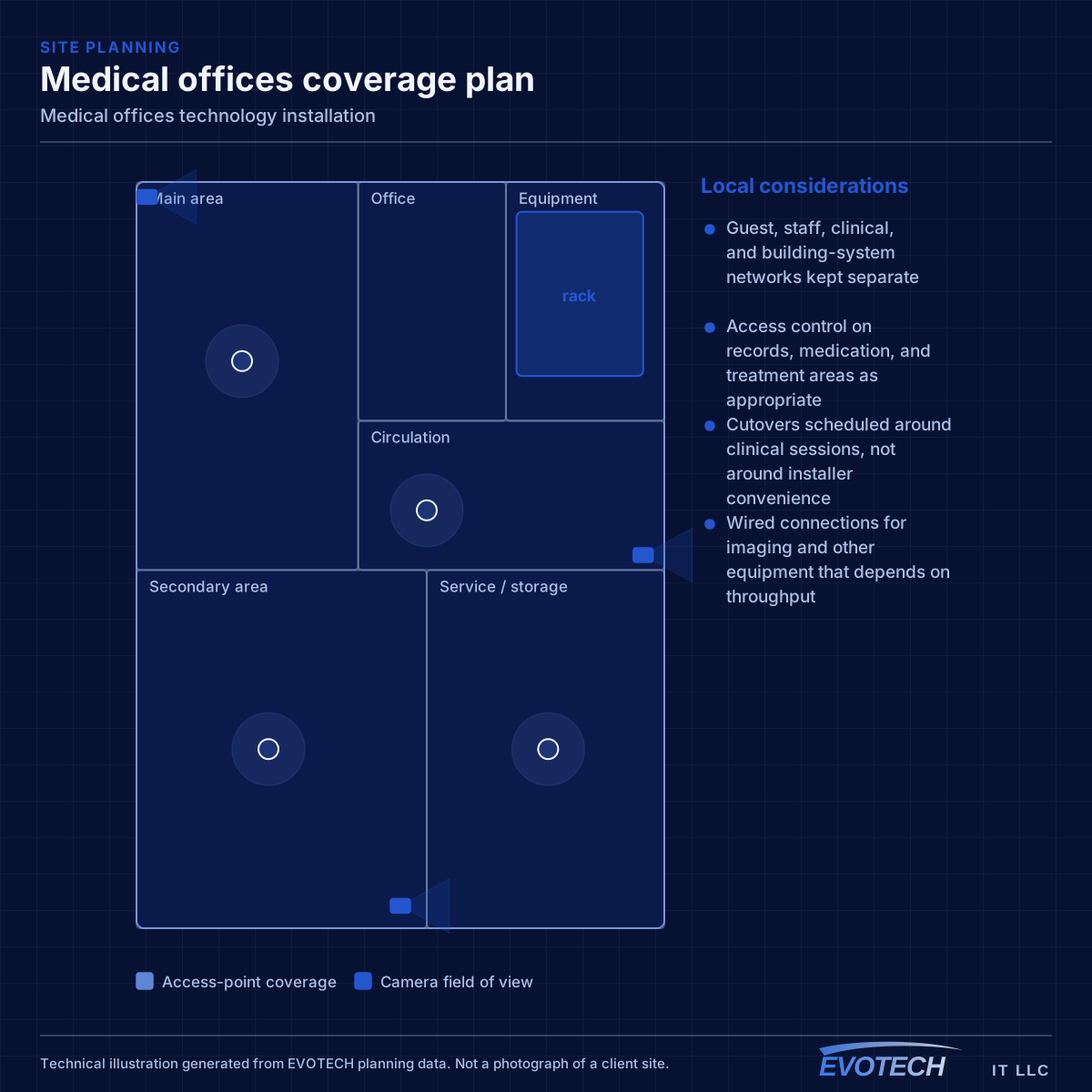
- Guest, staff, clinical, and building-system networks kept separate
- Access control on records, medication, and treatment areas as appropriate
- Cutovers scheduled around clinical sessions, not around installer convenience
- Wired connections for imaging and other equipment that depends on throughput
- Equipment position secured against casual access
Segmentation and clinical connectivity
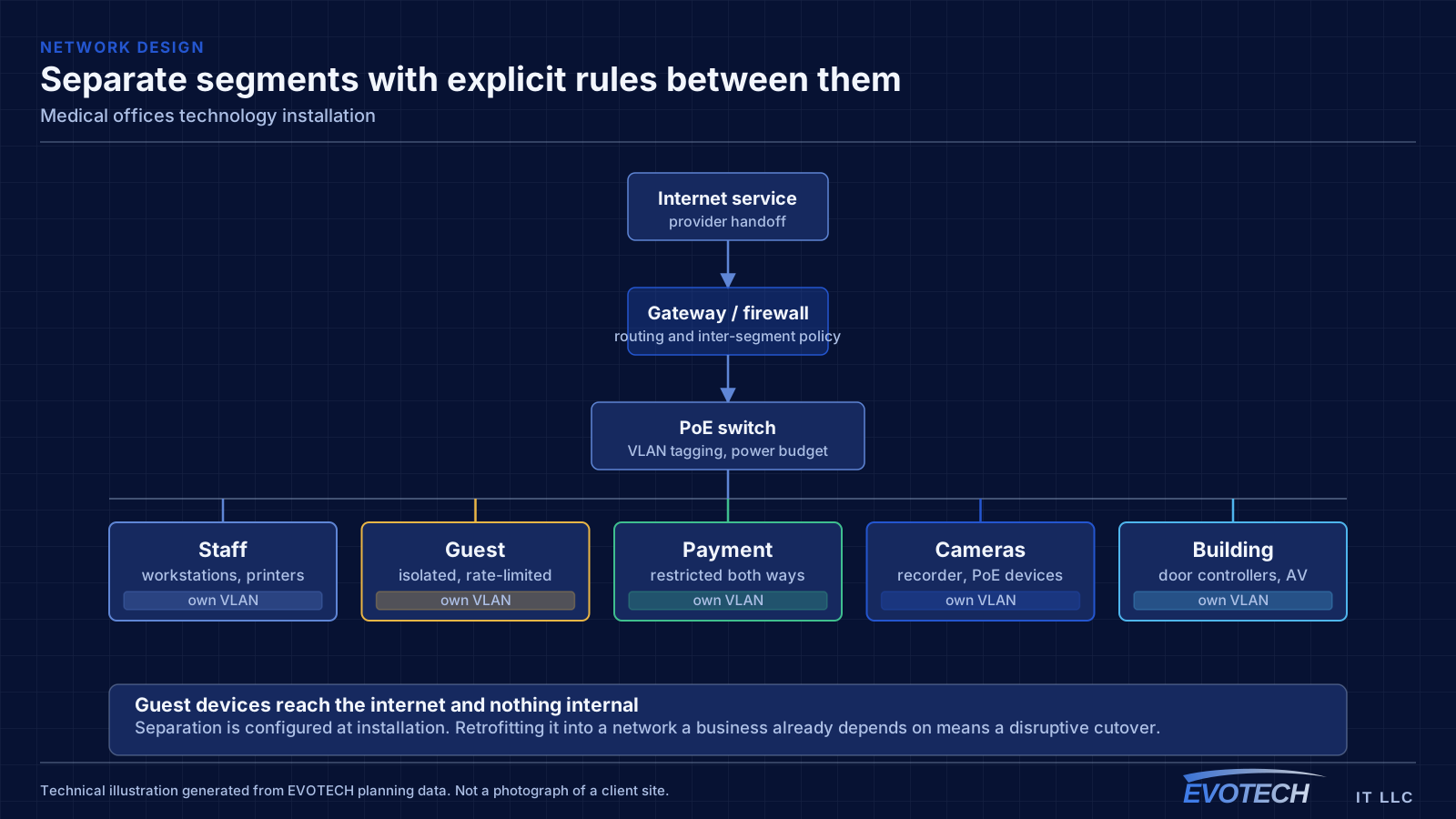
Clinical systems belong on their own segment, separate from staff general-purpose devices, separate again from patient guest access, and separate from building systems such as cameras and door controllers. This limits what any single compromised device can reach and makes the network far easier to reason about when something misbehaves.
For clinical equipment that moves large files — imaging in particular — wired connections are worth insisting on where the equipment supports them. Wireless is fine for tablets and general staff use, but a modality pushing studies across a congested wireless cell produces exactly the kind of intermittent slowness that is difficult to diagnose and disruptive to a clinic day.
Guest access in a waiting area should be isolated from everything internal and rate-limited. It is a courtesy, and it should be architecturally incapable of touching anything clinical.
- Clinical, staff, guest, and building-system traffic on separate segments
- Wired connections for imaging and other high-throughput clinical equipment
- Waiting-area guest access isolated and capped
- Access points placed for coverage in treatment rooms without relying on corridor spill
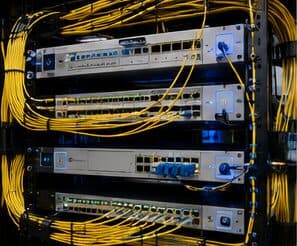
- Equipment room secured, since it holds the systems everything depends on
Cameras and access in a clinical setting
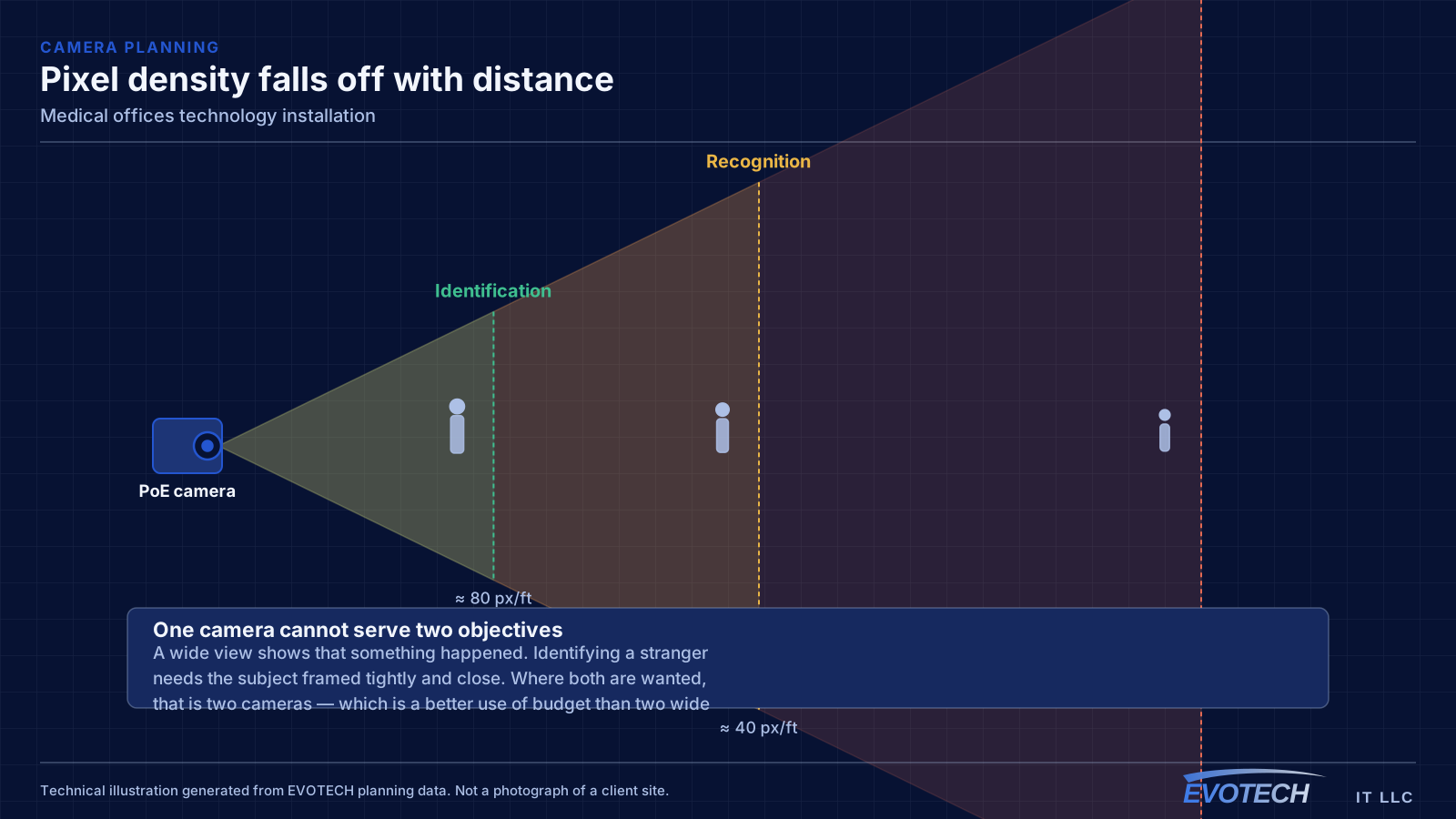
Camera coverage in medical settings is deliberately limited in scope. Entrances, corridors leading to controlled areas, medication storage approaches, parking areas, and after-hours coverage of the perimeter are the usual placements. Treatment areas are not camera locations, and this is worth stating plainly during design so the boundary is explicit.
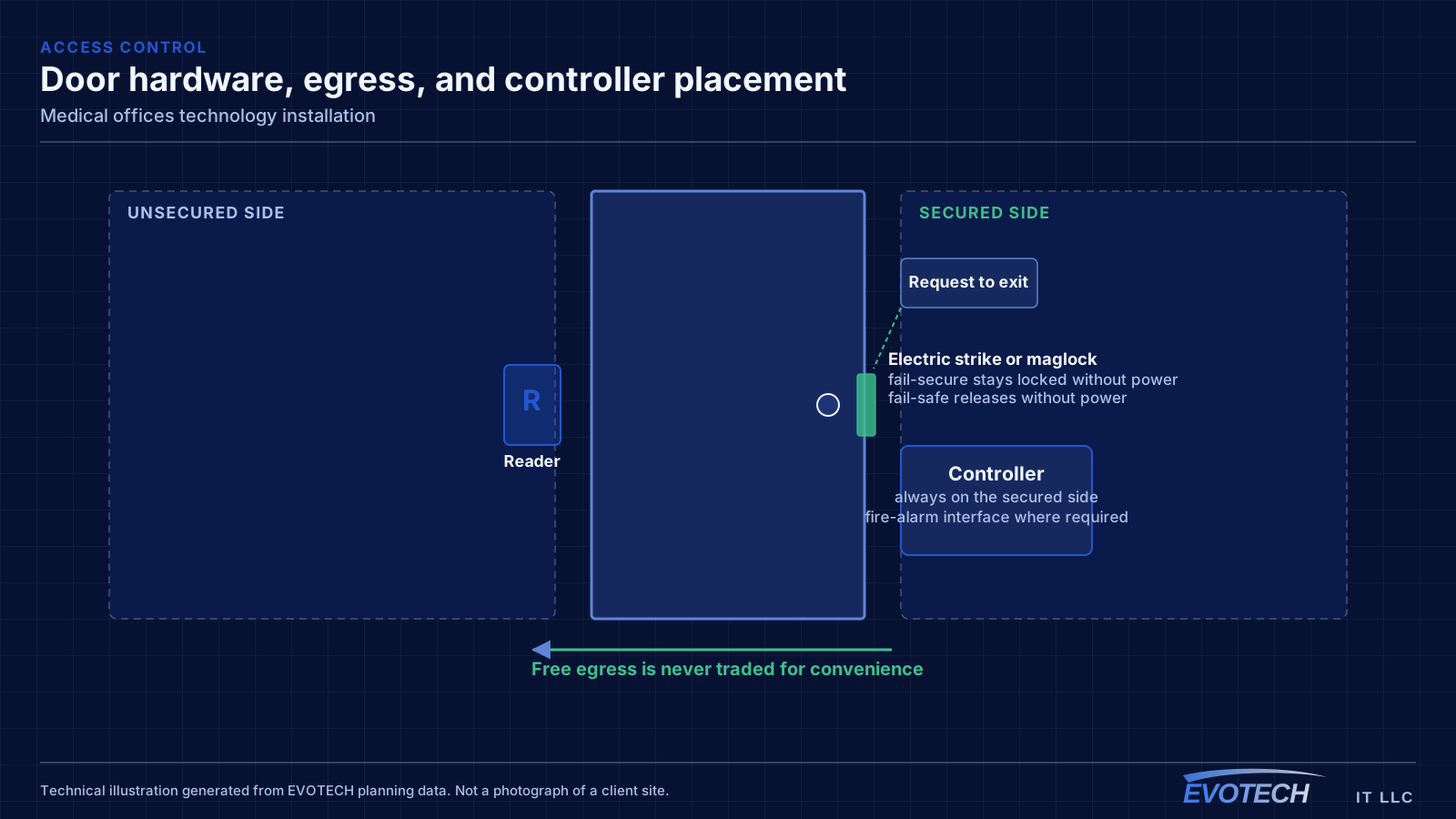
Access control usually carries more weight than cameras here, because the practical requirement is controlling and evidencing entry to specific areas rather than recording activity generally. Door records showing who entered a records room and when answer the questions that actually get asked.
Where cameras and access control are integrated, a door event can be reviewed alongside footage of the corridor approach — which is often the useful combination, and does not require a camera inside the controlled area itself.
- Entrances, corridors to controlled areas, and medication storage approaches
- No cameras in treatment or examination areas
- Access records as the primary evidence for controlled-area entry
- Integration so door events can be reviewed with corridor footage
- Exterior and parking coverage for after-hours
Working around a clinic day
Work in treatment areas is scheduled around patient sessions, which typically means early mornings, evenings, or non-clinical days. Corridors and public areas are more flexible but still need containment and clean working practice.
Infection control and cleanliness expectations exceed those of a standard commercial site. Dust control during drilling, protection of surfaces, and clearing the work area completely at the end of each session are baseline requirements rather than courtesies.
- Treatment-area work scheduled around clinical sessions
- Dust containment and surface protection throughout
- Complete clear-down at the end of every session
- Cutover planning that keeps clinical systems available
- Coordination with practice management on access to controlled areas
Explore everything in this section
All 84 pages under Medical office networks, access control, and clinical-space cabling.
- Access-control installation for medical offices
- Business phone & VoIP for medical offices
- Cat6 cabling for medical offices
- Cat6A cabling for medical offices
- Commercial IT solutions for medical offices
- Commercial Wi-Fi for medical offices
- Conference-room AV for medical offices
- Data-jack installation for medical offices
- Digital signage for medical offices
- Ethernet installation for medical offices
- Fiber-optic cabling for medical offices
- Floodlight camera installation for medical offices
- Gate & license-plate cameras for medical offices
- In-wall cable concealment for medical offices
- Intercom installation for medical offices
- Low-voltage installation for medical offices
- Network cabling for medical offices
- Network troubleshooting for medical offices
- Network-rack installation for medical offices
- NVR installation for medical offices
- Outdoor & patio speakers for medical offices
- Paging & PA systems for medical offices
- PoE camera installation for medical offices
- Projector & screen installation for medical offices
- Security-camera installation for medical offices
- Soundbar mounting for medical offices
- Technology for medical offices in Atascocita and Eagle Springs
- Technology for medical offices in Bellaire
- Technology for medical offices in Bridgeland and Towne Lake
- Technology for medical offices in Brookshire
- Technology for medical offices in Downtown Houston
- Technology for medical offices in EaDo (East Downtown)
- Technology for medical offices in east Kingwood
- Technology for medical offices in First Colony and Riverstone
- Technology for medical offices in Houston
- Technology for medical offices in League City
- Technology for medical offices in Meyerland
- Technology for medical offices in Midtown and the Museum District
- Technology for medical offices in Missouri City
- Technology for medical offices in Montrose
- Technology for medical offices in Oak Forest and Garden Oaks
- Technology for medical offices in Old Katy and Cane Island
- Technology for medical offices in old Pearland
- Technology for medical offices in Rice Military and Washington Avenue
- Technology for medical offices in Richmond
- Technology for medical offices in River Oaks
- Technology for medical offices in Sharpstown
- Technology for medical offices in south Kingwood
- Technology for medical offices in Spring Branch
- Technology for medical offices in Stafford
- Technology for medical offices in Sugar Creek and old Sugar Land
- Technology for medical offices in Sugar Land
- Technology for medical offices in the 77338 Humble area
- Technology for medical offices in the 77449 Katy area
- Technology for medical offices in the 77469 Richmond area
- Technology for medical offices in the 77505 southeast Pasadena area
- Technology for medical offices in the 77523 area east of Baytown
- Technology for medical offices in the 77573 League City area
- Technology for medical offices in the Aliana and Harvest Green area
- Technology for medical offices in the Braeswood area
- Technology for medical offices in the Champions area
- Technology for medical offices in the Grand Central Park area of Conroe
- Technology for medical offices in The Heights
- Technology for medical offices in the Imperial Oaks area
- Technology for medical offices in the Kelliwood and Nottingham Country area
- Technology for medical offices in the Klein area
- Technology for medical offices in the Lake Conroe side of Conroe
- Technology for medical offices in the Panther Creek and Cochran's Crossing villages
- Technology for medical offices in the Pecan Grove and west Richmond area
- Technology for medical offices in the Rose Hill and Tomball area
- Technology for medical offices in the Shepherd Park and west Oak Forest area
- Technology for medical offices in the Spring Valley area
- Technology for medical offices in the Sterling Ridge and Alden Bridge villages
- Technology for medical offices in the Texas Medical Center area
- Technology for medical offices in the Westchase District
- Technology for medical offices in The Woodlands
- Technology for medical offices in Upper Kirby
- Technology for medical offices in Webster
- Technology for medical offices in Woodland Heights and Near Northside
- TV mounting for medical offices
- Ubiquiti UniFi installation for medical offices
- Video wall installation for medical offices
- Wi-Fi installation for medical offices
- Wireless bridge (point-to-point) for medical offices
Frequently asked questions
Should patient guest Wi-Fi be offered?
It is common in waiting areas, and the requirement is that it is architecturally isolated: unable to reach clinical systems, staff devices, or building systems, and rate-limited so it cannot affect anything operational. Configured that way it is a low-risk courtesy; configured as a shared flat network it is not.
Where does access control make the most difference?
Records storage, medication storage, and the boundary between public and clinical areas. The value is both control and evidence — a record of who entered and when answers questions that a camera in a corridor cannot, and does so without placing recording equipment in sensitive areas.
Can cabling work happen without disrupting clinic hours?
Corridor and public-area work usually can, with containment. Treatment-room work is normally scheduled outside clinical sessions. The part that needs the most planning is any cutover affecting practice management or imaging systems, which is scheduled deliberately rather than fitted in.
Are cameras installed in treatment rooms?
No. Camera coverage is scoped to entrances, corridors, controlled-area approaches, and exterior areas. Treatment and examination areas are excluded, and that boundary is agreed explicitly at design rather than left to interpretation.