Built for volunteers, used intermittently
The defining constraint in church technology is who operates it. Systems are typically run by volunteers who rotate, may have limited technical background, and are operating live in front of a congregation. A system that requires specialist knowledge to start is a system that will fail publicly.
The second constraint is the building. Sanctuaries are large, often with high ceilings and hard reflective surfaces, and were frequently not designed with audio or cable pathways in mind. Older buildings add masonry walls, limited ceiling access, and additions built across several decades.
- Volunteer operators rotating through the roles
- Live use with no opportunity to troubleshoot mid-service
- Large, acoustically challenging main spaces
- Buildings extended over time with inconsistent construction and pathways
- Many small rooms used intermittently rather than continuously
Simple to operate, then everything else
The first design priority is that the routine operation is genuinely simple: a small number of clearly labeled controls that start the normal service configuration. Everything complex sits behind that, available to whoever maintains the system but not required for weekly use.
After that: audio intelligibility in the main space, display visibility from the back, coverage across the campus including classrooms and offices, and access control for a building that many people use at many different times.
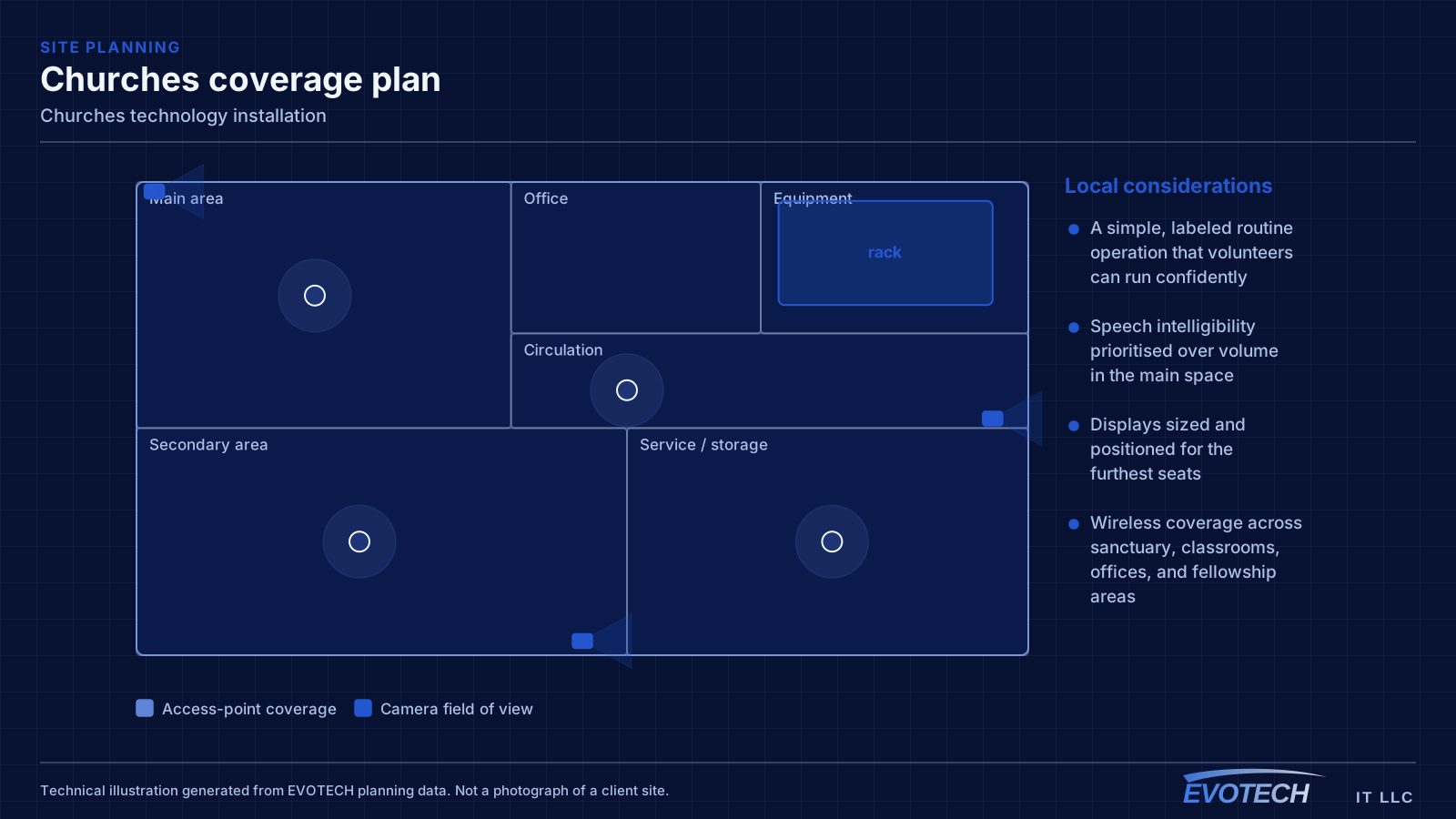
- A simple, labeled routine operation that volunteers can run confidently
- Speech intelligibility prioritised over volume in the main space
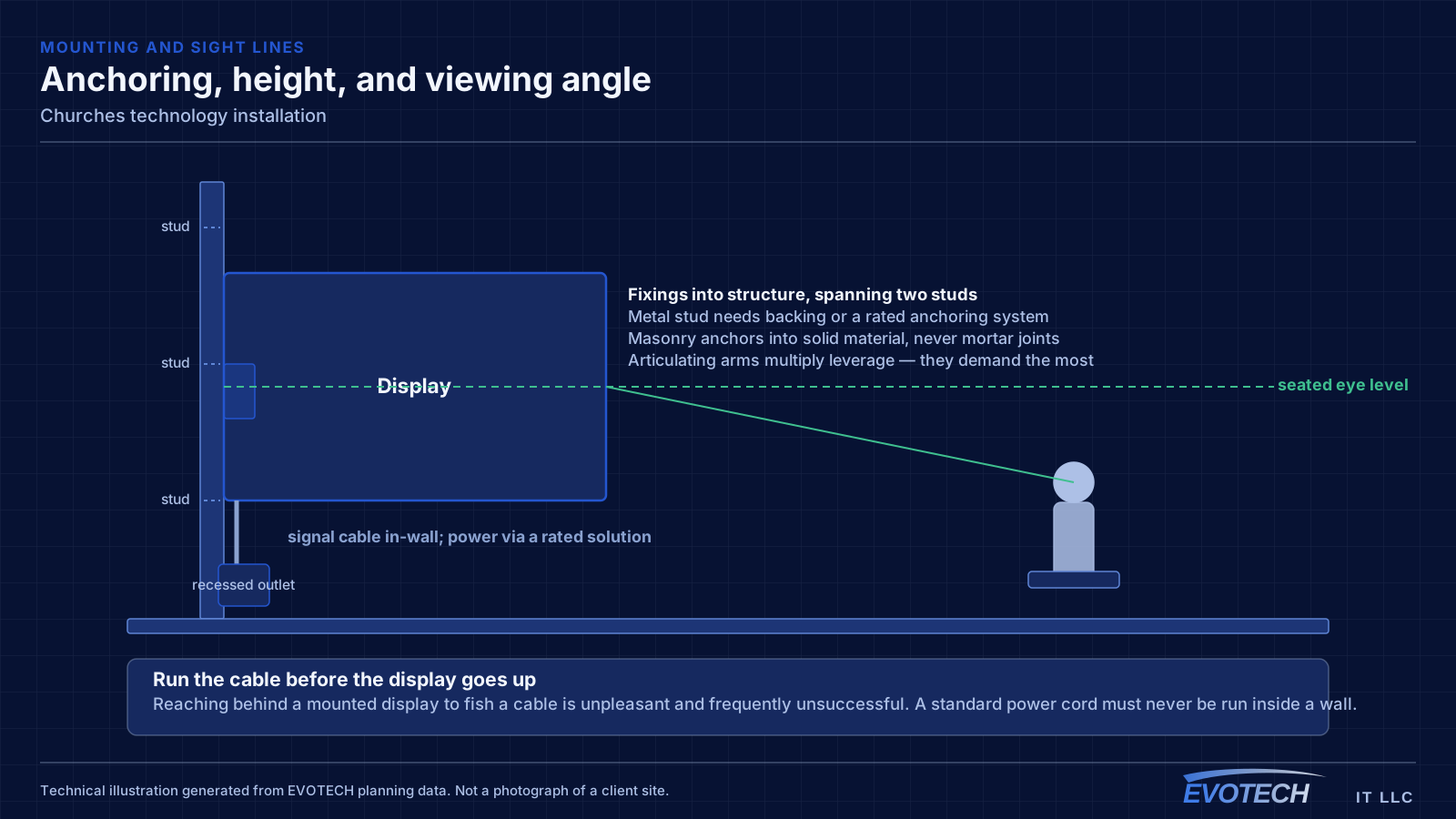
- Displays sized and positioned for the furthest seats
- Wireless coverage across sanctuary, classrooms, offices, and fellowship areas
- Access control suited to many users and irregular schedules
Campus coverage and the systems that share it
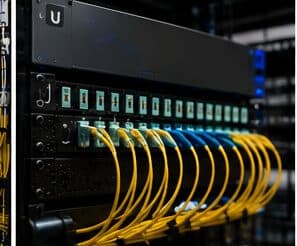
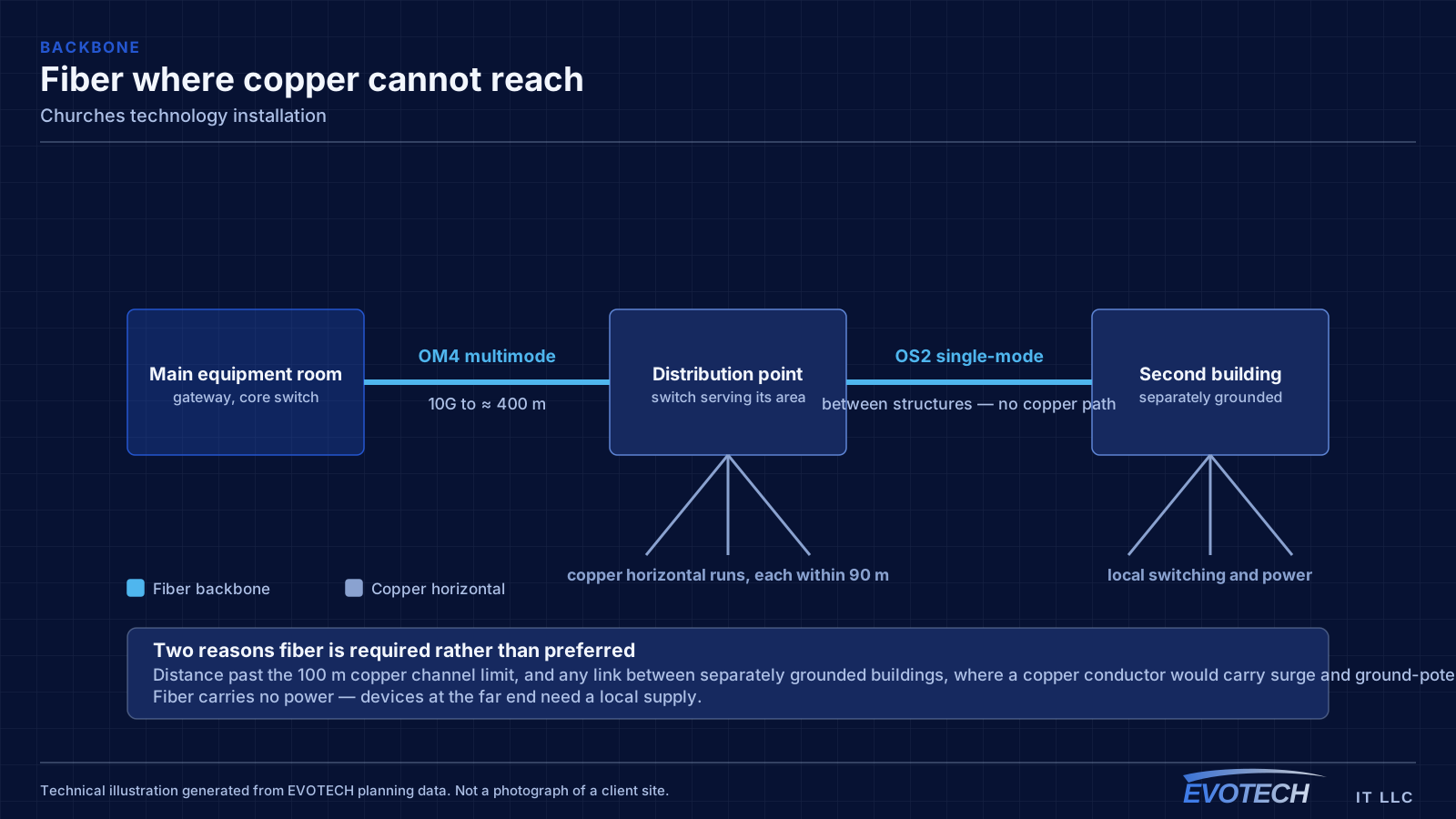
Church networks often have to cover a surprising spread: a sanctuary, classrooms, offices, a fellowship hall, and sometimes separate buildings. Where separate structures are involved, the link between them should be fiber rather than copper, both for distance and because a copper run between buildings carries genuine electrical risk.
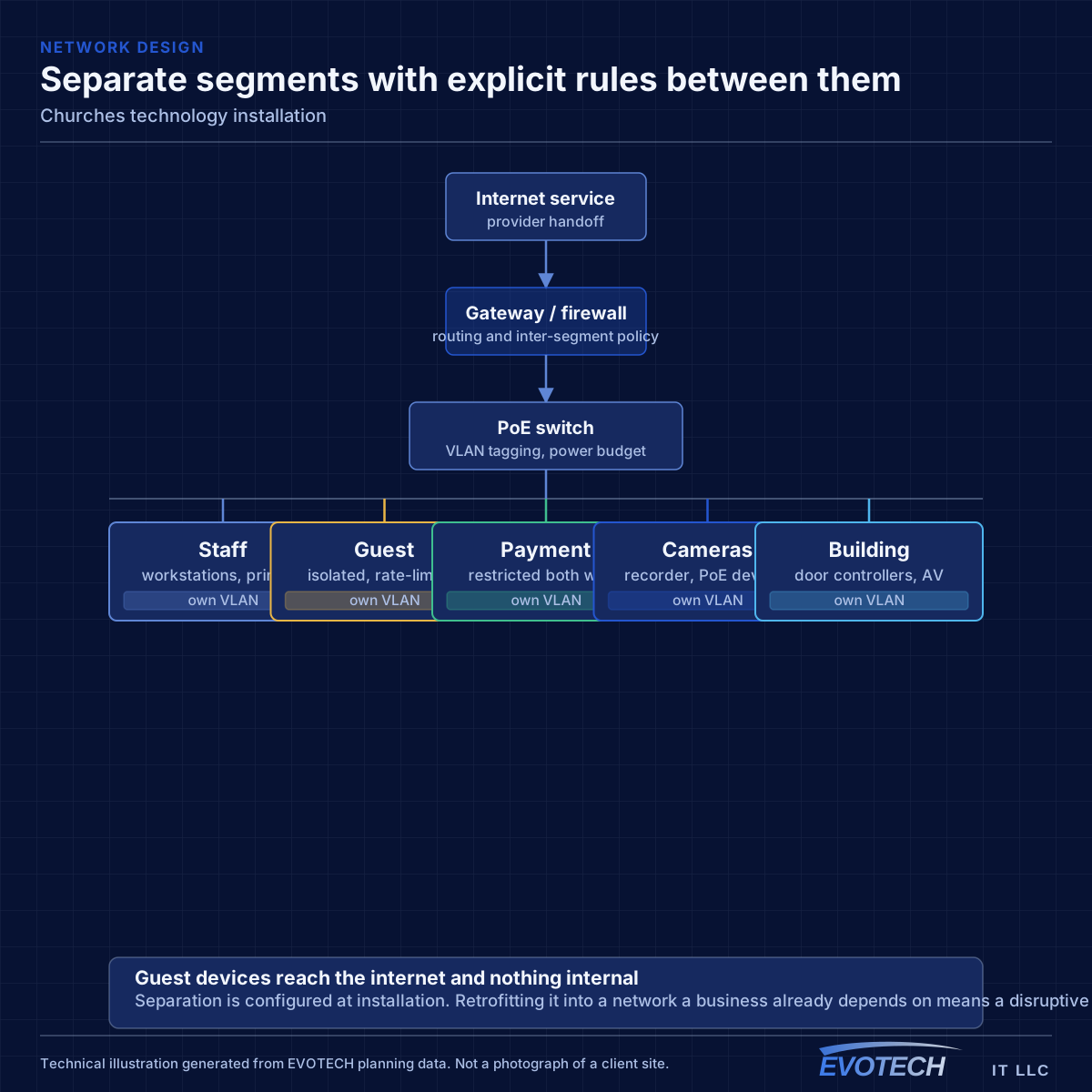
Segmentation is worth doing here for a specific reason: churches typically offer guest wireless, run children's-ministry check-in systems, operate AV equipment on the network, and have office computers handling sensitive information. Those should not share one flat network, and separating them is straightforward at installation.
Streaming has become a standard requirement, and it adds an upload-bandwidth dependency that most other building systems do not have. Confirming the circuit's upload capacity, and separating streaming traffic so it does not contend with guest use during a service, is worth doing before rather than after the first stream.
- Fiber between separate buildings on the campus
- Separate segments for guest, office, AV, and check-in systems
- Upload bandwidth confirmed where services are streamed
- Coverage extended to classrooms and fellowship areas, not just the sanctuary
- AV control devices wired rather than depending on wireless during a service
Access control and modest camera coverage
Church buildings are used by many people at many different times, which makes key management genuinely burdensome and access control genuinely useful. Credential access with schedules — different groups having access to different areas at different times — solves a problem that physical keys solve badly.
Camera coverage is usually focused on entrances, children's-ministry areas' approaches, offices, parking areas, and equipment storage. As in clinical settings, the boundary matters: worship spaces and children's classrooms are not general camera locations, and agreeing that explicitly during design prevents awkward conversations later.
- Credential access with per-group schedules replacing widely copied keys
- Entrance, office, and equipment storage coverage
- Parking area coverage for evening and weekend use
- Children's area approaches rather than interiors
- Access records that show who entered outside normal hours
Old buildings, tight schedules, and additions
Church buildings frequently comprise an original structure plus additions from several eras, each with different construction and no consistent pathway. Masonry walls, hard-lid ceilings, and limited access are common, and pathway discovery is often a genuine part of the project rather than a formality.
Scheduling is constrained by use rather than by business hours. Sanctuaries are in use on weekends and often several weekday evenings, and classrooms follow their own schedule. Work windows tend to be weekday daytimes, which is the opposite of most commercial installations.
- Additions from different eras with inconsistent construction
- Masonry and hard-lid areas limiting pathway options
- Weekday daytime work windows rather than evenings
- Volunteer availability affecting handover and training
- Budget staging across phases more common than a single project
Explore everything in this section
All 69 pages under Church AV, networks, and low-voltage systems.
- Access-control installation for churches
- Business phone & VoIP for churches
- Cat6 cabling for churches
- Cat6A cabling for churches
- Commercial IT solutions for churches
- Commercial Wi-Fi for churches
- Conference-room AV for churches
- Data-jack installation for churches
- Digital signage for churches
- Ethernet installation for churches
- Fiber-optic cabling for churches
- Floodlight camera installation for churches
- Gate & license-plate cameras for churches
- In-wall cable concealment for churches
- Intercom installation for churches
- Low-voltage installation for churches
- Network cabling for churches
- Network troubleshooting for churches
- Network-rack installation for churches
- NVR installation for churches
- Outdoor & patio speakers for churches
- Paging & PA systems for churches
- PoE camera installation for churches
- Projector & screen installation for churches
- Security-camera installation for churches
- Soundbar mounting for churches
- Technology for churches in Brookshire
- Technology for churches in Conroe
- Technology for churches in Cypress
- Technology for churches in Downtown Houston
- Technology for churches in EaDo (East Downtown)
- Technology for churches in east Kingwood
- Technology for churches in Fulshear
- Technology for churches in Houston
- Technology for churches in Jersey Village
- Technology for churches in Midtown and the Museum District
- Technology for churches in Missouri City
- Technology for churches in Oak Forest and Garden Oaks
- Technology for churches in Old Katy and Cane Island
- Technology for churches in Rice Military and Washington Avenue
- Technology for churches in River Oaks
- Technology for churches in Spring Branch
- Technology for churches in Sugar Land
- Technology for churches in the 77338 Humble area
- Technology for churches in the 77469 Richmond area
- Technology for churches in the 77505 southeast Pasadena area
- Technology for churches in the 77523 area east of Baytown
- Technology for churches in the 77546 Friendswood area
- Technology for churches in the 77573 League City area
- Technology for churches in the Champions area
- Technology for churches in the Galleria and Uptown
- Technology for churches in the Grand Central Park area of Conroe
- Technology for churches in The Heights
- Technology for churches in the Imperial Oaks area
- Technology for churches in the Kelliwood and Nottingham Country area
- Technology for churches in the Klein area
- Technology for churches in the Lake Conroe side of Conroe
- Technology for churches in the Pecan Grove and west Richmond area
- Technology for churches in the Sienna area
- Technology for churches in the Spring Valley area
- Technology for churches in the Texas Medical Center area
- Technology for churches in the Westchase District
- Technology for churches in Tomball
- Technology for churches in Woodland Heights and Near Northside
- TV mounting for churches
- Ubiquiti UniFi installation for churches
- Video wall installation for churches
- Wi-Fi installation for churches
- Wireless bridge (point-to-point) for churches
Popular services nearby
Frequently searched near this area — the pages people look for most.
Frequently asked questions
What makes a church AV system volunteer-friendly?
A small number of clearly labeled controls that produce the normal configuration reliably, with complexity hidden behind them. If starting a service requires selecting sources, adjusting levels, and remembering a sequence, it will eventually fail during a service. The design goal is that a new volunteer can run the routine case on their first attempt.
Why is sanctuary audio difficult?
Large volume, high ceilings, and hard reflective surfaces. Sound arrives at listeners both directly and via reflections, and the reflections smear speech. The response is a combination of speaker placement and coverage design, and acoustic treatment where it is feasible — raising volume generally makes intelligibility worse rather than better.
Should separate buildings be connected with a network cable?
Not with copper. A copper run between structures creates a path for surge and ground-potential differences between two separately grounded buildings. Fiber is the correct method, and it also removes the distance limit that copper would impose across a campus.
Is access control worthwhile for a church?
Often more than for a comparable commercial building, because many people need access to different areas at different times and keys get copied and lost. Credential access with per-group schedules addresses that directly, and revoking access takes seconds rather than a rekey.