Two audiences, one building
A multifamily property runs two distinct technology environments. Residents have their own connectivity inside their units, generally provided by whatever service they select. The property operates everything else: common-area wireless, controlled entry, intercom, package rooms, amenity spaces, cameras, and the office network.
The property-operated side is what needs design. It has to work for a resident population that turns over continuously, be administrable by on-site staff who also turn over, and survive being used by everyone in the building without a support desk.
- Resident in-unit service separate from property-operated systems
- Continuous resident turnover requiring rapid credential issue and revocation
- On-site staff administering systems without specialist training
- Common areas, amenity spaces, and package rooms all needing coverage
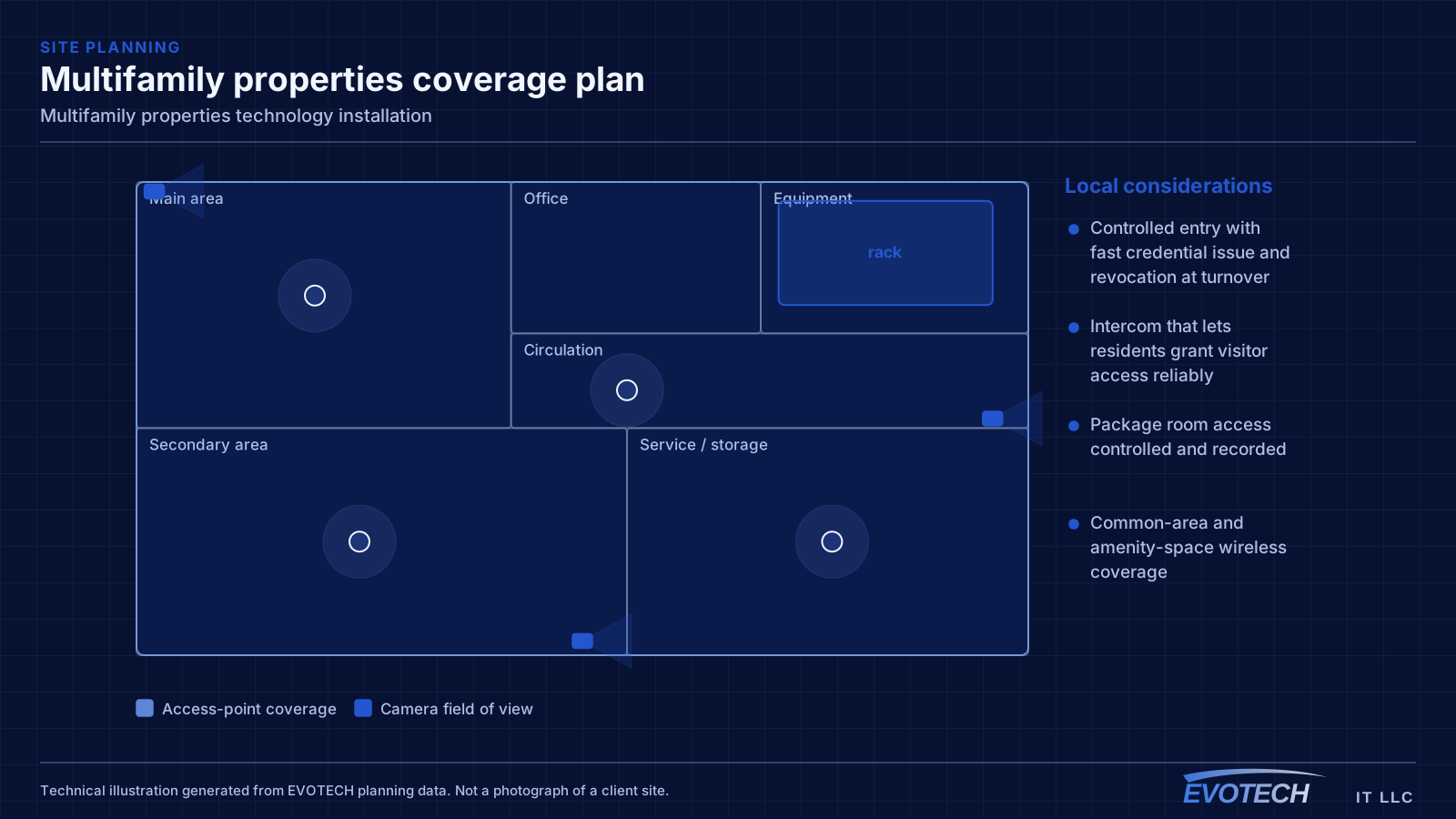
Entry, packages, and common-area coverage
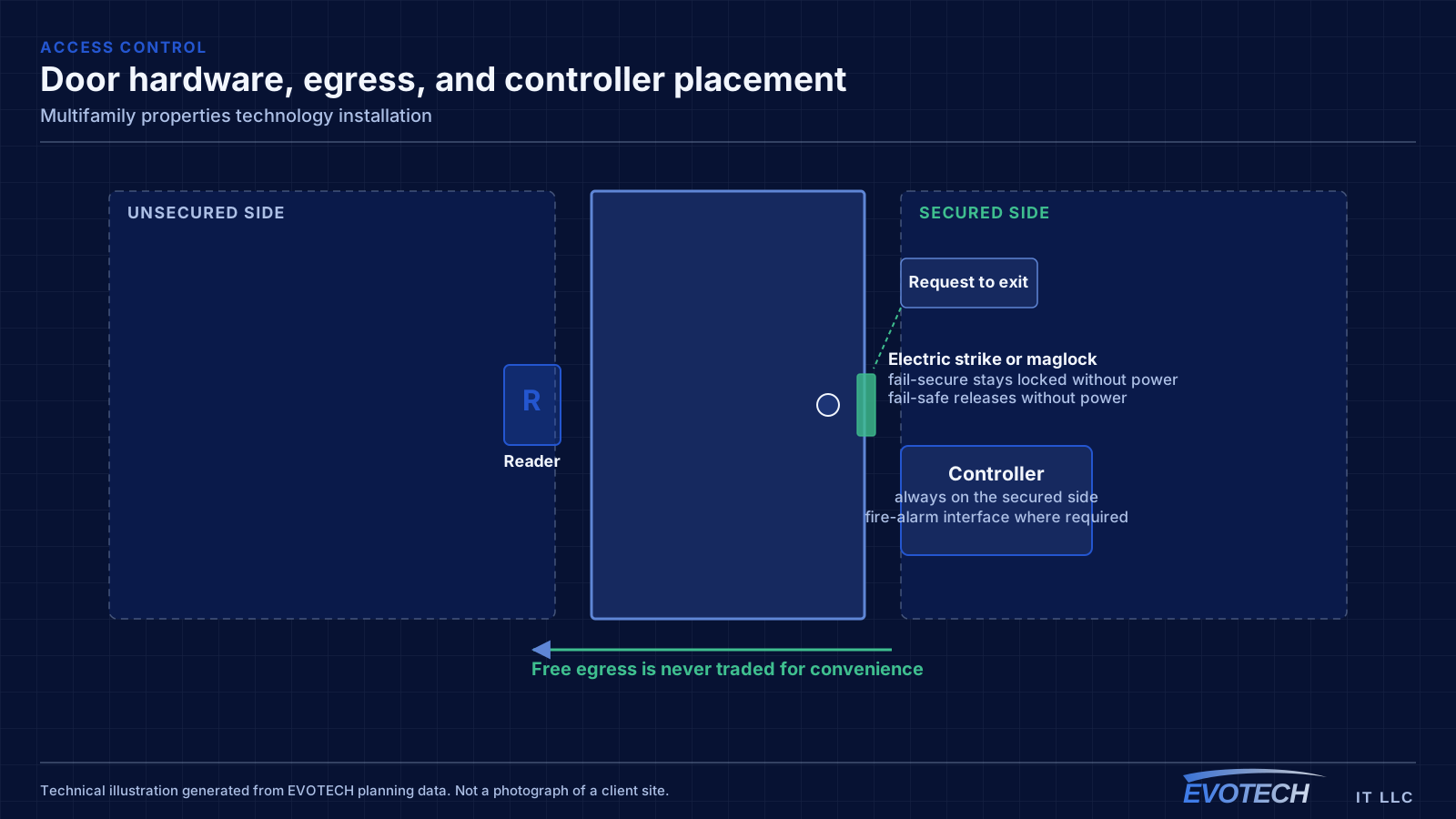
The systems residents notice are entry and packages. An entry system that reliably lets residents in and lets them grant access to visitors, and a package room that works, generate more satisfaction than any other technology on the property.
Behind those, common-area wireless coverage in amenity spaces, and camera coverage at entries, parking, and package areas, cover most of what the property needs.
- Controlled entry with fast credential issue and revocation at turnover
- Intercom that lets residents grant visitor access reliably
- Package room access controlled and recorded
- Common-area and amenity-space wireless coverage
- Camera coverage at entries, parking, and package areas
Property systems and common-area coverage
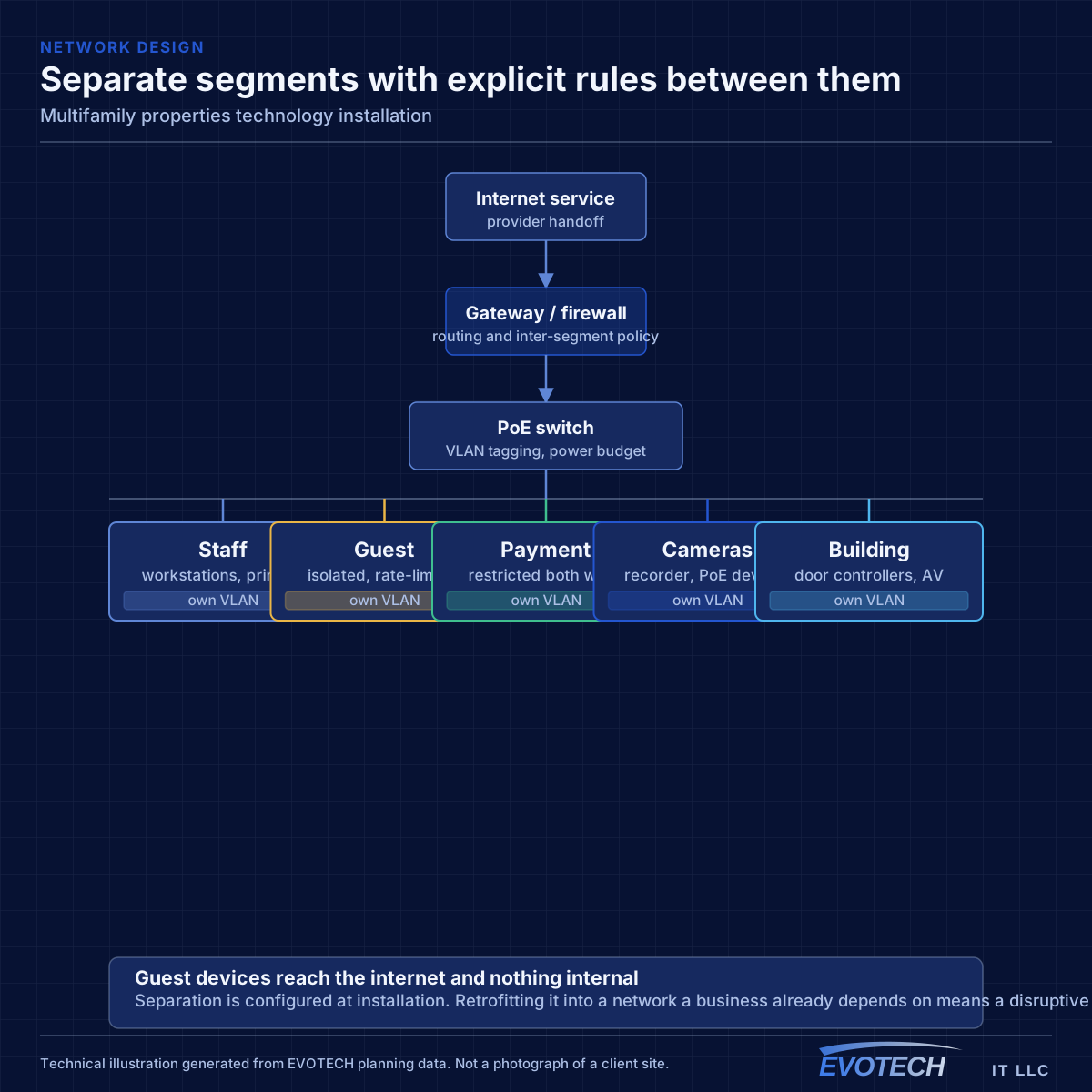
The property network carries cameras, door controllers, intercom, the leasing office, and common-area wireless. These belong on separate segments from each other — common-area guest wireless in particular should reach the internet and nothing else, since it is used by residents, visitors, and anyone within range of an amenity space.
Common-area coverage is a distributed problem. Lobbies, corridors, fitness rooms, clubhouses, pool areas, and parking structures each have different construction and different demand, and outdoor amenity areas need equipment rated for the exposure. Corridor coverage in particular tends to be underestimated, since corridors are long, narrow, and full of doors.
Where a property spans multiple buildings, the links between them are fiber, for the same distance and electrical-isolation reasons that apply on any campus.
- Property systems segmented from common-area guest wireless
- Amenity spaces, corridors, and outdoor areas as distinct coverage zones
- Outdoor-rated equipment for pool decks and exterior amenity areas
- Fiber between buildings on multi-building properties
- Leasing office network separated from resident-facing systems
Entry, packages, and parking
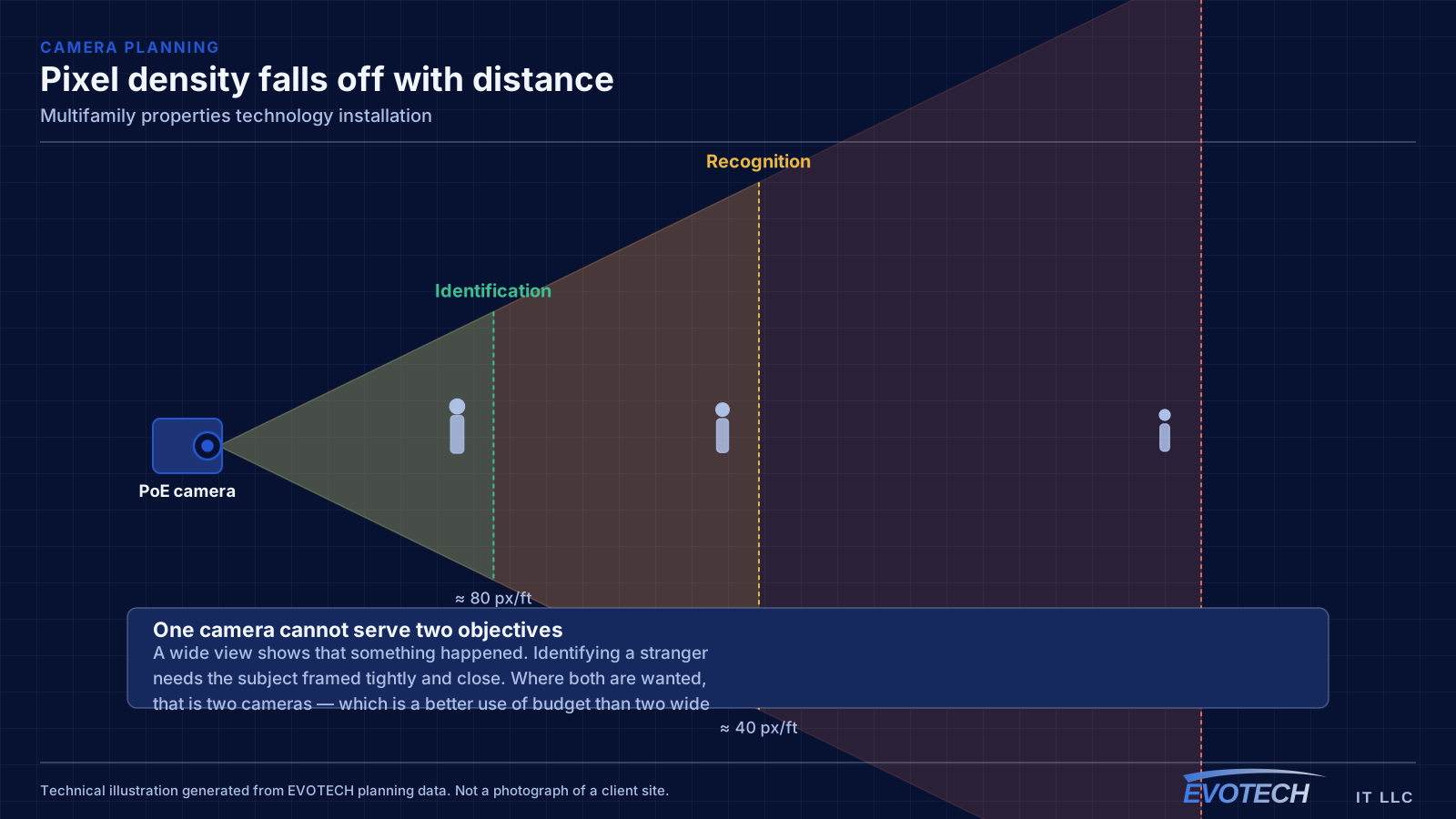
Camera coverage focuses on the points where the property has a legitimate operational interest: building entries, package rooms, parking areas and garages, amenity spaces, and the leasing office. Framing at entries should be tight enough for identification; parking coverage is usually about vehicle movement rather than identifying individuals.
Package areas have become one of the most-requested views, and they are also one of the easier ones to get right: a controlled room with an access record and a camera framed on the door covers most of what gets asked.
Cameras are not positioned to view into individual units, private balconies, or windows. That boundary is set at design and is not negotiable regardless of how a request is framed.
- Building entries framed for identification
- Package room door with access records alongside footage
- Parking areas and garages framed for vehicle movement
- Amenity spaces and leasing office
- No camera positioned to view into units, balconies, or windows
Occupied buildings and turnover
Multifamily properties are occupied continuously, which means work in corridors and common areas happens around residents, with containment, clear signage, and attention to noise during reasonable hours. Access to individual units, where required, needs the property's own notice procedures.
Turnover shapes the administrative design more than the physical one. Credentials need to be issued and revoked quickly and by on-site staff, which means the system's day-to-day administration has to be genuinely simple. A system requiring a specialist to add a resident will not be maintained accurately.
- Continuous occupancy requiring containment and noise consideration
- Unit access following the property's notice procedures
- Credential administration simple enough for on-site staff
- Phased work across buildings to limit disruption
- Documentation that survives staff turnover
Explore everything in this section
All 100 pages under Multifamily property networks, entry systems, and common areas.
- Access-control installation for multifamily properties
- Business phone & VoIP for multifamily properties
- Cat6 cabling for multifamily properties
- Cat6A cabling for multifamily properties
- Commercial IT solutions for multifamily properties
- Commercial Wi-Fi for multifamily properties
- Conference-room AV for multifamily properties
- Data-jack installation for multifamily properties
- Digital signage for multifamily properties
- Ethernet installation for multifamily properties
- Fiber-optic cabling for multifamily properties
- Fireplace TV mounting for multifamily properties
- Floodlight camera installation for multifamily properties
- Gate & license-plate cameras for multifamily properties
- Home theater installation for multifamily properties
- In-wall cable concealment for multifamily properties
- Intercom installation for multifamily properties
- Low-voltage installation for multifamily properties
- Network cabling for multifamily properties
- Network troubleshooting for multifamily properties
- Network-rack installation for multifamily properties
- NVR installation for multifamily properties
- Outdoor & patio speakers for multifamily properties
- Outdoor TV installation for multifamily properties
- Paging & PA systems for multifamily properties
- PoE camera installation for multifamily properties
- Projector & screen installation for multifamily properties
- Residential Wi-Fi for multifamily properties
- Samsung Frame TV installation for multifamily properties
- Security-camera installation for multifamily properties
- Smart home & smart locks for multifamily properties
- Soundbar mounting for multifamily properties
- Technology for multifamily properties in Atascocita and Eagle Springs
- Technology for multifamily properties in Baytown
- Technology for multifamily properties in Bellaire
- Technology for multifamily properties in Bridgeland and Towne Lake
- Technology for multifamily properties in Cinco Ranch and Seven Meadows
- Technology for multifamily properties in Cypress
- Technology for multifamily properties in Downtown Houston
- Technology for multifamily properties in EaDo (East Downtown)
- Technology for multifamily properties in east Kingwood
- Technology for multifamily properties in Friendswood
- Technology for multifamily properties in Houston
- Technology for multifamily properties in Humble
- Technology for multifamily properties in Jersey Village
- Technology for multifamily properties in Katy
- Technology for multifamily properties in League City
- Technology for multifamily properties in Memorial and Bunker Hill
- Technology for multifamily properties in Meyerland
- Technology for multifamily properties in Midtown and the Museum District
- Technology for multifamily properties in Missouri City
- Technology for multifamily properties in Montrose
- Technology for multifamily properties in Oak Forest and Garden Oaks
- Technology for multifamily properties in Old Katy and Cane Island
- Technology for multifamily properties in old Pearland
- Technology for multifamily properties in Pasadena
- Technology for multifamily properties in Rice Military and Washington Avenue
- Technology for multifamily properties in River Oaks
- Technology for multifamily properties in Rosenberg
- Technology for multifamily properties in Shadow Creek Ranch and Silverlake
- Technology for multifamily properties in south Kingwood
- Technology for multifamily properties in Spring
- Technology for multifamily properties in Spring Branch
- Technology for multifamily properties in Stafford
- Technology for multifamily properties in Sugar Creek and old Sugar Land
- Technology for multifamily properties in Sugar Land
- Technology for multifamily properties in the 77449 Katy area
- Technology for multifamily properties in the 77469 Richmond area
- Technology for multifamily properties in the 77523 area east of Baytown
- Technology for multifamily properties in the 77546 Friendswood area
- Technology for multifamily properties in the 77573 League City area
- Technology for multifamily properties in the Aliana and Harvest Green area
- Technology for multifamily properties in the Braeswood area
- Technology for multifamily properties in the Champions area
- Technology for multifamily properties in the Coles Crossing area of Cypress
- Technology for multifamily properties in the Galleria and Uptown
- Technology for multifamily properties in the Grand Central Park area of Conroe
- Technology for multifamily properties in The Heights
- Technology for multifamily properties in the Imperial Oaks area
- Technology for multifamily properties in the Kelliwood and Nottingham Country area
- Technology for multifamily properties in the Klein area
- Technology for multifamily properties in the Panther Creek and Cochran's Crossing villages
- Technology for multifamily properties in the Pecan Grove and west Richmond area
- Technology for multifamily properties in the Rose Hill and Tomball area
- Technology for multifamily properties in the Shepherd Park and west Oak Forest area
- Technology for multifamily properties in the Sienna area
- Technology for multifamily properties in the Spring Valley area
- Technology for multifamily properties in the Sterling Ridge and Alden Bridge villages
- Technology for multifamily properties in the Texas Medical Center area
- Technology for multifamily properties in the Westchase District
- Technology for multifamily properties in The Woodlands
- Technology for multifamily properties in Tomball
- Technology for multifamily properties in Woodland Heights and Near Northside
- TV mounting for multifamily properties
- Ubiquiti UniFi installation for multifamily properties
- Video wall installation for multifamily properties
- Video-doorbell installation for multifamily properties
- Whole-home & multi-zone audio for multifamily properties
- Wi-Fi installation for multifamily properties
- Wireless bridge (point-to-point) for multifamily properties
Frequently asked questions
Does the property provide internet inside the units?
That varies by property and is a business decision rather than a technical one. What the property always operates is the common-area and building-systems side: entry, intercom, package rooms, amenity wireless, cameras, and the leasing office network. That is where the design work sits.
What makes an entry system work well for residents?
Reliable credential access, and a straightforward way for residents to grant visitor access without being physically present. Those two together account for most resident satisfaction with entry systems. Behind them, credentials need to be issued and revoked quickly at turnover, which means administration has to be simple enough for on-site staff.
Where should cameras be placed on a multifamily property?
Building entries, package rooms, parking areas and garages, amenity spaces, and the leasing office. Cameras are not positioned to view into individual units, private balconies, or windows — that boundary is set during design and holds regardless of how a request is worded.
Why is corridor wireless coverage harder than it looks?
Corridors are long, narrow, and lined with doors and walls that break up signal, so a design based on floor area tends to under-provision them. They also connect to amenity spaces with quite different demand, so coverage has to be planned zone by zone rather than as a single floor-level number.