

Serving The Woodlands
The commercial side here skews toward corporate and professional office space with meeting-room density and finish expectations to match — projects where conference-room AV and wireless capacity in gathering areas matter more than raw port count.
The residential side has a characteristic that most of the metro does not: substantial mature tree cover on many lots. Foliage attenuates wireless signal and moves in wind, which affects both outdoor coverage and camera motion detection in ways that are easy to overlook when planning from a satellite image.
Corporate suites and wooded lots
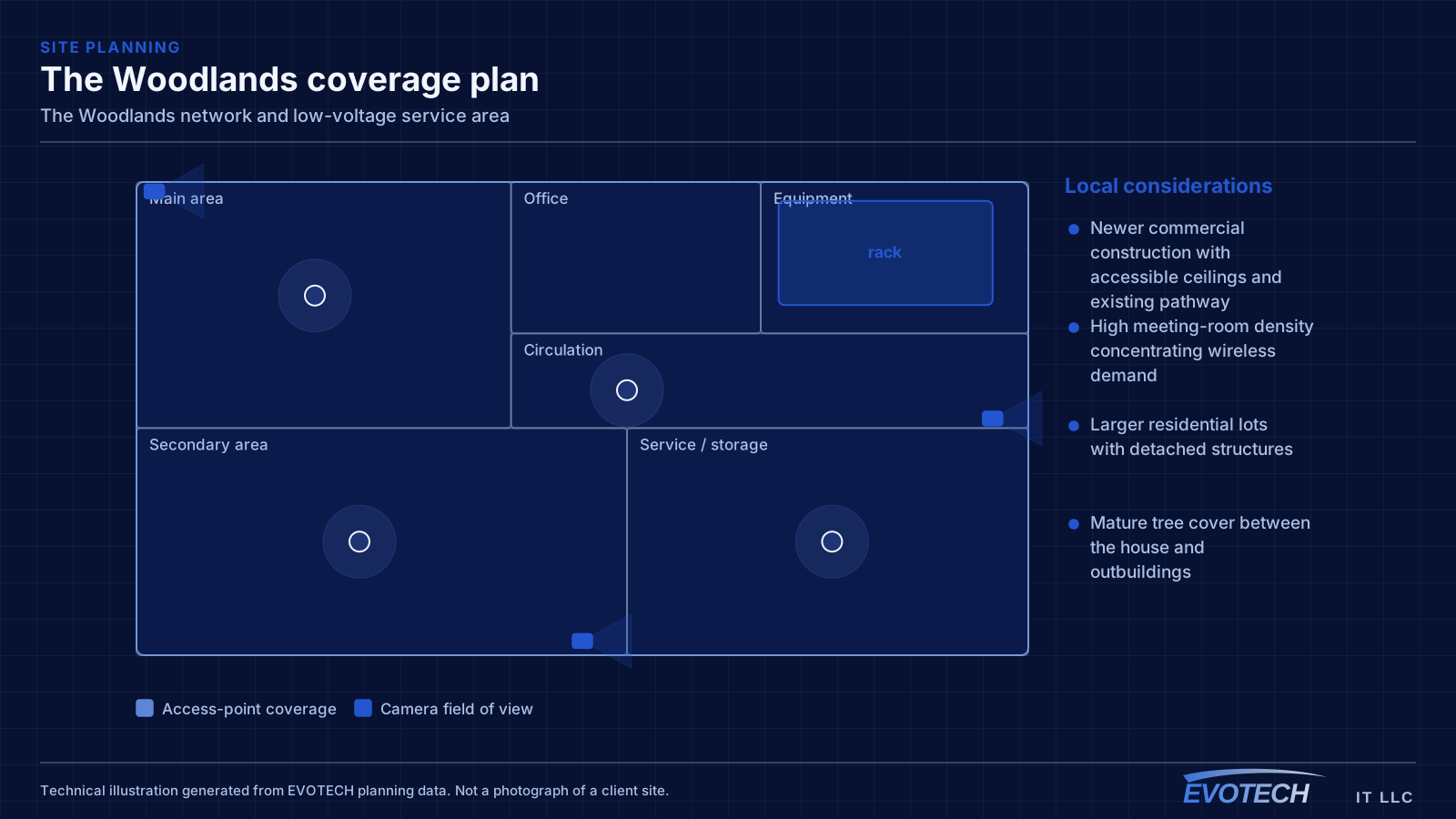
Office space here tends toward newer construction with accessible ceilings and reasonable existing pathway, which makes the physical work straightforward. What is less straightforward is capacity: these are offices with a lot of meeting rooms, and meeting rooms concentrate demand into single cells in a way that a coverage-based design will not anticipate.
Residential lots are often larger and heavily wooded, with detached garages, workshops, and pool structures that sit well beyond where house wireless can usefully reach. Those need their own cable or a deliberately designed link rather than an attempt to push coverage outward.
- Newer commercial construction with accessible ceilings and existing pathway
- High meeting-room density concentrating wireless demand
- Larger residential lots with detached structures
- Mature tree cover between the house and outbuildings
- Outdoor amenity areas — patios, pool decks — needing rated equipment
What actually differs in The Woodlands
These are the specific, verifiable conditions that change how a project is scoped in The Woodlands — building stock, property mix, and Gulf Coast climate, with no invented landmarks, offices, or permit rules.
- Mature tree cover on many residential lots, attenuating outdoor wireless signal and generating constant motion in camera scenes
- Corporate and professional office stock with meeting-room density driving wireless capacity requirements
- Larger residential lots with detached structures and outbuildings beyond practical house-coverage range
- Master-planned development producing relatively consistent, newer commercial construction with usable pathway
- Wooded exterior camera positions requiring careful framing to avoid constant vegetation-triggered motion events
What tree cover changes
Foliage attenuates wireless signal, and unlike a wall it changes with season and moves constantly in wind. A link between a house and a detached workshop that works in winter can degrade noticeably once the canopy fills in. Where a wireless link is genuinely the only option, that seasonal variation is worth planning for rather than discovering.
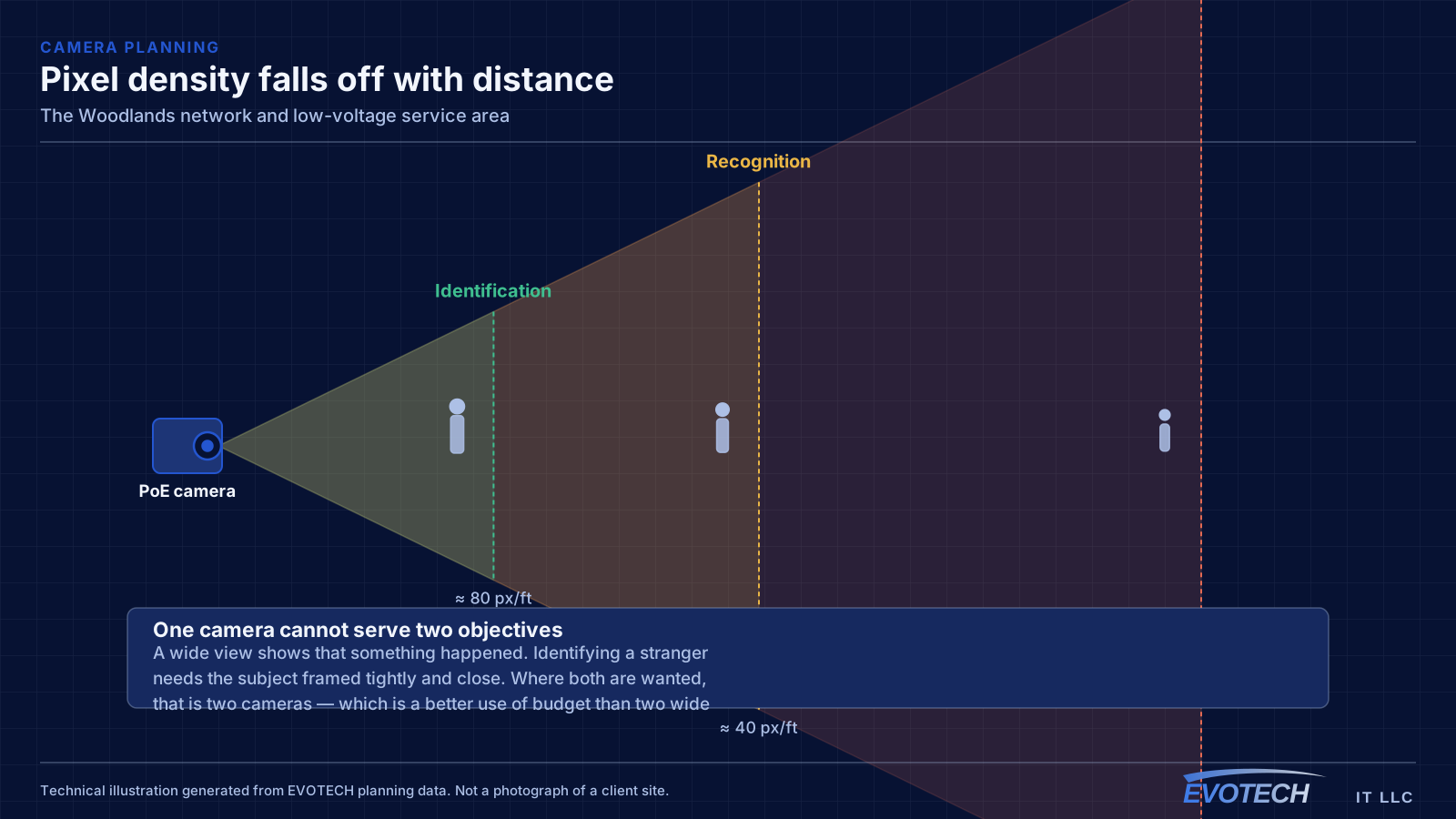
The same movement affects cameras. An exterior camera framed with vegetation in the scene generates motion events every time the wind blows, which either fills the recording with nothing or trains everyone to ignore the alerts. Framing to exclude moving vegetation, or using detection zones that do, is the practical response.
In The Woodlands specifically, that planning weighs corporate and professional office stock with meeting-room density driving wireless capacity requirements, and larger residential lots with detached structures and outbuildings beyond practical house-coverage range. These are not generic checklist items — they are the conditions that most change cable routes, equipment placement, and coverage decisions here, which is why a short walkthrough or clear photographs settle a The Woodlands scope faster than a floor plan can. The starting point stays mature tree cover on many residential lots, attenuating outdoor wireless signal and generating constant motion in camera scenes, because the right recommendation depends on what the specific building actually allows rather than on the city name.
- Cable to detached structures preferred over a wireless link through canopy
- Seasonal foliage variation accounted for where a wireless link is unavoidable
- Camera framing that excludes moving vegetation from the scene
- Detection zones tuned so wind does not generate constant events
- Meeting-room capacity planned explicitly on the commercial side
Practical considerations
Runs to detached structures on wooded lots are usually the most involved part of a residential project here — the route matters, and burial or conduit is generally preferable to anything aerial through trees. That is a planning conversation rather than an afternoon's work.
On the commercial side, the constraints are the ordinary multi-tenant ones: building rules, after-hours arrangements, and working around meetings in rooms that are booked most of the day.
On the ground, master-planned development producing relatively consistent, newer commercial construction with usable pathway, together with wooded exterior camera positions requiring careful framing to avoid constant vegetation-triggered motion events, shapes the schedule and the working method as much as the design does. EVOTECH scopes The Woodlands projects from the actual property rather than assuming one approach fits every building in the market, and keeps the wording as service-area coverage rather than any office claim. Where a fact about The Woodlands cannot be verified, it is left out rather than invented, which is why this page describes conditions and not landmarks, offices, or response times.
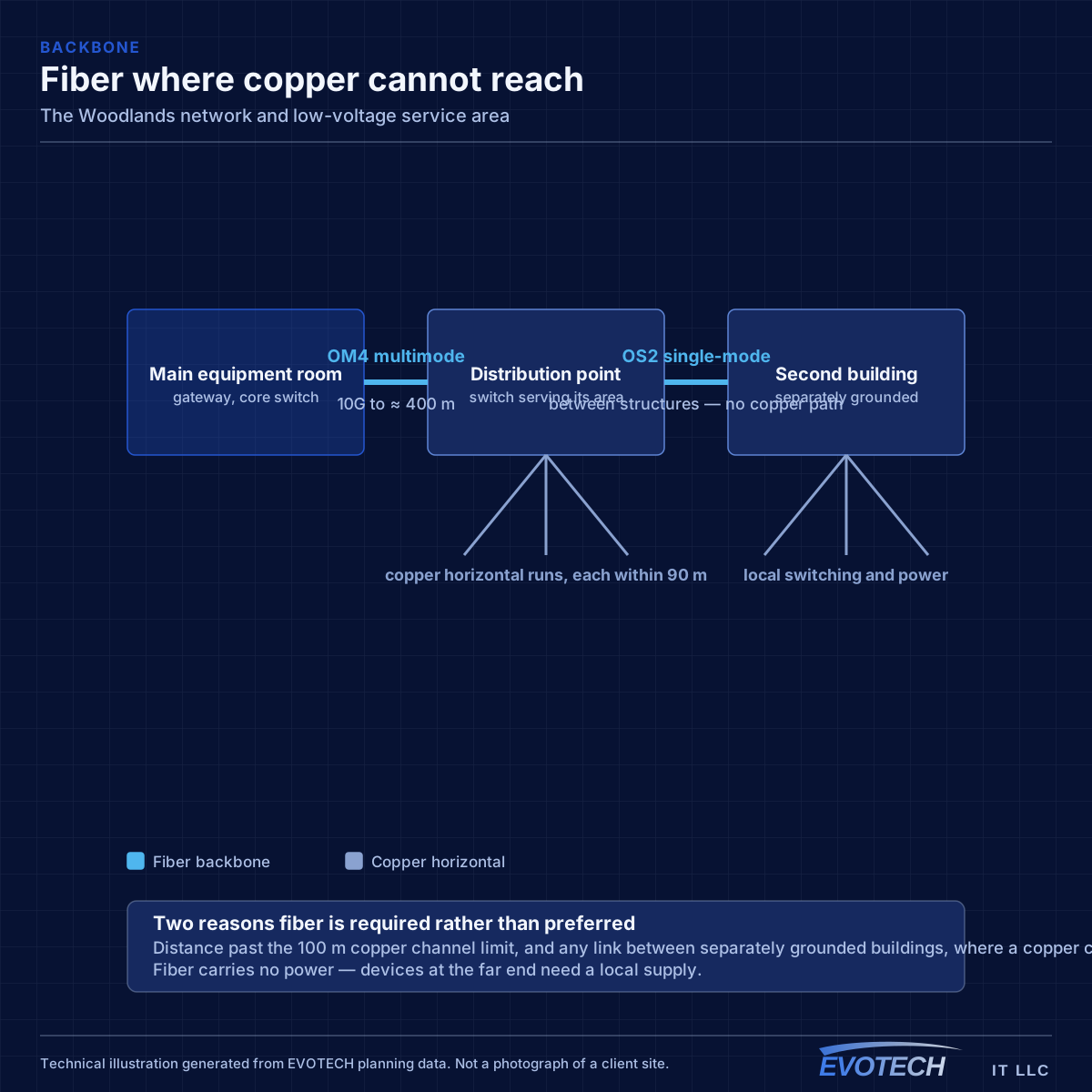
- Buried or conduit routes to outbuildings rather than aerial through trees
- Surge protection on any run between separate structures
- Exterior equipment rated for humidity and driven rain
- Commercial work scheduled around meeting-room availability
- Base-building rules confirmed for leased office space
Explore everything in this section
All 39 pages under The Woodlands office and residential low-voltage work.
- Access-control installation for The Woodlands properties
- Business phone & VoIP for The Woodlands properties
- Cat6 cabling for The Woodlands properties
- Cat6A cabling for The Woodlands properties
- Commercial IT solutions for The Woodlands properties
- Conference-room AV for The Woodlands properties
- Data-jack installation for The Woodlands properties
- Digital signage for The Woodlands properties
- Ethernet installation for The Woodlands properties
- Fiber-optic cabling for The Woodlands properties
- Fireplace TV mounting for The Woodlands properties
- Floodlight camera installation for The Woodlands properties
- Gate & license-plate cameras for The Woodlands properties
- Home theater installation in The Woodlands
- In-wall cable concealment for The Woodlands properties
- Intercom installation for The Woodlands properties
- Low-voltage installation for The Woodlands properties
- Network cabling for The Woodlands properties
- Network troubleshooting for The Woodlands properties
- Network-rack installation for The Woodlands properties
- NVR installation for The Woodlands properties
- Outdoor & patio speakers for The Woodlands properties
- Outdoor TV installation for The Woodlands properties
- Paging & PA systems for The Woodlands properties
- PoE camera installation for The Woodlands properties
- Projector & screen installation for The Woodlands properties
- Residential Wi-Fi for The Woodlands properties
- Samsung Frame TV installation in The Woodlands
- Security-camera installation for The Woodlands properties
- Smart home & smart locks for The Woodlands properties
- Soundbar mounting for The Woodlands properties
- The Woodlands office Wi-Fi built for meeting-room load
- TV mounting for The Woodlands properties
- Ubiquiti UniFi installation for The Woodlands properties
- Video wall installation for The Woodlands properties
- Video-doorbell installation for The Woodlands properties
- Whole-home & multi-zone audio for The Woodlands properties
- Wi-Fi installation for The Woodlands properties
- Wireless bridge (point-to-point) for The Woodlands properties
Popular services nearby
Frequently searched near this area — the pages people look for most.
Frequently asked questions
Can a detached workshop be covered by extending house Wi-Fi?
Rarely well, particularly with mature trees in between. Foliage attenuates signal and the attenuation changes with the season and with wind. A cable to the structure — buried or in conduit — gives a predictable result, and where the two structures are separately grounded, fiber removes the electrical risk that a copper run would introduce.
Why do exterior cameras here record so many empty events?
Vegetation movement. Trees and shrubs in the frame trigger motion detection every time the wind blows, and the result is either a full disk or alerts that everyone learns to ignore. Framing to keep moving vegetation out of the scene, and tuning detection zones around what remains, is what makes the events meaningful again.
What is different about office projects in this area?
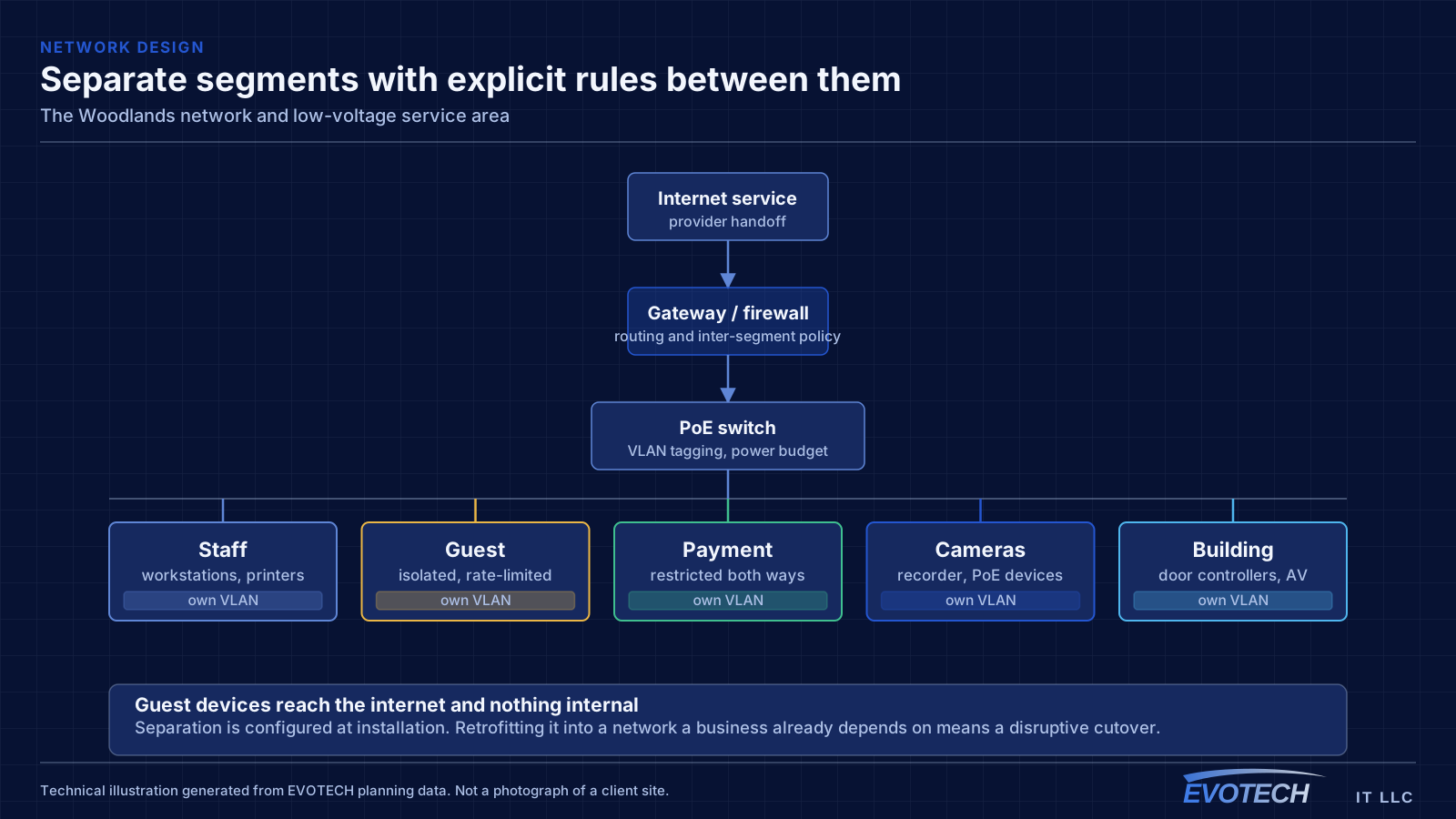
Meeting-room density. These are offices with a lot of conference space, and each busy room concentrates a dozen devices and a video call into a single wireless cell. That is a capacity requirement, and it will not appear in a survey that only measures signal coverage across an empty floor.


