

Why this page exists
Network cabling in The Woodlands is scoped around the same physical realities EVOTECH weighs everywhere — but read through The Woodlands's specific conditions: mature tree cover on many residential lots, attenuating outdoor wireless signal and generating constant motion in camera scenes. This page pairs what the service actually involves with what the The Woodlands market changes about it.
Network cabling is the permanent copper and fiber pathway between a building's equipment room and every device location. Done properly it is a structured system — horizontal runs from a patch panel out to labeled outlets, each one under the 90-metre permanent-link limit, each one tested and documented. Done casually it is a bundle of unlabeled patch cords stapled to a joist, and every future change costs someone an afternoon of tracing.
What network cabling usually involves
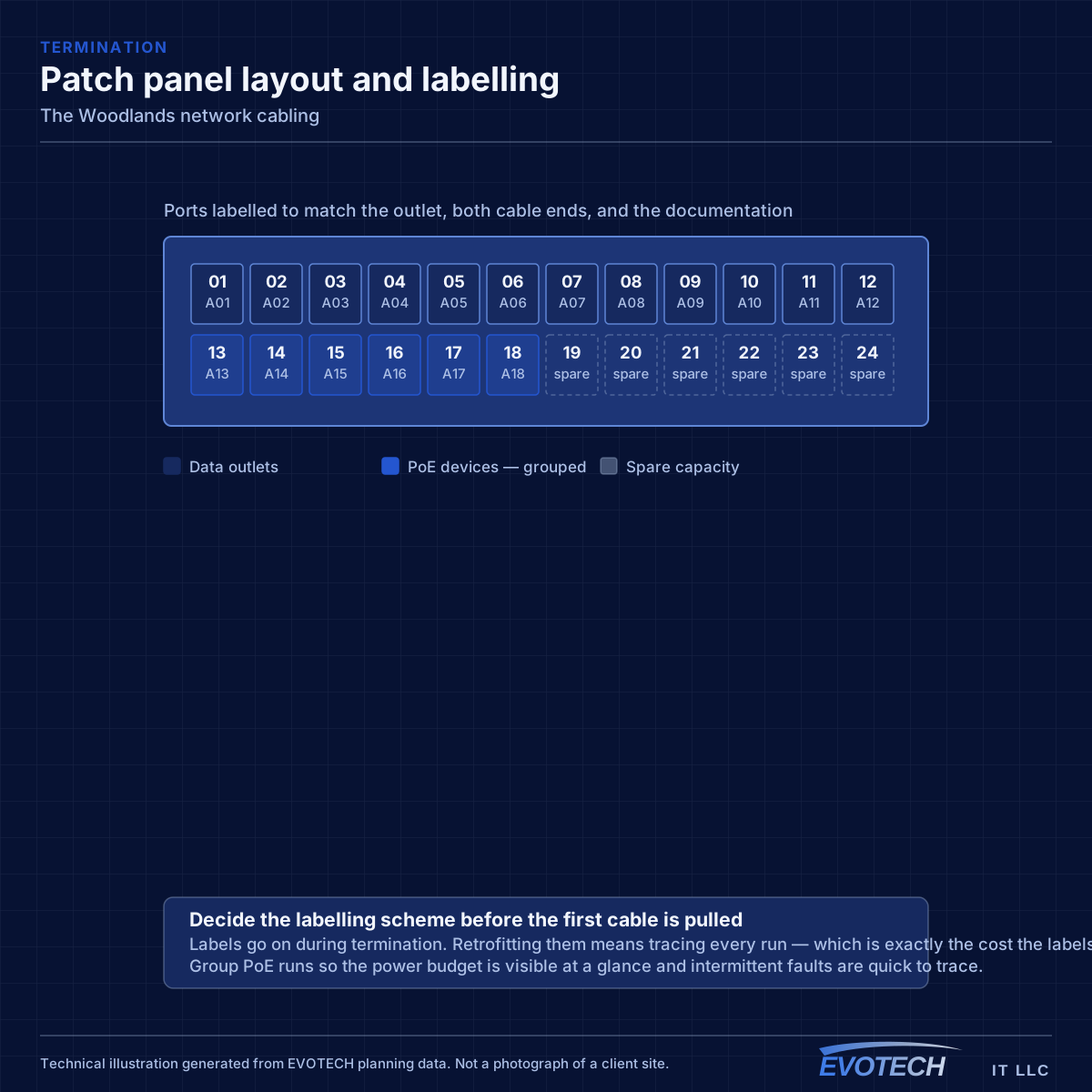
Most cabling complaints are not really about speed. They are about traceability and change cost. When nobody can tell which jack feeds which port, a five-minute move becomes a two-hour investigation, and the temptation is to run one more cable rather than fix the underlying mess.
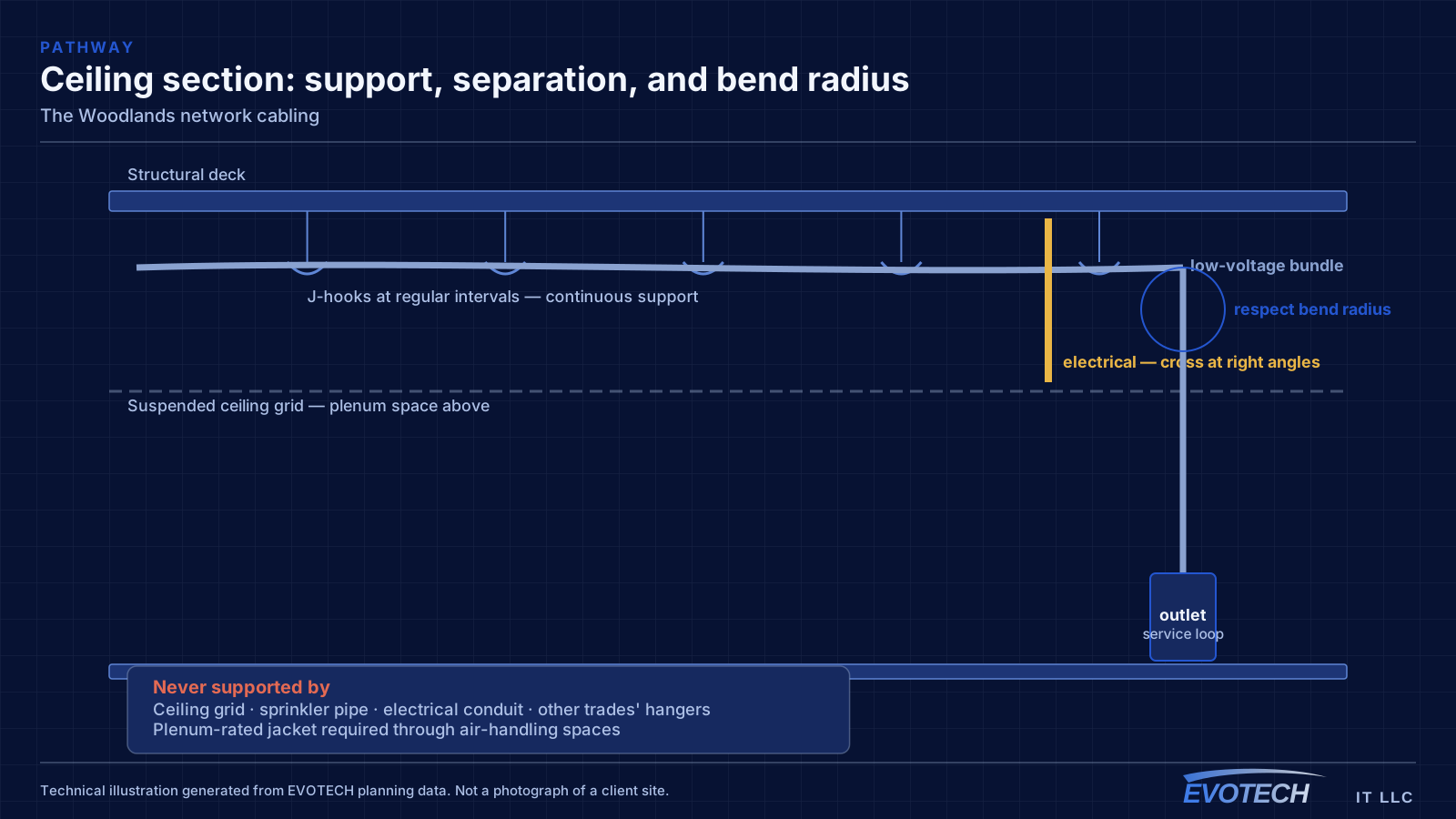
The second cluster of problems is physical: runs that exceed distance limits, cable that has been kinked or over-tensioned during the pull, terminations that violate the pair twist, and shared pathways with electrical conduit that inject noise the switch then has to correct for.
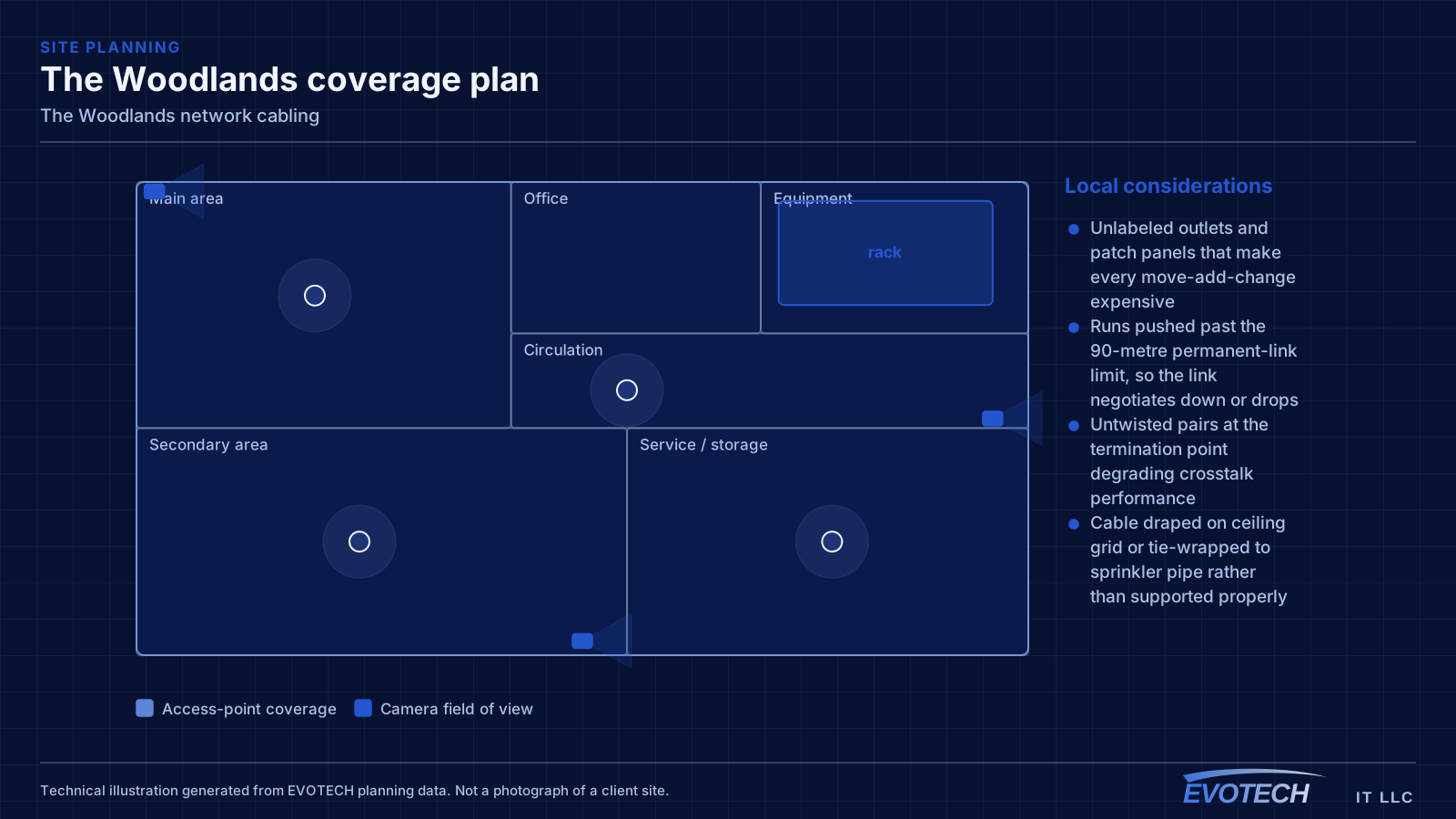
- Unlabeled outlets and patch panels that make every move-add-change expensive
- Runs pushed past the 90-metre permanent-link limit, so the link negotiates down or drops
- Untwisted pairs at the termination point degrading crosstalk performance
- Cable draped on ceiling grid or tie-wrapped to sprinkler pipe rather than supported properly
- No spare capacity, so every new device triggers a new pull
The Woodlands property conditions that change the plan
Office space here tends toward newer construction with accessible ceilings and reasonable existing pathway, which makes the physical work straightforward. What is less straightforward is capacity: these are offices with a lot of meeting rooms, and meeting rooms concentrate demand into single cells in a way that a coverage-based design will not anticipate.
Residential lots are often larger and heavily wooded, with detached garages, workshops, and pool structures that sit well beyond where house wireless can usefully reach. Those need their own cable or a deliberately designed link rather than an attempt to push coverage outward.
Foliage attenuates wireless signal, and unlike a wall it changes with season and moves constantly in wind. A link between a house and a detached workshop that works in winter can degrade noticeably once the canopy fills in. Where a wireless link is genuinely the only option, that seasonal variation is worth planning for rather than discovering.
- Newer commercial construction with accessible ceilings and existing pathway
- High meeting-room density concentrating wireless demand
- Larger residential lots with detached structures
- Mature tree cover between the house and outbuildings
- Outdoor amenity areas — patios, pool decks — needing rated equipment
- Cable to detached structures preferred over a wireless link through canopy
- Seasonal foliage variation accounted for where a wireless link is unavoidable
- Camera framing that excludes moving vegetation from the scene
- Detection zones tuned so wind does not generate constant events
- Meeting-room capacity planned explicitly on the commercial side
Getting network cabling done in The Woodlands
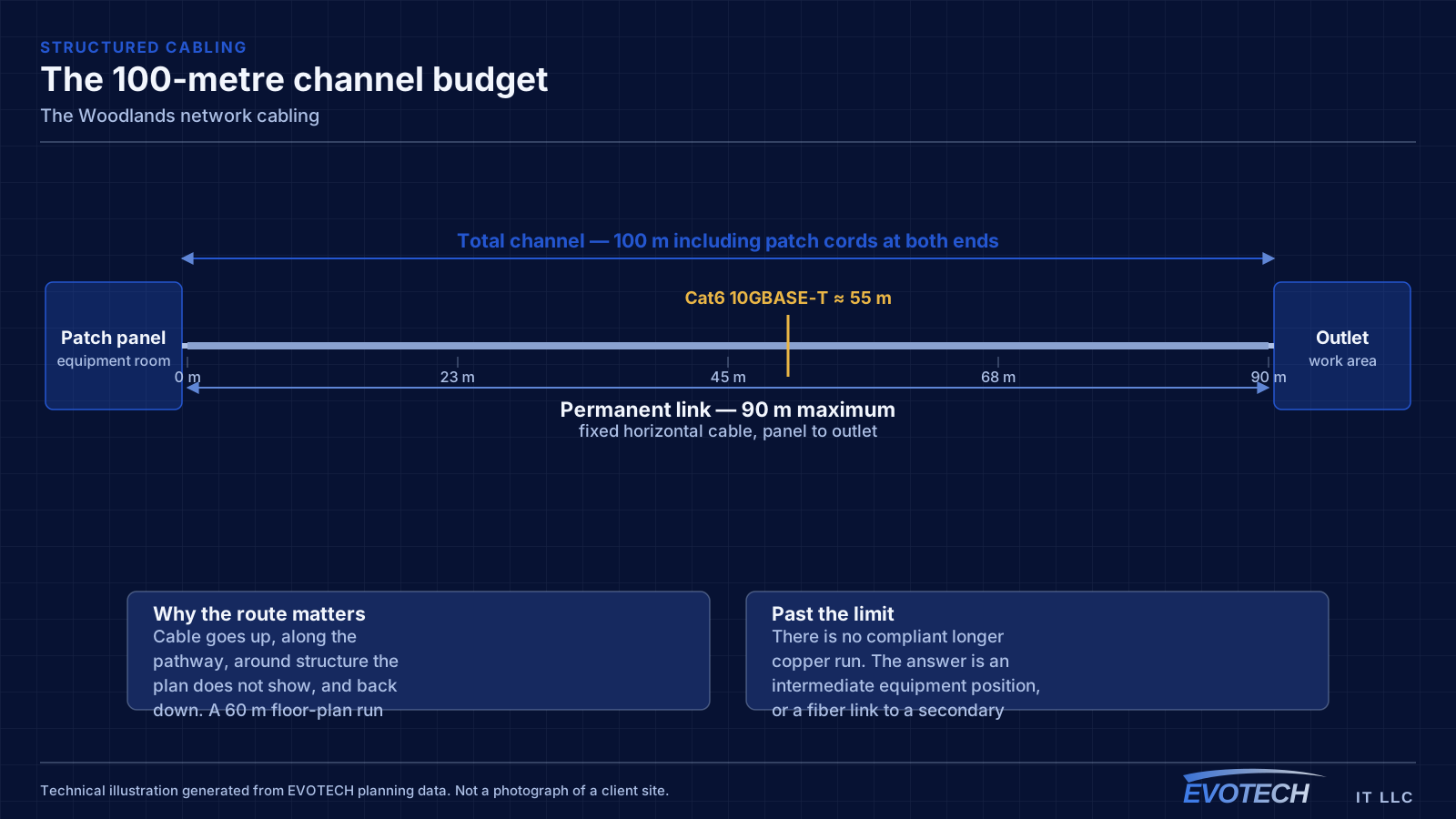
The governing number is the 90-metre permanent link: the fixed cable from patch panel to outlet. Adding patch cords at both ends brings the total channel to 100 metres. That budget disappears faster than people expect once the cable goes up into the ceiling, across the building, down a wall, and back. A run that measures 70 metres on a floor plan can easily land at 95 metres in reality.
Runs to detached structures on wooded lots are usually the most involved part of a residential project here — the route matters, and burial or conduit is generally preferable to anything aerial through trees. That is a planning conversation rather than an afternoon's work.
- Buried or conduit routes to outbuildings rather than aerial through trees
- Surge protection on any run between separate structures
- Exterior equipment rated for humidity and driven rain
- Commercial work scheduled around meeting-room availability
- Base-building rules confirmed for leased office space
Popular services nearby
Frequently searched near this area — the pages people look for most.
Frequently asked questions
Does EVOTECH have an office in The Woodlands?
No. This is a service-area page: EVOTECH serves The Woodlands without claiming a physical office there. The wording stays as coverage, not a location claim.
How long can a single network cable run be?
The fixed cable between patch panel and outlet is limited to 90 metres, with patch cords at each end bringing the total channel to 100 metres. Beyond that, the answer is not a longer cable — it is either an intermediate equipment location or a fiber link to a secondary switch.
Can a detached workshop be covered by extending house Wi-Fi?
Rarely well, particularly with mature trees in between. Foliage attenuates signal and the attenuation changes with the season and with wind. A cable to the structure — buried or in conduit — gives a predictable result, and where the two structures are separately grounded, fiber removes the electrical risk that a copper run would introduce.