The short version
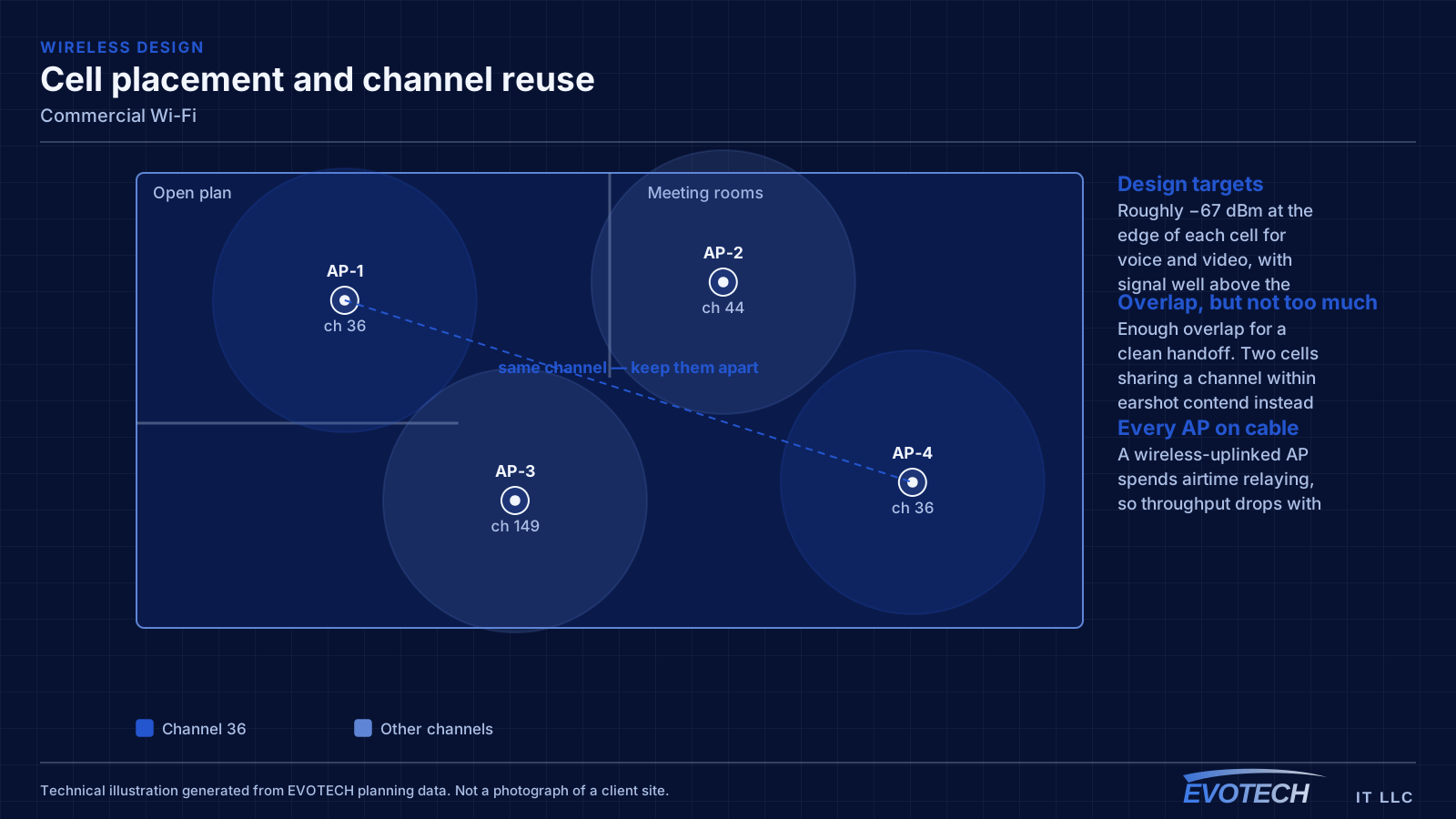
In a business space the binding constraint is usually capacity, not coverage. A twelve-person conference room with laptops, phones, a display system, and a room controller can put more demand into one cell than an entire floor of scattered desks. Design starts by counting devices per area and what those devices are doing, then works out how many access points and how much spectrum that area needs.
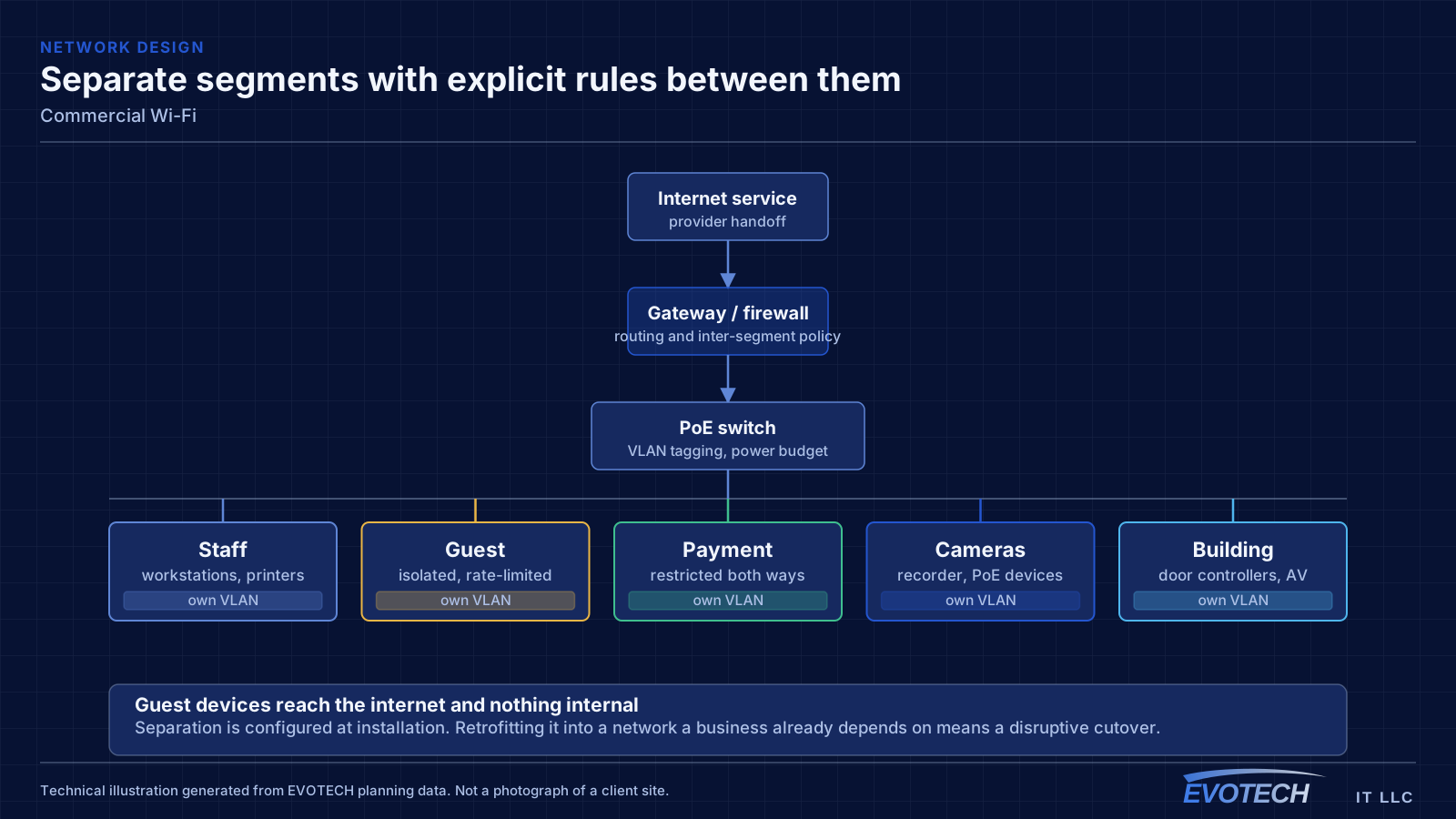
The second thing commercial wireless has to solve, which home networks do not, is separation. Guest devices, staff devices, point-of-sale terminals, cameras, and building systems have no business sharing one flat network. Keeping them apart limits what a compromised device can reach and makes troubleshooting far simpler.
What tends to go wrong
The characteristic commercial failure is the meeting room that fails at the worst moment. Everyone joins the same call from the same cell, the shared channel saturates, and the video degrades for the whole room. This is a capacity design issue that a coverage-only survey will never surface.
The second is guest traffic with no boundary. An open network that reaches the same address space as the point-of-sale system or the camera recorder is a real exposure, and it is also a support problem, because guest usage then competes directly with business systems for bandwidth.
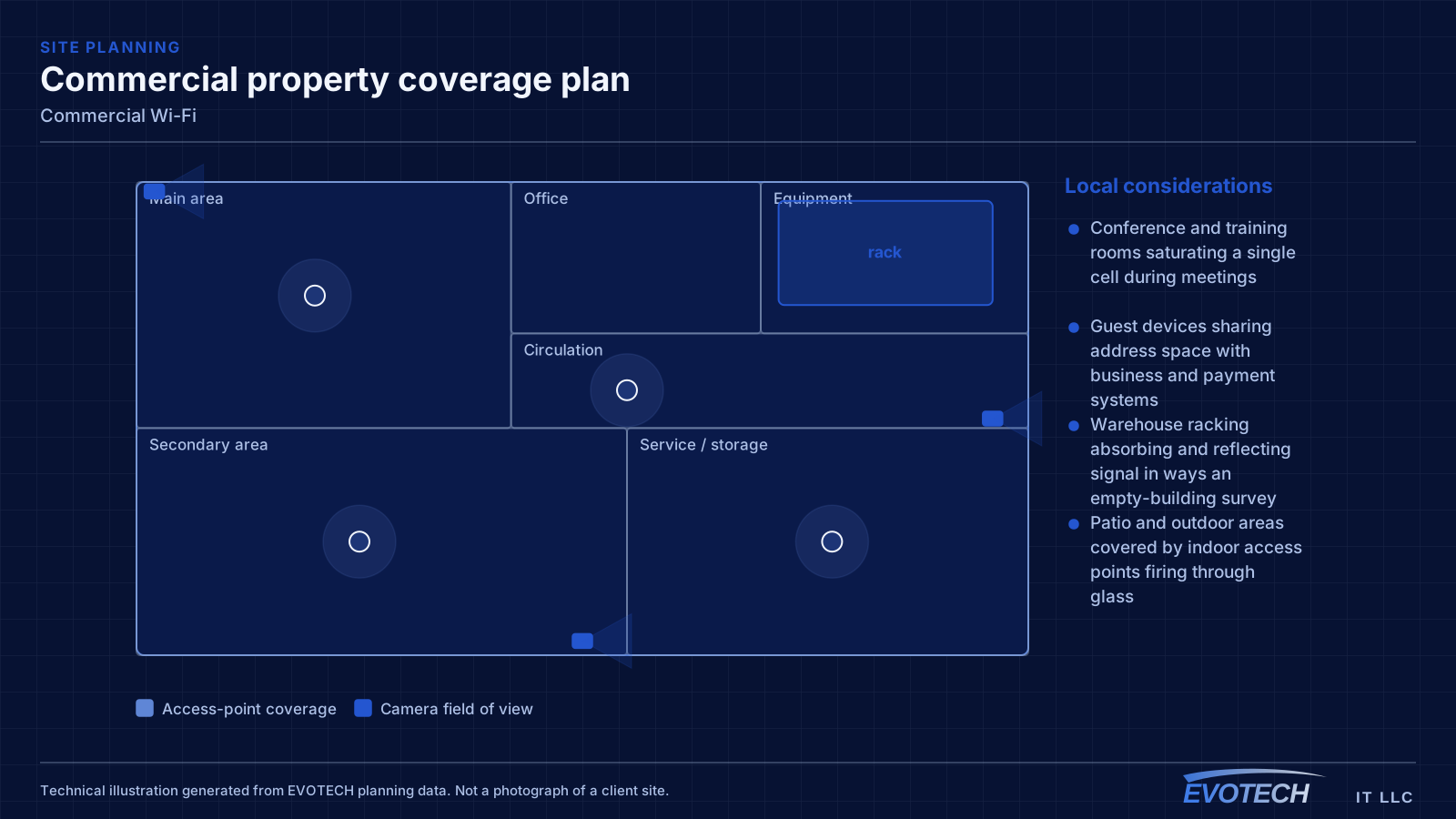
- Conference and training rooms saturating a single cell during meetings
- Guest devices sharing address space with business and payment systems
- Warehouse racking absorbing and reflecting signal in ways an empty-building survey missed
- Patio and outdoor areas covered by indoor access points firing through glass
- Neighbouring tenants' networks occupying the same channels
- Access points added ad hoc without revisiting the channel plan
Capacity per area, segmentation, and what warehouses do to signal
Capacity planning works from the airtime side. Every device on a channel takes turns; a slower device holds the channel longer for the same amount of data. That is why one legacy device on 2.4 GHz can visibly slow a cell, and why moving capable clients to higher bands and to narrower, more numerous channels usually helps more than adding hardware.
Segmentation is done with separate networks mapped to separate VLANs: staff, guest, payment or point-of-sale, cameras and building systems. Guest access is isolated so guest devices cannot reach each other or the internal network, and is generally rate-limited so it cannot consume the whole circuit. This is ordinary practice, and it is far easier to build in at installation than to retrofit.
Warehouses deserve their own note. Metal racking, stacked inventory, and high ceilings make signal behave very differently from an office. Coverage measured in an empty warehouse can disappear once the racks are full. Aisle-by-aisle coverage, mounting height chosen deliberately rather than defaulting to the roof deck, and sometimes directional antennas are what make these spaces work.
- Plan capacity by devices per area and their airtime demand, not by square footage
- Separate staff, guest, payment, and building-system traffic onto distinct networks
- Isolate guest clients from each other and from internal systems, with rate limits
- Survey warehouses under realistic stock conditions, not empty
- Choose AP mounting height deliberately in high-ceiling spaces
Who this work is for
The environments differ enough that the designs barely resemble each other.
- Professional offices with conference rooms, hot desks, and wireless printing
- Retail floors with point-of-sale, inventory scanners, and customer guest access
- Restaurants covering dining rooms, patios, kitchens, and back office
- Warehouses needing coverage down racking aisles and across open floor
- Multi-tenant suites where neighbouring networks compete for the same spectrum
How the work runs
Commercial projects justify a more formal sequence because the cost of getting it wrong is operational.
- Inventory areas, device counts, and what each area must support
- Survey the space, including neighbouring network activity and interference
- Design coverage and capacity together, with cable reachability confirmed
- Define the network segmentation plan before installation
- Install with wired backhaul and mounting appropriate to the ceiling type
- Configure channels, power, and per-network policy deliberately
- Validate by walking the space and testing in the busiest areas at a realistic time of day
What changes the scope
Commercial scope moves with density and construction more than with area.
- Peak simultaneous device count per area
- Ceiling height and mounting method, including lift requirements
- Construction: demountable partitions, masonry, tile, metal stud, glass
- Whether outdoor areas such as patios or yards need coverage
- Number of separate networks and the switching required to support them
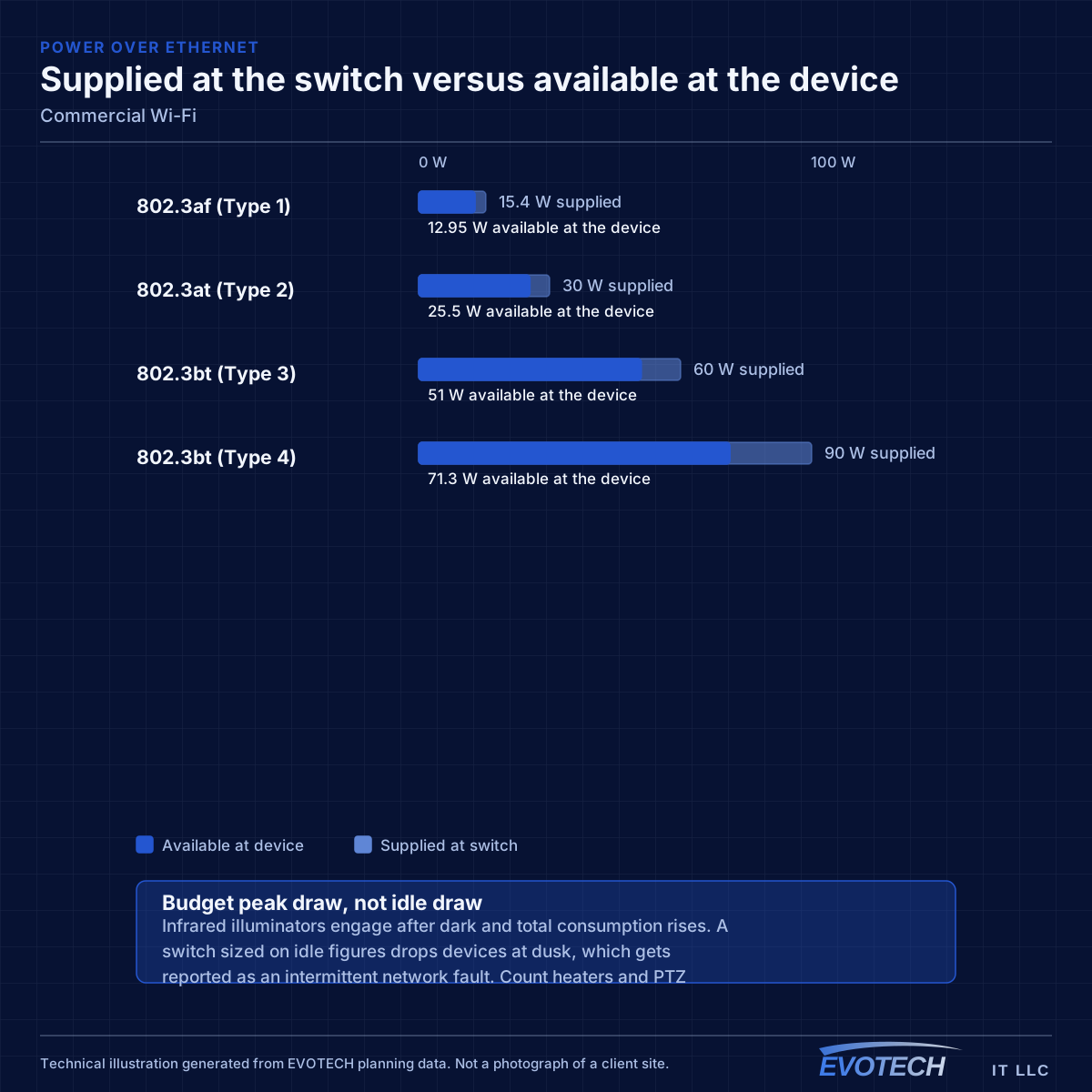
- Existing switch PoE budget and available ports
- Whether installation must happen outside operating hours
Testing and verification
Commercial validation happens under load, because an empty office at eight in the morning tells you almost nothing about a full one at eleven.
- Coverage and noise measured at working positions in every area
- Capacity test in the densest area during a realistic busy period
- Roaming validated along the paths people actually walk
- Network separation verified by attempting cross-network access
- Guest rate limiting confirmed
- Uplink and internet circuit measured so wireless is not blamed for a wired limit
Common mistakes
Commercial deployments fail in recognisable ways.
- Designing for coverage and discovering the capacity problem in the first all-hands meeting
- Running one flat network for staff, guests, payments, and cameras
- Surveying a warehouse before the racking is stocked
- Mounting access points above ceiling tiles for appearance
- Sizing the switch for today's AP count with no PoE headroom
- Leaving channel and power selection entirely automatic in a dense multi-tenant building
What drives the cost
The variables that move a commercial wireless quote most are ceiling access and density.
- Access-point count driven by capacity requirements
- Cable run difficulty, particularly in hard-lid or high-ceiling areas
- Lift or scaffold requirements for high mounting positions
- Switching capacity and PoE budget
- Number of segmented networks and associated configuration
- Survey depth and whether a post-installation validation survey is included
- After-hours work windows in operating businesses
Honest limitations
These are the boundaries of what this service can do, stated up front rather than discovered later.
- Wireless capacity is bounded by available spectrum; beyond a point the answer is more cable and more cells, not more power.
- Coverage predictions made from a floor plan need validating on site, particularly in warehouses and masonry buildings.
- Neighbouring tenants' networks cannot be controlled, only planned around.
- Improving wireless does not increase the internet circuit's capacity, and a saturated circuit will still look like a Wi-Fi problem to users.
Frequently asked questions
How many access points does a business space need?
It comes out of density rather than area. A quiet office floor might be covered by a handful of access points; a conference-heavy floor with the same square footage might need more, concentrated where people gather. The count is an output of counting devices per area and understanding what they do — which is why a walkthrough beats a per-square-foot rule.
Should guest Wi-Fi be on a separate network?
Yes, and separate means more than a different name. Guests belong on their own network segment, isolated from internal systems and from each other, usually with a bandwidth limit so guest use cannot consume the whole circuit. This is straightforward to configure at installation and awkward to retrofit later.
Why does the warehouse have dead spots that were not there before?
Almost always stock. Metal racking and full pallets absorb and reflect signal in ways an empty building does not, so coverage measured before the shelves were loaded no longer applies. Warehouse designs should assume realistic stock levels and generally place access points to cover along aisles rather than firing across them.
Can existing access points be reused?
Often, if they support the bands and features the design needs and there are enough of them in the right places. What usually needs to change is the plan around them: placement, channels, power, and backhaul. Reusing hardware in the same positions with the same settings tends to reproduce the same complaints.