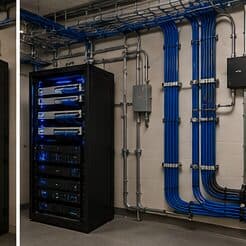
Density in bursts, across a campus
A classroom with thirty students on devices is one of the densest wireless environments in any building type, and it happens simultaneously in every classroom on a bell schedule. That is a capacity problem of a specific shape: predictable, synchronised, and concentrated.
The campus dimension compounds it. Multiple buildings, outdoor circulation, portable classrooms, gymnasiums, and administrative areas each need coverage, and the distances involved usually exceed what copper alone can serve from one position.
- Classroom device density peaking simultaneously across the campus
- Multiple buildings and outdoor areas requiring distributed infrastructure
- Portable and temporary classrooms with their own connectivity needs
- Entry control and visitor management as standing requirements
Per-classroom capacity and controlled entry
Two priorities dominate: enough wireless capacity in each classroom to serve a full class simultaneously, and controlled entry at the points where people come into the campus.
Both benefit from being designed at a campus level rather than building by building, because the addressing, segmentation, and management overhead of a piecemeal approach grows quickly.
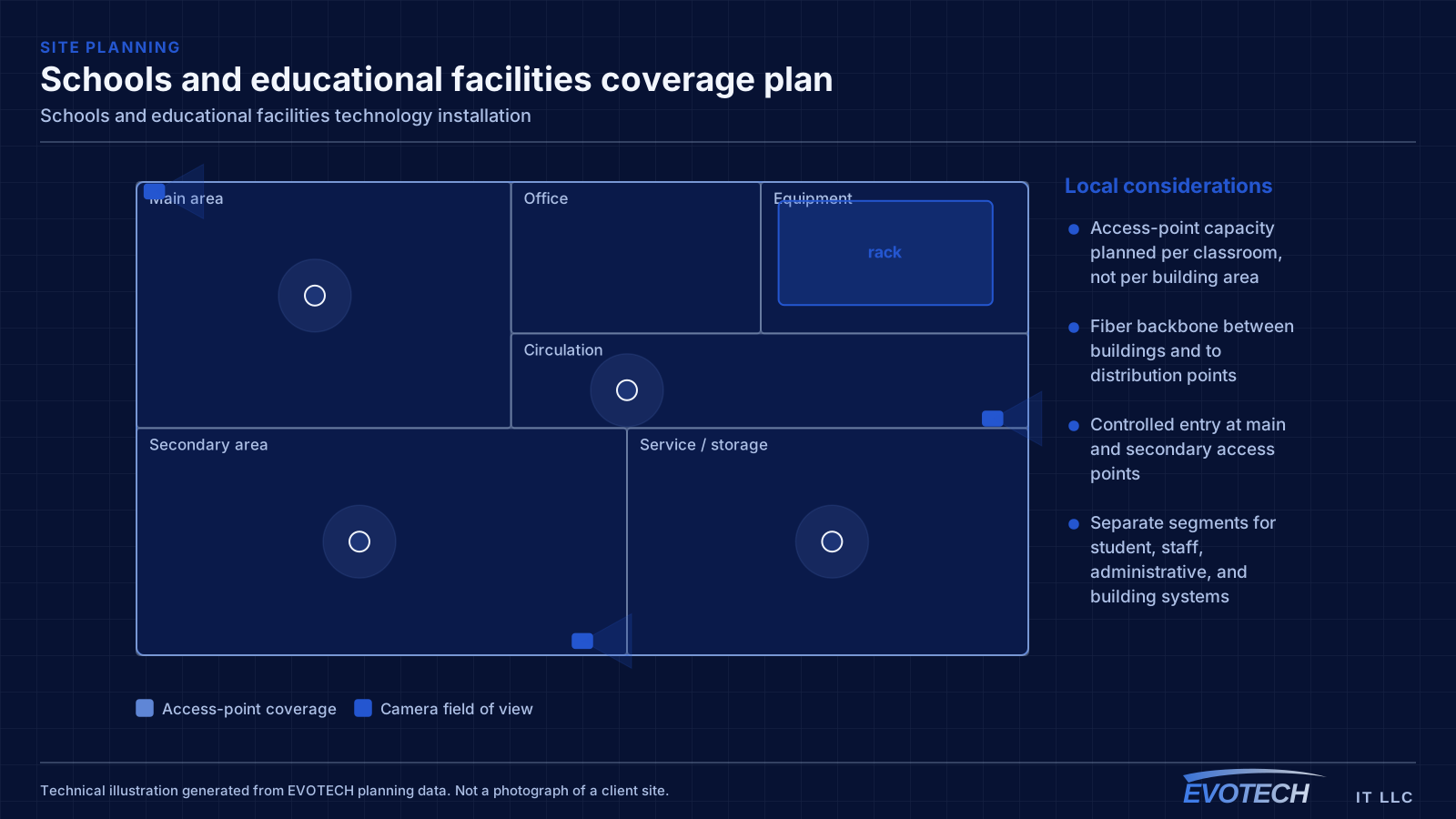
- Access-point capacity planned per classroom, not per building area
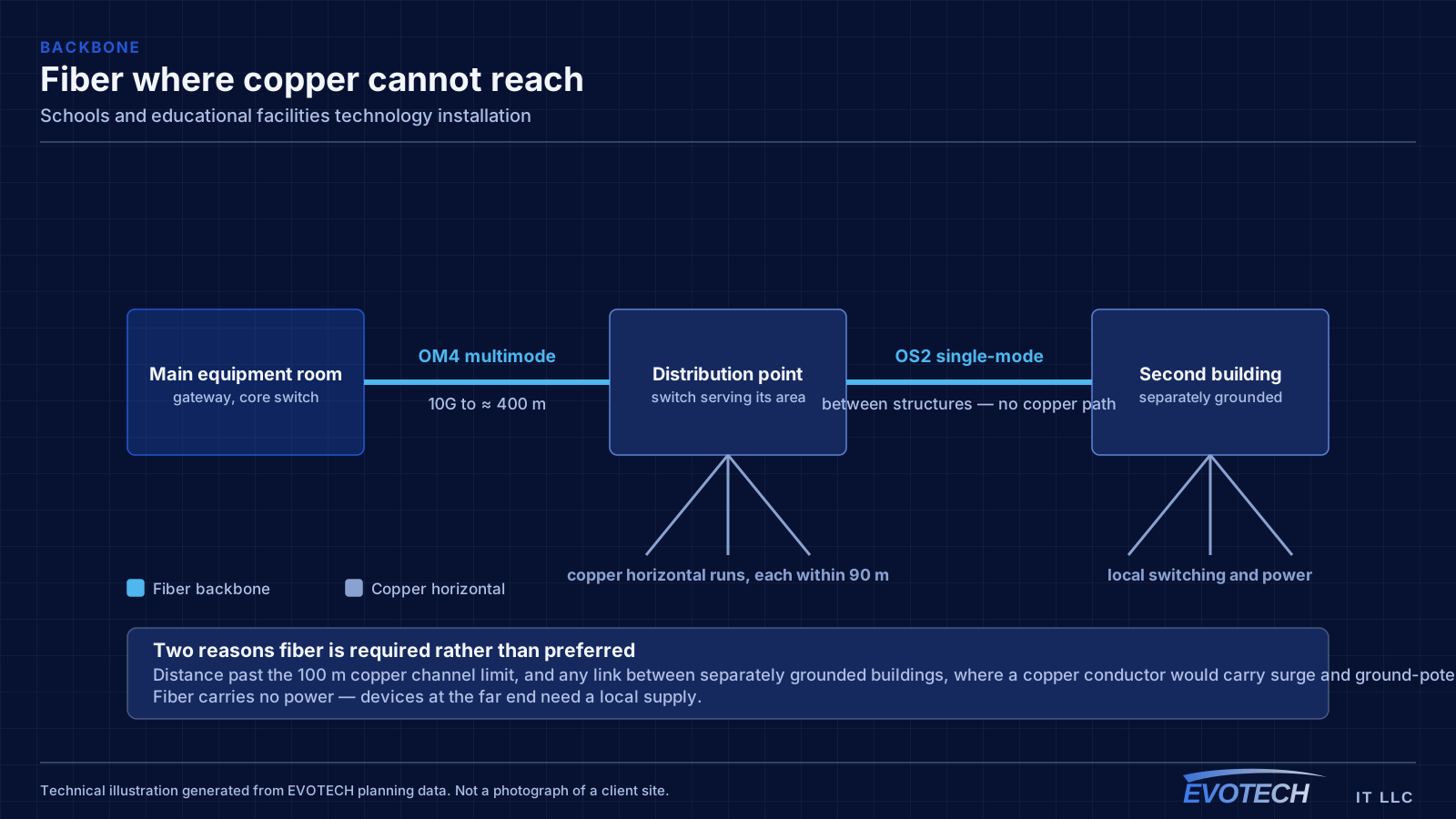
- Fiber backbone between buildings and to distribution points
- Controlled entry at main and secondary access points
- Separate segments for student, staff, administrative, and building systems
- Coverage extended to gymnasiums, libraries, and outdoor gathering areas
Classroom capacity and campus topology
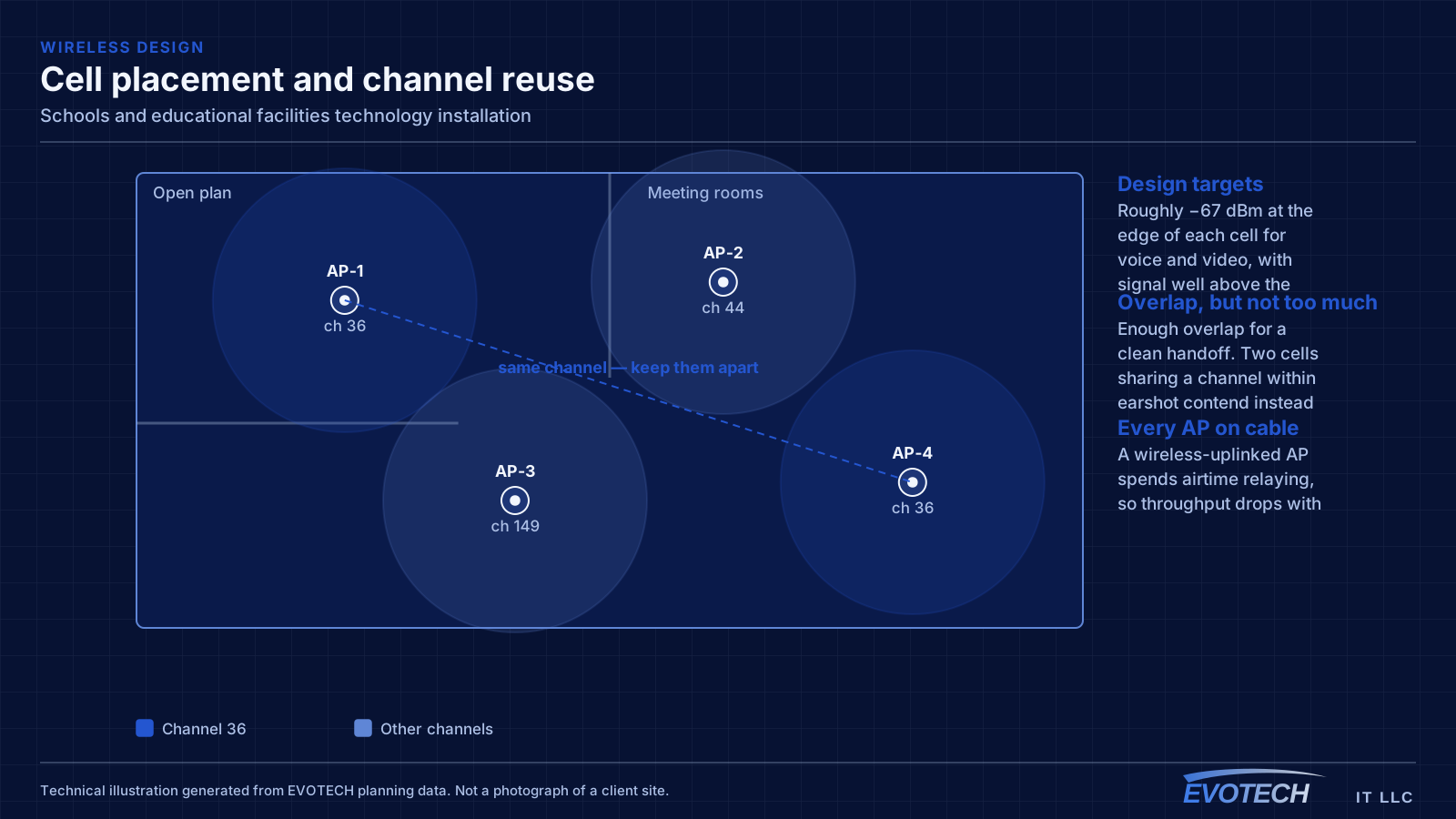
Classroom wireless is a capacity design. A single access point serving a full class of devices needs adequate spectrum, and neighbouring classrooms on the same channel will contend with each other through the wall. That makes the channel plan across a corridor of classrooms as important as the access-point count — a plan that ignores the neighbours produces a corridor where every room is slow.
Campus topology follows standard structured-cabling practice at a larger scale: a main equipment position, fiber to distribution points in each building or wing, and copper from those points out to classrooms within the distance limit. Between-building links are fiber for both distance and electrical isolation.
Segmentation separates student devices, staff devices, administrative systems, and building systems such as cameras and door controllers. Student access is typically the most restricted and the most heavily used, and separating it means student traffic cannot affect administrative systems.
- Capacity designed per classroom with a corridor-wide channel plan
- Fiber backbone between buildings and to per-building distribution
- Student, staff, administrative, and building-system segments
- Coverage for gymnasiums, libraries, cafeterias, and outdoor areas
- Portable classroom connectivity planned rather than improvised
Entry control and perimeter coverage
Camera coverage on a school campus concentrates on entrances, circulation between buildings, parking and drop-off areas, and the perimeter. Corridors are common; classrooms are not, and that boundary is agreed at design.
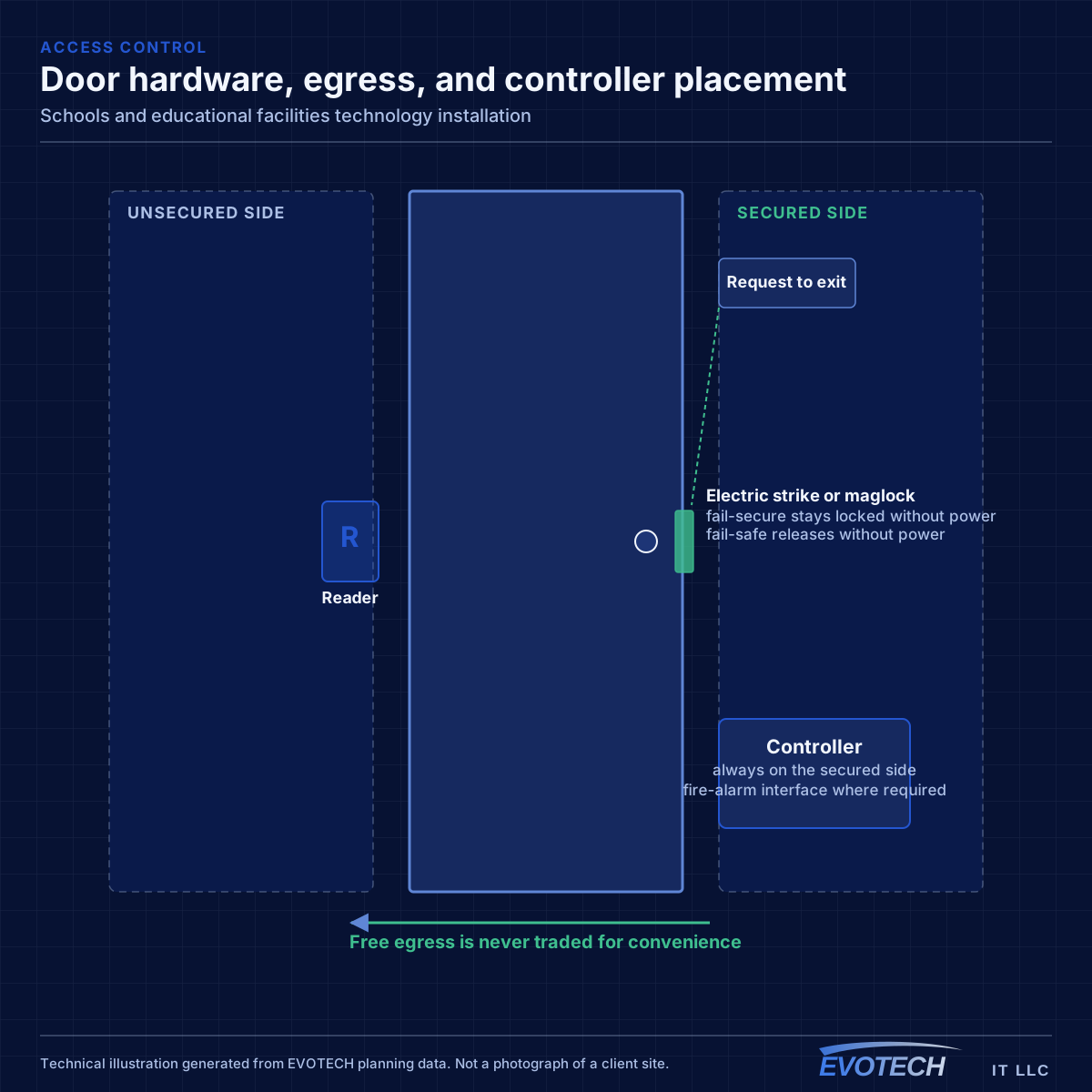
Entry control is typically the higher priority. Controlled main entry with a visitor process, secondary doors that are secured but permit free egress, and records of who entered when address the requirement more directly than camera coverage does. Free egress on every controlled door is non-negotiable and is designed in from the start.
- Main and secondary entrances with controlled access and free egress
- Circulation routes between buildings
- Parking, drop-off, and perimeter coverage
- Corridor coverage where required; classrooms excluded
- Entry records available to administration
The academic calendar sets the schedule
Substantial infrastructure work happens during breaks. That concentrates a lot of activity into a short window and makes preparation disproportionately important — materials on site, pathways confirmed, and decisions made before the window opens, because there is no extending it.
Work during term time is possible but constrained: classroom access has to fit around teaching, and any work in occupied areas requires appropriate coordination with the school's own procedures for contractors on site.
- Major work concentrated into scheduled breaks
- Preparation completed before the window opens, since it cannot be extended
- Term-time work coordinated around teaching schedules
- Contractor procedures and site access governed by school policy
- Phased approaches common where budgets follow academic years
Explore everything in this section
All 81 pages under School networks, classroom coverage, and campus low voltage.
- Access-control installation for schools and educational facilities
- Business phone & VoIP for schools and educational facilities
- Cat6 cabling for schools and educational facilities
- Cat6A cabling for schools and educational facilities
- Commercial IT solutions for schools and educational facilities
- Commercial Wi-Fi for schools and educational facilities
- Conference-room AV for schools and educational facilities
- Data-jack installation for schools and educational facilities
- Digital signage for schools and educational facilities
- Ethernet installation for schools and educational facilities
- Fiber-optic cabling for schools and educational facilities
- Floodlight camera installation for schools and educational facilities
- Gate & license-plate cameras for schools and educational facilities
- In-wall cable concealment for schools and educational facilities
- Intercom installation for schools and educational facilities
- Low-voltage installation for schools and educational facilities
- Network cabling for schools and educational facilities
- Network troubleshooting for schools and educational facilities
- Network-rack installation for schools and educational facilities
- NVR installation for schools and educational facilities
- Outdoor & patio speakers for schools and educational facilities
- Paging & PA systems for schools and educational facilities
- PoE camera installation for schools and educational facilities
- Projector & screen installation for schools and educational facilities
- Security-camera installation for schools and educational facilities
- Soundbar mounting for schools and educational facilities
- Technology for schools and educational facilities in Atascocita and Eagle Springs
- Technology for schools and educational facilities in Bellaire
- Technology for schools and educational facilities in Brookshire
- Technology for schools and educational facilities in Cinco Ranch and Seven Meadows
- Technology for schools and educational facilities in Conroe
- Technology for schools and educational facilities in EaDo (East Downtown)
- Technology for schools and educational facilities in east Kingwood
- Technology for schools and educational facilities in First Colony and Riverstone
- Technology for schools and educational facilities in Friendswood
- Technology for schools and educational facilities in Fulshear
- Technology for schools and educational facilities in Kingwood
- Technology for schools and educational facilities in Memorial and Bunker Hill
- Technology for schools and educational facilities in Midtown and the Museum District
- Technology for schools and educational facilities in Missouri City
- Technology for schools and educational facilities in Montrose
- Technology for schools and educational facilities in Oak Forest and Garden Oaks
- Technology for schools and educational facilities in Old Katy and Cane Island
- Technology for schools and educational facilities in Rice Military and Washington Avenue
- Technology for schools and educational facilities in Richmond
- Technology for schools and educational facilities in River Oaks
- Technology for schools and educational facilities in Rosenberg
- Technology for schools and educational facilities in Sharpstown
- Technology for schools and educational facilities in south Kingwood
- Technology for schools and educational facilities in Spring
- Technology for schools and educational facilities in Spring Branch
- Technology for schools and educational facilities in Stafford
- Technology for schools and educational facilities in Sugar Land
- Technology for schools and educational facilities in the 77338 Humble area
- Technology for schools and educational facilities in the 77449 Katy area
- Technology for schools and educational facilities in the 77469 Richmond area
- Technology for schools and educational facilities in the 77573 League City area
- Technology for schools and educational facilities in the Aliana and Harvest Green area
- Technology for schools and educational facilities in the Champions area
- Technology for schools and educational facilities in the Coles Crossing area of Cypress
- Technology for schools and educational facilities in the Galleria and Uptown
- Technology for schools and educational facilities in the Grand Central Park area of Conroe
- Technology for schools and educational facilities in the Imperial Oaks area
- Technology for schools and educational facilities in the Kelliwood and Nottingham Country area
- Technology for schools and educational facilities in the Lake Conroe side of Conroe
- Technology for schools and educational facilities in the Panther Creek and Cochran's Crossing villages
- Technology for schools and educational facilities in the Pecan Grove and west Richmond area
- Technology for schools and educational facilities in the Rose Hill and Tomball area
- Technology for schools and educational facilities in the Spring Valley area
- Technology for schools and educational facilities in the Sterling Ridge and Alden Bridge villages
- Technology for schools and educational facilities in the Westchase District
- Technology for schools and educational facilities in The Woodlands
- Technology for schools and educational facilities in Tomball
- Technology for schools and educational facilities in Upper Kirby
- Technology for schools and educational facilities in Webster
- Technology for schools and educational facilities in Woodland Heights and Near Northside
- TV mounting for schools and educational facilities
- Ubiquiti UniFi installation for schools and educational facilities
- Video wall installation for schools and educational facilities
- Wi-Fi installation for schools and educational facilities
- Wireless bridge (point-to-point) for schools and educational facilities
Frequently asked questions
How many access points does a classroom need?
It is a capacity question rather than a coverage one. A classroom with a full class on devices concentrates demand into one cell, and neighbouring classrooms on the same channel contend through the wall. That usually means one access point per classroom with a corridor-wide channel plan, rather than fewer access points at higher power.
Why is fiber needed between school buildings?
Distance and electrical isolation. Campus distances routinely exceed the 100-metre copper limit, and a copper run between separately grounded buildings creates a path for surge and ground-potential differences. Fiber addresses both, which is why it is standard for campus backbones.
When can this work realistically happen?
Substantial infrastructure work usually happens during scheduled breaks, which makes preparation critical — the window does not extend. Smaller work can happen during term time with coordination around teaching schedules and the school's contractor procedures.
Are classrooms covered by cameras?
Camera coverage is normally scoped to entrances, circulation areas, parking, and the perimeter, with corridors included where required. Classrooms are excluded, and that boundary is agreed explicitly during design rather than left open to interpretation.