Why this page exists
Technology for schools and educational facilities in the Spring Valley area sits where two things meet: how schools and educational facilities actually operate, and what the Spring Valley area specifically brings to the building. 77055 around Spring Valley is heavy teardown-and-rebuild territory, so a growing share of homes are new two-story custom builds with modern low-voltage rough-in.
A classroom with thirty students on devices is one of the densest wireless environments in any building type, and it happens simultaneously in every classroom on a bell schedule. That is a capacity problem of a specific shape: predictable, synchronised, and concentrated.
Density in bursts, across a campus
A classroom with thirty students on devices is one of the densest wireless environments in any building type, and it happens simultaneously in every classroom on a bell schedule. That is a capacity problem of a specific shape: predictable, synchronised, and concentrated.
The campus dimension compounds it. Multiple buildings, outdoor circulation, portable classrooms, gymnasiums, and administrative areas each need coverage, and the distances involved usually exceed what copper alone can serve from one position.
- Classroom device density peaking simultaneously across the campus
- Multiple buildings and outdoor areas requiring distributed infrastructure
- Portable and temporary classrooms with their own connectivity needs
- Entry control and visitor management as standing requirements
the Spring Valley area: what the location adds
77055 around Spring Valley is heavy teardown-and-rebuild territory, so a growing share of homes are new two-story custom builds with modern low-voltage rough-in. In the Spring Valley area, that is where the plan begins, because it changes cable paths, device placement, and access-point counts before anything else does. Remaining mid-century ranch homes are slab with accessible attics, a very different scope from the new construction next door. New custom builds are the ideal time for structured prewire, media rooms, and camera conduit before drywall. None of these are generic checklist items — each moves the design in a direction a citywide assumption would miss, and the honest recommendation always depends on what this particular property allows.
- 77055 around Spring Valley is heavy teardown-and-rebuild territory, so a growing share of homes are new two-story custom builds with modern low-voltage rough-in
- Remaining mid-century ranch homes are slab with accessible attics, a very different scope from the new construction next door
- New custom builds are the ideal time for structured prewire, media rooms, and camera conduit before drywall
- Larger established lots leave distance between the house, garage, and street for camera and gate runs
- Mature trees on the older lots shade exterior views and complicate rooftop wireless paths
Per-classroom capacity and controlled entry
Two priorities dominate: enough wireless capacity in each classroom to serve a full class simultaneously, and controlled entry at the points where people come into the campus.
Both benefit from being designed at a campus level rather than building by building, because the addressing, segmentation, and management overhead of a piecemeal approach grows quickly.
- Access-point capacity planned per classroom, not per building area
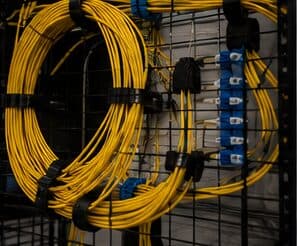
- Fiber backbone between buildings and to distribution points
- Controlled entry at main and secondary access points
- Separate segments for student, staff, administrative, and building systems
- Coverage extended to gymnasiums, libraries, and outdoor gathering areas
Installing in the Spring Valley area
Classroom wireless is a capacity design. A single access point serving a full class of devices needs adequate spectrum, and neighbouring classrooms on the same channel will contend with each other through the wall. That makes the channel plan across a corridor of classrooms as important as the access-point count — a plan that ignores the neighbours produces a corridor where every room is slow.
On site, the schedule and working method turn on conditions like these. Larger established lots leave distance between the house, garage, and street for camera and gate runs. Mature trees on the older lots shade exterior views and complicate rooftop wireless paths. Both shape how and when a crew can actually operate, which is why EVOTECH scopes each the Spring Valley area job from the property itself rather than assuming one approach fits every address. Coverage is stated as a service area, never an office claim, and anything about the Spring Valley area that cannot be verified is left out instead of invented.
Popular services nearby
Frequently searched near this area — the pages people look for most.
Frequently asked questions
What do schools and educational facilities in the Spring Valley area usually need first?
It varies by site, but the pattern for schools and educational facilities holds in the Spring Valley area: get the network and cabling backbone right, then layer cameras and access on top. What the Spring Valley area changes is the physical install — the conditions listed above drive routes and equipment placement more than the sector alone does.
How many access points does a classroom need?
It is a capacity question rather than a coverage one. A classroom with a full class on devices concentrates demand into one cell, and neighbouring classrooms on the same channel contend through the wall. That usually means one access point per classroom with a corridor-wide channel plan, rather than fewer access points at higher power.