The short version
An access-control system manages who may open which door and when, and records each attempt. The immediate operational benefit over keys is revocation: a lost credential is disabled in seconds instead of prompting a rekey. The secondary benefit is the audit record, which turns 'who was here on Saturday' into a query rather than a guess.
The part that demands the most care is not the software. It is the door. A controlled door has to release for anyone leaving, under all conditions including power loss and fire alarm, and it has to do so in the manner the building's life-safety requirements dictate. Getting that wrong is a serious matter, and it is why door hardware selection is a design decision rather than a purchasing one.
What tends to go wrong
Most operational access-control problems come from doors, not from software. A door that does not close fully leaves a held-open alarm that people learn to ignore. A misaligned strike causes intermittent failures that get blamed on credentials. A magnetic lock installed without correct release arrangements is a genuine safety issue rather than an inconvenience.
The second cluster is administrative. Credentials issued to people who left, shared credentials that make the audit log meaningless, and no defined process for issuing or revoking access all erode the value the system was installed to provide.
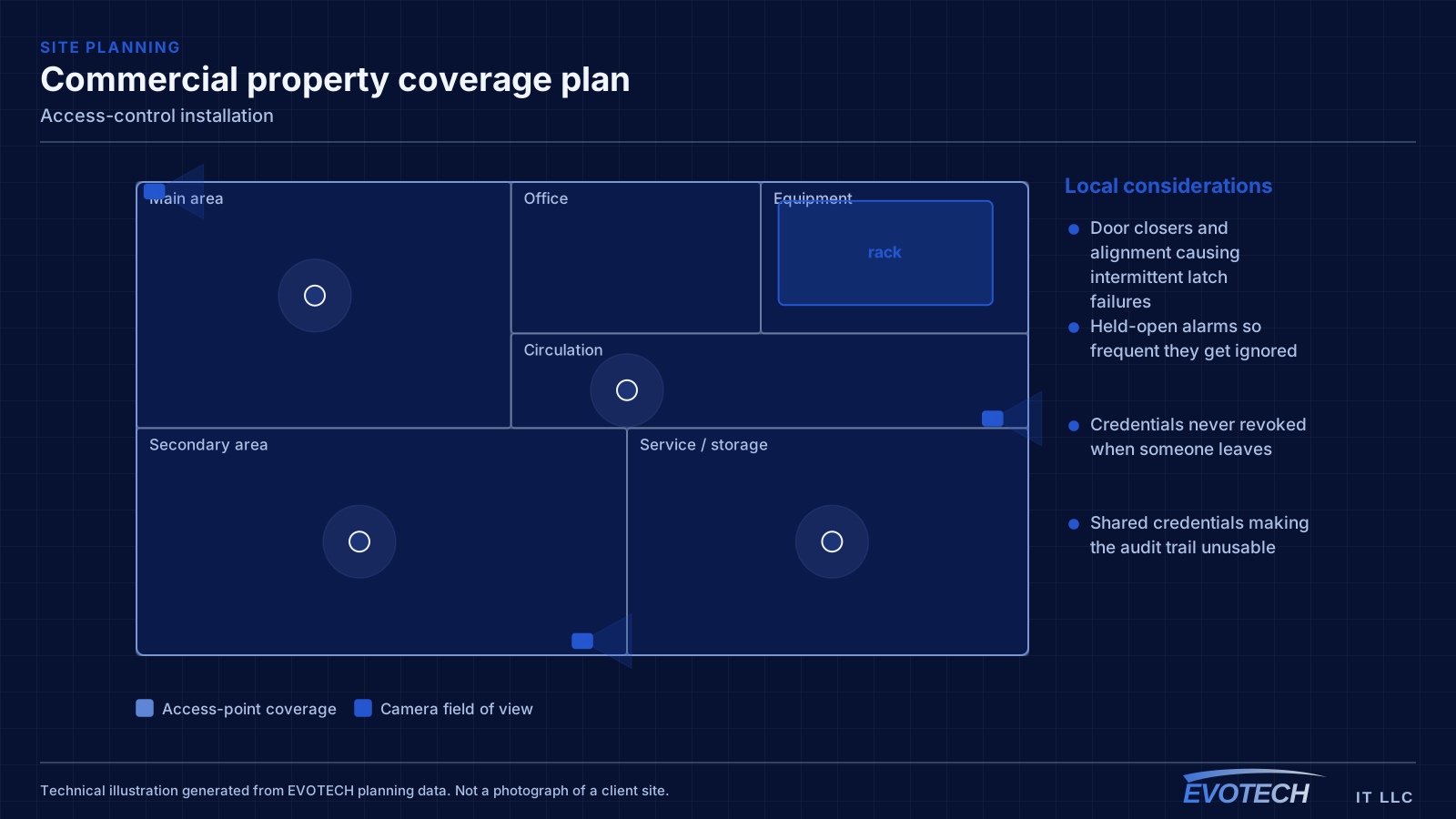
- Door closers and alignment causing intermittent latch failures
- Held-open alarms so frequent they get ignored
- Credentials never revoked when someone leaves
- Shared credentials making the audit trail unusable
- Request-to-exit devices missing, misaligned, or not covering the approach
- Controllers installed on the unsecured side of the door they control
Locks, egress, and where the controller belongs
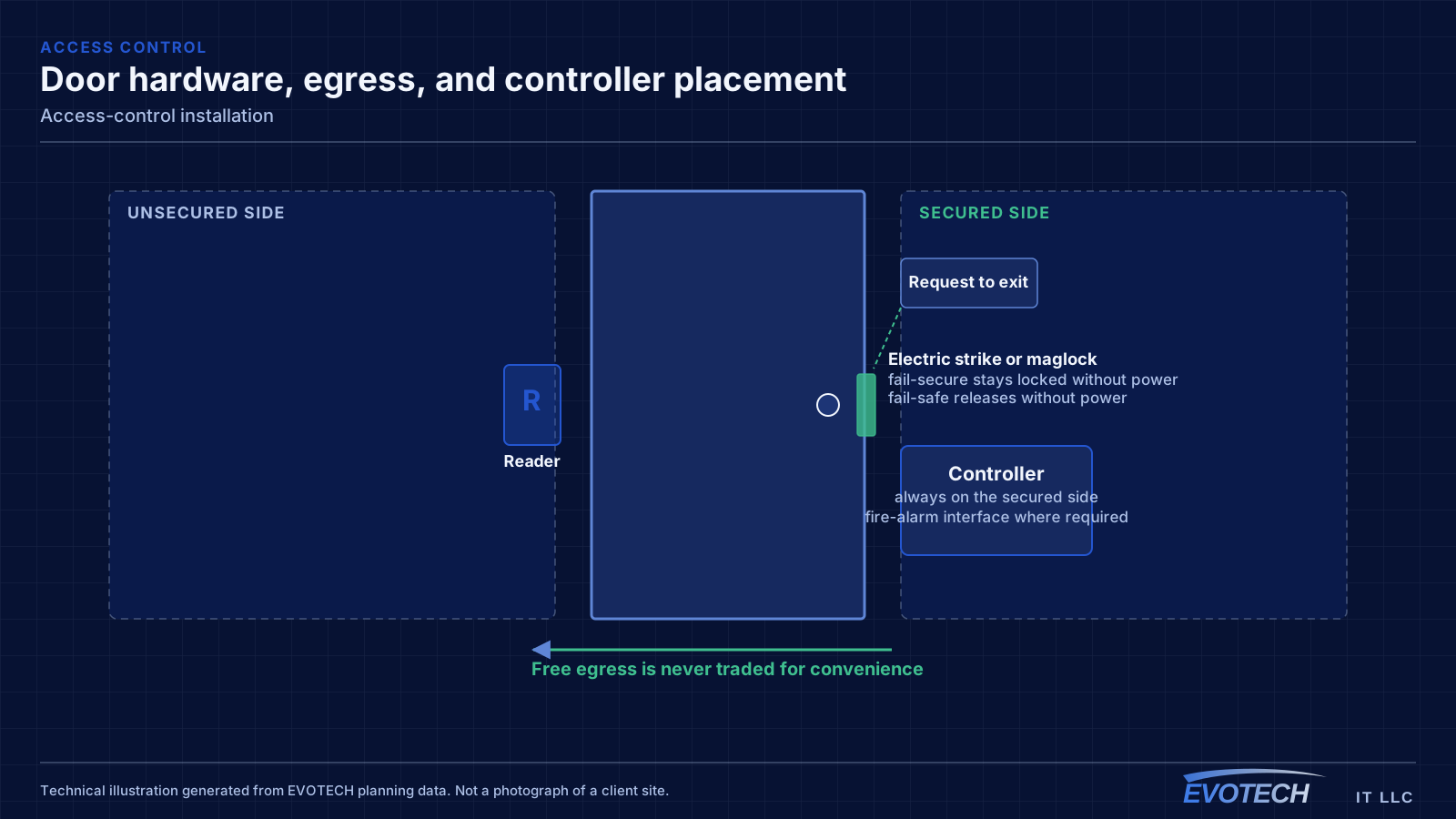
Electric strikes and magnetic locks behave oppositely on power loss. A magnetic lock is fail-safe — it releases when power is removed, so the door is passable during an outage or alarm. A standard electric strike is typically fail-secure — it stays locked without power, though the door can still be opened from the inside by its mechanical hardware. Which is appropriate depends on the door's role and on the applicable life-safety requirements, and it is not an interchangeable preference.
Free egress is non-negotiable. Anyone inside must be able to leave without special knowledge, effort, or a credential. That is achieved through mechanical exit hardware, request-to-exit sensors that release the lock as someone approaches from the inside, and connection to the fire alarm so that controlled doors release on alarm where required. Where a magnetic lock is used, these arrangements are the reason the installation is compliant rather than dangerous.
The controller and its wiring belong on the secured side of the door. A controller mounted outside, or wiring accessible from the unsecured side, undermines the entire system regardless of how good the credential technology is. Similarly, credential technology matters: older low-frequency proximity formats are trivially copied, while modern encrypted credentials and mobile credentials are substantially harder to duplicate.
- Magnetic locks fail safe on power loss; standard electric strikes fail secure
- Free egress must be preserved by mechanical hardware and request-to-exit devices
- Fire-alarm interface required where controlled doors must release on alarm
- Controller and wiring on the secured side of the door
- Prefer modern encrypted or mobile credentials over legacy proximity formats
- Door position sensors to detect held-open and forced conditions
How the work runs
Access-control installation begins at the door and works outward.
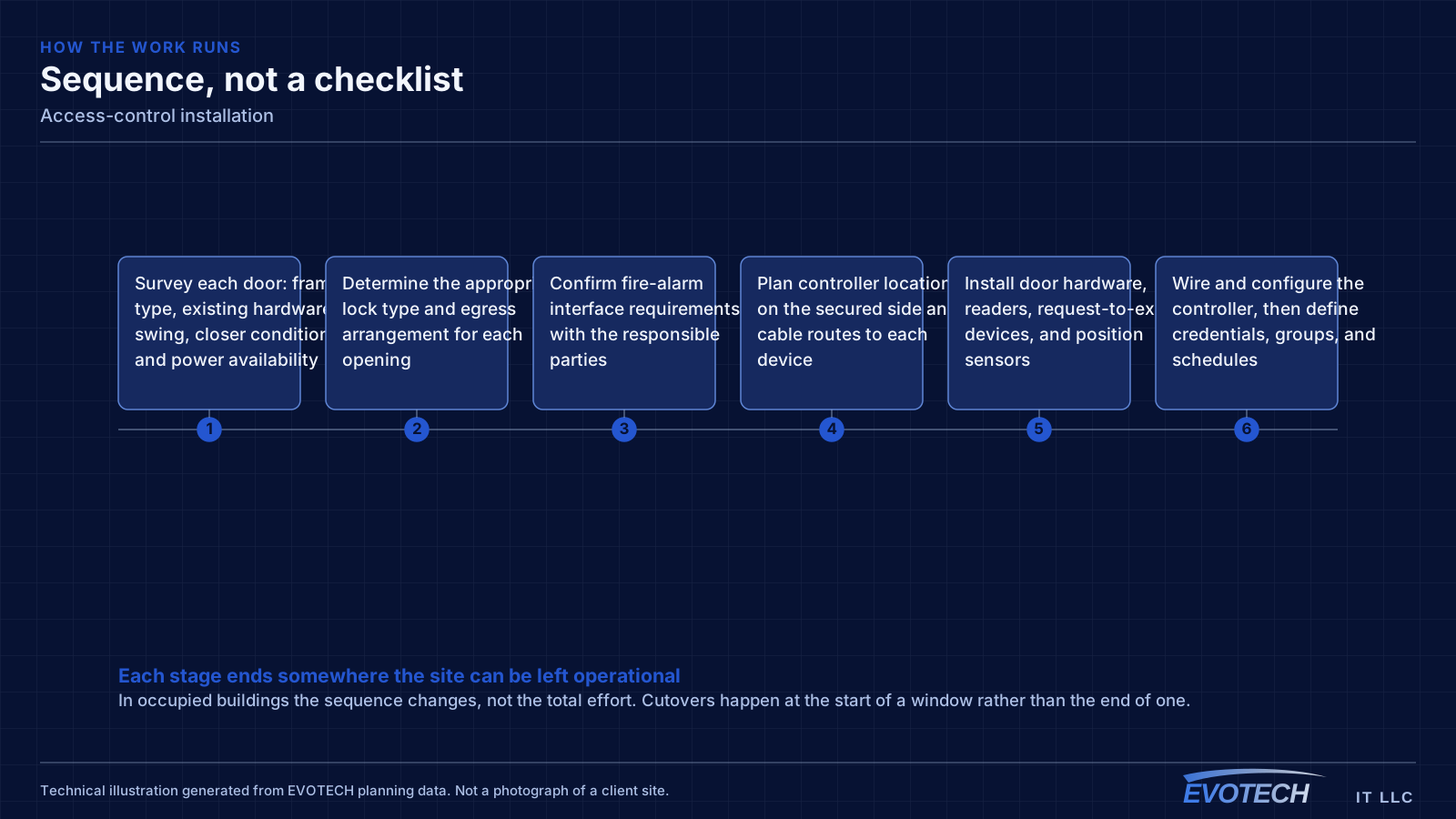
- Survey each door: frame type, existing hardware, swing, closer condition, and power availability
- Determine the appropriate lock type and egress arrangement for each opening
- Confirm fire-alarm interface requirements with the responsible parties
- Plan controller location on the secured side and cable routes to each device
- Install door hardware, readers, request-to-exit devices, and position sensors
- Wire and configure the controller, then define credentials, groups, and schedules
- Test entry, exit, held-open, forced-door, power loss, and alarm-release behaviour
- Hand over administration procedures for issuing and revoking credentials
Testing and verification
Access-control commissioning is about failure modes, not just successful entry.
- Valid credential grants entry and is logged accurately
- Invalid and revoked credentials are denied and logged
- Free egress works from inside without a credential, on every controlled door
- Request-to-exit releases reliably from the normal approach path
- Power-loss behaviour matches the design for each opening
- Fire-alarm release verified where required, with the responsible parties present
- Held-open and forced-door conditions generate the intended alerts
Who this work is for
Access control is worth its complexity where key management has become a burden or where a record of entry matters.
- Offices with staff turnover where reissuing keys has become routine
- Buildings with after-hours access needs for specific people or times
- Warehouses separating office areas from operational and storage space
- Medical and professional offices restricting entry to records and treatment areas
- Multi-tenant properties managing shared entries and common areas
- Sites integrating door events with camera footage for review
What changes the scope
Door conditions dominate access-control scope.
- Number of doors and the condition of existing hardware at each
- Frame material and construction, which changes lock options and labour
- Lock type appropriate for each opening
- Whether doors need closer replacement or adjustment before automation
- Fire-alarm interface work
- Credential technology and the number of credentials to issue
- Cable routes from controller to each door
- Whether camera integration or visitor management is included
Common mistakes
Access-control mistakes range from irritating to genuinely unsafe.
- Choosing a lock type without considering egress and power-loss behaviour
- Installing a magnetic lock without proper release arrangements
- Mounting the controller on the unsecured side of the door
- Automating a door whose closer or alignment was already unreliable
- Issuing shared credentials, which destroys the audit record
- Having no defined revocation process, so old credentials stay valid
- Deploying legacy proximity credentials that are trivial to copy
What drives the cost
Door hardware and its condition drive access-control cost more than the electronics.
- Door count and hardware condition
- Lock type and whether frames need modification
- Closer repair or replacement
- Controller capacity and panel location
- Cable runs from controller to each opening
- Credential technology and quantity issued
- Fire-alarm interface coordination
- Camera or visitor-management integration
Honest limitations
These are the boundaries of what this service can do, stated up front rather than discovered later.
- Life-safety and egress requirements govern door hardware decisions. Where an opening is subject to specific requirements, those take precedence over convenience and may involve other trades or authorities.
- Fire-alarm interfacing is coordinated with the parties responsible for that system.
- Access control records credential events; it does not by itself confirm who used a credential.
- This service covers installation and configuration of access hardware. EVOTECH does not provide lock defeat, bypass, or credential-duplication services.
Frequently asked questions
What is the difference between fail-safe and fail-secure?
It describes what happens when power is lost. Fail-safe hardware — typically a magnetic lock — releases and the door becomes passable. Fail-secure hardware — typically a standard electric strike — stays locked, though the door can still be opened from the inside by its mechanical hardware. Which is correct for a given opening depends on its role and on applicable life-safety requirements, so it is a design decision rather than a preference.
Can people still get out during a power failure?
They must be able to, and the installation is designed to guarantee it. That comes from mechanical exit hardware on the inside, request-to-exit devices that release the lock as someone approaches, and where required a fire-alarm interface that releases controlled doors on alarm. Free egress is a requirement, not a feature to be traded away.
Are key fobs secure?
It depends entirely on the format. Older low-frequency proximity credentials can be copied with inexpensive equipment and should be treated as a convenience rather than a security control. Modern encrypted credentials and mobile credentials are substantially more resistant. If an existing system uses a legacy format, that is worth knowing when deciding what to install next.
Can access control be integrated with cameras?
Commonly, yes — door events can be associated with footage from a camera covering that door, so reviewing an entry means looking at both the log line and the video. The requirement is that both systems support the integration, which is worth confirming during design rather than after purchase.