The short version
Good surround sound comes from placing speakers correctly relative to where people sit, not from buying larger ones. A surround layout — front left, centre, and right across the screen; surrounds to the sides and slightly behind; a subwoofer positioned for even bass; and height or ceiling speakers for object-based formats — only works when each speaker sits where the format expects it relative to the primary seat. A theater with excellent equipment in the wrong positions sounds worse than modest equipment placed well.
The room itself is the other half. Hard parallel surfaces create reflections and standing waves that smear dialogue and make bass uneven from seat to seat. Some soft surface, sensible subwoofer placement, and speakers aimed at the seating do more for intelligibility than any electronics upgrade.
What tends to go wrong
The recurring complaint is dialogue that is hard to follow while effects are too loud — a balance and placement issue, usually a centre channel that is poorly positioned or a room that smears speech through reflection. The second is bass that is boomy in one seat and thin in another, which is subwoofer placement interacting with the room's dimensions rather than a fault in the subwoofer.
The third is operational: a system that needs three remotes and knowledge of which input to select is a system the household stops using at full capability. Consolidated, simple control is what keeps a theater in daily use.
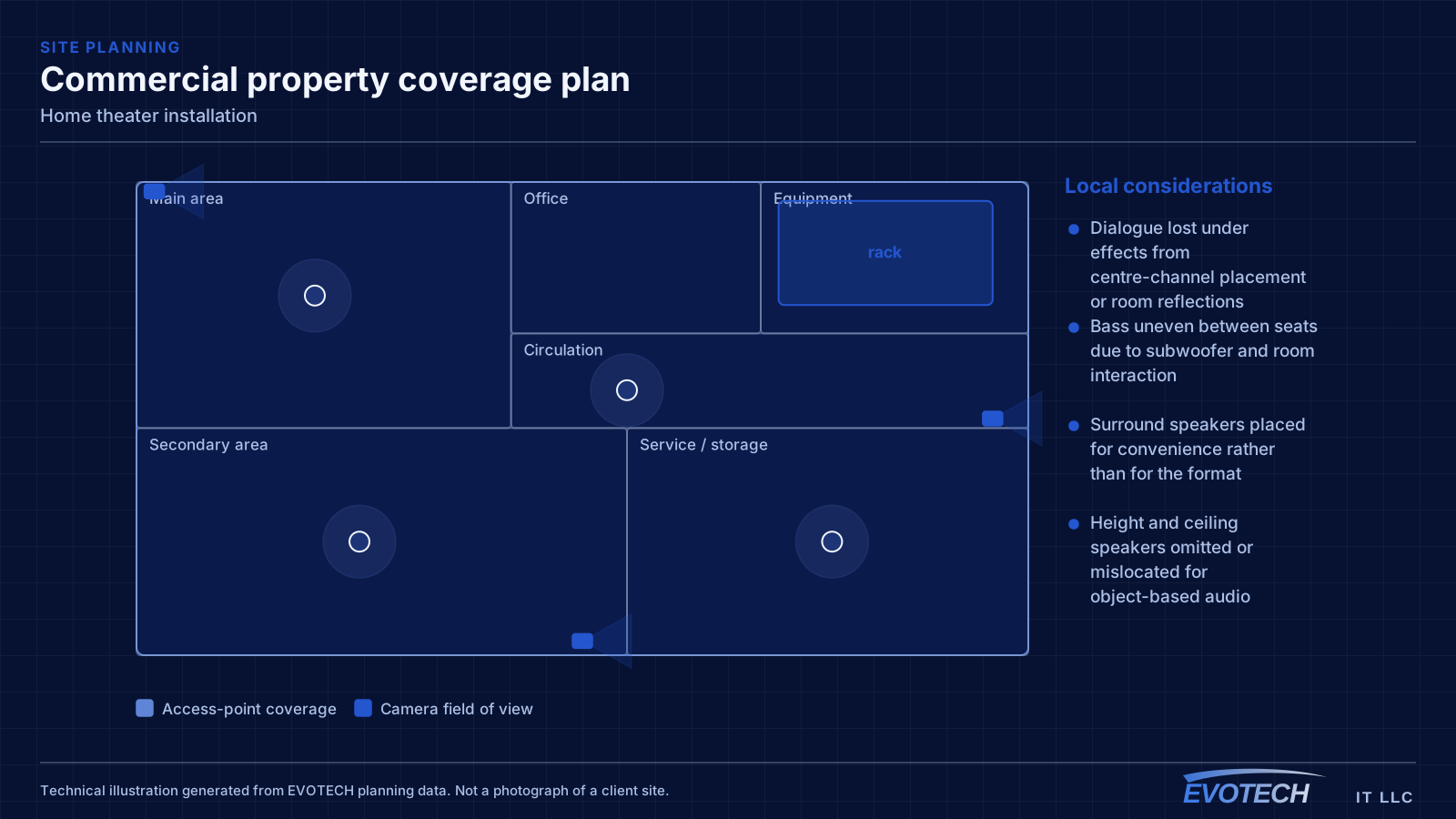
- Dialogue lost under effects from centre-channel placement or room reflections
- Bass uneven between seats due to subwoofer and room interaction
- Surround speakers placed for convenience rather than for the format
- Height and ceiling speakers omitted or mislocated for object-based audio
- Cable runs to speaker and equipment positions left until after finishes
- Control complex enough that the system is used below its capability
Who this work is for
Home theater work ranges from a living-room surround system to a dedicated media room, and the two are planned differently.
- Living rooms adding discreet surround sound around existing furniture
- Dedicated media rooms built for viewing, with controlled seating and lighting
- Bonus rooms and basements being converted to a theater
- New construction prewiring for speakers, the display, and the equipment position
- Homes consolidating a tangle of components into one controllable system
Speaker layout, subwoofer placement, and room acoustics
The front three speakers anchor the soundstage: left and right at the edges of the screen, centre directly at or just below it, all aimed toward the seating at roughly ear height. Surrounds go to the sides and slightly behind the main seats. Height or in-ceiling speakers, for object-based formats, sit above and around the seating per the format's layout. The single most important reference point is the primary seat — everything is placed relative to it.
Subwoofer placement is where rooms fight back. Bass builds up at room boundaries and cancels at certain points depending on the dimensions, so a subwoofer in a corner may be powerful but uneven, while a measured position produces smoother bass across the seats. Finding it is a placement exercise, sometimes with two subwoofers to even out the response, not a matter of turning the level up.
Acoustics tie it together. A dedicated room benefits from some absorption on first-reflection points and soft furnishings; a living room does what it can with rugs, drapes, and upholstered furniture. Either way, treating reflections improves dialogue clarity more reliably than upgrading the speakers.
- Front left/centre/right anchored to the screen at ear height
- Surrounds to the sides and slightly behind the main seating
- Height or in-ceiling speakers placed per the object-audio format
- Subwoofer position found by measurement, not defaulted to a corner
- Reflection control and soft surfaces for dialogue intelligibility
- Everything placed relative to the primary seat
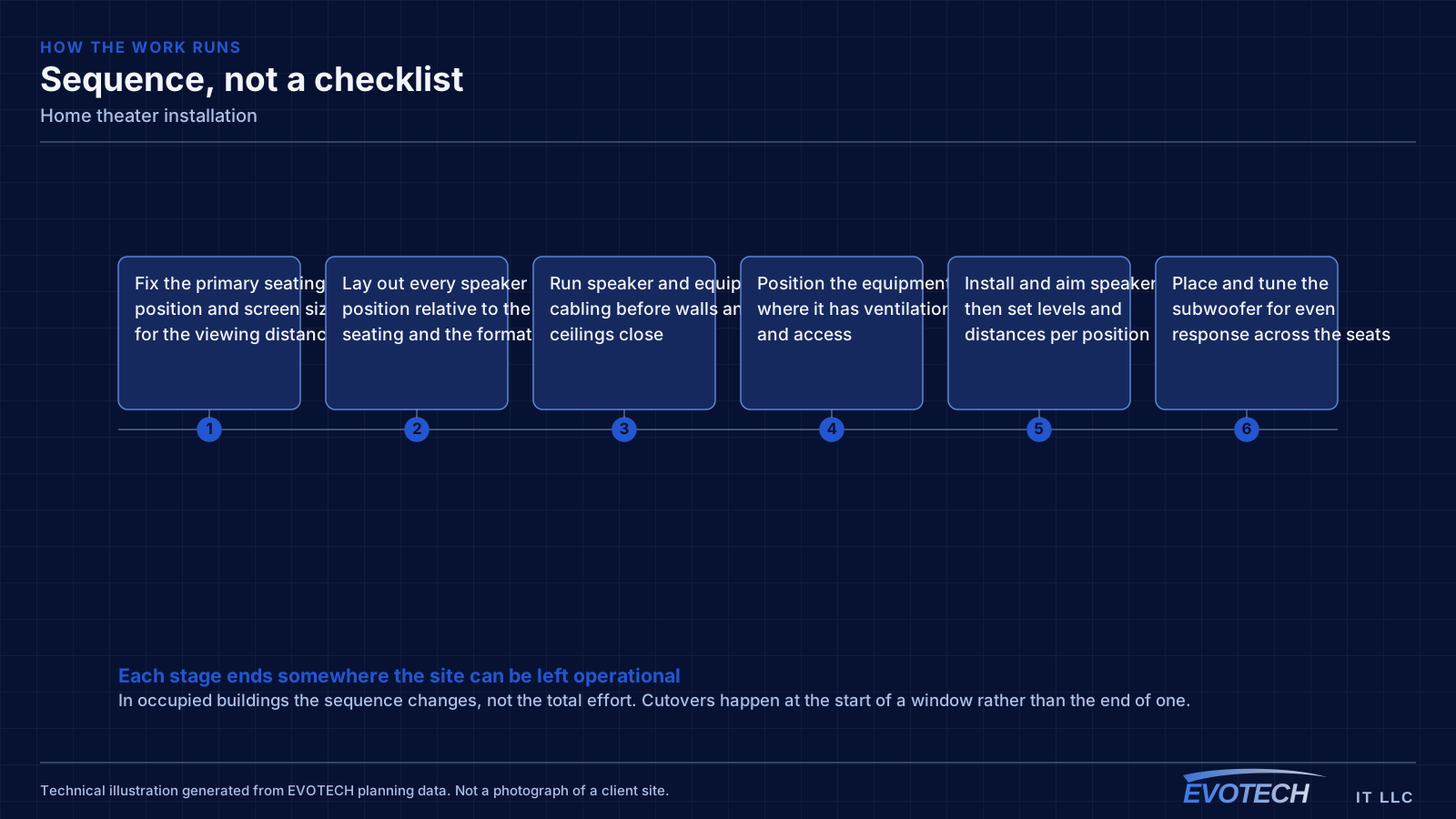
How the work runs
A theater is designed from the seating outward, and the cabling has to happen before the room is finished.
- Fix the primary seating position and screen size for the viewing distance
- Lay out every speaker position relative to the seating and the format
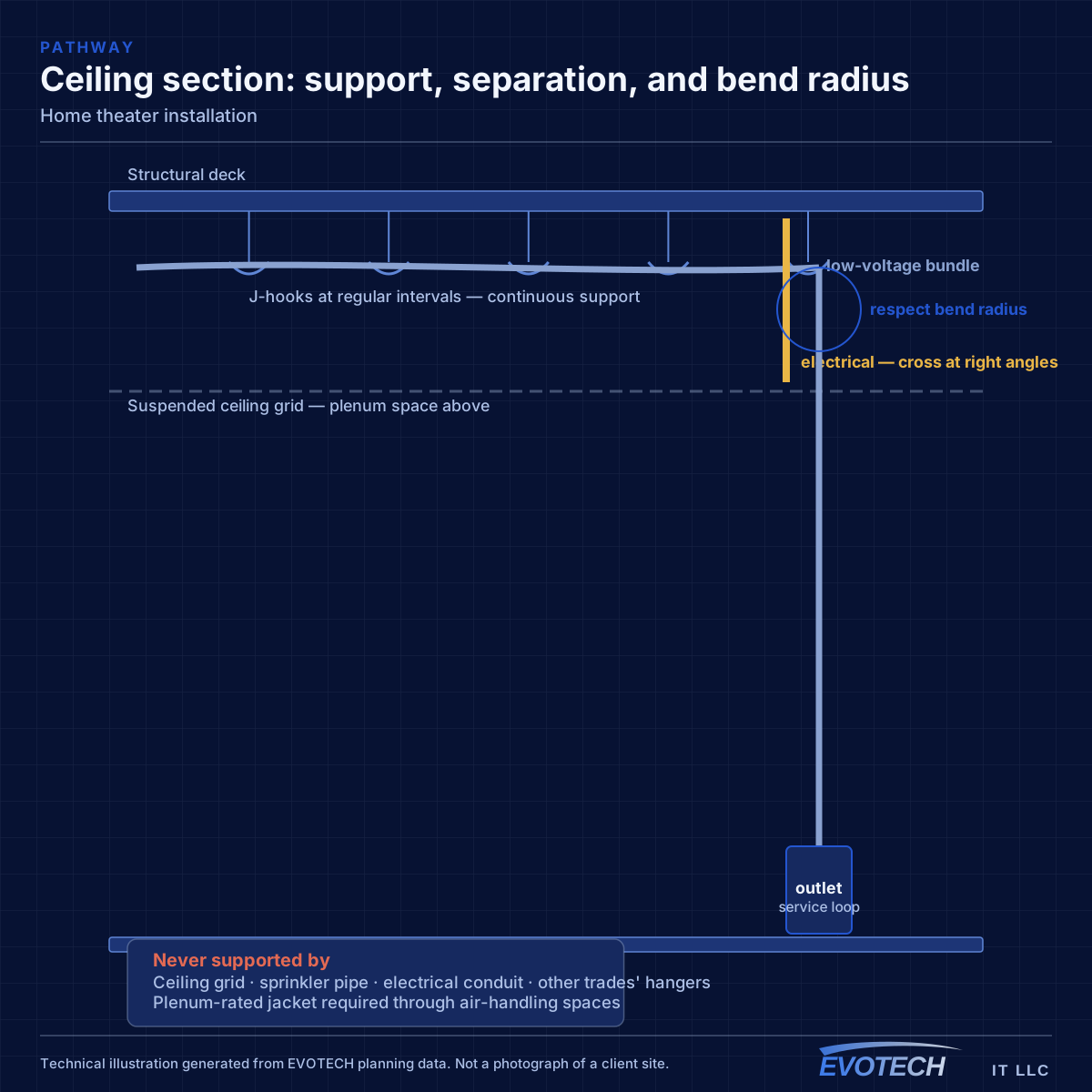
- Run speaker and equipment cabling before walls and ceilings close
- Position the equipment where it has ventilation and access
- Install and aim speakers, then set levels and distances per position
- Place and tune the subwoofer for even response across the seats
- Configure one simple control path and hand it over
Testing and verification
A theater is commissioned by listening from the seats, with measurement to back up placement.
- Levels and distances set for each speaker relative to the primary seat
- Subwoofer response checked across all seats, not just the centre
- Dialogue intelligibility confirmed against loud effects
- Surround and height steering verified with test content
- Control tested by someone who has not been shown the sequence
- Equipment temperature checked under load in its final position
What changes the scope
Scope depends on the room type and the format, more than on the component budget.
- Living room versus dedicated media room
- Surround format and therefore the speaker count and height layout
- In-wall/in-ceiling speakers versus freestanding
- Room acoustics and any treatment required
- Cable routing difficulty and whether it is pre- or post-construction
- Equipment position, ventilation, and control system
- Display or projector and screen, where included
Common mistakes
Home theaters underperform for placement reasons far more than equipment reasons.
- Buying bigger speakers to fix a placement or room problem
- Putting surrounds where furniture allows rather than where the format needs
- Dropping the subwoofer in a corner and turning it up
- Ignoring reflections and then fighting muddy dialogue
- Running cable after the walls are closed
- Leaving control complex enough that the family stops using surround
What drives the cost
Placement and cabling drive a theater more than the electronics do.
- Room type and the speaker count the format requires
- In-wall/in-ceiling versus freestanding speakers
- Cable routing, especially post-construction
- Acoustic treatment
- Display or projector and screen
- Equipment rack, ventilation, and control system
Honest limitations
These are the boundaries of what this service can do, stated up front rather than discovered later.
- Room acoustics set a ceiling on what any system achieves; placement and treatment mitigate but do not eliminate a difficult room.
- Object-based formats need their specific speaker layout to work as intended; a partial layout gives partial results.
- Post-construction cable routing is constrained by the finished structure and may require surface solutions.
- Display and content performance depend on the source and the display, independently of the audio system.
Popular services nearby
Frequently searched near this area — the pages people look for most.
Frequently asked questions
Why is dialogue hard to hear but explosions too loud?
Usually the centre channel and the room. Dialogue lives in the centre speaker, and if it is poorly placed or the room smears it through reflection, speech gets buried while wide effects stay loud. Correcting centre placement, setting levels relative to the seat, and adding some absorption fixes far more of this than adjusting the volume ever will.
Do speakers need to be in the walls or ceiling?
Not necessarily — it is an aesthetic choice more than an acoustic one. In-wall and in-ceiling speakers disappear visually and suit clean rooms and height layouts; freestanding speakers are easier to position precisely and often perform as well or better. What matters is that each speaker ends up where the format expects it relative to the seating.
Why does the bass sound different in each seat?
Because bass interacts with the room's dimensions, building up at some points and cancelling at others. A single subwoofer in a corner is often powerful but uneven across seats. Finding a measured position, or using two subwoofers, evens out the response so every seat gets similar bass — a placement exercise, not a matter of adding level.
Can a normal living room be a good theater?
Yes, within the limits of a shared space. Discreet surround placement, a well-sited subwoofer, and the soft surfaces a living room already has — rugs, drapes, upholstery — get most of the way there. A dedicated room allows more control over seating, lighting, and acoustics, but a thoughtfully set-up living room is a genuine theater for daily use.