The short version
Modern business phones run over the data network — VoIP handsets plug into the same switches as everything else and draw their power from PoE. That is the appeal: one cabling system, central management, and features like auto-attendant, voicemail-to-email, call groups, and remote extensions that older key systems could not offer. The decision that shapes the rest is on-premise versus cloud: an on-site call server you own and maintain, or a hosted service where the provider runs the platform and the site just needs handsets, power, and a good circuit.
Because the phones are network devices, their call quality depends on the network. Voice is unforgiving of jitter and packet loss in a way that a file download is not, so a phone system going onto a busy flat network without any prioritisation is the most common cause of choppy or dropped calls — and it is a design problem, not a handset fault.
Prioritisation, power, and how many calls the circuit carries
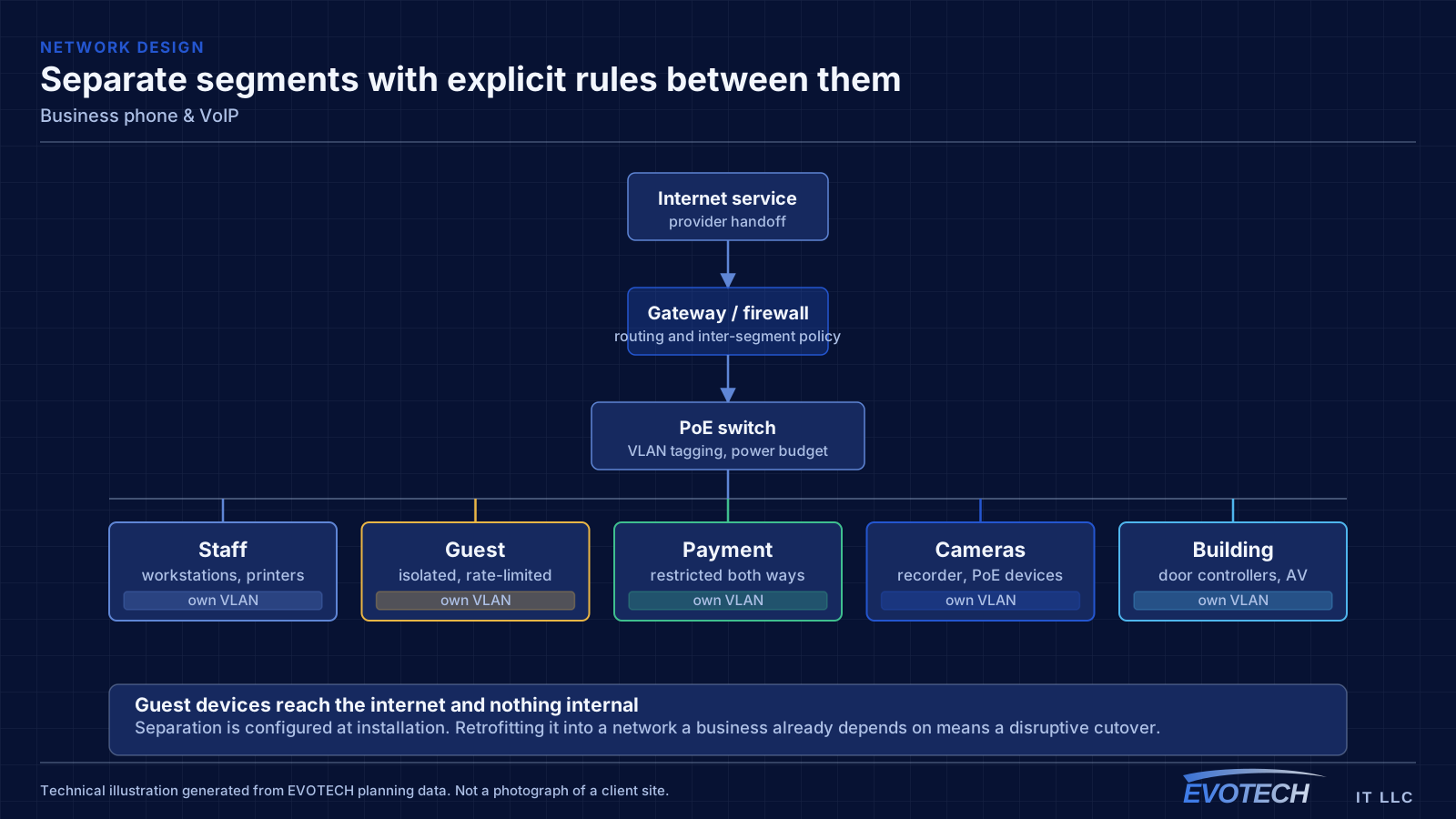
Voice quality is protected by keeping voice traffic separate and prioritised. A dedicated voice network segment, with quality-of-service marking so switches and the gateway send voice packets ahead of bulk data, is what keeps calls clean when the network is busy. Without it, a call and a large file transfer compete as equals, and the call loses.
Bandwidth is a simple calculation that people skip: each simultaneous call consumes a modest, roughly fixed amount of upload bandwidth depending on the codec, so the number of concurrent calls the site can support is bounded by its upload capacity, not its download. A connection that streams video effortlessly can still run out of room for calls at busy times, which is why upload is the figure that matters for phones.
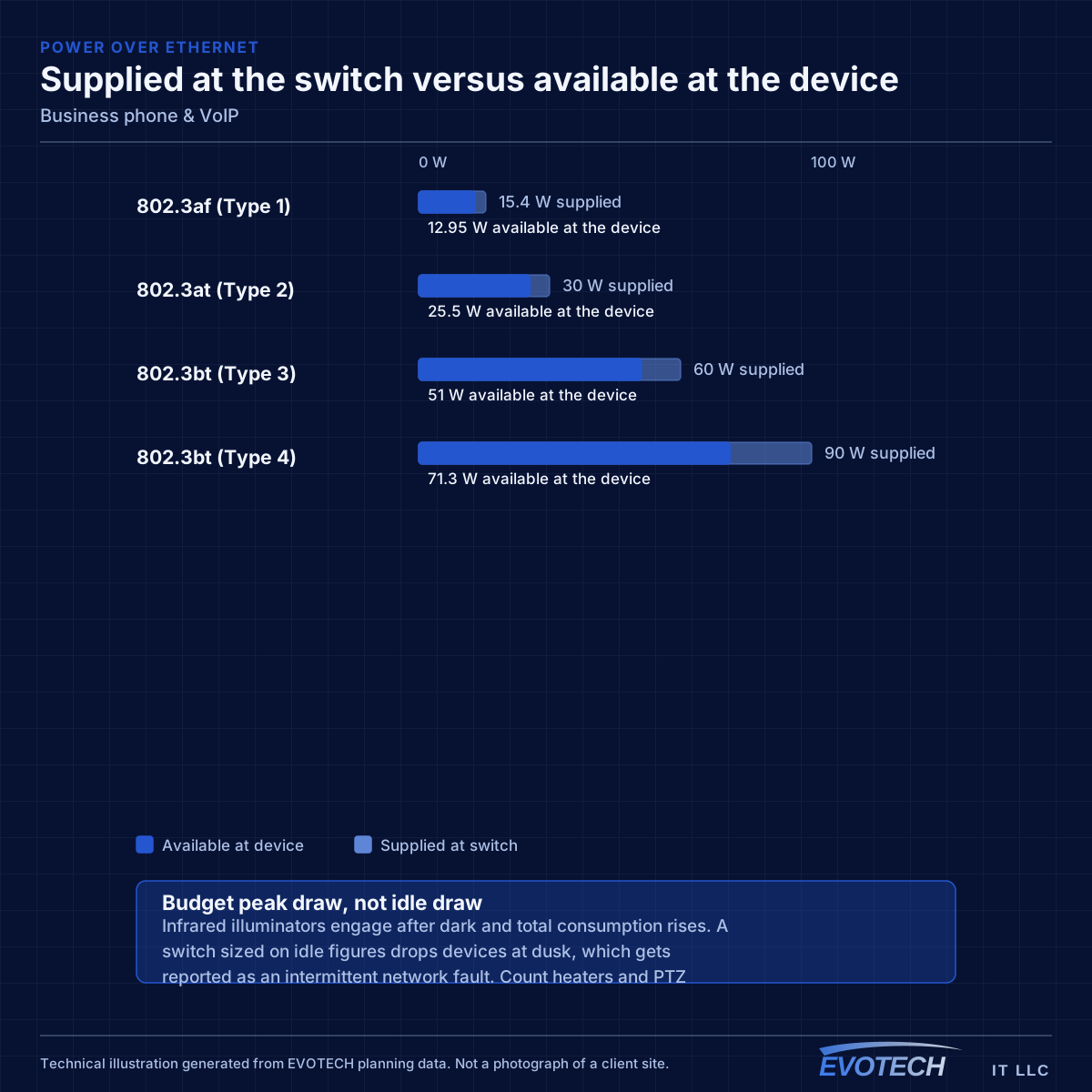
Power planning mirrors camera work: handsets draw PoE, the switch has to carry the total, and the switch plus the call server belong on a UPS. Phones that stay up during a short outage are exactly the phones you want when something has gone wrong.
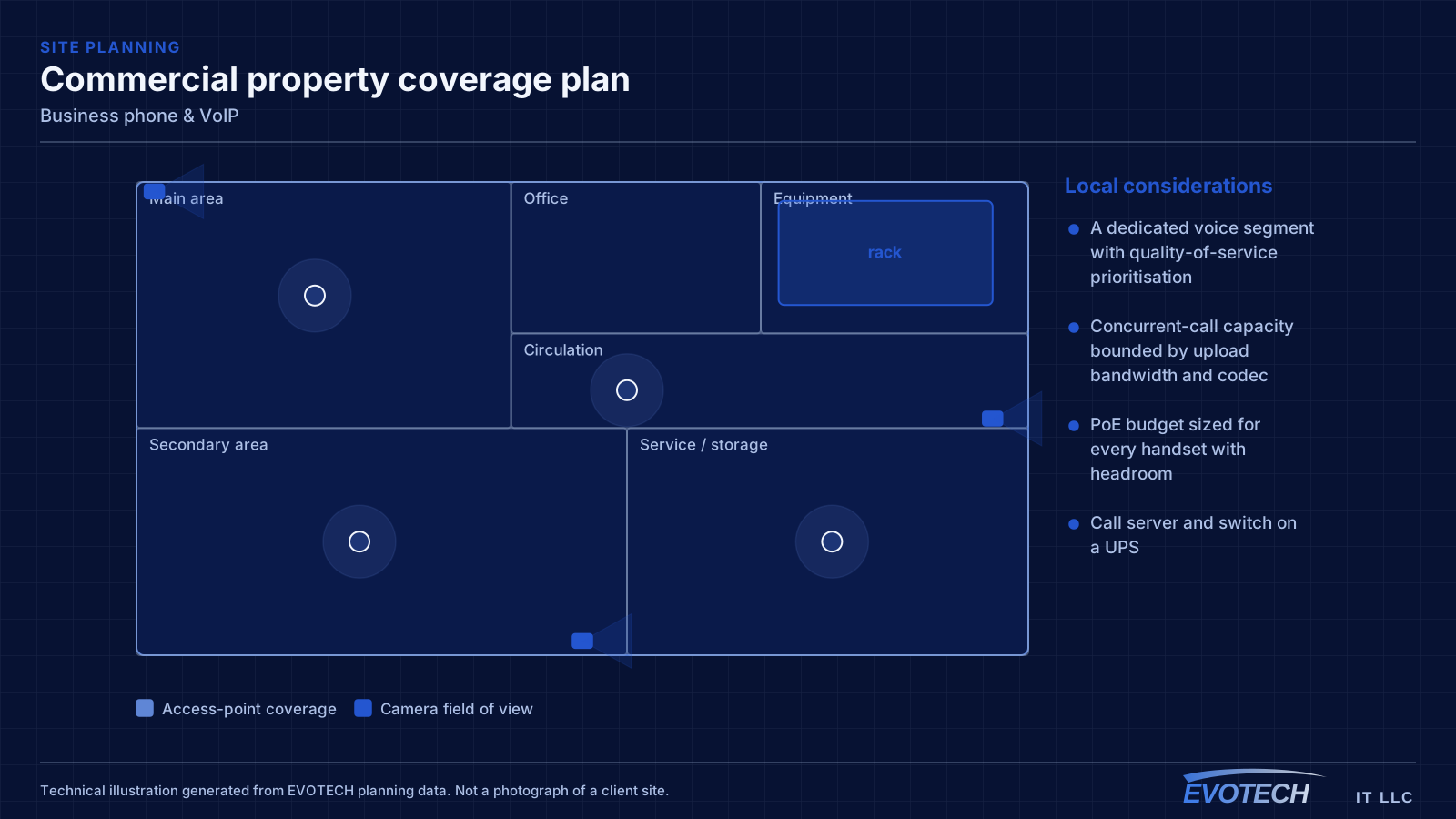
- A dedicated voice segment with quality-of-service prioritisation
- Concurrent-call capacity bounded by upload bandwidth and codec
- PoE budget sized for every handset with headroom
- Call server and switch on a UPS
- On-premise versus hosted decided on who maintains the platform
What tends to go wrong
The defining VoIP problem is call quality on a network that was never prepared for voice. Jitter — variation in packet timing — makes speech robotic; packet loss clips words; and both get worse when a backup or a large upload competes for the same uplink. Voice needs to be prioritised over other traffic, and its own segment, or it inherits every congestion event on the network.
The second problem is power. PoE handsets, a PoE switch, and the call server all have to stay up for phones to work, and a site that puts its phones on an unprotected switch loses its phones with every brief outage — including the ability to call for help.
- Jitter and packet loss on an unprioritised network clipping and dropping calls
- Voice traffic sharing a congested uplink with backups and uploads
- PoE budget exhausted when handsets are added to an existing switch
- No UPS on the phone equipment, so an outage takes the phones down
- Insufficient internet upload bandwidth for the number of simultaneous calls
- Number porting scheduled without a cutover plan, risking dead lines
How the work runs
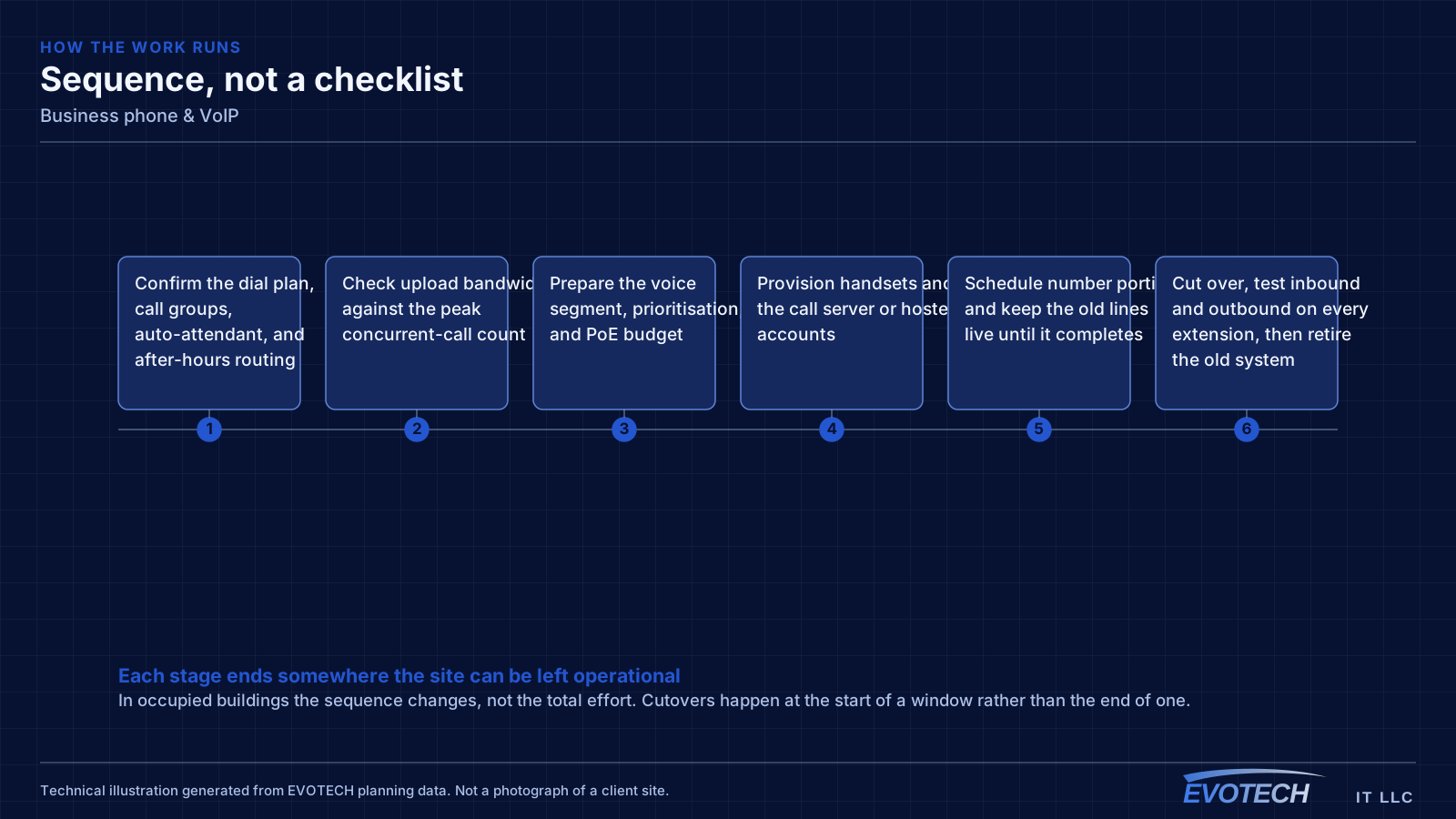
A phone cutover is planned backwards from the moment numbers move, because that is the step with no easy undo.
- Confirm the dial plan, call groups, auto-attendant, and after-hours routing
- Check upload bandwidth against the peak concurrent-call count
- Prepare the voice segment, prioritisation, and PoE budget
- Provision handsets and the call server or hosted accounts
- Schedule number porting and keep the old lines live until it completes
- Cut over, test inbound and outbound on every extension, then retire the old system
- Hand over administration for adding extensions and changing routing
Testing and verification
Phones are commissioned by making real calls under real conditions, not by confirming the handsets register.
- Inbound and outbound tested on every extension
- Call quality checked while the network is under normal load
- Auto-attendant, call groups, and after-hours routing verified end to end
- Concurrent-call capacity tested toward the calculated ceiling
- Voicemail delivery and any voicemail-to-email confirmed
- UPS runtime verified with the phone equipment under load
Who this work is for
Phone work comes up on new fit-outs, on moves, and when an aging key system finally becomes unsupportable.
- Offices replacing an analogue or legacy key system with VoIP handsets
- Businesses adding remote or hybrid extensions to an existing system
- Sites needing auto-attendant, call groups, or after-hours routing
- Multi-location businesses wanting one dial plan across sites
- Retail, medical, and professional offices adding conference and paging
What changes the scope
Phone-system scope moves with the number of extensions and the call features, not the building size.
- Handset count and any conference, paging, or door-phone endpoints
- On-premise call server versus a hosted platform
- Peak concurrent calls and the resulting upload requirement
- Whether the existing cabling and switching can carry the handsets
- Number porting complexity and how many numbers move
- Auto-attendant, voicemail, call-group, and after-hours routing complexity
- Multi-site dial plan requirements
What drives the cost
Handsets are visible; the network readiness and porting usually decide the total.
- Number of handsets and specialty endpoints
- On-premise server versus hosted subscription model
- Network work: voice segment, prioritisation, and PoE capacity
- UPS provision
- Number porting and any temporary overlap of old and new service
- Configuration depth for routing and after-hours behaviour
Common mistakes
VoIP disappoints for network reasons far more often than handset reasons.
- Putting phones on a flat, unprioritised network and blaming the handsets for choppy calls
- Sizing for download and running out of upload at busy times
- Adding handsets to a switch with no PoE budget left
- Leaving the phone equipment off a UPS
- Porting numbers before the new system is tested and ready
- No defined process for adding an extension, so the system ossifies
Honest limitations
These are the boundaries of what this service can do, stated up front rather than discovered later.
- VoIP call quality depends on the internet circuit; a saturated or unreliable connection limits it regardless of the handsets.
- Hosted platforms depend on the provider's service and on connectivity to it.
- Number porting timelines are controlled by carriers, not the installer, and are planned around rather than promised.
- Emergency-calling behaviour on VoIP has specific requirements the operator should confirm with the provider.
Frequently asked questions
Why do our VoIP calls sound choppy when the internet seems fine?
Almost always jitter or contention rather than raw bandwidth. Voice packets are time-sensitive, and on a network that treats them the same as a backup or a large upload they get delayed or dropped whenever the network is busy. A dedicated voice segment with quality-of-service prioritisation fixes the majority of these cases without changing the internet plan.
On-premise phone server or hosted (cloud) VoIP?
It comes down to who maintains it. A hosted platform means the provider runs the call system and the site just needs handsets, power, and a solid circuit — simpler to operate, dependent on the provider. An on-premise server gives more control and keeps working if the internet drops for internal calls, at the cost of owning the maintenance. Both are common; the deciding factor is usually in-house capability.
How many calls can our internet support at once?
It is set by upload bandwidth, not download. Each simultaneous call uses a roughly fixed amount of upload depending on the codec, so the concurrent-call ceiling is that upload figure divided by the per-call rate. This is why a connection that streams video perfectly can still struggle with phones at a busy time — the two use different halves of the circuit.
Can we keep our existing phone numbers?
Generally yes, through number porting from the current carrier. The important part is sequencing: the new system is built and tested while the old lines stay live, and the numbers move only once everything is ready, so there is no window with dead lines. Porting timelines are set by the carriers, so they are planned around rather than promised to a specific hour.