The short version
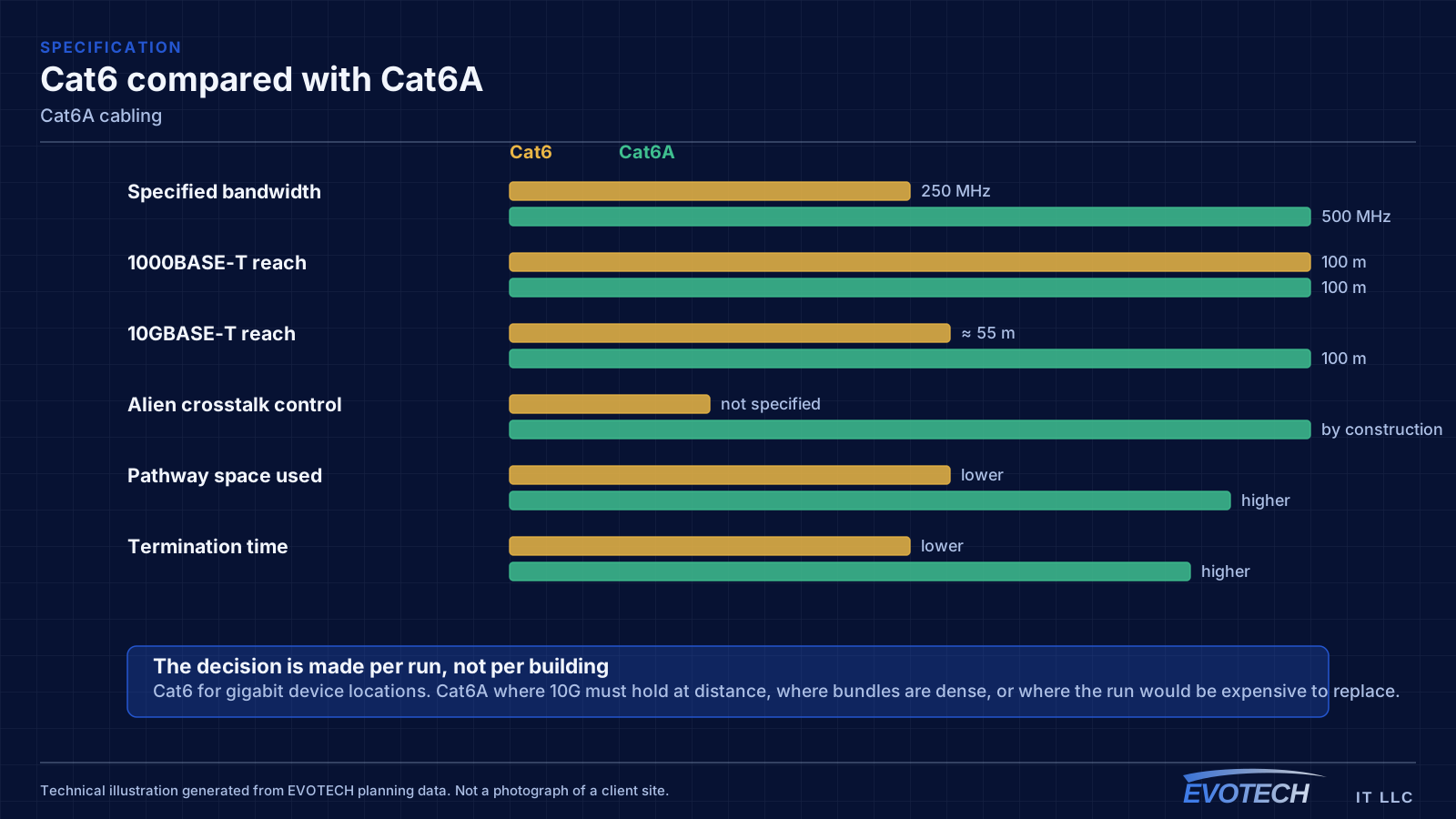
Cat6A is specified to 500 MHz and supports 10GBASE-T across a full 100-metre channel. It achieves that mainly by controlling alien crosstalk — the interference between adjacent cables that constrains Cat6 at 10G — through larger construction, tighter pair geometry, and in shielded variants a foil layer.
The practical decision is not whether Cat6A is better. It plainly is. The decision is which runs need it, because a Cat6A cable is noticeably thicker and stiffer, fills pathway faster, takes longer to dress into a rack, and takes longer again to terminate if it is shielded. On a large project those minutes multiply.
Bandwidth headroom, bundle heat, and shield bonding
The 500 MHz specification is the headline, but the parameter that distinguishes Cat6A in practice is power sum alien near-end crosstalk. That is the measurement that describes how much a cable is disturbed by its neighbours, and it is the reason Cat6A cable is physically larger — separation between cables is part of the design, not an accident of manufacturing.
Power over Ethernet interacts with this directly. Current flowing through the conductors raises temperature, temperature raises resistance, and higher resistance raises insertion loss. In a large tightly packed bundle at the centre, that rise is greatest. Higher PoE classes and dense bundles push designers toward larger conductors, looser bundling, and better pathway airflow.
For shielded Cat6A, the shield only works when it is bonded to a grounded path at the terminations and continuous along the run. A shield connected at one end only, or interrupted by a non-shielded coupler, converts a careful design into an unpredictable one. If a project cannot guarantee consistent bonding practice, unshielded Cat6A is usually the safer specification.
- 500 MHz specification supporting 10GBASE-T to 100 m
- Power sum alien crosstalk control through physical construction
- PoE heat rise increases insertion loss; bundle size and airflow are design inputs
- Shield continuity and bonding must be consistent end to end
- Larger diameter changes pathway fill calculations
What tends to go wrong
The problems Cat6A solves are specific and measurable. In dense bundles, alien crosstalk raises the noise floor for every cable in the group, and 10G links are the first to suffer. In high-power PoE bundles, conductor heating raises insertion loss, which reduces margin at exactly the frequencies 10G depends on.
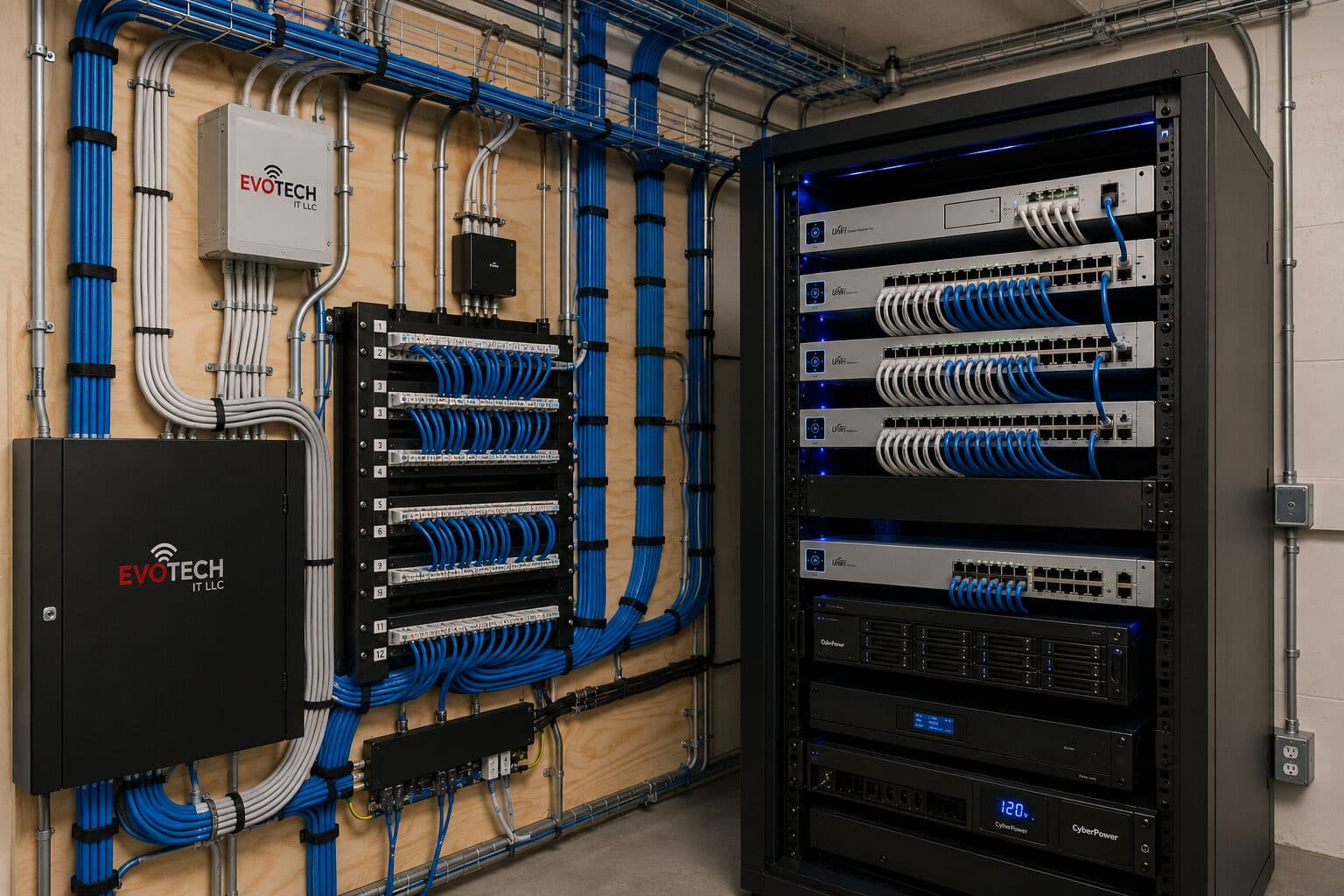
The problems Cat6A creates are logistical. A pathway sized for Cat6 may not accept the same count in Cat6A. A rack designed for tidy Cat6 dressing gets crowded. Shielded terminations demand consistent bonding, and inconsistent bonding is worse than no shield at all.
- Alien crosstalk in dense bundles degrading 10G links
- PoE-driven temperature rise increasing insertion loss and reducing margin
- Pathway fill limits reached sooner than planned
- Shield continuity broken at one termination, undermining the whole run
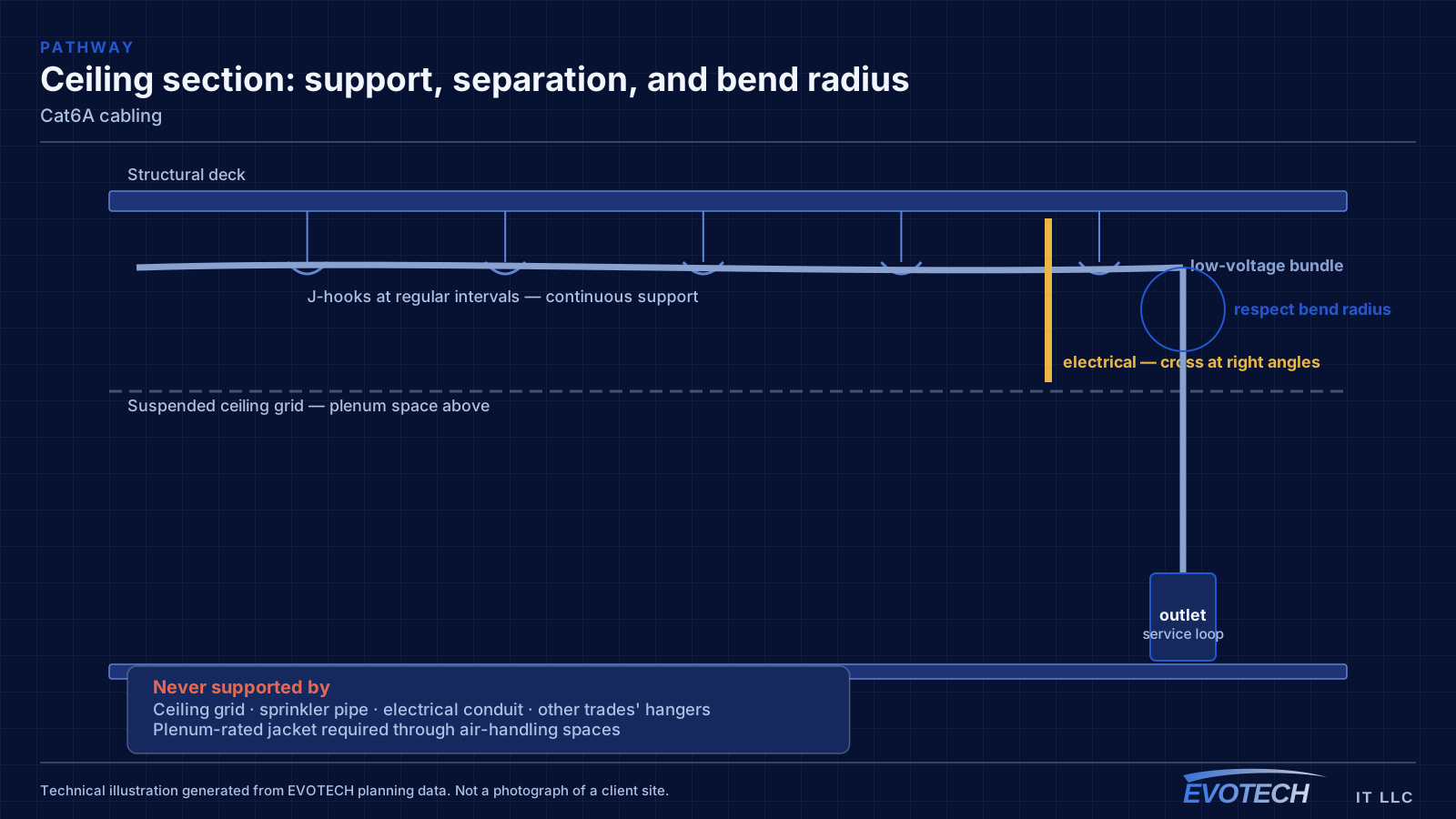
- Tight bend radius in the rack deforming a stiffer cable more than it would Cat6
How the work runs
Cat6A installation follows the same sequence as any structured cabling work, with extra attention at three points: pathway sizing, bundle management, and termination discipline.
- Identify the specific runs that justify Cat6A rather than defaulting the whole building
- Recalculate pathway fill for the larger cable diameter before ordering
- Keep bundles loose and support them frequently, particularly on high-PoE groups
- Maintain generous bend radius in the ceiling and inside the rack
- Terminate with minimal untwist, and bond shields consistently if shielded
- Certify to the Cat6A limits and record margin per port
What changes the scope
What changes a Cat6A scope is mostly physical.
- Count of runs genuinely requiring 10G at distance
- Shielded versus unshielded construction
- Existing pathway capacity and whether it must be enlarged
- PoE class carried and resulting bundle-size constraints
- Rack space available for dressing a stiffer cable cleanly
- Termination labour, which is materially higher for shielded builds
Testing and verification
Certification to Cat6A runs the same parameter set as Cat6 but across the full 500 MHz range, where margins are naturally tighter. Passing at 250 MHz says nothing about behaviour at 500 MHz, so the test configuration has to match the intended rating.
Where alien crosstalk is the reason Cat6A was specified, measuring it on a representative sample of the densest bundle is the step that confirms the design assumption rather than assuming it.
- Full-range certification to Cat6A permanent-link or channel limits
- Recorded margin per port rather than a bare pass
- Alien crosstalk sampling on the densest bundles
- Shield continuity verification on shielded installations
What drives the cost
Cat6A raises cost in three places at once — material, pathway, and labour — which is why selective specification usually beats blanket specification.
- Cable and component cost per run
- Pathway modifications where fill limits are exceeded
- Termination time, especially for shielded constructions
- Rack space and cable management to dress larger cable cleanly
- Test time at the higher frequency range
Common mistakes
Cat6A mistakes tend to come from treating it as a drop-in upgrade rather than a different physical product.
- Ordering Cat6A for an existing pathway without recalculating fill
- Bundling high-PoE Cat6A as tightly as low-power Cat6
- Bonding shields at one end only, or breaking continuity with an unshielded coupler
- Certifying to Cat6 limits and calling the link Cat6A
- Forcing stiff cable into a bend radius sized for thinner cable
Who this work is for
Cat6A shows up in three recurring places: uplinks between equipment positions, device locations that already exceed gigabit, and dense environments where many identical runs share a pathway.
- Switch-to-switch uplinks where fiber is not being used
- Wi-Fi access points in high-density areas whose aggregate throughput exceeds gigabit
- Server, storage, and video-editing positions with 10G network interfaces
- Camera aggregation points and high-count PoE bundles where heat matters
- Buildings being wired once, with a long expected tenancy and no appetite to revisit the ceiling
Honest limitations
These are the boundaries of what this service can do, stated up front rather than discovered later.
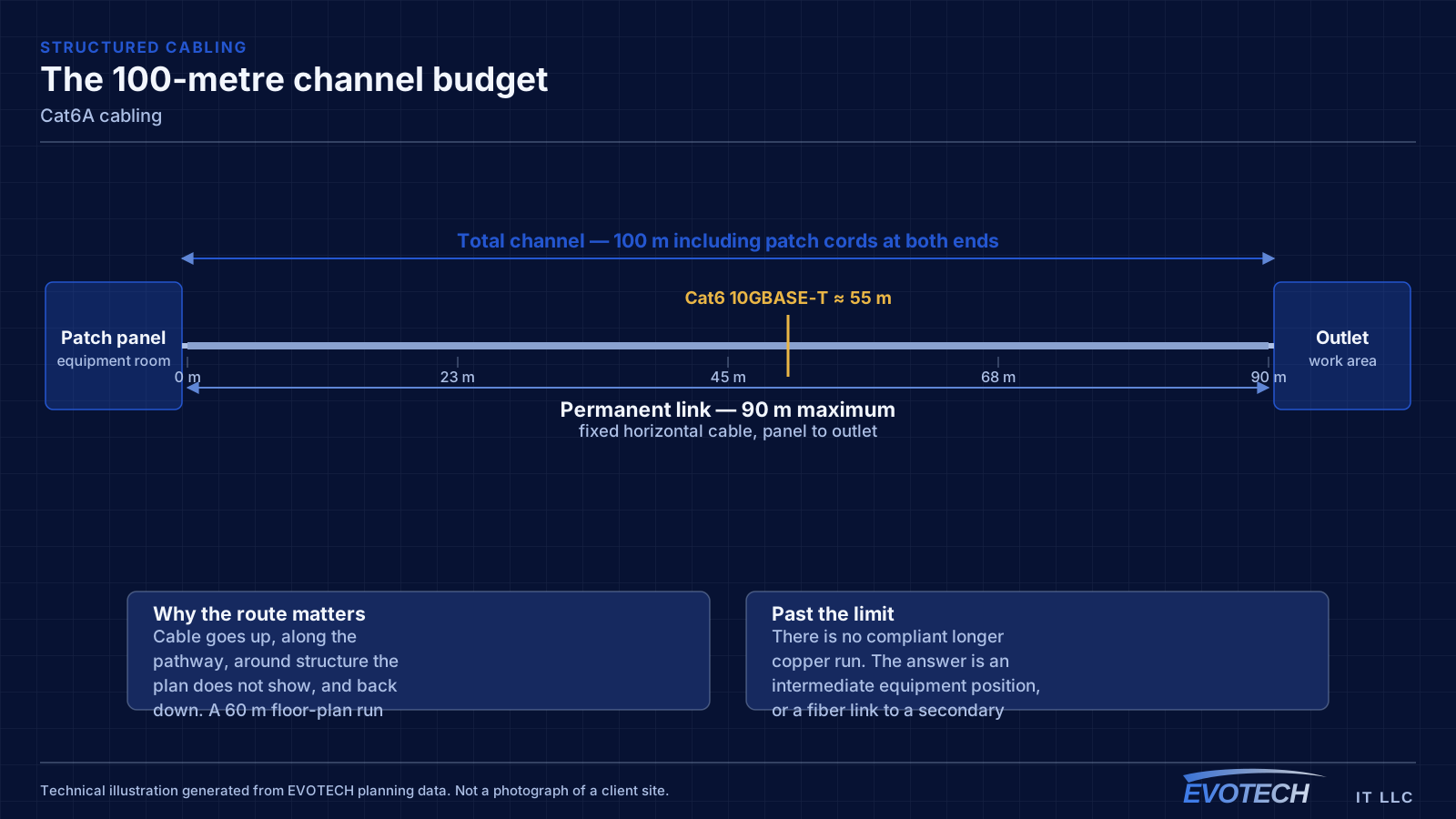
- Cat6A supports 10G to 100 metres; it does not extend the distance limit itself.
- Shielded construction only performs as designed when bonding is consistent throughout.
- The larger diameter reduces how many runs fit an existing pathway.
- Higher category cable does not compensate for undersized switching or an oversubscribed internet circuit.
Frequently asked questions
Is Cat6A worth it if nothing today runs 10 gigabit?
Sometimes. The argument for it is that reopening a ceiling is far more expensive than the cable premium, so runs that are hard to reach and likely to matter later are good candidates. The argument against blanket use is pathway fill and labour. A common middle path is Cat6A on uplinks, dense areas, and inaccessible runs, with Cat6 elsewhere.
Shielded or unshielded Cat6A?
Unshielded is the default unless there is a specific noise reason for shielding, because unshielded terminations are faster and there is no bonding to get wrong. Shielded belongs in environments with real interference sources or where a specification requires it — and only where the installation practice can keep the shield continuous and properly bonded at both ends.
Does Cat6A run hotter with PoE?
All copper carrying PoE warms up, and the cables at the centre of a large bundle warm up most. Cat6A's larger conductors generally handle it better than thinner cable, but the mitigations are the same either way: smaller bundles, adequate spacing, and pathway that allows some airflow. On high-power classes, bundle size becomes an explicit design constraint.
Can Cat6A and Cat6 be mixed in the same building?
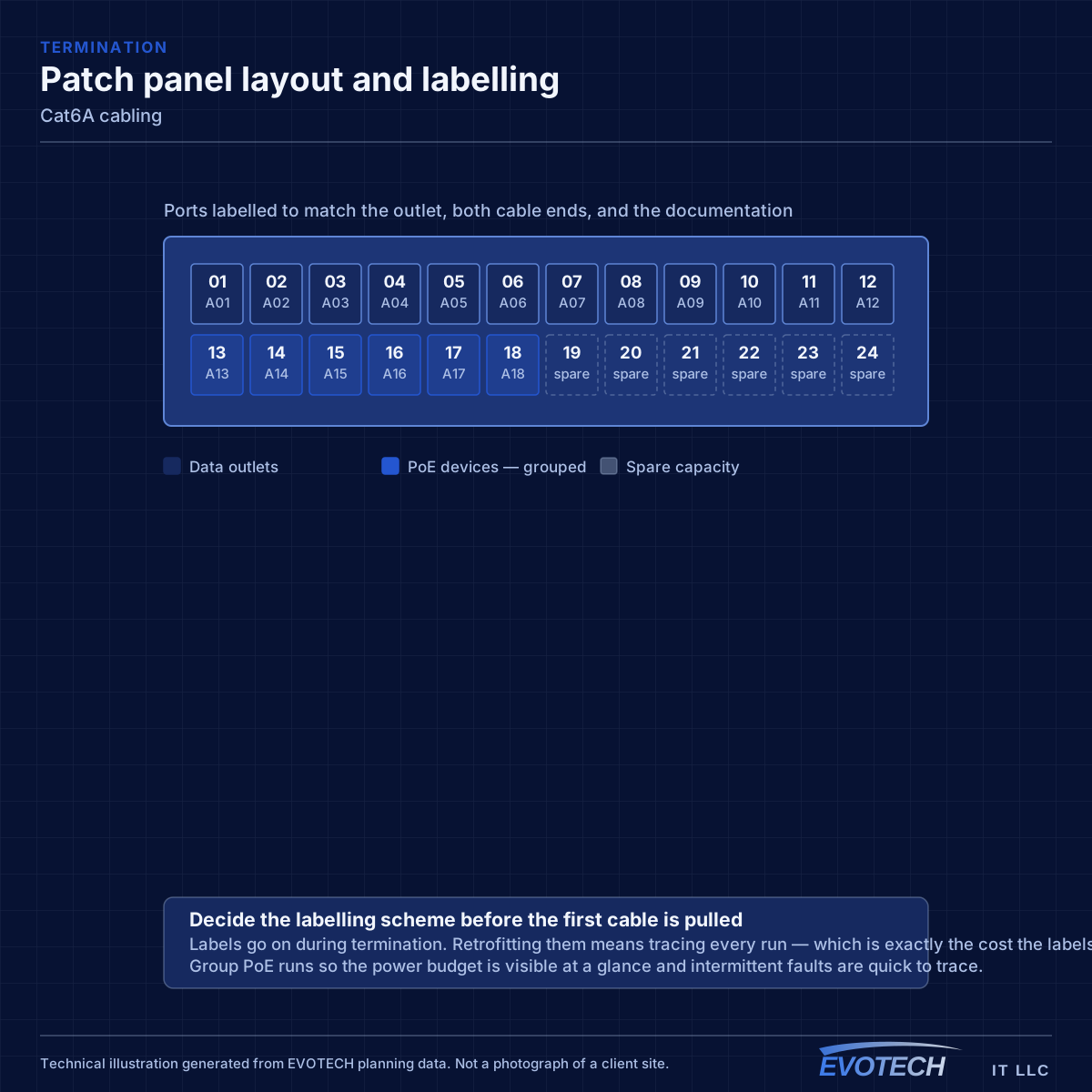
Yes, and it is the usual approach. What cannot be mixed is components within a single channel — a Cat6A run terminated on Cat6 hardware performs as Cat6. Keeping the two clearly labeled at the patch panel avoids a future technician patching a 10G device into the wrong port.