The short answer
Specify Cat6 for device locations that need gigabit, which is nearly all of them. Specify Cat6A where a run must carry 10 gigabit at distance, where it will sit in a dense bundle, or where reopening the ceiling later would be genuinely difficult. That is the whole decision, and it is made run by run rather than for the whole building.
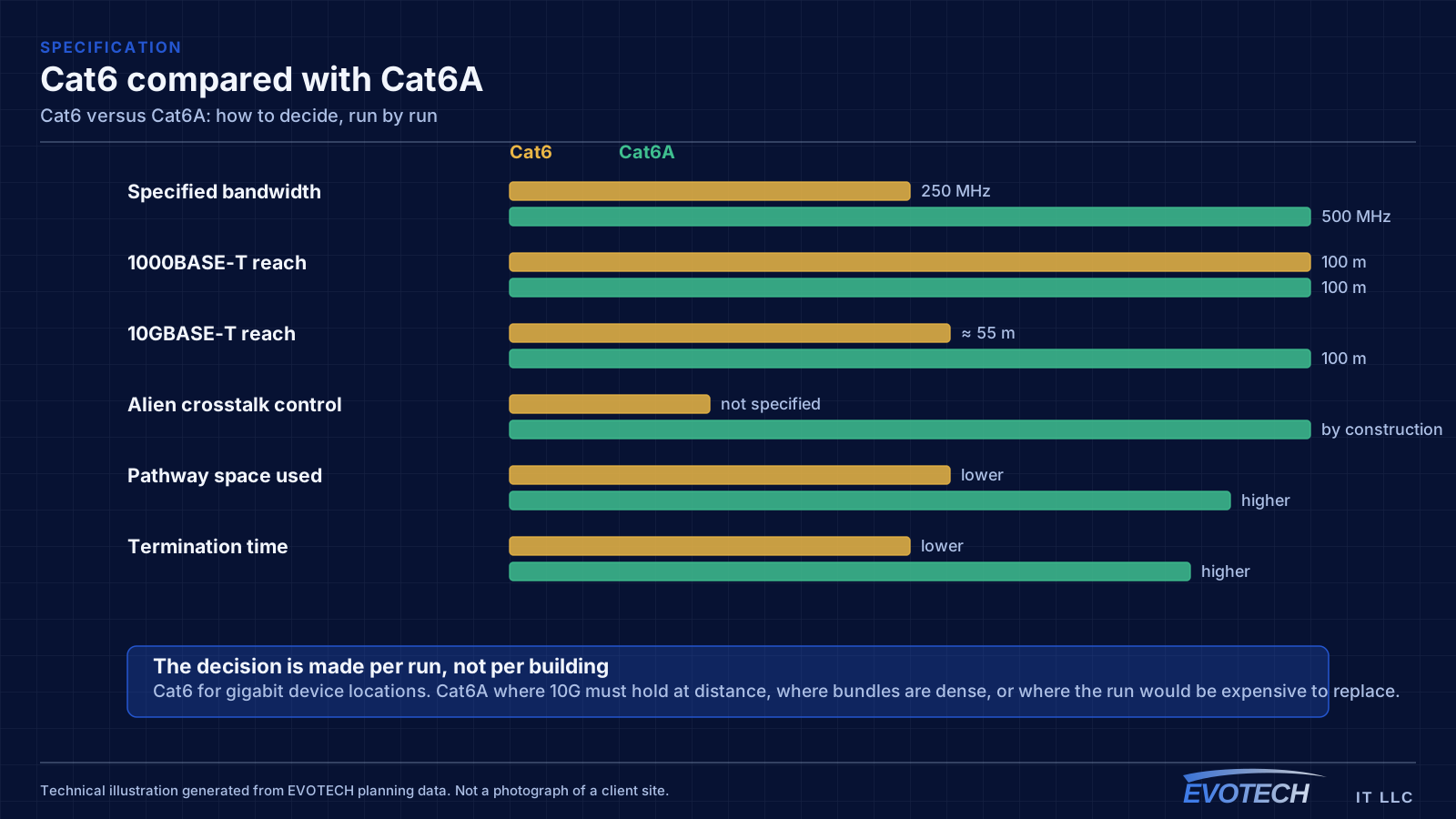
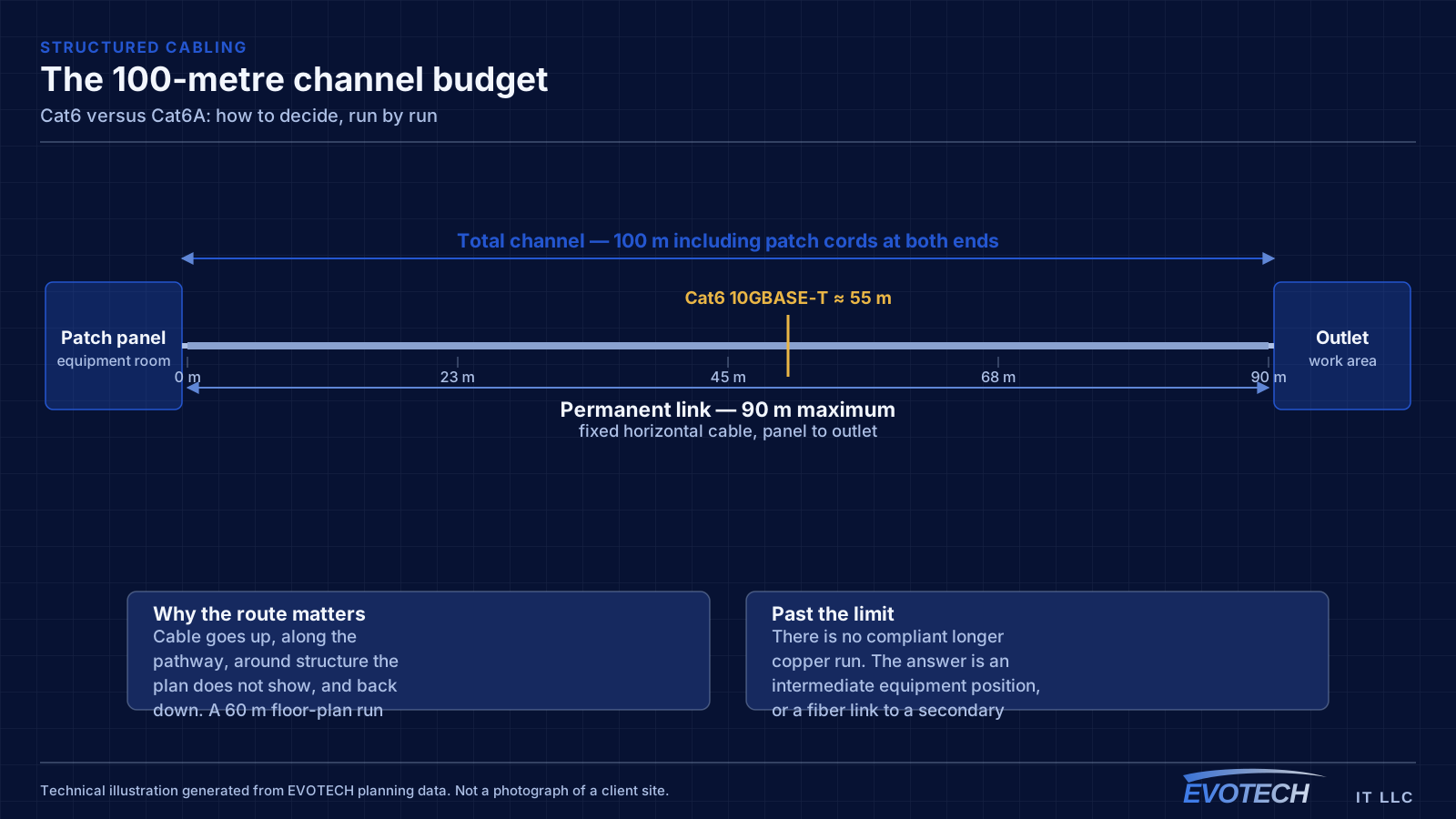
The technical reason is bandwidth headroom. Cat6 is specified to 250 MHz, which comfortably supports 1000BASE-T across the full 100-metre channel. 10GBASE-T needs roughly twice that usable bandwidth, so Cat6 supports it to only about 55 metres — and less in tightly bundled installations. Cat6A is specified to 500 MHz and holds 10 gigabit to the full 100 metres.
Why the distance drops, and what alien crosstalk actually is
The parameter that limits Cat6 at 10 gigabit is not interference between the pairs inside one cable — that is well controlled by the twist. It is alien crosstalk: interference between one cable and its neighbours running alongside it.
At the frequencies 10GBASE-T uses, a cable sitting in the middle of a bundle of forty identical cables all carrying the same signal is being disturbed from every direction. Cat6 has no specific construction feature to counter this. Cat6A does: it is physically larger, keeps more distance between the pairs and between adjacent cables, and in shielded constructions adds foil that blocks the coupling directly.
This is why the published Cat6 10G figure comes with conditions attached. A single Cat6 run in free air can perform better than the number suggests; forty of them cinched into a tray can perform worse. The 55-metre figure is a planning value, not a guarantee, and bundle density is the variable that moves it.
- Cat6: 250 MHz specification, 1000BASE-T to 100 m, 10GBASE-T to roughly 55 m
- Cat6A: 500 MHz specification, 10GBASE-T to the full 100 m
- Alien crosstalk between neighbouring cables is the limiting mechanism
- Bundle density directly affects how far Cat6 will carry 10 gigabit
- Cat6A controls it through larger construction and, optionally, shielding
The decision, in the order it should be made
Start with the question the run has to answer: will anything at this location ever need more than gigabit? For a desk outlet, a phone, a printer, a door controller, or a typical camera, the answer is no and it will stay no for a long time. Those runs are Cat6.
For the runs where the answer is yes or maybe, measure the actual route. Not the floor-plan distance — the real path up into the ceiling, along whatever pathway exists, around structure the drawing does not show, down the wall, plus patch cords at each end. In a large floor plate that regularly turns an apparent 60 metres into something close to 95.
Then check the bundle. A run comfortably under 55 metres sitting in a loose bundle of six is a reasonable Cat6 candidate for 10G. The same length inside a tight bundle of forty identical runs is not, and that is the situation where the published figure stops being conservative.
Finally, weigh accessibility. A run above a hard-lid ceiling that would cost significantly more to replace later is worth over-specifying now, because the cable premium is trivial next to reopening the ceiling.
- Will this location ever need more than gigabit? If no, Cat6
- Measure the actual cable route including patch cords, not the floor-plan distance
- Check bundle density along the shared portion of the pathway
- Consider how expensive this specific run would be to replace
- Decide per run; a mixed design is normal and usually correct
Shielded or unshielded, and why the default is unshielded
Shielded Cat6A exists for electrically noisy environments, and it works — provided the shield is bonded to a grounded path at both terminations and remains continuous along the whole run. That last condition is where shielded installations fail.
A shield connected at one end only, or interrupted by an unshielded coupler somewhere in the middle, does not perform as designed and can behave worse than a well-installed unshielded run. It also takes noticeably longer to terminate, which multiplies across a large project.
So the practical default is unshielded Cat6A unless there is a specific reason for shielding — a genuinely noisy environment, or a specification that requires it — and unless the installation practice can guarantee consistent bonding. Choosing shielded without that guarantee buys complexity rather than performance.
- Shielding helps in genuinely noisy environments, not universally
- Shield must be bonded at both ends and continuous throughout
- Inconsistent bonding can perform worse than good unshielded cable
- Shielded terminations take materially longer to install
- Unshielded is the sensible default absent a specific reason
The PoE dimension people forget
Power over Ethernet interacts with cable choice in a way that is easy to overlook. Current flowing through the conductors generates heat, heat raises resistance, and higher resistance raises insertion loss — which reduces the margin available at exactly the frequencies 10G depends on.
In a large, tightly packed bundle the cables at the centre run warmest, because they have nowhere to shed heat. On higher PoE classes this stops being a theoretical concern and becomes a design constraint: bundle size, spacing, and pathway airflow all appear in the design of high-count camera and access-point installations.
Cat6A's larger conductors generally cope better with this, but the mitigations are the same whichever cable is specified: keep bundles smaller, space them, and give the pathway some airflow. And use full-copper conductors of the correct gauge — copper-clad aluminium has higher resistance and is a poor choice wherever current is flowing.
- PoE current heats conductors; heat raises insertion loss
- Cables at the centre of a large bundle run warmest
- Bundle size becomes an explicit design constraint on high PoE classes
- Full-copper conductors of correct gauge; avoid copper-clad aluminium
- Pathway airflow matters more on high-count PoE installations
Category is a property of the channel, not the spool
A frequent and expensive misunderstanding: buying Cat6A cable does not produce a Cat6A channel. The rating applies to the assembled path — patch cord, patch panel, horizontal cable, and outlet. Every component has to meet the intended category or the channel performs at the lowest one present.
A Cat6A run terminated on a Cat6 jack and patched with a Cat6 cord is a Cat6 channel, and certification testing will report it as one. This turns up regularly when an existing installation gets tested for the first time and the results do not match what was purchased.
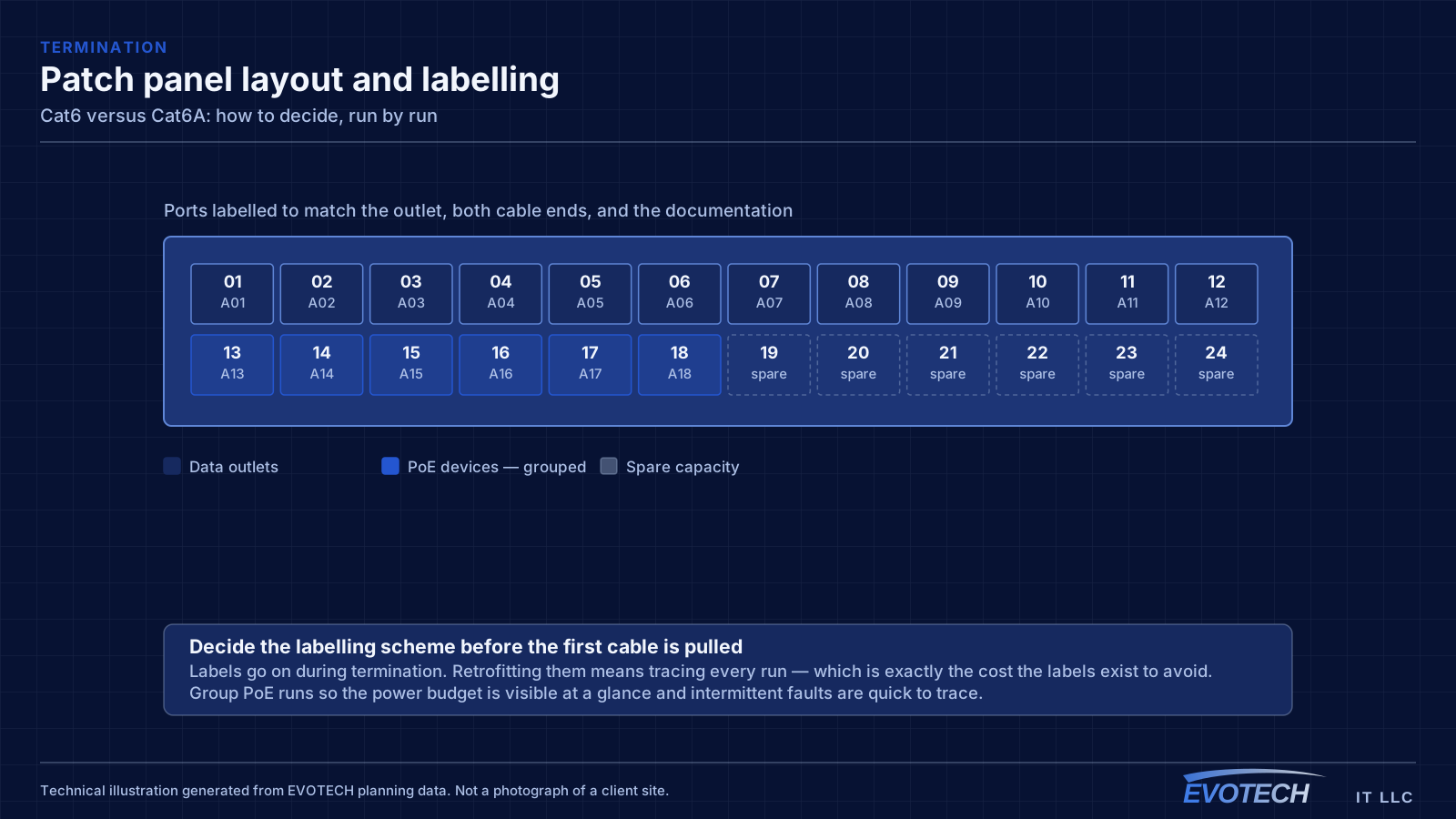
The practical protection is matching components deliberately and labeling the patch panel so a future technician does not patch a 10G device into a port fed by a lower-category run.
- Category applies to the assembled channel, not to the cable alone
- Jacks, panels, and patch cords must all meet the intended rating
- Certification testing reports the channel, which is what matters
- Label mixed installations clearly at the patch panel
- Test to the limits of the specified category, not a lower one
What Cat6A costs beyond the cable price
The cable premium is the visible cost and usually the smallest one. Cat6A is physically larger, which changes pathway fill calculations — a conduit or tray sized comfortably for a given count of Cat6 may not take the same count in Cat6A, and discovering that after ordering is a genuine problem.
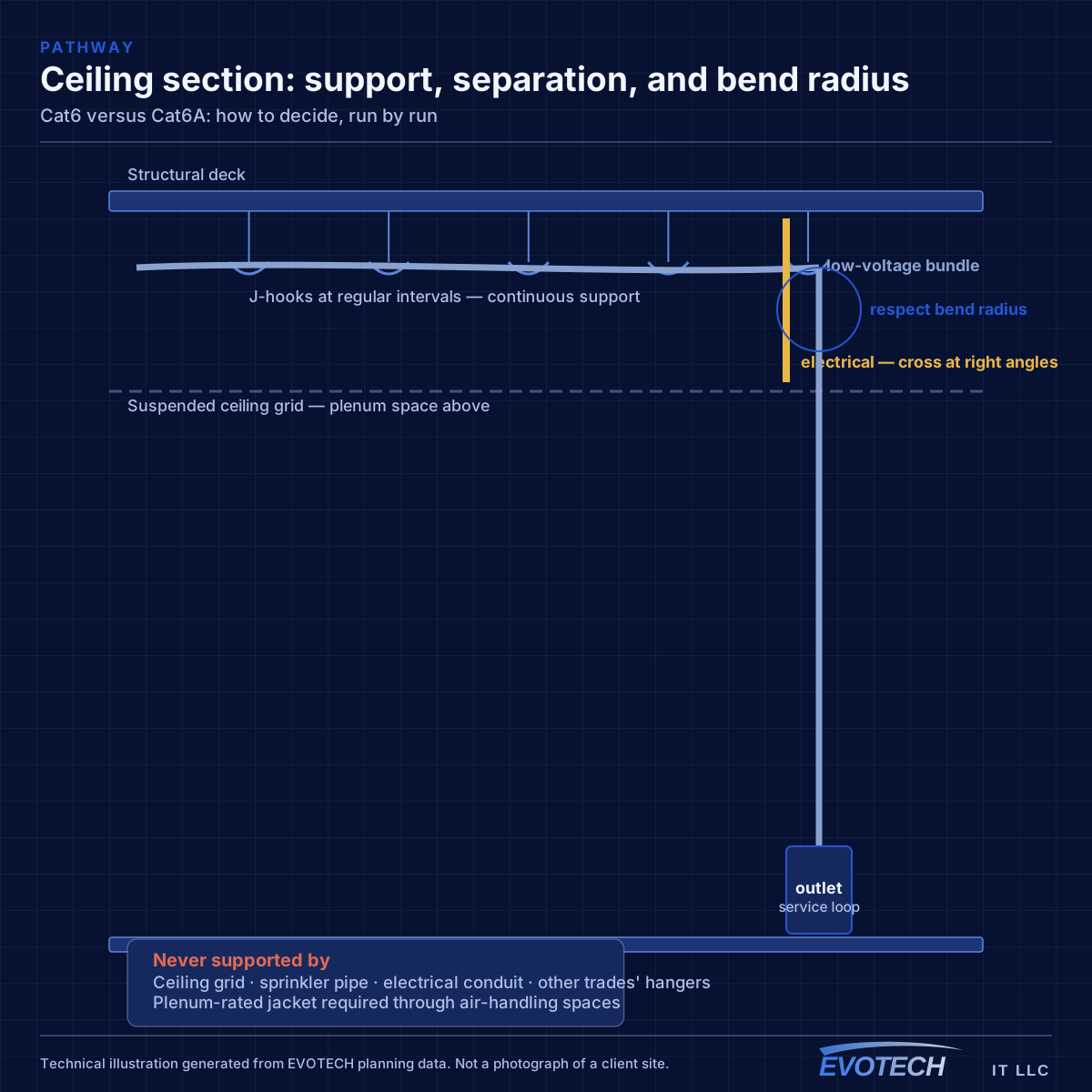
It is also stiffer, which affects both the pull and the rack dressing. Maintaining bend radius takes more care, and a rack laid out for tidy Cat6 gets crowded when the same run count arrives in a larger cable.
None of this argues against Cat6A where it is needed. It argues against specifying it reflexively for every run, which is what a blanket decision does. A mixed design keeps pathway capacity available for future additions, which on a long-lived building is worth more than the marginal capability on runs that will never exceed gigabit.
- Larger diameter changes pathway fill; recalculate before ordering
- Stiffer cable requires more care with bend radius and rack dressing
- Termination time is higher, especially for shielded constructions
- Blanket specification consumes pathway that future runs will need
- Mixed designs are normal engineering practice, not a compromise
Frequently asked questions
If Cat6A is better, why not use it everywhere?
Because 'better' has costs that are not on the price list: it fills pathway faster, takes longer to terminate, and dresses less neatly in a rack. On runs that will never exceed gigabit — desks, phones, printers, most cameras — that buys nothing. A mixed design puts Cat6A where it earns its place and keeps pathway capacity available for the next expansion.
How do I know whether a run will exceed 55 metres?
Measure the actual route rather than the floor plan. Cable goes up into the ceiling, along whatever pathway exists, around structure the drawing does not show, down a wall, and then patch cords add more at both ends. In larger floor plates an apparent 60-metre run frequently lands closer to 95.
Does Cat6A improve normal gigabit performance?
Not in any way you would notice. Cat6 carries gigabit across the full channel with margin to spare, and a higher-category cable does not make a gigabit link faster. The benefit of Cat6A is headroom for 10 gigabit and better behaviour in dense bundles — neither of which affects a gigabit desk outlet.
What about Cat5e — is it ever still acceptable?
It carries gigabit and plenty of installed Cat5e works fine. For new installations it is rarely worth specifying, because the cable cost difference against Cat6 is small relative to the labour of installing it, and Cat6 gives more margin on the same run. Where existing Cat5e tests clean and serves an ordinary device, replacing it for its own sake is not usually justified.