Serving Richmond
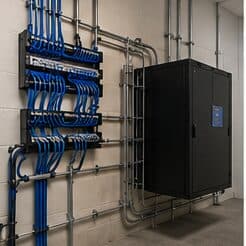
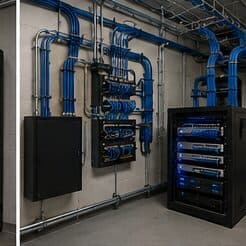
New-construction work has one window and it does not reopen. In a market with substantial ongoing residential and commercial building, the most valuable conversation happens before drywall — device locations, pathway, and how much spare capacity to leave.
The second characteristic is distance. Larger lots mean longer runs to outbuildings, gates, and driveway positions, and those distances need checking against copper limits rather than assumed.
Building rather than retrofitting
When the walls are open, running cable anywhere is straightforward and running spare cable is nearly free. The value of the pre-rough-in conversation is entirely in deciding where things go, because that decision is what determines whether a future camera, access point, or display position is a simple addition or an impossibility.
Larger lots add a distance dimension that tighter suburban plots do not. A gate position, a detached workshop, or a driveway camera can sit far enough from the equipment room that copper is not the right answer, and that needs establishing during design rather than discovering during installation.
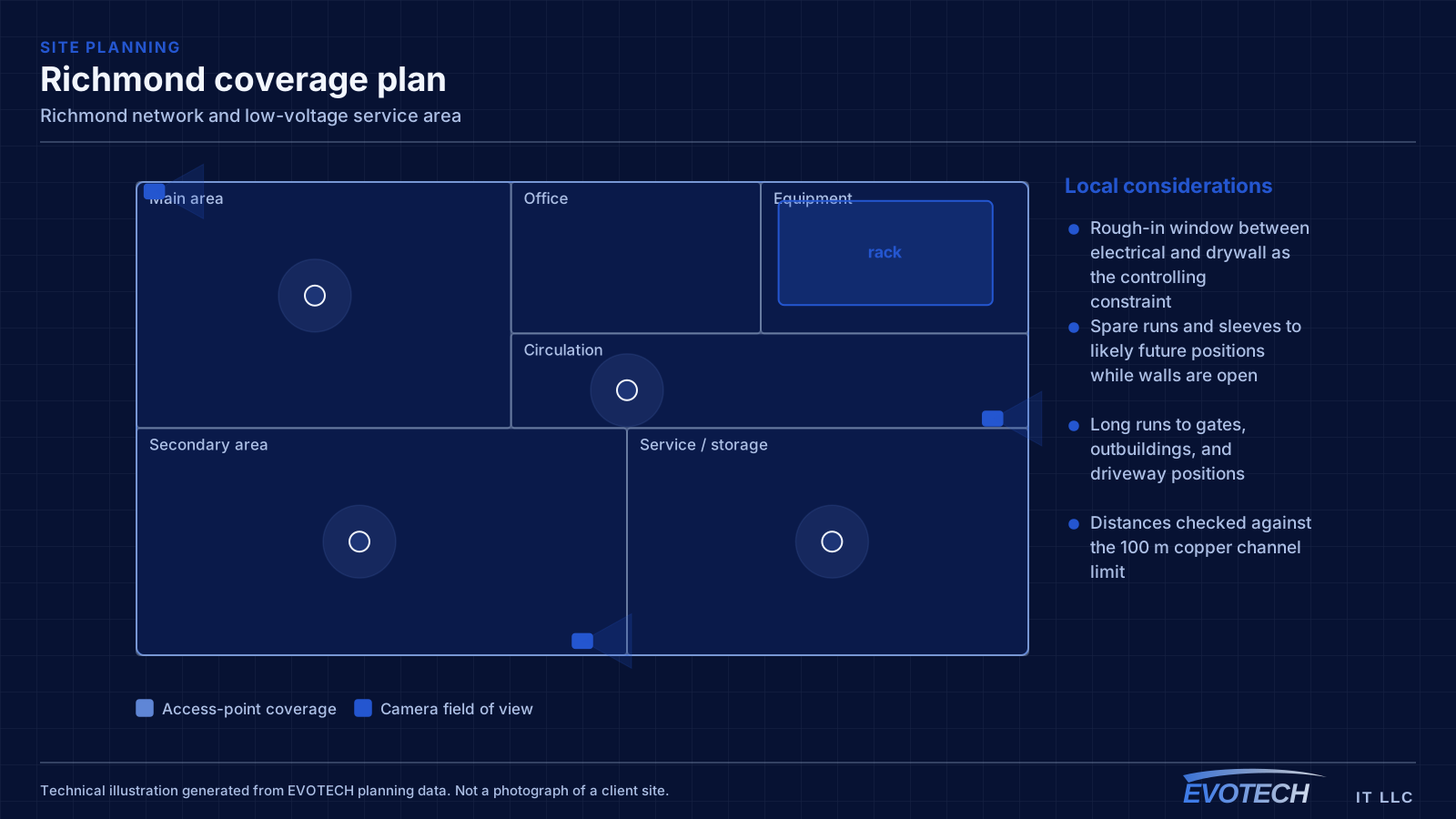
- Rough-in window between electrical and drywall as the controlling constraint
- Spare runs and sleeves to likely future positions while walls are open
- Long runs to gates, outbuildings, and driveway positions
- Distances checked against the 100 m copper channel limit
- Equipment room sized for every system, not just the network
What actually differs in Richmond
These are the specific, verifiable conditions that change how a project is scoped in Richmond — building stock, property mix, and Gulf Coast climate, with no invented landmarks, offices, or permit rules.
- High proportion of new residential and commercial construction, making rough-in timing the dominant scheduling factor
- Larger lots producing long runs to gates, outbuildings, and driveway camera positions that approach or exceed copper distance limits
- Slab-on-grade construction with the rough-in window falling between electrical and drywall
- Conduit and sleeve decisions made during rough-in determining what is possible for the following decade
- Detached structures common enough that between-building links are a routine design question rather than an exception
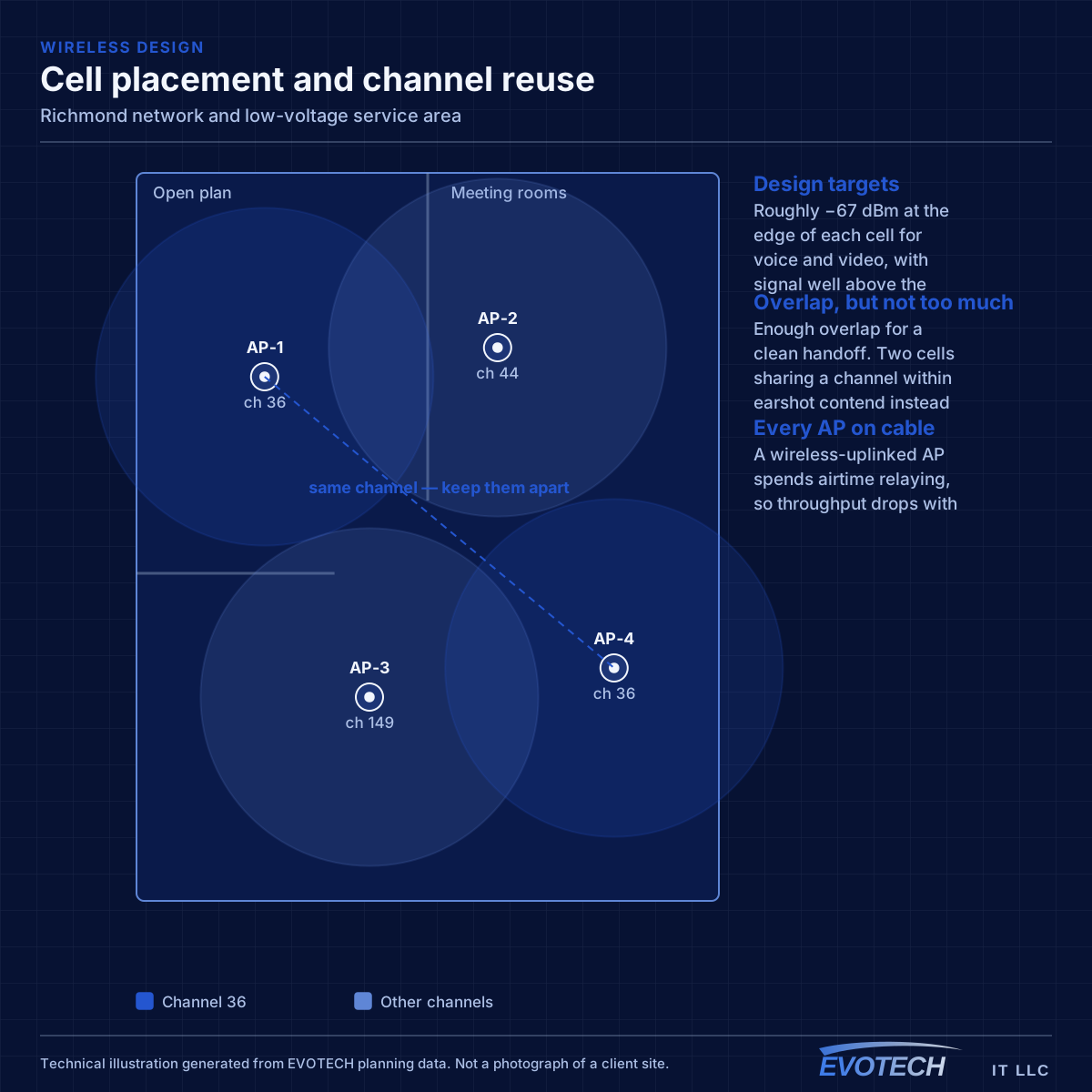
Decisions that must happen before drywall
Three sets of decisions have a hard deadline. Device locations, because cable follows them. Pathway — conduit, sleeves, and rated penetrations — because those are built into the structure. And the equipment room, because its size, power, and ventilation are architectural rather than adjustable.
Equipment selection is not on that list. A run can be pulled to a camera or access-point position without knowing which model will eventually go there, so uncertainty about products is not a reason to defer the pathway.
In Richmond specifically, that planning weighs larger lots producing long runs to gates, outbuildings, and driveway camera positions that approach or exceed copper distance limits, and slab-on-grade construction with the rough-in window falling between electrical and drywall. These are not generic checklist items — they are the conditions that most change cable routes, equipment placement, and coverage decisions here, which is why a short walkthrough or clear photographs settle a Richmond scope faster than a floor plan can. The starting point stays high proportion of new residential and commercial construction, making rough-in timing the dominant scheduling factor, because the right recommendation depends on what the specific building actually allows rather than on the city name.
- Device locations agreed and marked before rough-in
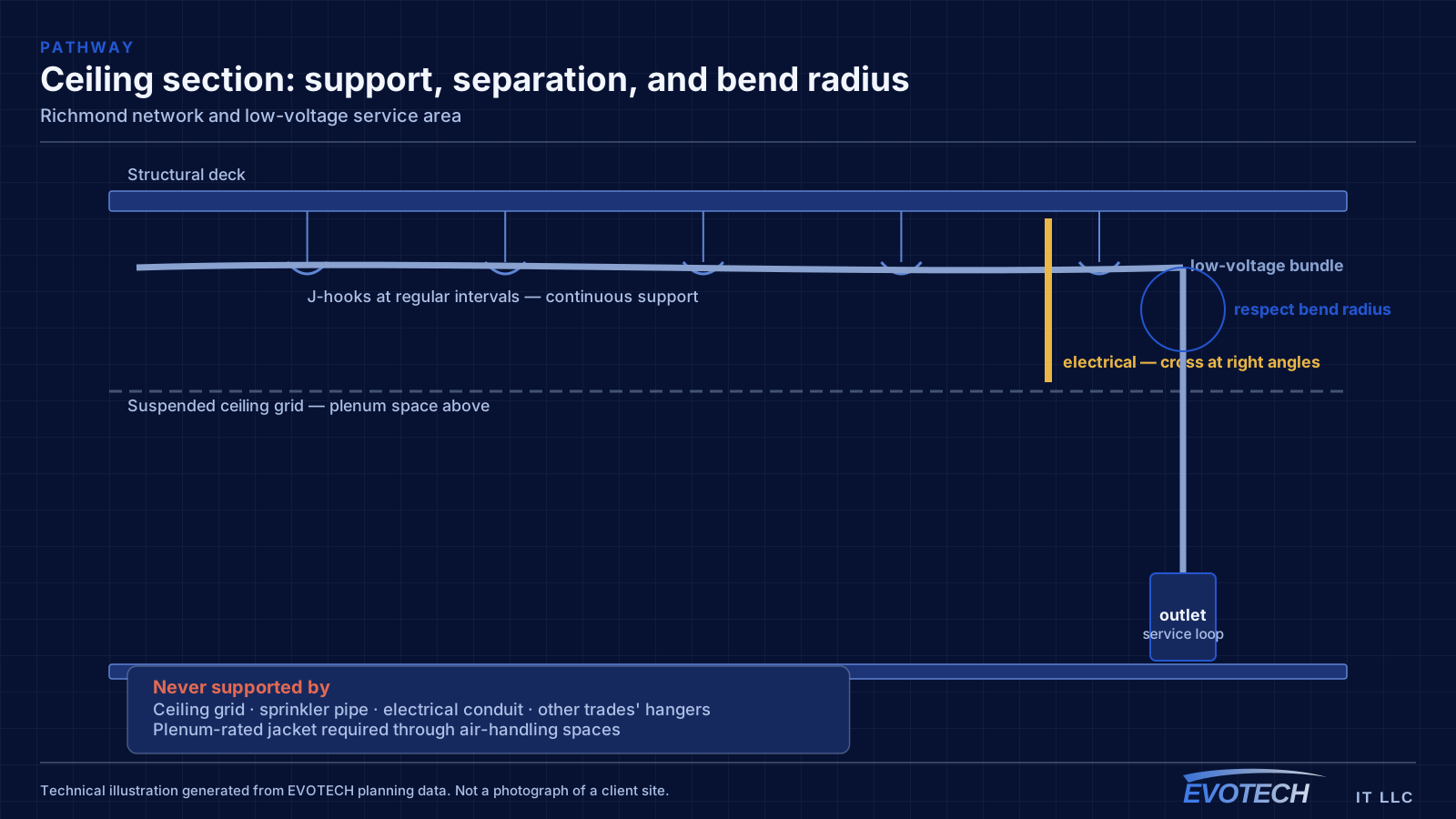
- Conduit and sleeves installed to positions that may be used later
- Rated penetrations sleeved and firestopped properly
- Equipment room with dedicated power, ventilation, and clearance
- Between-building routes decided before slabs and hardscape go in
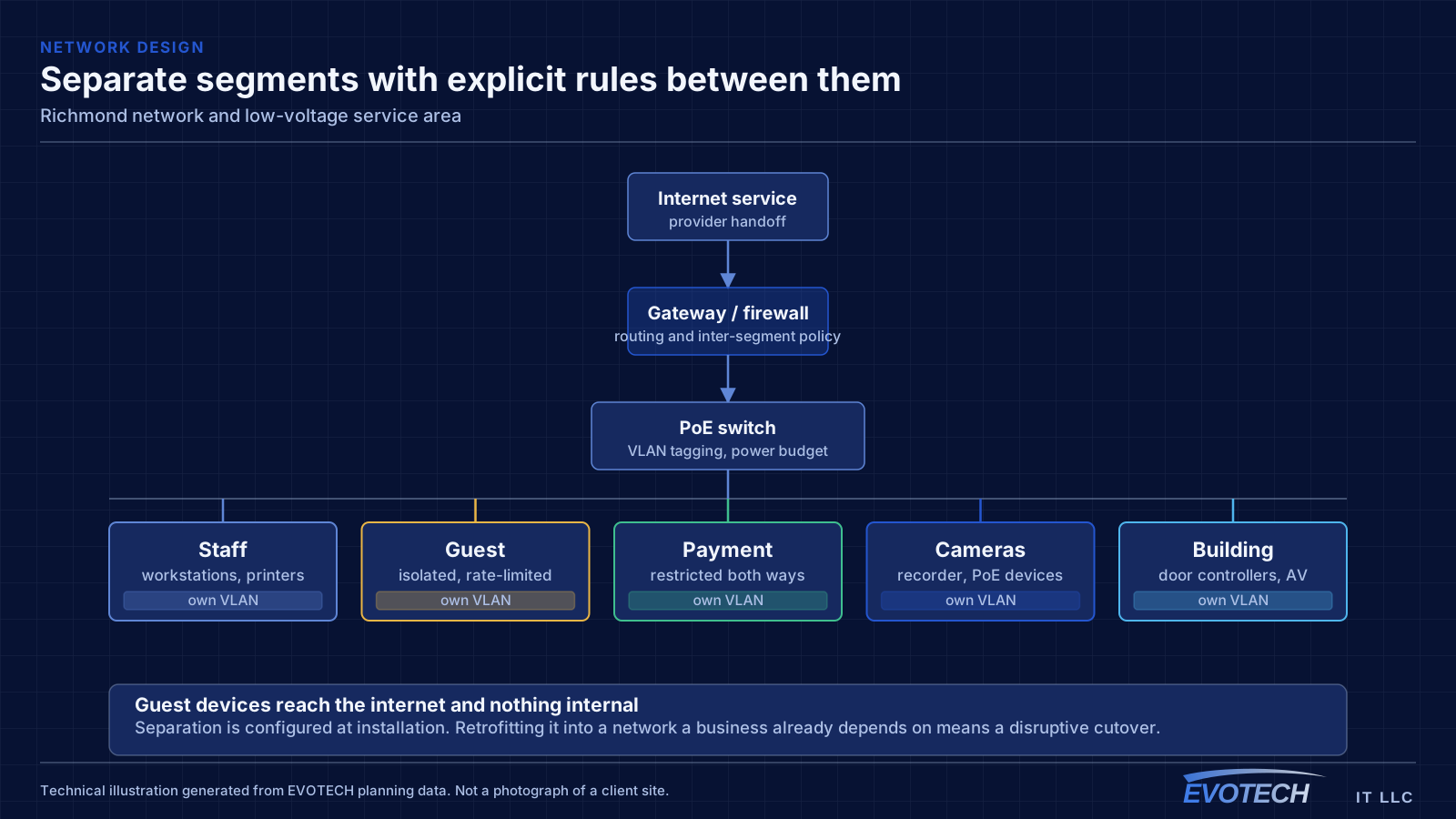
Working against a construction programme
The rough-in window is controlled by trades upstream. Delays compress it without moving the completion date, so readiness matters more than anything — decisions made, materials on site, pathway plan settled before the window opens.
The gap between rough-in and finish is often months. Cable sitting in walls needs protecting and labeling clearly, and as-built documentation completed before the walls close is what makes the return visit efficient rather than exploratory.
On the ground, conduit and sleeve decisions made during rough-in determining what is possible for the following decade, together with detached structures common enough that between-building links are a routine design question rather than an exception, shapes the schedule and the working method as much as the design does. EVOTECH scopes Richmond projects from the actual property rather than assuming one approach fits every building in the market, and keeps the wording as service-area coverage rather than any office claim. Where a fact about Richmond cannot be verified, it is left out rather than invented, which is why this page describes conditions and not landmarks, offices, or response times.
- Readiness before the window opens, since it cannot be extended
- Cable protected and clearly labeled during the gap to finish
- As-built documentation completed before drywall
- Coordination with electrical and mechanical trades on shared pathway
- Exterior and between-building routes planned before hardscape
Explore everything in this section
All 39 pages under Richmond new-construction and retrofit low-voltage work.
- Access-control installation for Richmond properties
- Business phone & VoIP for Richmond properties
- Cat6 cabling for Richmond properties
- Cat6A cabling for Richmond properties
- Commercial IT solutions for Richmond properties
- Commercial Wi-Fi for Richmond properties
- Conference-room AV for Richmond properties
- Data-jack installation for Richmond properties
- Digital signage for Richmond properties
- Ethernet installation for Richmond properties
- Fiber-optic cabling for Richmond properties
- Fireplace TV mounting for Richmond properties
- Floodlight camera installation for Richmond properties
- Gate & license-plate cameras for Richmond properties
- Home theater installation for Richmond properties
- In-wall cable concealment for Richmond properties
- Intercom installation for Richmond properties
- Network cabling for Richmond properties
- Network troubleshooting for Richmond properties
- Network-rack installation for Richmond properties
- NVR installation for Richmond properties
- Outdoor & patio speakers for Richmond properties
- Outdoor TV installation for Richmond properties
- Paging & PA systems for Richmond properties
- PoE camera installation for Richmond properties
- Projector & screen installation for Richmond properties
- Residential Wi-Fi for Richmond properties
- Richmond low-voltage rough-in for new construction
- Samsung Frame TV installation for Richmond properties
- Security-camera installation for Richmond properties
- Smart home & smart locks for Richmond properties
- Soundbar mounting for Richmond properties
- TV mounting for Richmond properties
- Ubiquiti UniFi installation for Richmond properties
- Video wall installation for Richmond properties
- Video-doorbell installation for Richmond properties
- Whole-home & multi-zone audio for Richmond properties
- Wi-Fi installation for Richmond properties
- Wireless bridge (point-to-point) for Richmond properties
Popular services nearby
Frequently searched near this area — the pages people look for most.
Frequently asked questions
How much spare cable should a new build include?
More than the current plan calls for, because the cost asymmetry is severe. A spare run during rough-in is inexpensive; the same run after drywall may cost several times as much or be impossible. Terminating and labeling spare runs to likely access-point, camera, and display positions is among the cheapest decisions in the whole project.
What about a gate or a detached building at the far end of the lot?
Check the distance first. Past the 100-metre copper channel limit there is no compliant copper answer, and between separately grounded structures a copper run also creates an electrical risk. Fiber with local power addresses both. Deciding this before slabs and hardscape are placed is much easier than afterwards.
Does equipment need to be selected before rough-in?
No, and waiting is often sensible. What has to be decided is where things go, because that determines where cable is pulled. A run to a ceiling position works regardless of which access point eventually mounts there, so product uncertainty is not a reason to skip the pathway.