

Why this page exists
Video-doorbell installation in Richmond is scoped around the same physical realities EVOTECH weighs everywhere — but read through Richmond's specific conditions: high proportion of new residential and commercial construction, making rough-in timing the dominant scheduling factor. This page pairs what the service actually involves with what the Richmond market changes about it.
A video doorbell is a small camera with a doorbell button, and the three things that make it work well are adequate power, a sensible viewing angle, and a solid network connection at the door. Existing doorbell wiring often provides power, but many older transformers were sized for a mechanical chime and do not supply enough for a camera that streams and records.
What video-doorbell installation usually involves
The most common failure is a doorbell that works intermittently, drops its video, or reboots when someone presses the button. That pattern almost always indicates insufficient power — either a transformer below the required rating or a chime configuration the device cannot work with.
The second is wireless. The front door is frequently the furthest point from the router, often through an exterior wall and sometimes behind brick veneer. A device with a marginal connection produces delayed notifications and choppy video, and no amount of doorbell configuration fixes a signal problem.
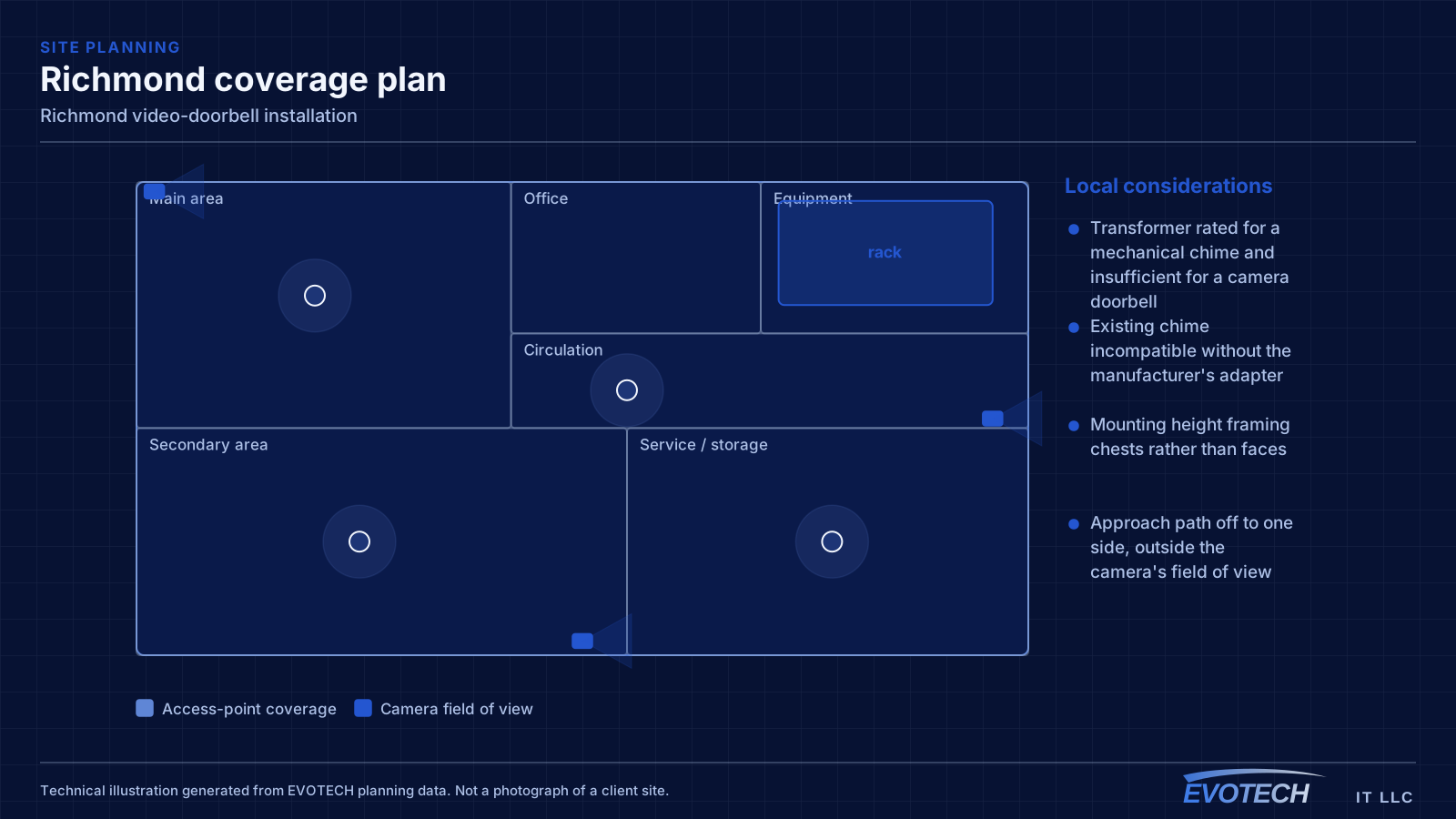
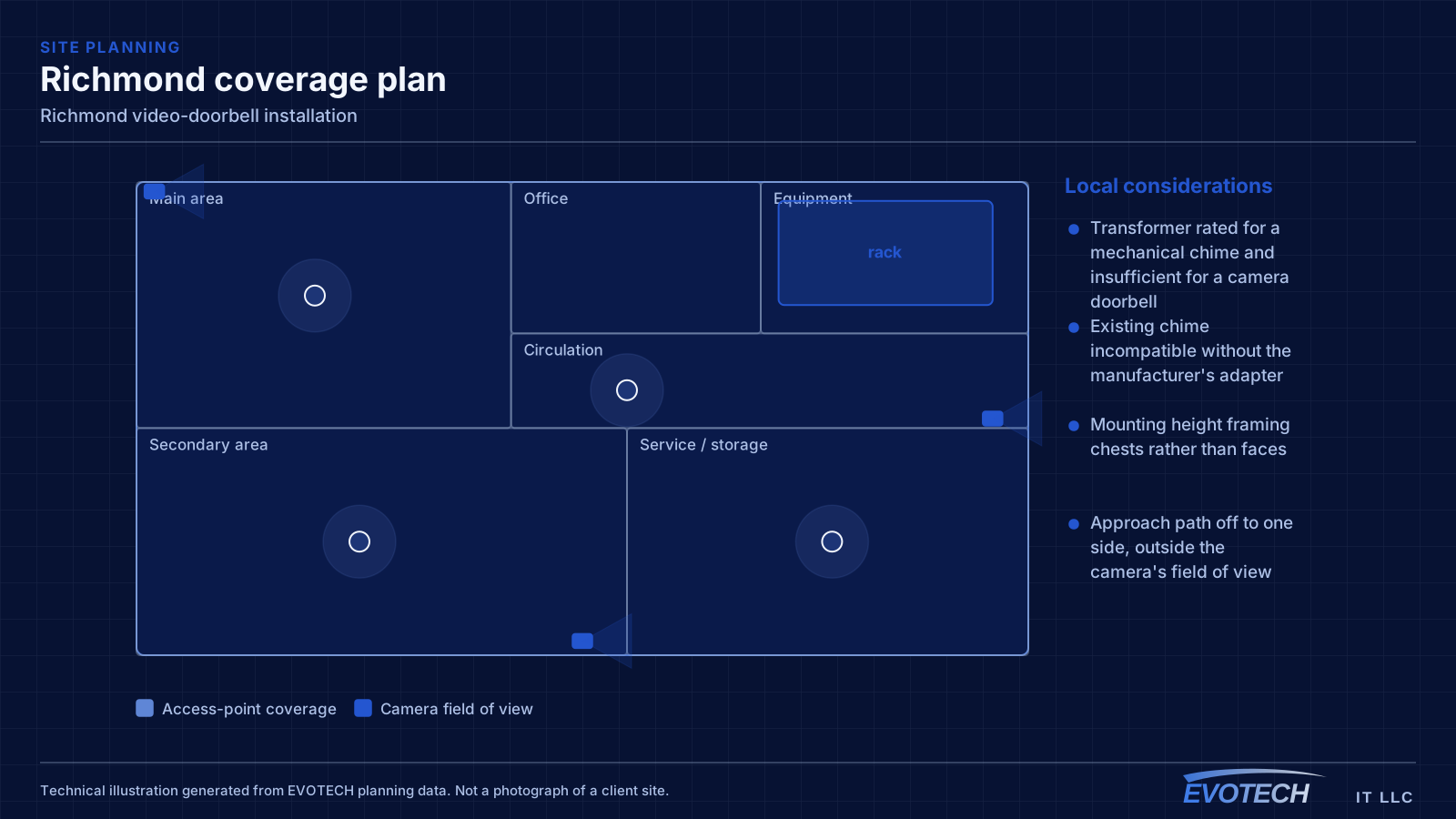
- Transformer rated for a mechanical chime and insufficient for a camera doorbell
- Existing chime incompatible without the manufacturer's adapter
- Mounting height framing chests rather than faces
- Approach path off to one side, outside the camera's field of view
- Weak wireless signal at the door causing delays and dropped clips
- Direct sun or a bright background silhouetting visitors at certain times of day
Richmond property conditions that change the plan
When the walls are open, running cable anywhere is straightforward and running spare cable is nearly free. The value of the pre-rough-in conversation is entirely in deciding where things go, because that decision is what determines whether a future camera, access point, or display position is a simple addition or an impossibility.
Larger lots add a distance dimension that tighter suburban plots do not. A gate position, a detached workshop, or a driveway camera can sit far enough from the equipment room that copper is not the right answer, and that needs establishing during design rather than discovering during installation.
Three sets of decisions have a hard deadline. Device locations, because cable follows them. Pathway — conduit, sleeves, and rated penetrations — because those are built into the structure. And the equipment room, because its size, power, and ventilation are architectural rather than adjustable.
- Rough-in window between electrical and drywall as the controlling constraint
- Spare runs and sleeves to likely future positions while walls are open
- Long runs to gates, outbuildings, and driveway positions
- Distances checked against the 100 m copper channel limit
- Equipment room sized for every system, not just the network
- Device locations agreed and marked before rough-in
- Conduit and sleeves installed to positions that may be used later
- Rated penetrations sleeved and firestopped properly
- Equipment room with dedicated power, ventilation, and clearance
- Between-building routes decided before slabs and hardscape go in
Getting video-doorbell installation done in Richmond
Camera doorbells specify a voltage and minimum VA rating for their transformer. Many houses have transformers sized only for a mechanical chime, which is a much smaller load. When the supply is marginal the device may appear to work and then fail when the camera and radio draw peak current — typically at the moment the button is pressed. Replacing the transformer with one meeting the device specification resolves a large share of these cases.
The rough-in window is controlled by trades upstream. Delays compress it without moving the completion date, so readiness matters more than anything — decisions made, materials on site, pathway plan settled before the window opens.
- Readiness before the window opens, since it cannot be extended
- Cable protected and clearly labeled during the gap to finish
- As-built documentation completed before drywall
- Coordination with electrical and mechanical trades on shared pathway
- Exterior and between-building routes planned before hardscape
Popular services nearby
Frequently searched near this area — the pages people look for most.
Frequently asked questions
Does EVOTECH have an office in Richmond?
No. This is a service-area page: EVOTECH serves Richmond without claiming a physical office there. The wording stays as coverage, not a location claim.
Why does the doorbell keep going offline or restarting?
Most often the transformer. Many houses have a transformer sized for a mechanical chime, which is a much smaller load than a camera doorbell. The device appears to work until it draws peak current — usually at the button press — and then drops. Confirming the transformer meets the device's stated voltage and VA rating resolves a large share of these cases.
How much spare cable should a new build include?
More than the current plan calls for, because the cost asymmetry is severe. A spare run during rough-in is inexpensive; the same run after drywall may cost several times as much or be impossible. Terminating and labeling spare runs to likely access-point, camera, and display positions is among the cheapest decisions in the whole project.