The short version
A business does not need a network, then some cameras, then a phone system, then Wi-Fi, each chosen by a different vendor at a different time. It needs those systems designed to work together on shared infrastructure, sized for how the business will grow, and delivered so one party is accountable for the whole thing working. That is what commercial IT solutions means here: the full low-voltage and network stack — structured cabling, managed switching and Wi-Fi, cameras, access control, and phones — planned as a single system rather than assembled from disconnected projects.
The value is in the coordination. Systems bought piecemeal end up on one flat network with no segmentation, with cabling that suits none of them well, and with nobody able to say why something does not work because each vendor points at the others. A coordinated design puts them on shared, properly segmented infrastructure and gives the business one number to call.
Shared infrastructure, segmentation, continuity, and headroom
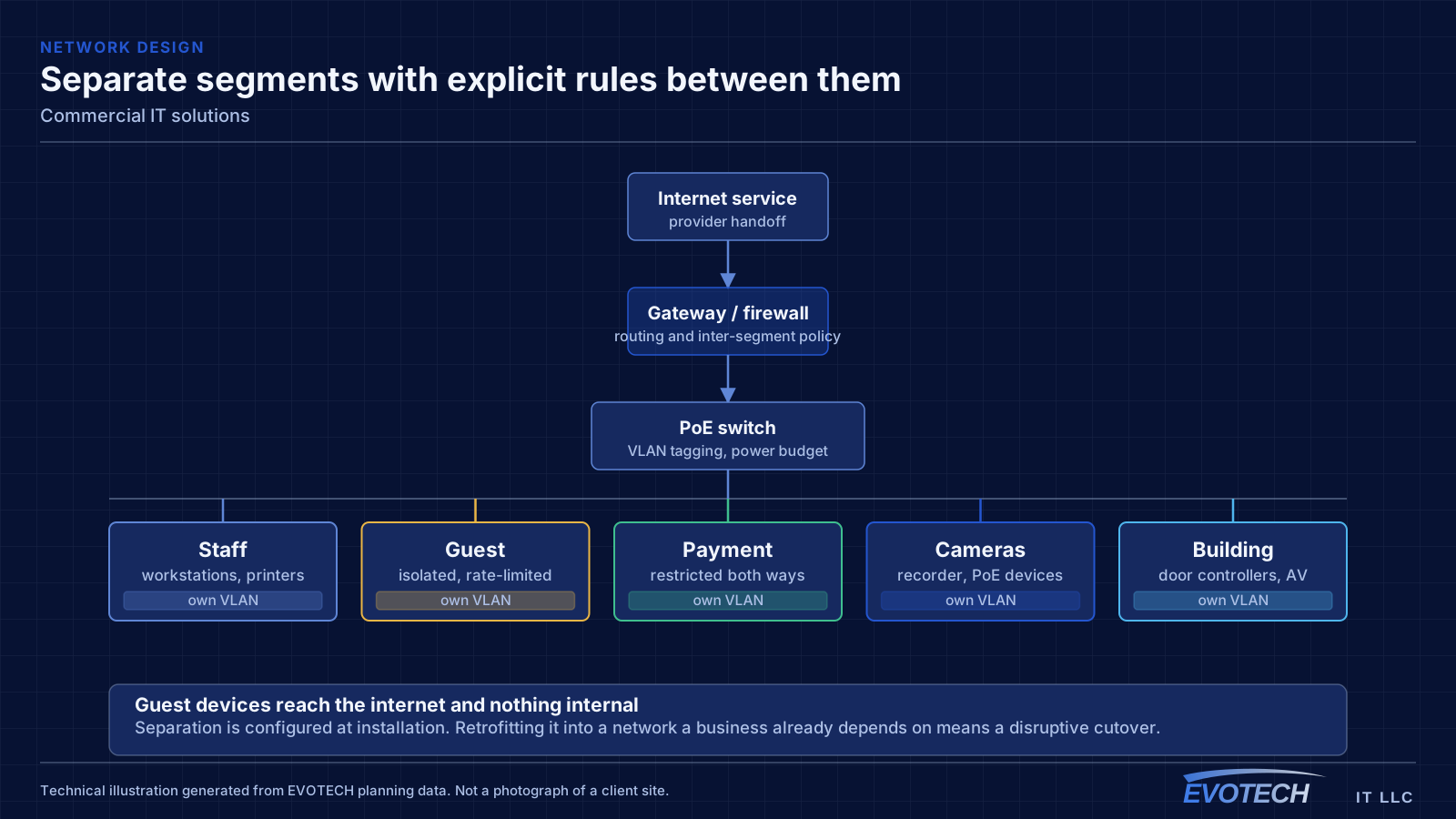
A coordinated design starts from a single structured-cabling backbone and managed switching that every system rides on. Segmentation then keeps them apart at the network level — staff, guests, payment, cameras, phones, and building systems each on their own segment with defined rules — so the systems share the wiring without sharing risk. This is ordinary practice done deliberately across the whole estate rather than per project.
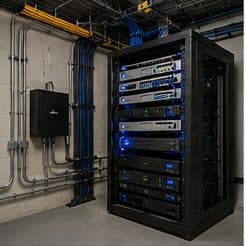
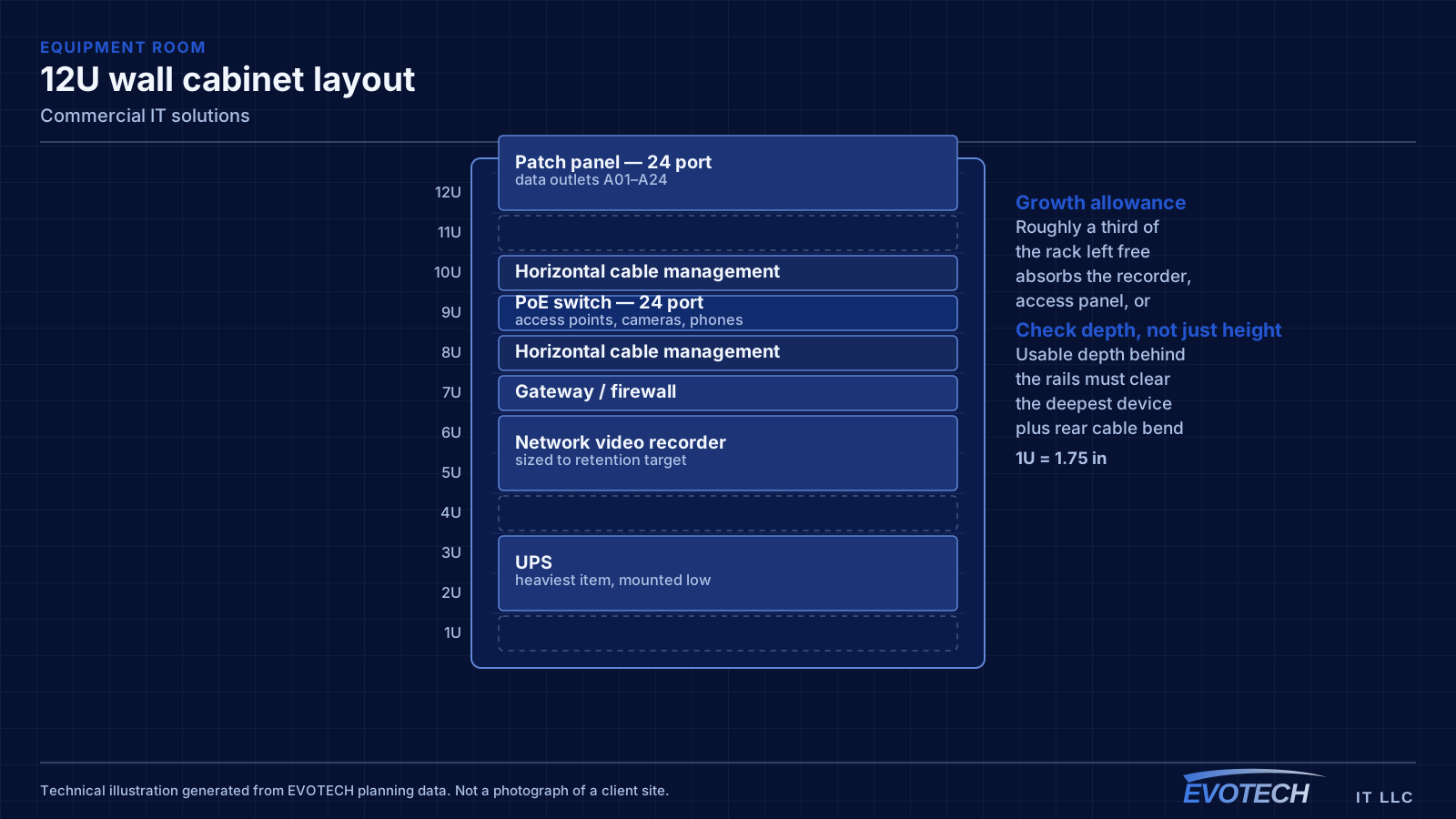
Business continuity is designed in rather than bolted on. The equipment room is sized and powered for everything it carries, protected by a UPS, and where uptime matters, the internet and critical systems get failover so a single outage does not stop the business. These are decisions that are cheap to make at design time and expensive to retrofit into a running operation.
Headroom is the difference between a project and a recurring one. Cabling with spare capacity, switching with spare ports and PoE budget, and a rack with room to grow mean the next hire, the next camera, or the next phone is an addition rather than a rebuild. Sizing for the growth curve rather than the current count is the single decision that most affects total cost over the life of the fit-out.
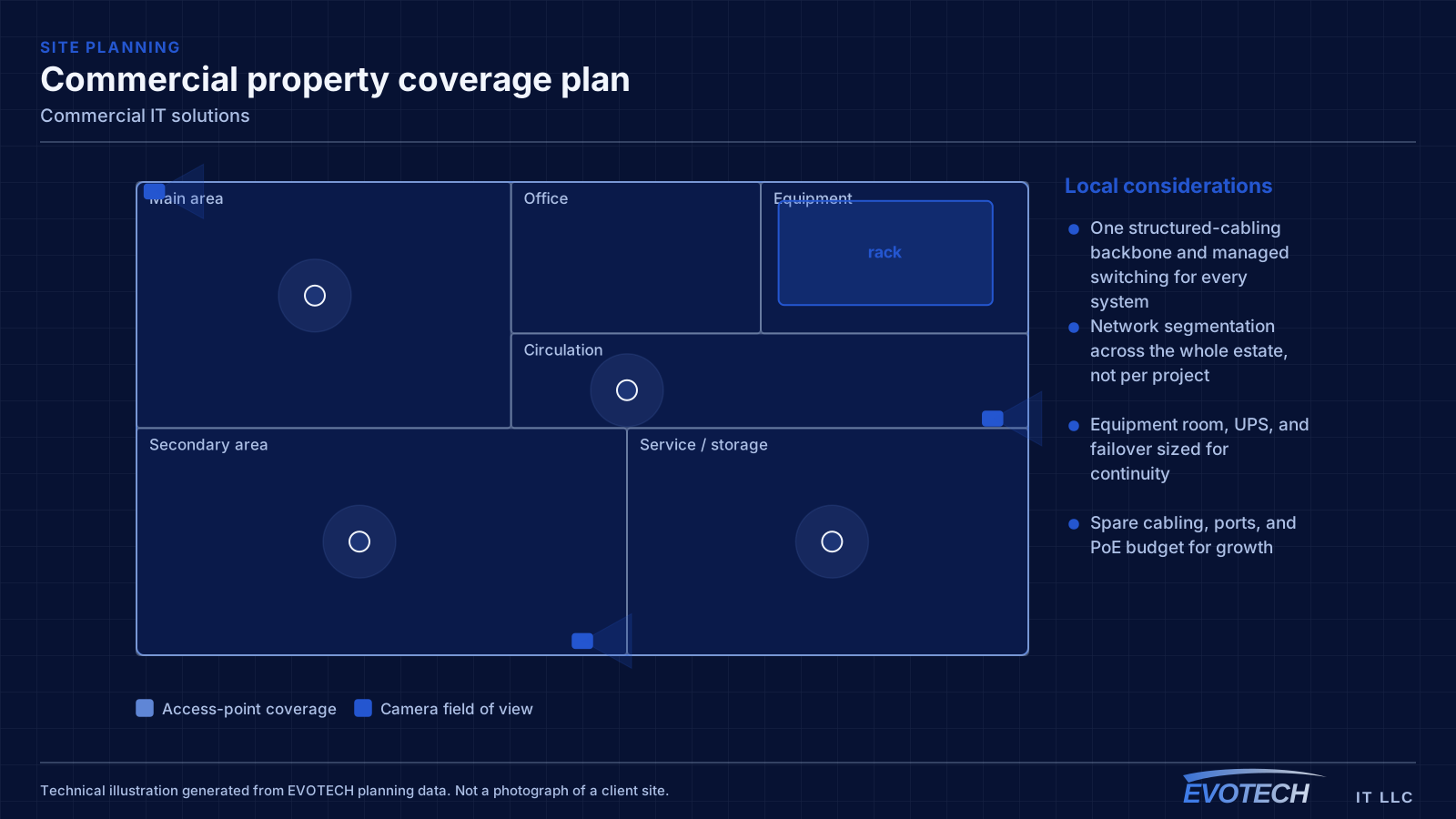
- One structured-cabling backbone and managed switching for every system
- Network segmentation across the whole estate, not per project
- Equipment room, UPS, and failover sized for continuity
- Spare cabling, ports, and PoE budget for growth
- A documented, consistent design across multiple sites
Who this work is for
This is the umbrella service for businesses treating their technology as infrastructure rather than a series of purchases.
- New office, retail, or warehouse fit-outs needing the whole stack at once
- Relocations moving and re-establishing systems with minimal downtime
- Growing businesses that outgrew equipment bought piecemeal
- Multi-site operations wanting consistent infrastructure across locations
- Owners who want one accountable party rather than several vendors
What tends to go wrong
The defining problem is fragmentation. Each system was bought on its own, so they share one unsegmented network, compete for the same uplink, and were cabled to whatever suited that day's installer. When something misbehaves, no single vendor owns the outcome, and the business becomes the integrator by default.
The second is planning for today rather than the growth curve. Infrastructure sized exactly to current headcount needs replacing the moment the business adds people or systems, whereas a design with headroom absorbs growth without another disruptive project.
- Systems on one flat network with no separation between them
- Cabling and switching that suit none of the systems well
- No single party accountable when something breaks
- Infrastructure sized to today, requiring rework as the business grows
- Relocations that lose days because the cutover was not coordinated
- Multiple sites each built differently, so support is inconsistent
How the work runs
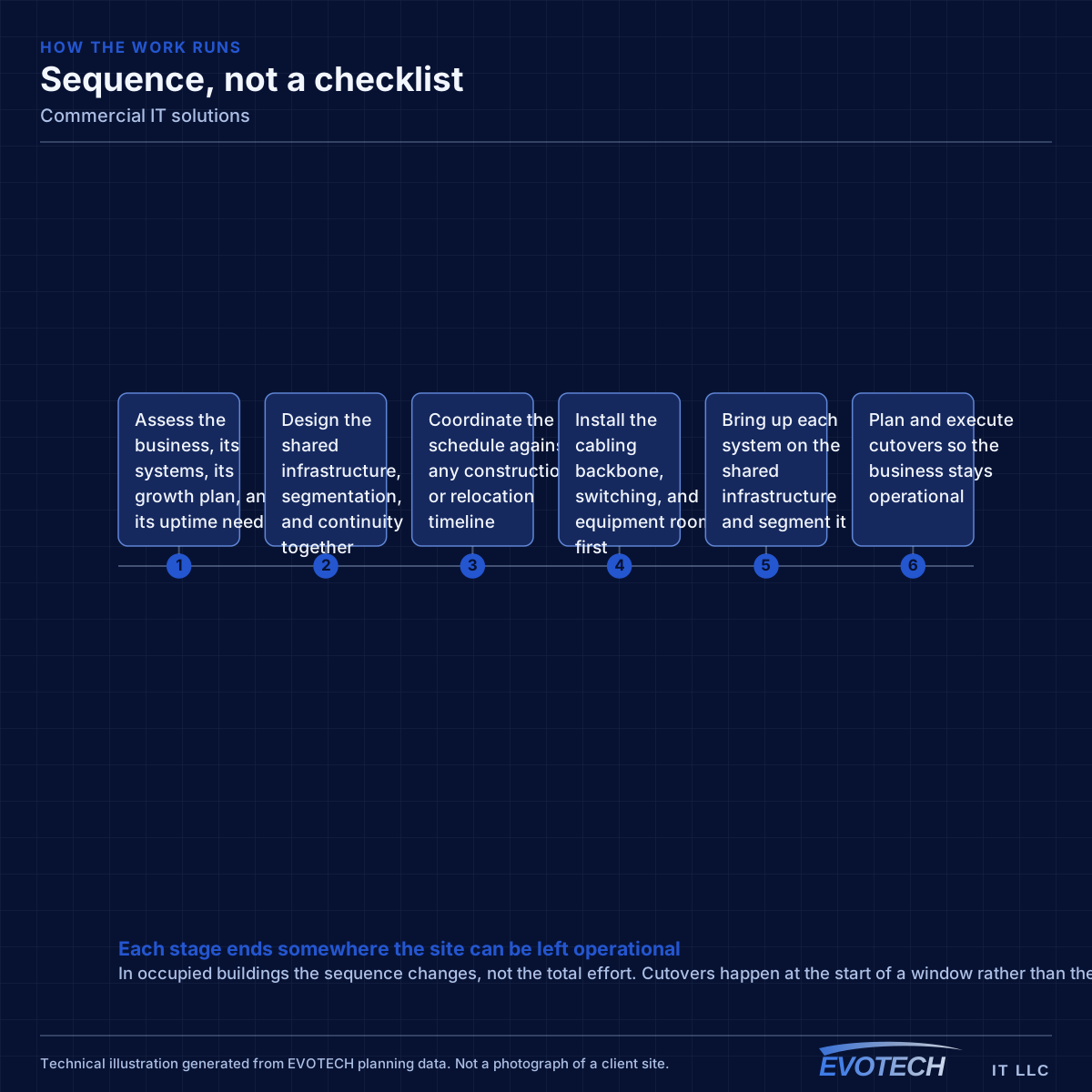
A commercial IT project is run as one coordinated programme, from assessment to handover.
- Assess the business, its systems, its growth plan, and its uptime needs
- Design the shared infrastructure, segmentation, and continuity together
- Coordinate the schedule against any construction or relocation timeline
- Install the cabling backbone, switching, and equipment room first
- Bring up each system on the shared infrastructure and segment it
- Plan and execute cutovers so the business stays operational
- Document the whole design and hand over one accountable support path
What changes the scope
Scope is driven by the number of systems, the site count, and the continuity requirements.
- Which systems are in scope and how they integrate
- Site size, count, and whether it is a fit-out or a relocation
- Uptime and business-continuity requirements
- Growth headroom designed into the infrastructure
- Existing systems to migrate versus new installation
- Ongoing support and management expectations
Testing and verification
A coordinated system is verified as a whole, not one component at a time.
- Every system confirmed working on its segment
- Segmentation verified by attempting cross-system access
- Failover and UPS runtime tested against the continuity plan
- Relocation cutovers confirmed with the business operational at open
- Documentation reconciled against what was actually installed
- A single support path confirmed and handed over
What drives the cost
Breadth, site count, and continuity requirements drive the cost more than any single system.
- Number of systems and the integration between them
- Site size and count
- Continuity provision: UPS, failover, and equipment-room build
- Growth headroom designed in
- Migration of existing systems versus new build
- Whether ongoing management is included
Common mistakes
Commercial technology fails on coordination far more than on components.
- Buying each system separately and inheriting a flat, fragile network
- Cabling for one system at a time rather than a shared backbone
- Sizing infrastructure to today and rebuilding at the next hire
- No accountable party, leaving the business to integrate its own vendors
- Relocating without a coordinated cutover and losing days
- Building each site differently, so support never gets consistent
Honest limitations
These are the boundaries of what this service can do, stated up front rather than discovered later.
- A coordinated design improves how systems work together; it cannot exceed the capacity of the internet circuit delivered to the building.
- Business-continuity features such as failover reduce but do not eliminate the impact of every possible outage.
- Growth headroom is sized to a stated plan; a change in that plan may change the design.
- This is the integration umbrella; each underlying system also has its own dedicated service page.
Frequently asked questions
How is this different from just hiring separate installers?
Coordination and accountability. Separate installers each optimise their own system, which is how a business ends up with everything on one flat network, cabling that suits nobody, and no one able to say why something does not work. A coordinated design puts every system on shared, segmented infrastructure and gives you one party accountable for the whole thing working — which is usually cheaper over the life of the fit-out, not just simpler.
Can you handle an office relocation without downtime?
The goal is minimal downtime, achieved by coordinating the cutover rather than moving everything at once and hoping. The infrastructure at the new site is built and tested ahead of the move, systems are brought over in a planned sequence, and the switch-over is timed so the business is operational when it opens. Some systems — phone numbers in particular — depend on carrier timelines that are planned around rather than promised to the hour.
How much should we build for growth?
Enough that the next hire or the next system is an addition, not a rebuild — spare cabling, spare switch ports and PoE budget, and rack space. The exact amount comes from your growth plan, and it is the single decision that most affects total cost over the life of the installation, because reopening finished infrastructure is far more expensive than the headroom would have been.
Do we have to do everything at once?
No, but the shared infrastructure benefits from being planned as one even if it is delivered in phases. The cabling backbone, switching, and equipment room laid in first mean cameras, phones, or additional Wi-Fi added later drop onto a design that already anticipated them — rather than each becoming its own disruptive retrofit. Phasing the delivery is fine; fragmenting the design is what causes the problems.