The short version
Network cabling is the permanent copper and fiber pathway between a building's equipment room and every device location. Done properly it is a structured system — horizontal runs from a patch panel out to labeled outlets, each one under the 90-metre permanent-link limit, each one tested and documented. Done casually it is a bundle of unlabeled patch cords stapled to a joist, and every future change costs someone an afternoon of tracing.
The reason cabling deserves planning attention is that it is the longest-lived part of the system. Switches get replaced on a five-year cycle and access points sooner, but the cable in the wall tends to stay for the life of the tenancy. Deciding where outlets go, how many, and what category of cable feeds them is a decision that either quietly supports the next decade or quietly constrains it.
Distance, pathway, and pair-twist decisions that set the outcome
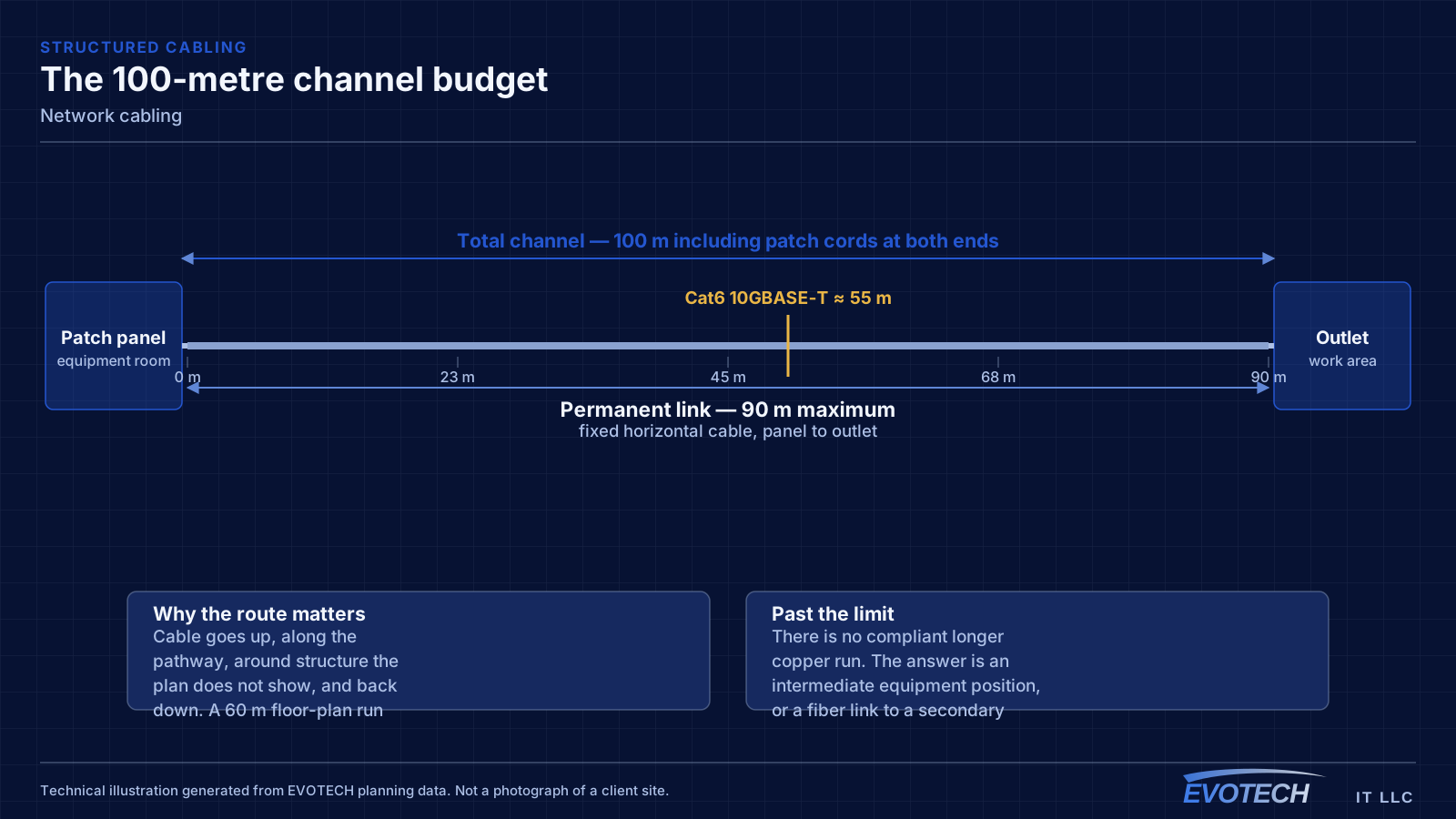
The governing number is the 90-metre permanent link: the fixed cable from patch panel to outlet. Adding patch cords at both ends brings the total channel to 100 metres. That budget disappears faster than people expect once the cable goes up into the ceiling, across the building, down a wall, and back. A run that measures 70 metres on a floor plan can easily land at 95 metres in reality.
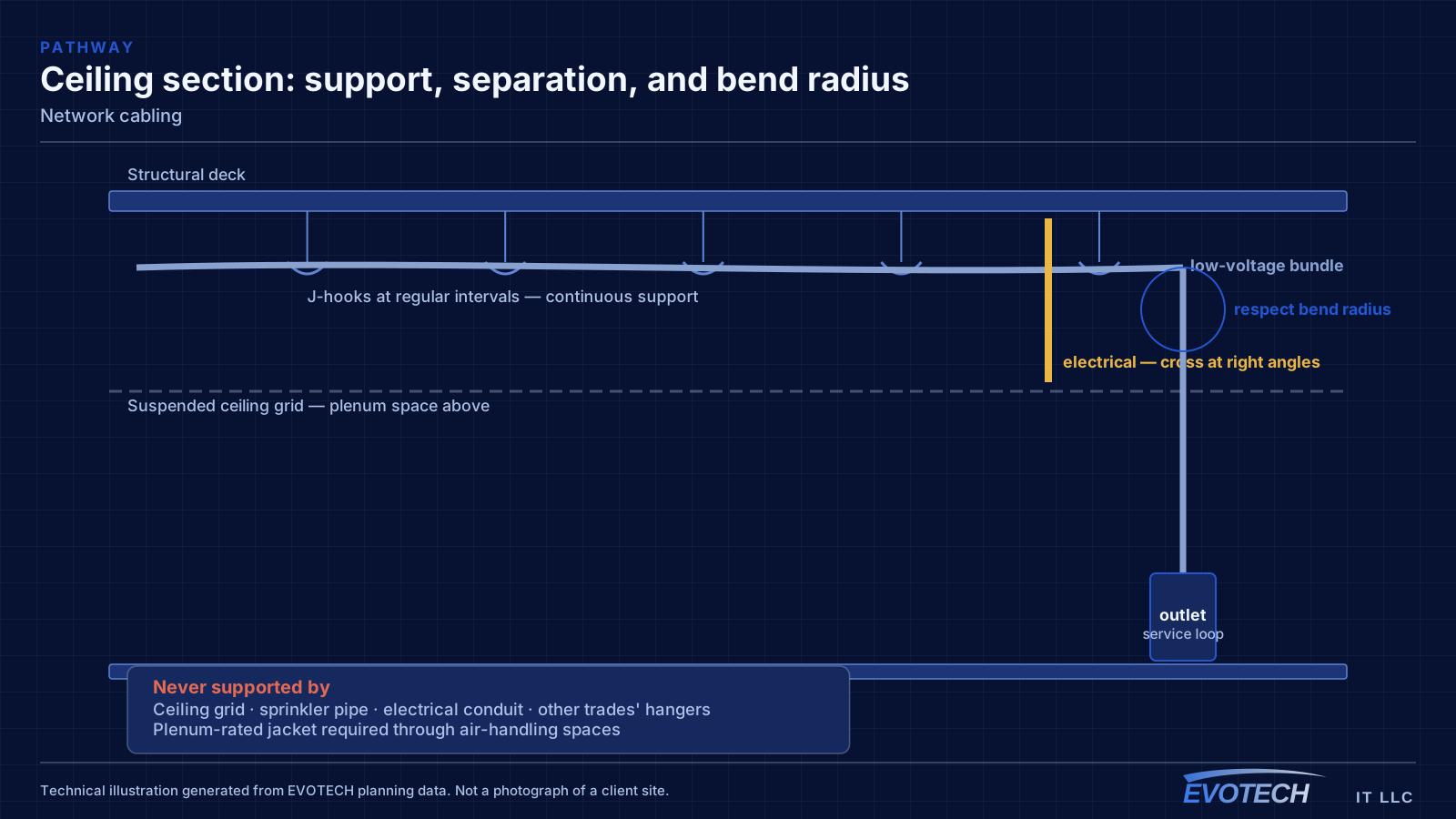
Pathway choice matters as much as cable choice. Cable needs continuous support — J-hooks or tray at regular intervals rather than resting on ceiling tiles or hanging off pipework. Where a run parallels electrical conduit, separation keeps induced noise down; crossing at right angles is preferable to running alongside for tens of feet. Bend radius is the other quiet killer: tight corners and over-cinched tie-wraps deform the pair geometry that gives twisted-pair cable its noise rejection in the first place.
At the termination, the untwisted length at the jack should be minimal. Every extra centimetre of untwisted pair is a small crosstalk penalty, and those penalties accumulate across a channel. Plenum-rated jacket is required where the cable passes through an air-handling space, which in a typical suspended-ceiling office means most of the horizontal run.
- 90 m permanent link, 100 m total channel including patch cords
- Continuous cable support rather than ceiling-tile or pipe bearing
- Separation from parallel electrical runs; cross at right angles where unavoidable
- Bend radius respected at corners, in the rack, and behind the outlet
- Plenum-rated jacket where the pathway shares an air-handling space
What tends to go wrong
Most cabling complaints are not really about speed. They are about traceability and change cost. When nobody can tell which jack feeds which port, a five-minute move becomes a two-hour investigation, and the temptation is to run one more cable rather than fix the underlying mess.
The second cluster of problems is physical: runs that exceed distance limits, cable that has been kinked or over-tensioned during the pull, terminations that violate the pair twist, and shared pathways with electrical conduit that inject noise the switch then has to correct for.
- Unlabeled outlets and patch panels that make every move-add-change expensive
- Runs pushed past the 90-metre permanent-link limit, so the link negotiates down or drops
- Untwisted pairs at the termination point degrading crosstalk performance
- Cable draped on ceiling grid or tie-wrapped to sprinkler pipe rather than supported properly
- No spare capacity, so every new device triggers a new pull

How the work runs
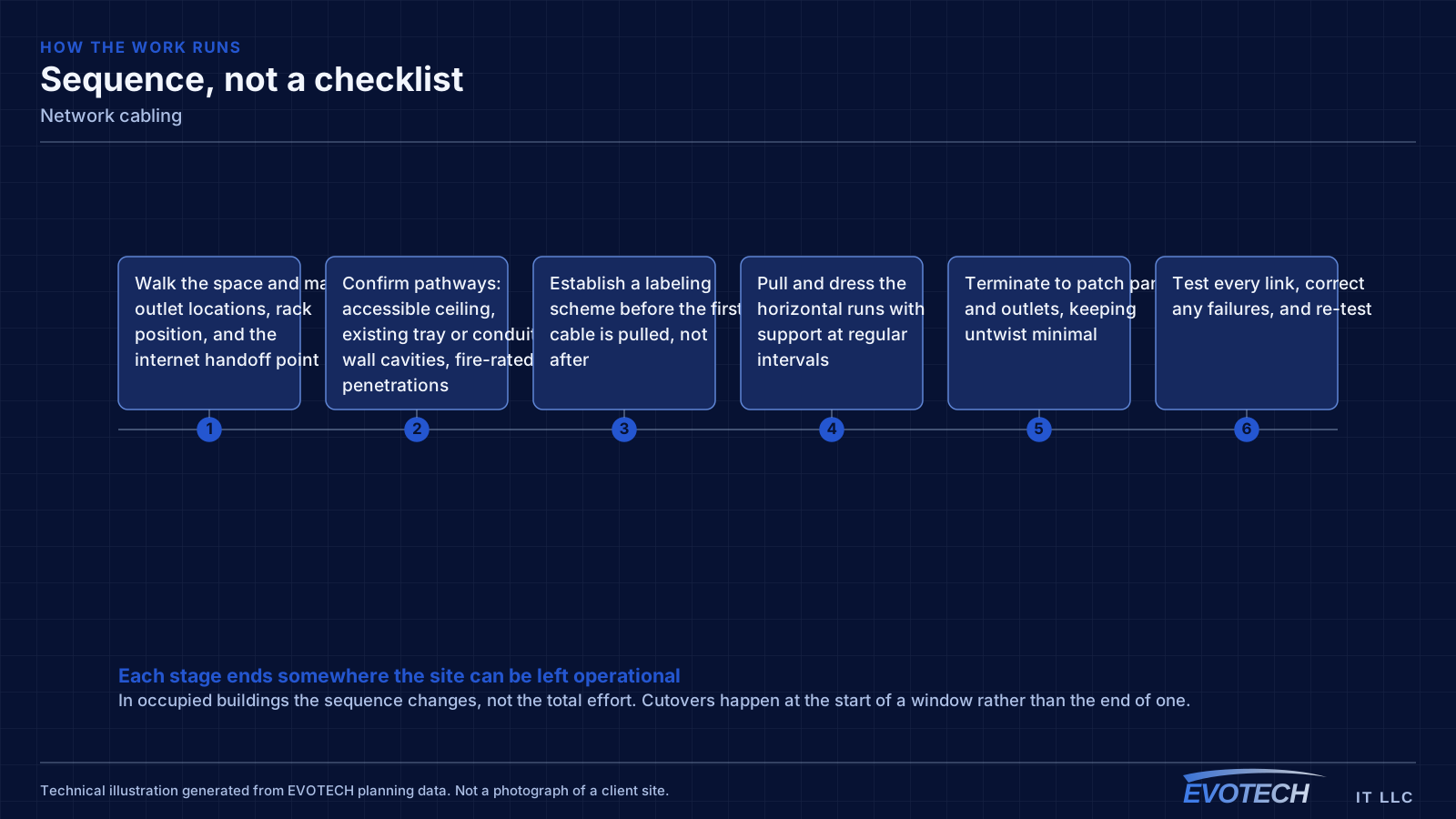
The sequence is deliberately front-loaded. Walking the pathway before pulling anything is what prevents the expensive surprises — a firewall with no sleeve, a hard-lid ceiling with no access, a rack location with no dedicated circuit nearby.
- Walk the space and mark outlet locations, rack position, and the internet handoff point
- Confirm pathways: accessible ceiling, existing tray or conduit, wall cavities, fire-rated penetrations
- Establish a labeling scheme before the first cable is pulled, not after
- Pull and dress the horizontal runs with support at regular intervals
- Terminate to patch panel and outlets, keeping untwist minimal
- Test every link, correct any failures, and re-test
- Hand over labeled panels, a port-to-outlet map, and the test results
What changes the scope
Two buildings with the same square footage can differ by a factor of three in cabling effort. What drives that spread is access, not area.
- Ceiling type: accessible grid versus hard lid, and whether the plenum is shared
- Building age and whether existing pathway can be reused
- Number of outlets and whether each location gets one, two, or more
- Rack or wall-cabinet location relative to the incoming service
- Fire-rated wall and floor penetrations requiring proper sleeving and firestop
- Occupied-space constraints: after-hours access, dust control, furniture protection
- Whether the design leaves spare capacity for the next expansion
Testing and verification
Testing is what separates a cabling installation from a cable pull. A basic continuity or wire-map check confirms the pairs land in the right order; it says nothing about whether the link will carry its rated bandwidth. Certification testing against the relevant TIA channel or permanent-link limits measures insertion loss, return loss, near-end crosstalk, and delay skew, and produces a per-port record.
The practical value of that record shows up later. When a port misbehaves two years on, a stored baseline turns an argument into a comparison.
- Wire map on every link to catch reversed, split, or crossed pairs
- Length verification against the permanent-link budget
- Certification against TIA limits for the installed category where the project calls for it
- Re-test after any correction, and store the results with the as-built documentation
What drives the cost
Cabling scope is priced from conditions, not from a per-outlet number, which is why a walkthrough or a good set of photos changes an estimate more than any other input. The largest single driver is usually whether the pathway already exists.
- Total run count and average run length
- Whether existing tray, conduit, or sleeves can be reused
- Ceiling and wall construction, including hard-lid areas requiring cut and patch
- Category of cable specified and whether shielding is required
- Depth of testing and documentation requested
- Working hours: occupied space and after-hours windows extend the schedule
Common mistakes
The recurring mistakes are not exotic. They are the shortcuts that save an hour during installation and cost days later.
- Pulling cable before agreeing on a labeling scheme
- Sizing the rack and panel for today's port count with no spare capacity
- Running low-voltage cable alongside electrical for long parallel stretches
- Supporting cable on ceiling grid, sprinkler pipe, or other trades' hangers
- Skipping certification and discovering marginal links only when a device misbehaves
Who this work is for
Structured cabling work usually starts from one of three situations: a tenant improvement where the space is open and the ceiling is accessible, an occupied building that has outgrown whatever was installed by a previous tenant, or a new build where the low-voltage rough-in has to land between the electrical and drywall stages.
- Office suites adding desks, phones, or access points beyond the original outlet count
- Retail and restaurant spaces wiring point-of-sale stations, kitchen displays, and back-office equipment
- Warehouses feeding scanners, ceiling-mounted access points, and dock-door cameras
- General contractors who need low-voltage rough-in coordinated with the electrical trade
- Property managers inheriting a wiring closet with no labels and no documentation
Honest limitations
These are the boundaries of what this service can do, stated up front rather than discovered later.
- Cabling improves the local network path. It cannot improve the speed of the internet circuit delivered to the building.
- Distance limits are physical. A location beyond the permanent-link budget needs an intermediate equipment position or a fiber link, not a longer copper run.
- Pricing depends on pathway conditions that usually cannot be confirmed from a floor plan alone.
- Work inside fire-rated assemblies requires proper sleeving and firestopping, which may involve other trades.
Frequently asked questions
How long can a single network cable run be?
The fixed cable between patch panel and outlet is limited to 90 metres, with patch cords at each end bringing the total channel to 100 metres. Beyond that, the answer is not a longer cable — it is either an intermediate equipment location or a fiber link to a secondary switch.
Can new cabling be installed while the space is occupied?
Usually yes, though it changes the sequence. Work tends to be split into ceiling access, pulls, and terminations, with dust control and furniture protection in occupied areas. Spaces that cannot tolerate disruption during business hours are scheduled into evening or weekend windows, which lengthens the calendar even when the labour hours are similar.
Do you need to replace existing cable, or can it be reused?
It depends on what is there and what it has to carry. Existing runs that test clean at the required category and land in usable locations are worth keeping. Runs that fail certification, exceed distance, or terminate in the wrong places are usually cheaper to replace than to chase.
What documentation should be handed over at the end?
At minimum: labeled patch panel and outlets using a consistent scheme, a port-to-location map, and the test results for each link. That set is what makes the next change cheap instead of exploratory.