The short version
Watching a gate or driveway and reading the license plates that come through it are two different objectives, and they usually need two different cameras. An overview camera shows the scene — who arrived, what happened — with a wide, well-lit view. A license-plate camera is tuned narrowly for one thing: a fast shutter to freeze a moving plate, a tight field of view and angle aimed at where plates appear, and controlled infrared so the reflective plate is legible at night rather than blown out.
The other half of the job is getting to the gate. Entry points are often far from the building, so power and a reliable connection to a gate or driveway position have to be planned — frequently a fiber or intermediate-powered run rather than a stretched copper one — along with mounting that gives the right angle and distance for the plate.
Who this work is for
Entry and perimeter cameras suit properties where knowing who and what comes and goes matters.
- Gated homes and estates monitoring the entry
- Businesses recording vehicles at gates and yards
- Parking areas and lots capturing plates
- Warehouses and industrial sites monitoring entry and exit
- Properties wanting both an overview and plate capture
What tends to go wrong
The core mistake is expecting one camera to both show the scene and read plates. A wide overview camera cannot freeze or resolve a plate on a moving vehicle, and a plate camera's narrow, fast-shutter view is useless as a general scene. Trying to do both with one camera gives a view that is mediocre at each.
The second is night and motion. A plate is retroreflective, so at night an ordinary camera either loses it in the dark or blows it out with too much infrared, and a slow shutter smears the plate on a moving car. And gate positions are often beyond easy power and network reach, so a run planned as if it were a nearby camera fails.
- One camera expected to both show the scene and read plates
- Slow shutter smearing plates on moving vehicles
- Night infrared blowing out the reflective plate or losing it in the dark
- Field of view and angle too wide to resolve a plate
- Gate position beyond easy power and network reach
- No overview camera, so context of the entry is lost
Dedicated plate capture, night handling, and reach to the gate
License-plate capture is a specialised camera task. It needs a fast shutter to freeze a plate on a moving vehicle, a narrow field of view and a shallow angle aimed at where plates present, and a distance matched to the lens so the plate fills enough of the frame to be legible. Because a plate is retroreflective, the infrared is controlled so the plate is lit to read rather than blown out — settings that make the plate legible also make the rest of the scene dark, which is exactly why a separate overview camera covers context.
The overview camera does the opposite job: a wider, well-lit view showing the vehicle, occupants, and the entry event, framed and lit for a general scene. Together they answer both questions — what happened, and which vehicle.
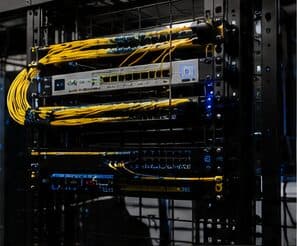
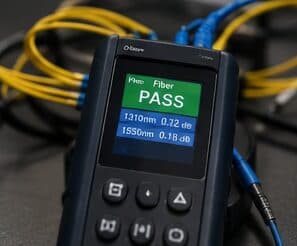
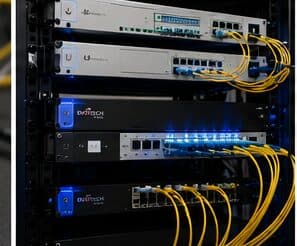
Reaching the gate is the infrastructure half. Entry points are frequently past the 100-metre copper limit or across separately grounded structures, so the run is planned as fiber with local power, or an intermediate powered position, rather than a stretched copper cable — the same distance discipline as any far-flung camera, applied to the entry.
- A dedicated plate camera: fast shutter, narrow view, shallow angle
- Distance and lens matched so the plate is legible in frame
- Controlled infrared so the reflective plate reads at night
- A separate overview camera for the scene and context
- Fiber or intermediate-powered runs to distant gate positions
- Mounting angle and height set for plate presentation
How the work runs
Entry camera work is planned around the two objectives and the distance.
- Define what must be captured: overview, plates, or both
- Set the plate camera's distance, angle, and field of view
- Plan the overview camera for scene and context
- Resolve power and connection to the gate position
- Install and aim each camera for its objective
- Tune shutter, infrared, and night behaviour for plates
- Review captures day and night and adjust angle and settings
Testing and verification
Entry cameras are verified against their objectives, day and night.
- Plate captures confirmed legible on moving vehicles at night
- Overview footage confirmed to show the scene and context
- Shutter and infrared tuned so plates read, not blow out
- Reach to the gate confirmed reliable in power and connection
- Recording and retention verified for the objective
- Angles confirmed for plate presentation and scene coverage
What changes the scope
Scope depends on distance, objectives, and power.
- Overview, plate capture, or both
- Distance from the building to the gate
- Power and connection method to the entry
- Mounting positions and angles
- Recording and retention needs
- Number of entry and perimeter points
What drives the cost
Distance to the gate and the number of cameras drive the cost.
- Distance and the resulting fiber or powered run
- Whether both overview and plate cameras are used
- Mounting positions and access
- Recording and storage for the objective
- Local power provision at the entry
- Number of entry and perimeter points
Common mistakes
Entry camera systems fail when one camera is asked to do two jobs.
- Expecting one camera to both show the scene and read plates
- A slow shutter smearing plates on moving vehicles
- Uncontrolled infrared blowing out the reflective plate
- Field of view too wide to resolve a plate
- Stretching copper to a gate beyond its reach
- Skipping the overview camera and losing context
Honest limitations
These are the boundaries of what this service can do, stated up front rather than discovered later.
- License-plate capture depends on angle, distance, speed, and light; it is a tuned camera task with real conditions, not a guarantee on every vehicle.
- Plate-reading settings darken the wider scene, which is why a separate overview camera is used for context.
- Distant gate positions need fiber or local power; a stretched copper run will not perform.
- Cameras must view the client's own property and approaches, and any legal requirements for recording are the owner's to confirm.
Frequently asked questions
Can one camera watch the gate and read plates?
Rarely well. Reading a plate needs a fast shutter, a narrow view, a shallow angle, and controlled infrared — settings that make the plate legible also make the wider scene dark. A general overview camera cannot resolve a plate on a moving vehicle. The reliable approach is two cameras: one for the scene, one dedicated to plates.
Why can't my current camera read plates at night?
A plate is retroreflective, so it either disappears in the dark or blows out under too much infrared, and a slow shutter smears it on a moving car. A dedicated plate camera controls the shutter and infrared specifically so the plate is frozen and legible at night — which is a different tuning from a general camera.
The gate is far from the house — can you still get a camera there?
Yes, by planning for the distance. Entry points are often past the copper limit or across separately grounded structures, so the run is fiber with local power, or an intermediate powered position, rather than a stretched copper cable. It is the same distance discipline as any far camera, applied to the entry.
Do I need both an overview and a plate camera?
If you want both context and plates, yes — they answer different questions. The overview shows what happened and who; the plate camera identifies the vehicle. Each is tuned for its job, which is why using one camera for both leaves you mediocre at each.