

Why this page exists
This pairing exists because Richmond's high proportion of new construction on larger lots concentrates two decisions into the rough-in window: which pathways get built into the structure, and how the far reaches of the property will be served.
Everything about new-construction low voltage is governed by one asymmetry. While the walls are open, running cable anywhere costs very little. Once drywall is up, the same run costs several times more and in some places is not possible at all.
On a larger lot, that asymmetry extends outdoors. A conduit run to a gate or an outbuilding, placed before hardscape and landscaping, is straightforward. The same route trenched through a finished yard is a different project entirely.
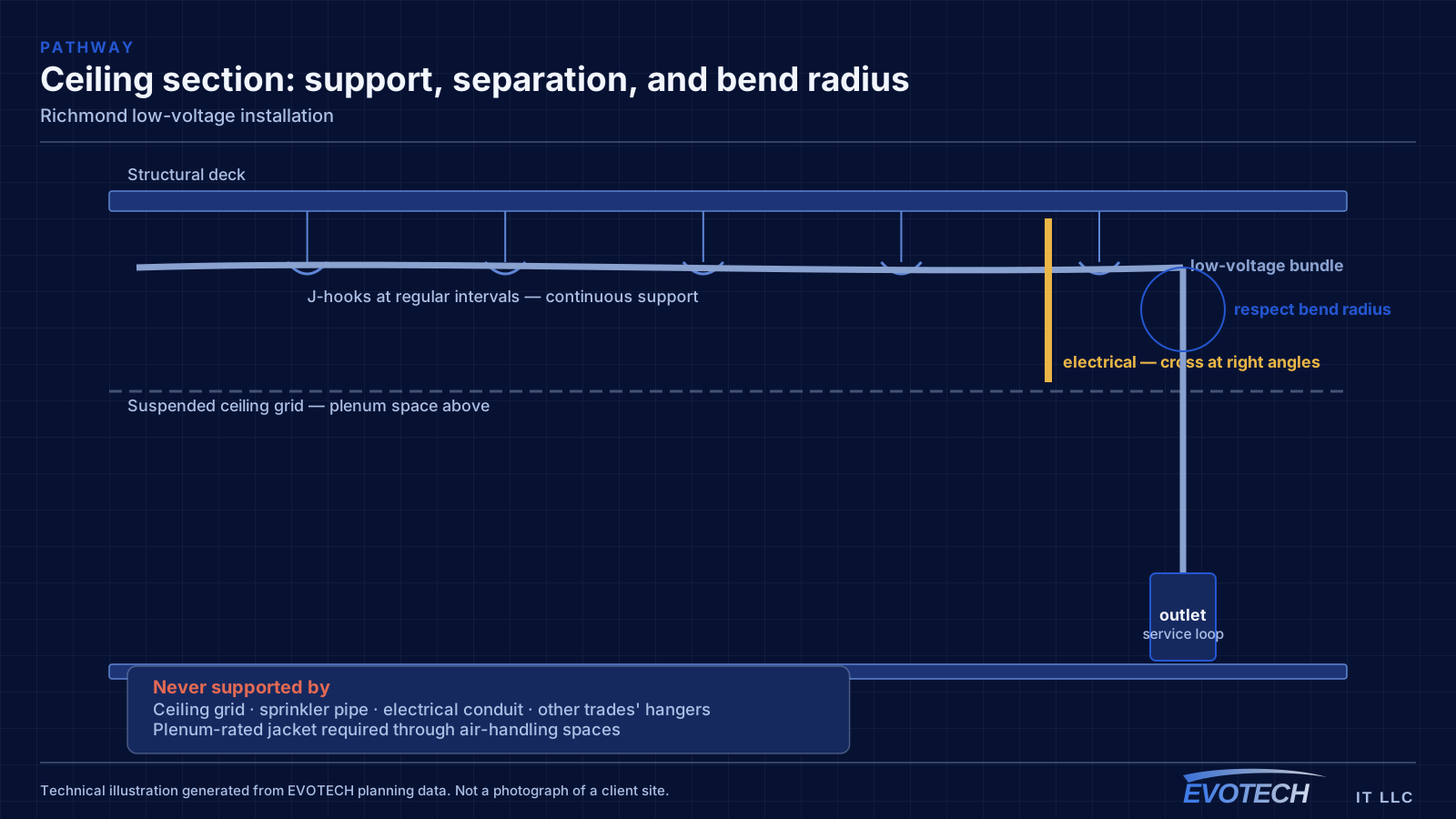
Deciding the outdoor routes first
Indoor rough-in follows the standard sequence. What needs deciding earlier on these properties is the outdoor side: where a gate station, a driveway camera, an outbuilding, or a detached garage will need service, and what route the conduit takes to reach them.
That decision has to precede hardscape. Once a driveway, a patio, and landscaping are in place, a route that would have cost a trench during construction becomes a significantly more disruptive job.
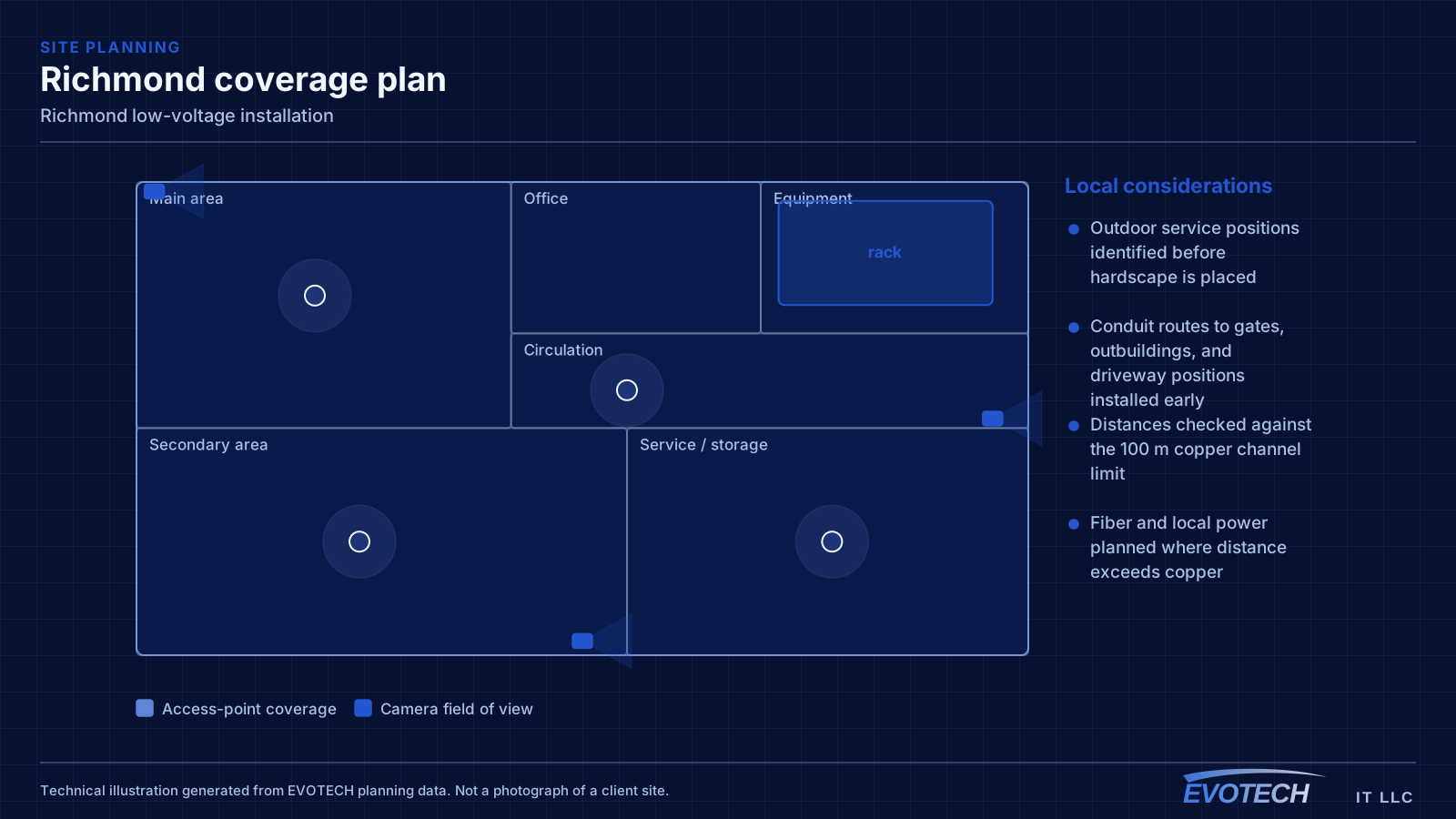
- Outdoor service positions identified before hardscape is placed
- Conduit routes to gates, outbuildings, and driveway positions installed early
- Distances checked against the 100 m copper channel limit
- Fiber and local power planned where distance exceeds copper
- Surge protection specified for any between-structure run
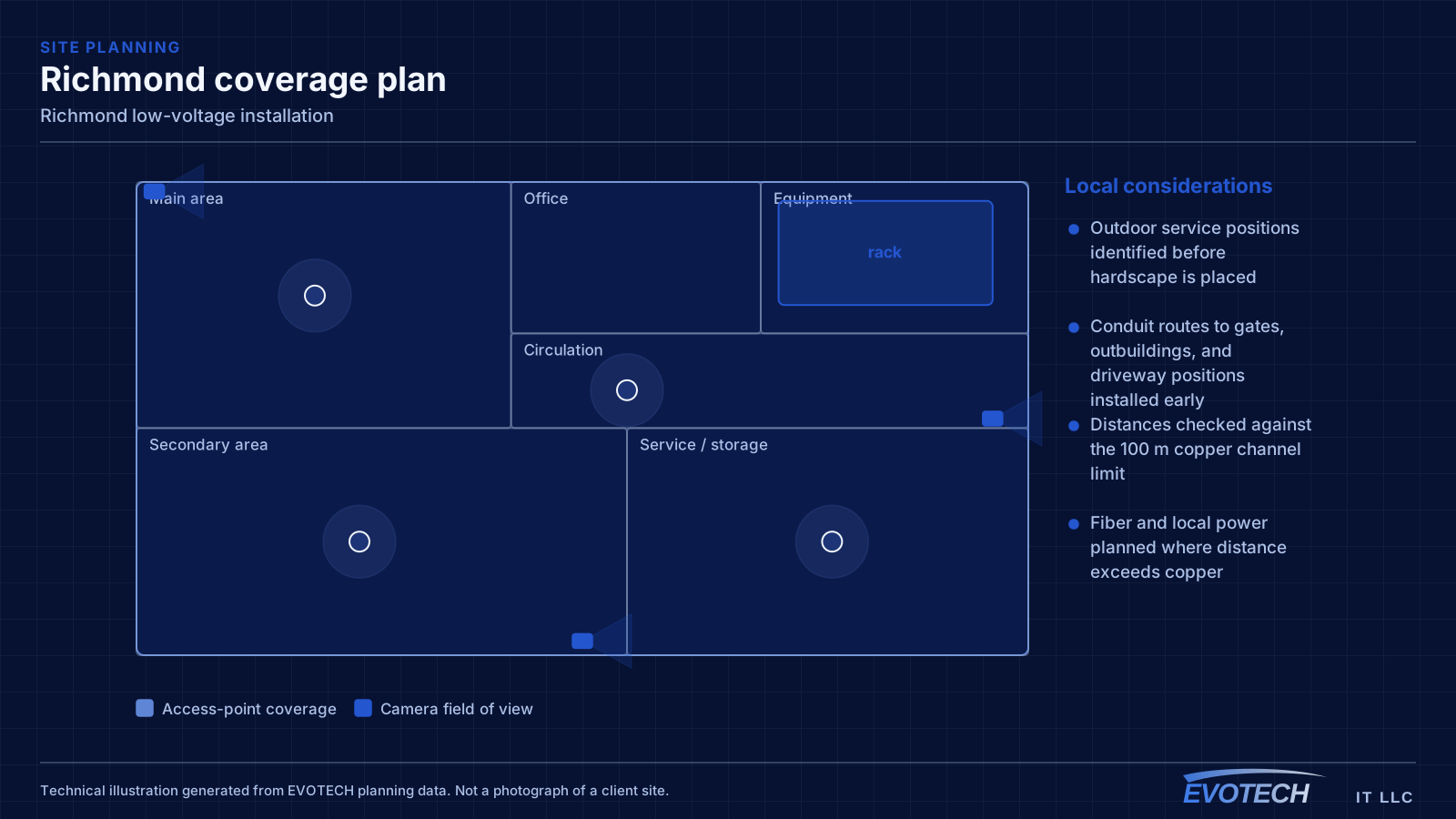
Indoor pathway and the equipment room
Indoors, the list is the familiar one: outlets at working and device positions, ceiling positions for access points, camera runs to entries and approaches, cable from each controlled door to the controller, and pathway to display positions. Plus sleeves to anything undecided.
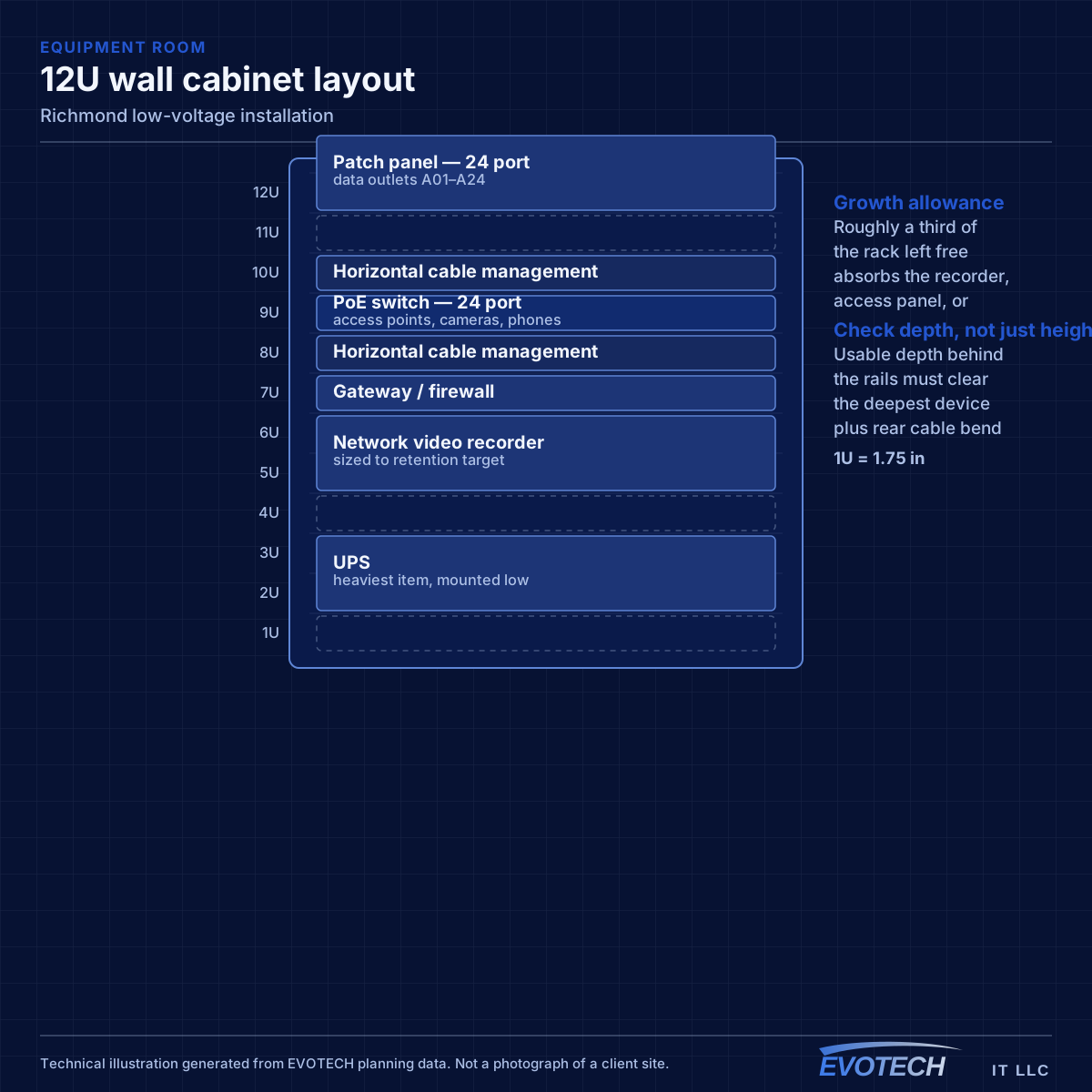
The equipment room gets sized for every system rather than for the network. Rack, recorder, access-control panel, AV equipment, and a UPS, with dedicated power, a ventilation path, and clearance to work — in this climate the ventilation is not negotiable.
- Device locations agreed across every system before rough-in
- Sleeves and conduit to positions that are still undecided
- Ceiling access-point positions spaced for the intended coverage
- Equipment room sized for all systems with power and ventilation
- Rated penetrations sleeved and firestopped correctly
Working against the construction programme
The rough-in window is set by trades upstream, and delays compress it without moving the completion date. Being ready before it opens — decisions made, materials on site, pathway agreed — is what keeps the available time spent installing rather than deciding.
The months between rough-in and finish need cable protected and clearly labeled, and as-built positions documented before the walls close. That documentation is what makes the return visit efficient rather than exploratory.
- Readiness established before the window opens
- Cable protected and labeled during the gap to finish
- As-built positions documented before drywall
- Coordination with electrical and mechanical trades on shared pathway
- Additional mobilisations anticipated where the schedule fragments
Popular services nearby
Frequently searched near this area — the pages people look for most.
Frequently asked questions
What outdoor work has to happen before landscaping?
Any conduit route to a gate, outbuilding, detached garage, or distant camera position. Placing conduit during construction is straightforward; trenching the same route through a finished driveway, patio, and planting is a substantially larger job. It is the outdoor equivalent of running cable before drywall.
How far can service reach across a large lot?
Copper reaches 100 metres of channel, and that budget goes quickly once the route follows real pathways. Beyond it the answer is fiber with local power at the far end, not a longer copper run. Establishing which positions fall on which side of that line is a design-stage task.
Does equipment have to be chosen before rough-in?
No. Locations do; products do not. A run to a ceiling position works regardless of which access point eventually mounts there, so waiting on equipment decisions is fine — but it is not a reason to defer the pathway, because the pathway is what the closing walls take away.