Why this page exists
Technology for schools and educational facilities in Woodland Heights and Near Northside sits where two things meet: how schools and educational facilities actually operate, and what Woodland Heights and Near Northside specifically brings to the building. 77009 covers Woodland Heights and the Near Northside — older wood-frame bungalows and cottages, many pier-and-beam, on established tree-lined blocks.
A classroom with thirty students on devices is one of the densest wireless environments in any building type, and it happens simultaneously in every classroom on a bell schedule. That is a capacity problem of a specific shape: predictable, synchronised, and concentrated.
Density in bursts, across a campus
A classroom with thirty students on devices is one of the densest wireless environments in any building type, and it happens simultaneously in every classroom on a bell schedule. That is a capacity problem of a specific shape: predictable, synchronised, and concentrated.
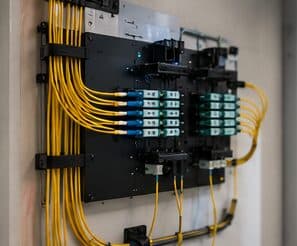
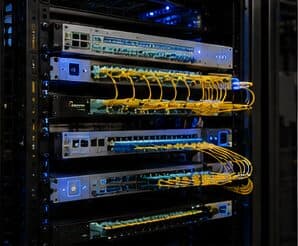
The campus dimension compounds it. Multiple buildings, outdoor circulation, portable classrooms, gymnasiums, and administrative areas each need coverage, and the distances involved usually exceed what copper alone can serve from one position.
- Classroom device density peaking simultaneously across the campus
- Multiple buildings and outdoor areas requiring distributed infrastructure
- Portable and temporary classrooms with their own connectivity needs
- Entry control and visitor management as standing requirements
Woodland Heights and Near Northside: what the location adds
The starting point for any Woodland Heights and Near Northside job is one local fact. 77009 covers Woodland Heights and the Near Northside — older wood-frame bungalows and cottages, many pier-and-beam, on established tree-lined blocks. That single condition shapes where cable can run, where equipment can sit, and how coverage is laid out — more than any spec sheet does. Two more conditions weigh on it. Plaster-and-lath interior walls and shallow attics make in-wall fishing slower than in modern drywall construction. The area's ongoing renovation activity means partial modern rewires sit alongside untouched original wiring in the same house. Together they make the route specific to this pocket, which is why a short walkthrough or a few clear photos settle the scope faster than a floor plan can.
- 77009 covers Woodland Heights and the Near Northside — older wood-frame bungalows and cottages, many pier-and-beam, on established tree-lined blocks
- Plaster-and-lath interior walls and shallow attics make in-wall fishing slower than in modern drywall construction
- The area's ongoing renovation activity means partial modern rewires sit alongside untouched original wiring in the same house
- Older detached garages and rear structures often need a fresh buried conduit run rather than reusing decayed original paths
- Close-set lots and mature oaks shape where exterior cameras and any wireless bridge can actually see
Per-classroom capacity and controlled entry
Two priorities dominate: enough wireless capacity in each classroom to serve a full class simultaneously, and controlled entry at the points where people come into the campus.
Both benefit from being designed at a campus level rather than building by building, because the addressing, segmentation, and management overhead of a piecemeal approach grows quickly.
- Access-point capacity planned per classroom, not per building area
- Fiber backbone between buildings and to distribution points
- Controlled entry at main and secondary access points
- Separate segments for student, staff, administrative, and building systems
- Coverage extended to gymnasiums, libraries, and outdoor gathering areas
Installing in Woodland Heights and Near Northside
Classroom wireless is a capacity design. A single access point serving a full class of devices needs adequate spectrum, and neighbouring classrooms on the same channel will contend with each other through the wall. That makes the channel plan across a corridor of classrooms as important as the access-point count — a plan that ignores the neighbours produces a corridor where every room is slow.
Getting Woodland Heights and Near Northside work done means planning around the site as it actually is. Older detached garages and rear structures often need a fresh buried conduit run rather than reusing decayed original paths. Close-set lots and mature oaks shape where exterior cameras and any wireless bridge can actually see. Both matter as much as the design to how and when the work happens. The scope is drawn from the real property, the coverage is stated as a service area rather than an office, and unverifiable specifics about Woodland Heights and Near Northside are kept off the page on purpose.
Popular services nearby
Frequently searched near this area — the pages people look for most.
Frequently asked questions
What do schools and educational facilities in Woodland Heights and Near Northside usually need first?
It varies by site, but the pattern for schools and educational facilities holds in Woodland Heights and Near Northside: get the network and cabling backbone right, then layer cameras and access on top. What Woodland Heights and Near Northside changes is the physical install — the conditions listed above drive routes and equipment placement more than the sector alone does.
How many access points does a classroom need?
It is a capacity question rather than a coverage one. A classroom with a full class on devices concentrates demand into one cell, and neighbouring classrooms on the same channel contend through the wall. That usually means one access point per classroom with a corridor-wide channel plan, rather than fewer access points at higher power.