Why this page exists
Low-voltage installation for schools and educational facilities is shaped by how the space is used, not just by the service itself. Schools and educational facilities bring their own operating constraints, and this page pairs what low-voltage installation actually involves with what that environment changes about it.
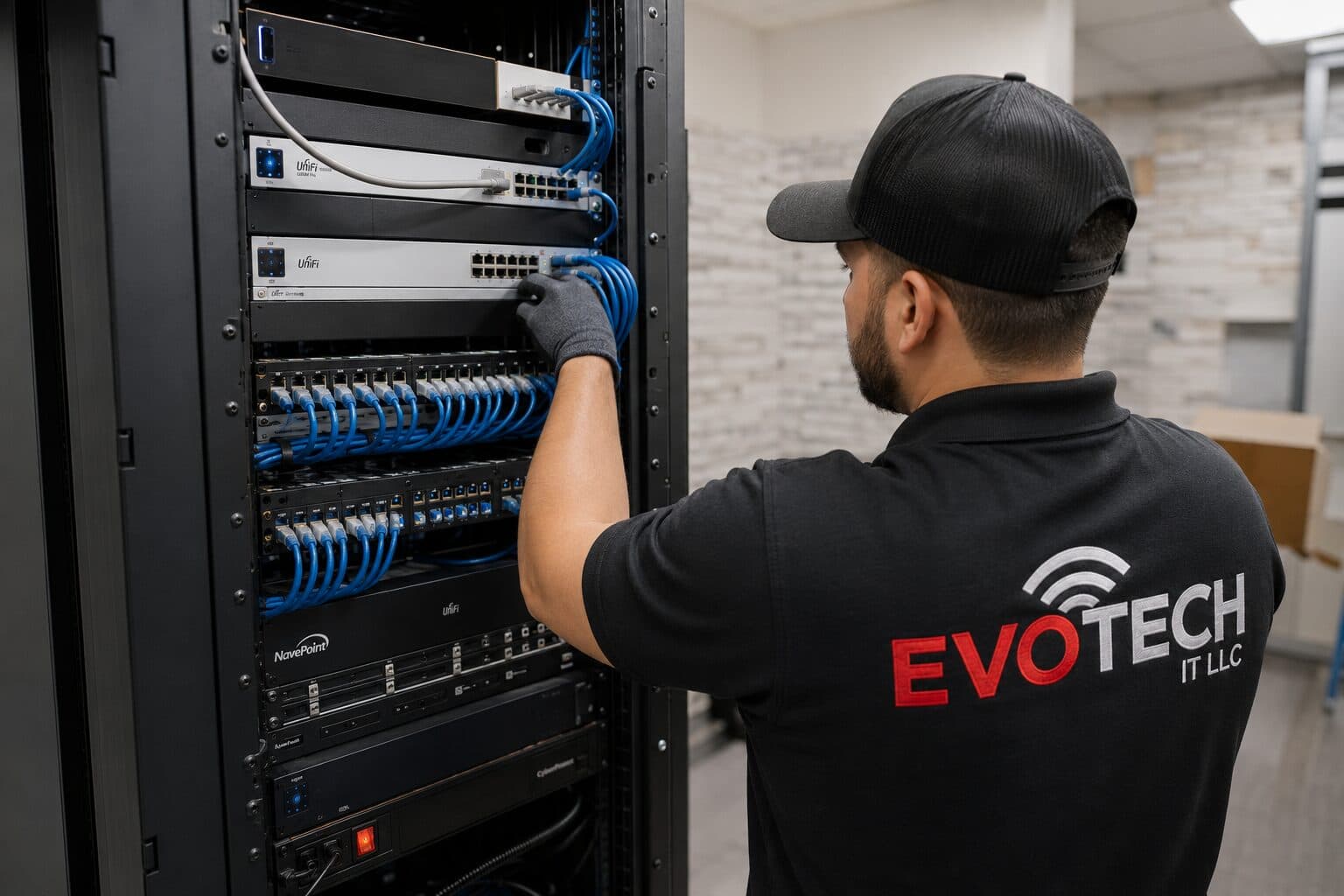
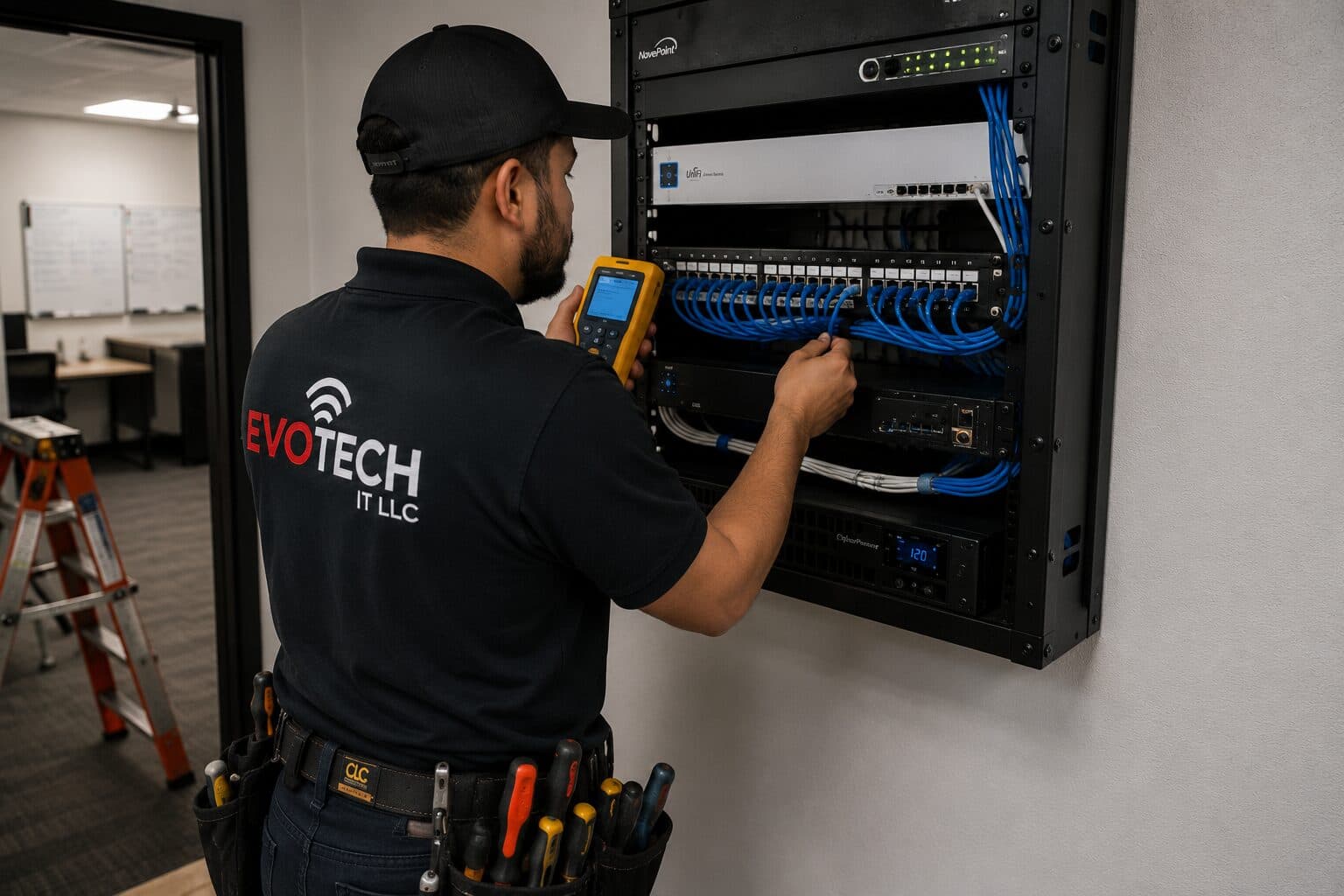
Low-voltage work covers the systems that run on cable rather than mains power: data, wireless, cameras, door access, intercoms, and audio-visual. In a new build or a fit-out these systems share pathways, share an equipment position, and increasingly share a network — so planning them together during rough-in costs far less than adding each one separately after the walls close.
Density in bursts, across a campus
A classroom with thirty students on devices is one of the densest wireless environments in any building type, and it happens simultaneously in every classroom on a bell schedule. That is a capacity problem of a specific shape: predictable, synchronised, and concentrated.
The campus dimension compounds it. Multiple buildings, outdoor circulation, portable classrooms, gymnasiums, and administrative areas each need coverage, and the distances involved usually exceed what copper alone can serve from one position.
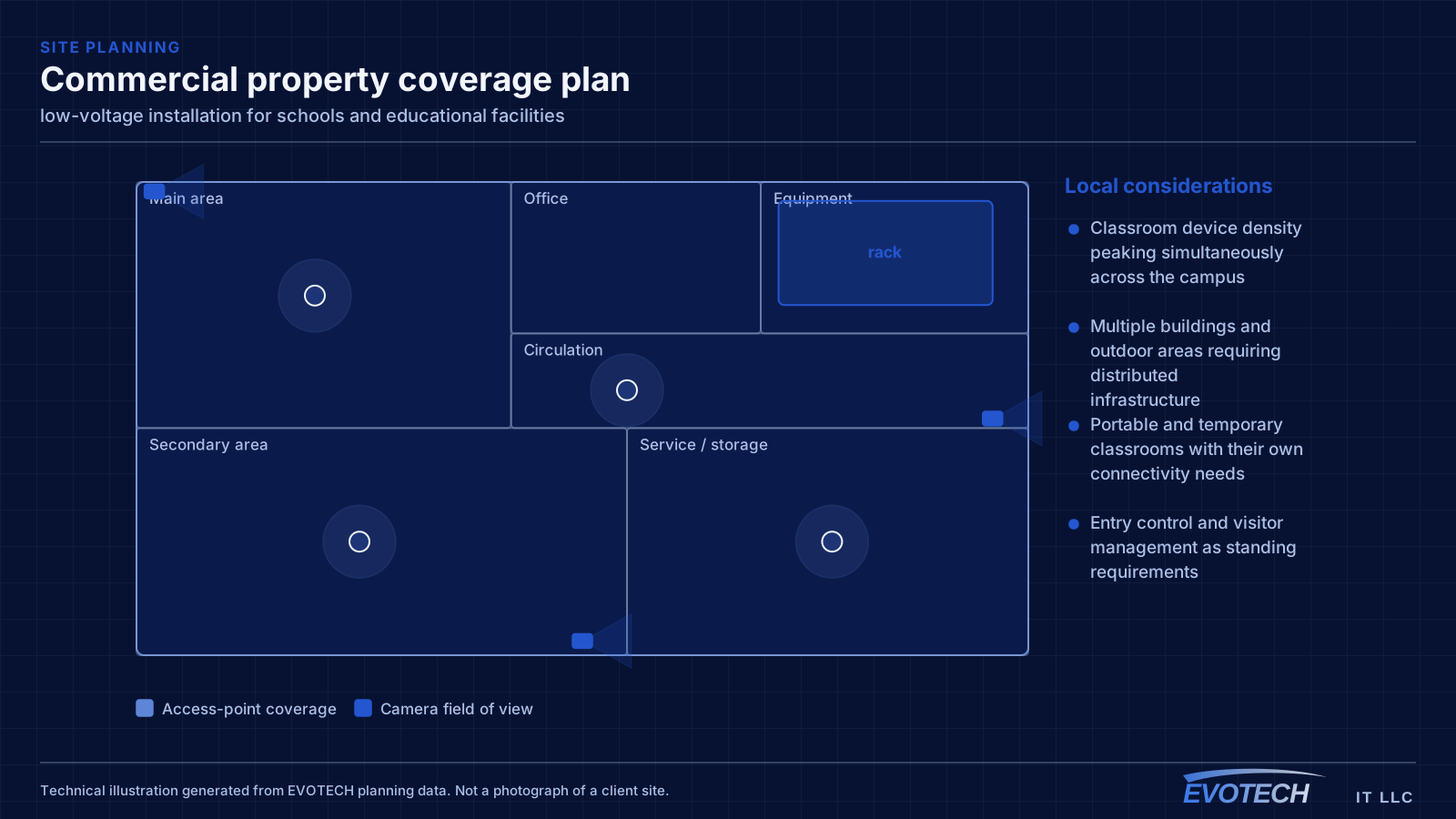
- Classroom device density peaking simultaneously across the campus
- Multiple buildings and outdoor areas requiring distributed infrastructure
- Portable and temporary classrooms with their own connectivity needs
- Entry control and visitor management as standing requirements
What low-voltage installation usually involves
The characteristic problem is systems planned in isolation. Cameras get specified after the ceiling closes, so their cable runs surface-mount. The access-control panel arrives with no allocated space in the equipment room. The AV system needs a run to a wall the network design never considered. Each individually is a small compromise; together they produce a building where nothing is quite where it should be.
The second problem is pathway conflict. Low voltage shares ceiling space with mechanical, electrical, plumbing, and fire protection, and the low-voltage trade is usually last in. Pathways claimed early are pathways available; pathways assumed are frequently full by the time anyone arrives.
- Systems specified at different times, each retrofitting around the last
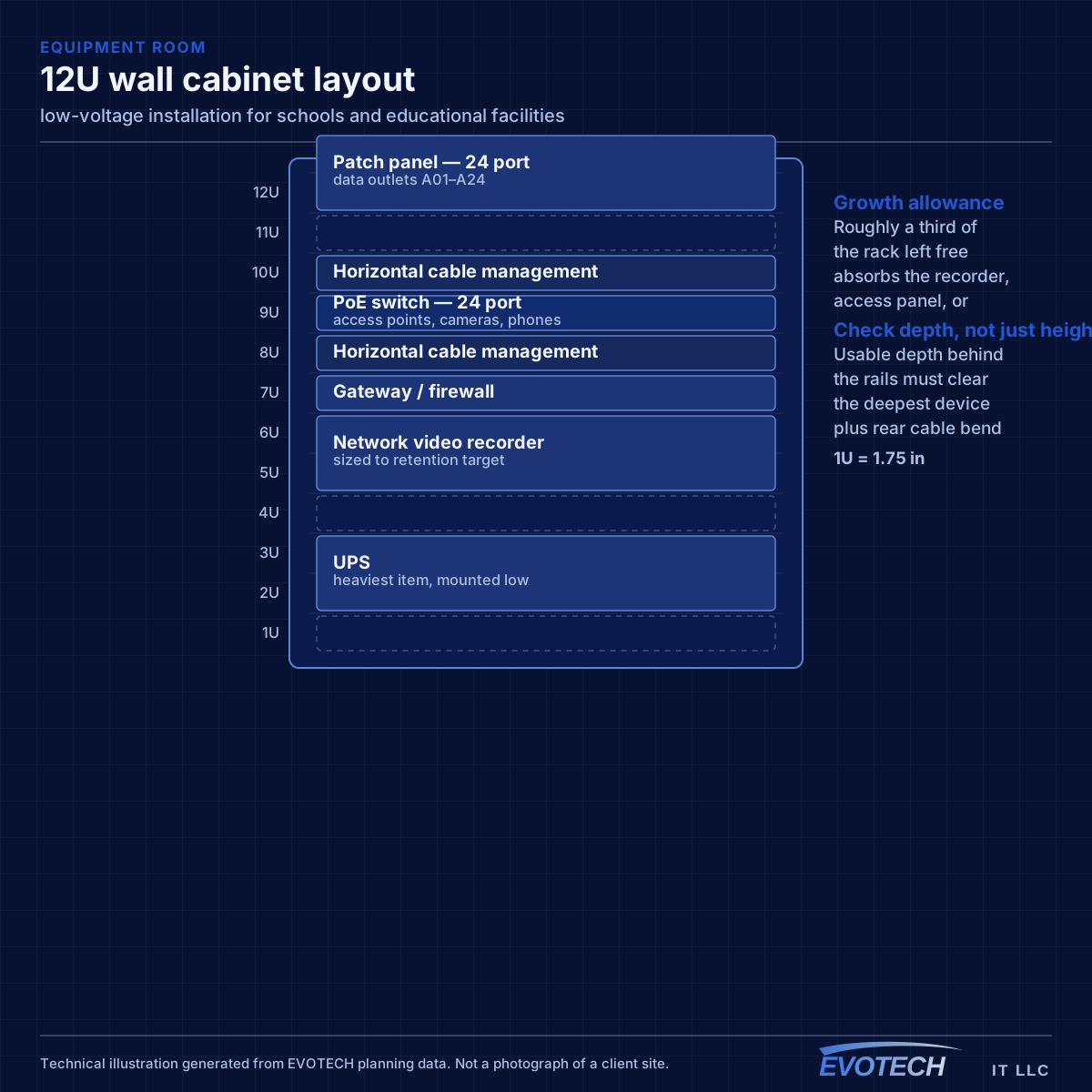
- Equipment room sized for the network and not for recorders, access panels, and AV
- Pathway congestion because low voltage was scheduled after the other trades
- Device locations unresolved at rough-in, forcing best guesses that get moved later
- Fire-rated penetrations made without proper sleeving and firestopping
- Rough-in complete but the finish scope unscheduled, leaving cable coiled in walls for months
Classroom capacity and campus topology
Classroom wireless is a capacity design. A single access point serving a full class of devices needs adequate spectrum, and neighbouring classrooms on the same channel will contend with each other through the wall. That makes the channel plan across a corridor of classrooms as important as the access-point count — a plan that ignores the neighbours produces a corridor where every room is slow.
Campus topology follows standard structured-cabling practice at a larger scale: a main equipment position, fiber to distribution points in each building or wing, and copper from those points out to classrooms within the distance limit. Between-building links are fiber for both distance and electrical isolation.
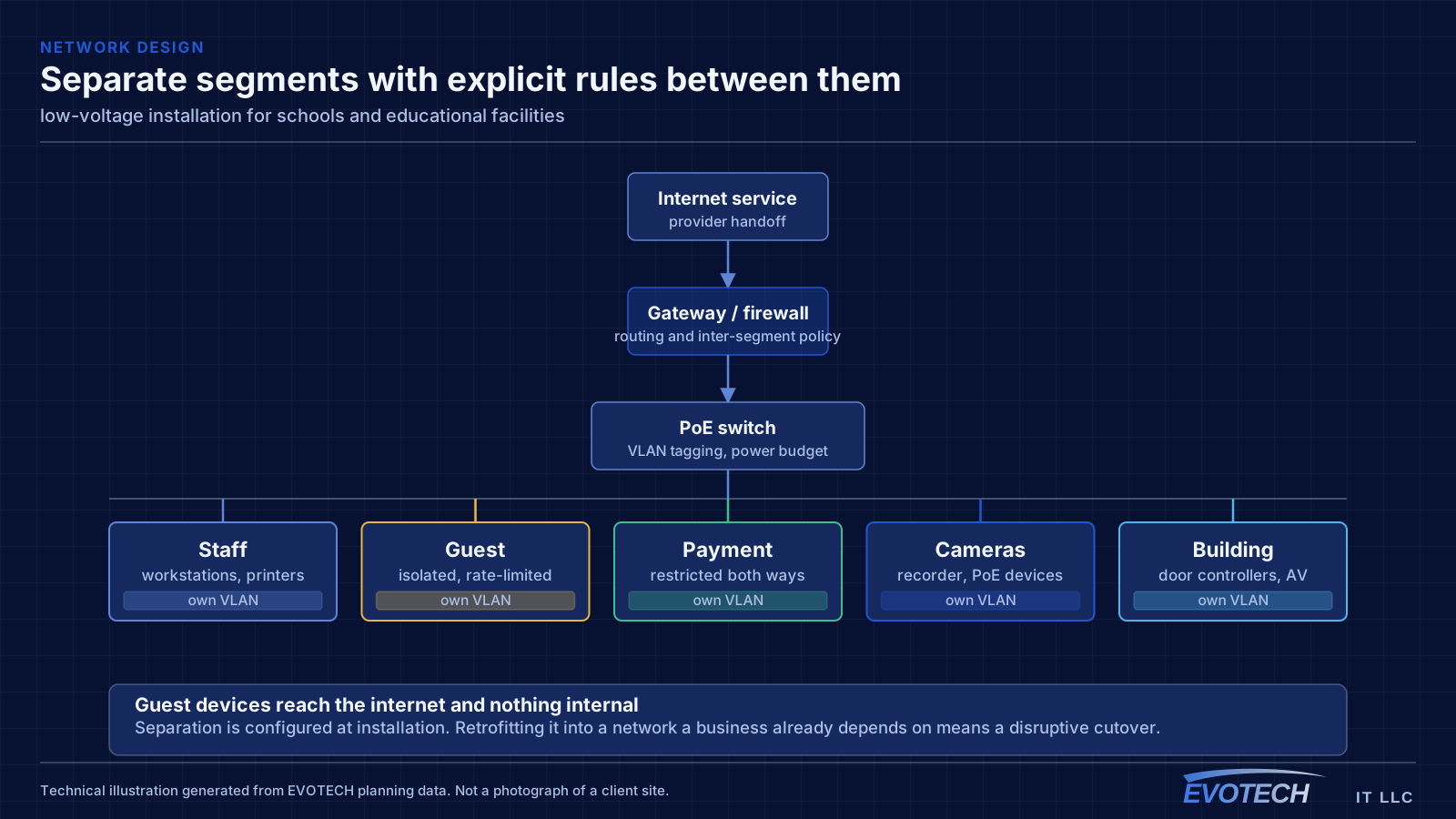
Segmentation separates student devices, staff devices, administrative systems, and building systems such as cameras and door controllers. Student access is typically the most restricted and the most heavily used, and separating it means student traffic cannot affect administrative systems.
- Capacity designed per classroom with a corridor-wide channel plan
- Fiber backbone between buildings and to per-building distribution
- Student, staff, administrative, and building-system segments
- Coverage for gymnasiums, libraries, cafeterias, and outdoor areas
- Portable classroom connectivity planned rather than improvised
Pathways, separation, and coordinating with the other trades
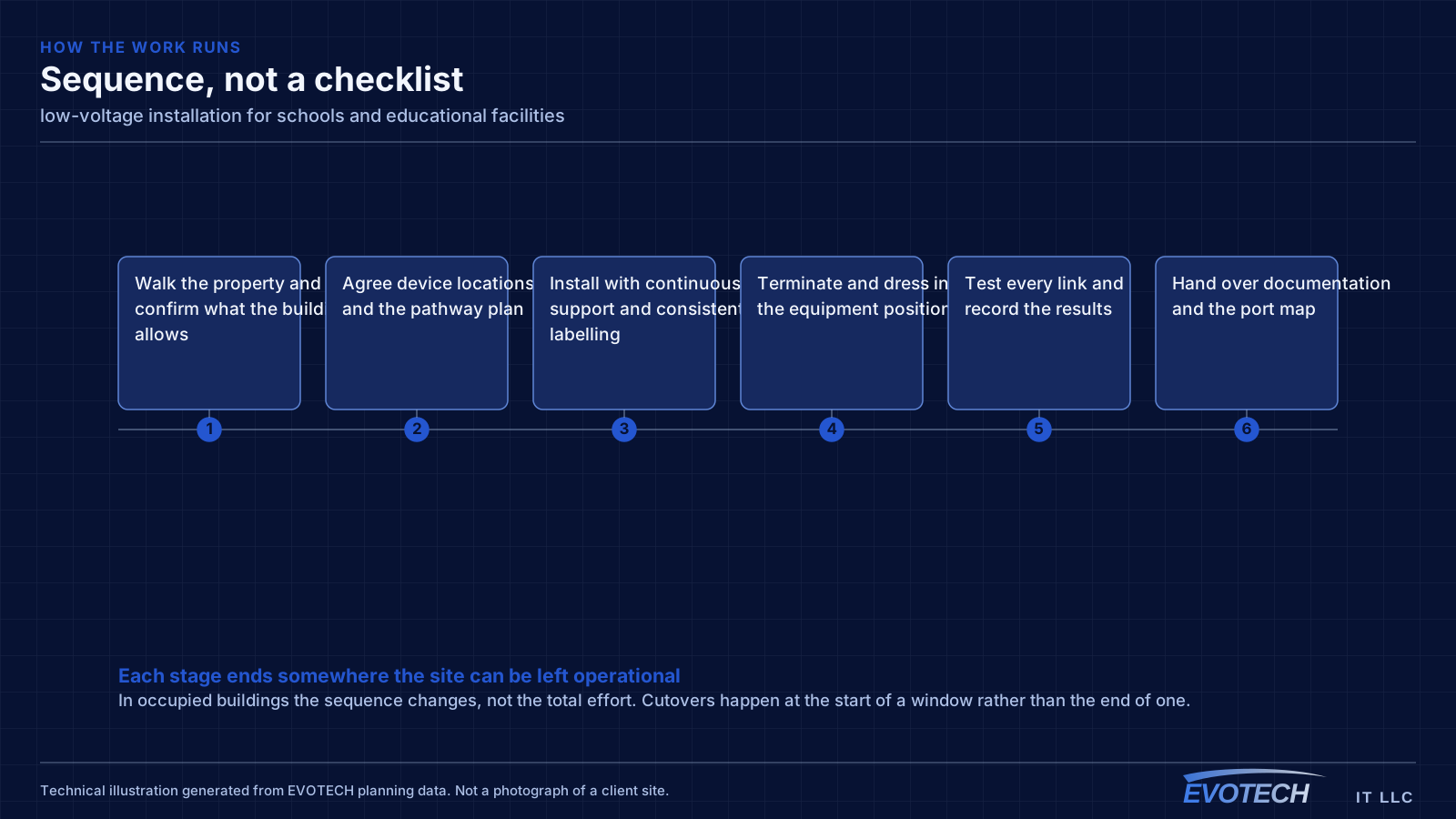
Pathway planning is the core technical activity. Low-voltage cable needs continuous support — tray, J-hooks, or conduit — at regular intervals, routed to keep separation from parallel electrical runs and to cross them at right angles where they must meet. Penetrations through fire-rated walls and floors need proper sleeves and firestopping, which is a coordination item and not an afterthought.
- Continuous pathway with support at regular intervals
- Separation from parallel electrical, crossing at right angles where needed
- Proper sleeving and firestopping at rated penetrations
- Rough-in between electrical and drywall; finish after paint and ceiling
- Cable protected and identified during the gap between rough-in and finish
- Equipment room sized for every system, not only the network
Frequently asked questions
What changes about low-voltage installation in schools and educational facilities?
The operating environment does. Schools and educational facilities bring specific constraints — how the space is used, when work can happen, and what has to keep running — and those shape the low-voltage installation plan as much as the service's own technical requirements.
When should low-voltage work happen in a construction schedule?
Rough-in sits after electrical and framing and before insulation and drywall. Finish work — terminations, device mounting, and commissioning — happens after paint and ceilings. The risk is that upstream delays compress the rough-in window, so having device locations and pathway plans settled in advance is what keeps that window usable.
How many access points does a classroom need?
It is a capacity question rather than a coverage one. A classroom with a full class on devices concentrates demand into one cell, and neighbouring classrooms on the same channel contend through the wall. That usually means one access point per classroom with a corridor-wide channel plan, rather than fewer access points at higher power.