Why this page exists
Data-jack installation for schools and educational facilities is shaped by how the space is used, not just by the service itself. Schools and educational facilities bring their own operating constraints, and this page pairs what data-jack installation actually involves with what that environment changes about it.
A data jack is the terminated outlet at the end of a horizontal run. It looks trivial, and it is the single most common place for a link to lose performance, because it is where the pairs get untwisted, where a punch-down can be shallow, and where the wrong component category quietly caps the channel.
Density in bursts, across a campus
A classroom with thirty students on devices is one of the densest wireless environments in any building type, and it happens simultaneously in every classroom on a bell schedule. That is a capacity problem of a specific shape: predictable, synchronised, and concentrated.
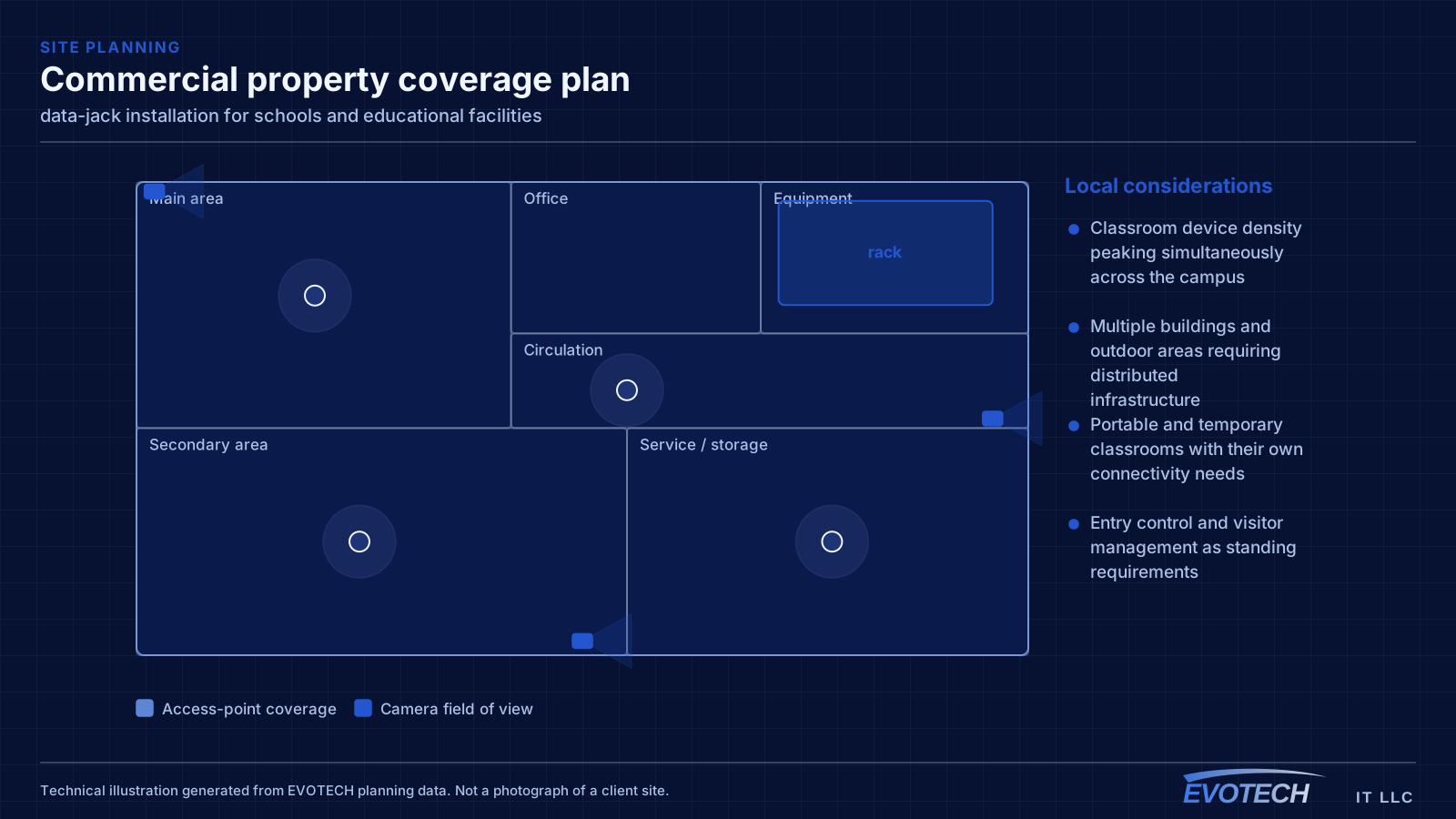
The campus dimension compounds it. Multiple buildings, outdoor circulation, portable classrooms, gymnasiums, and administrative areas each need coverage, and the distances involved usually exceed what copper alone can serve from one position.
- Classroom device density peaking simultaneously across the campus
- Multiple buildings and outdoor areas requiring distributed infrastructure
- Portable and temporary classrooms with their own connectivity needs
- Entry control and visitor management as standing requirements
What data-jack installation usually involves
The dominant failure is untwist. Twisted-pair cable rejects noise because of the twist rate, and every centimetre of pair untwisted at the punch-down is a small crosstalk penalty. Combined across four pairs and two ends, sloppy terminations can move a link from comfortable margin to marginal.
The second failure is component mismatch. A jack rated one category below the cable caps the entire channel at the lower rating, and nothing about the installation looks wrong. The third is mechanical: a plate mounted without a low-voltage bracket, so the cable takes strain every time something is plugged in.
- Excess untwist at the punch-down degrading crosstalk performance
- Jacks rated below the cable capping the channel
- No low-voltage bracket, so the cable carries plug-in strain
- Insufficient service loop, leaving no material for re-termination
- Inconsistent wiring scheme between ends causing split pairs
Classroom capacity and campus topology
Classroom wireless is a capacity design. A single access point serving a full class of devices needs adequate spectrum, and neighbouring classrooms on the same channel will contend with each other through the wall. That makes the channel plan across a corridor of classrooms as important as the access-point count — a plan that ignores the neighbours produces a corridor where every room is slow.
Campus topology follows standard structured-cabling practice at a larger scale: a main equipment position, fiber to distribution points in each building or wing, and copper from those points out to classrooms within the distance limit. Between-building links are fiber for both distance and electrical isolation.
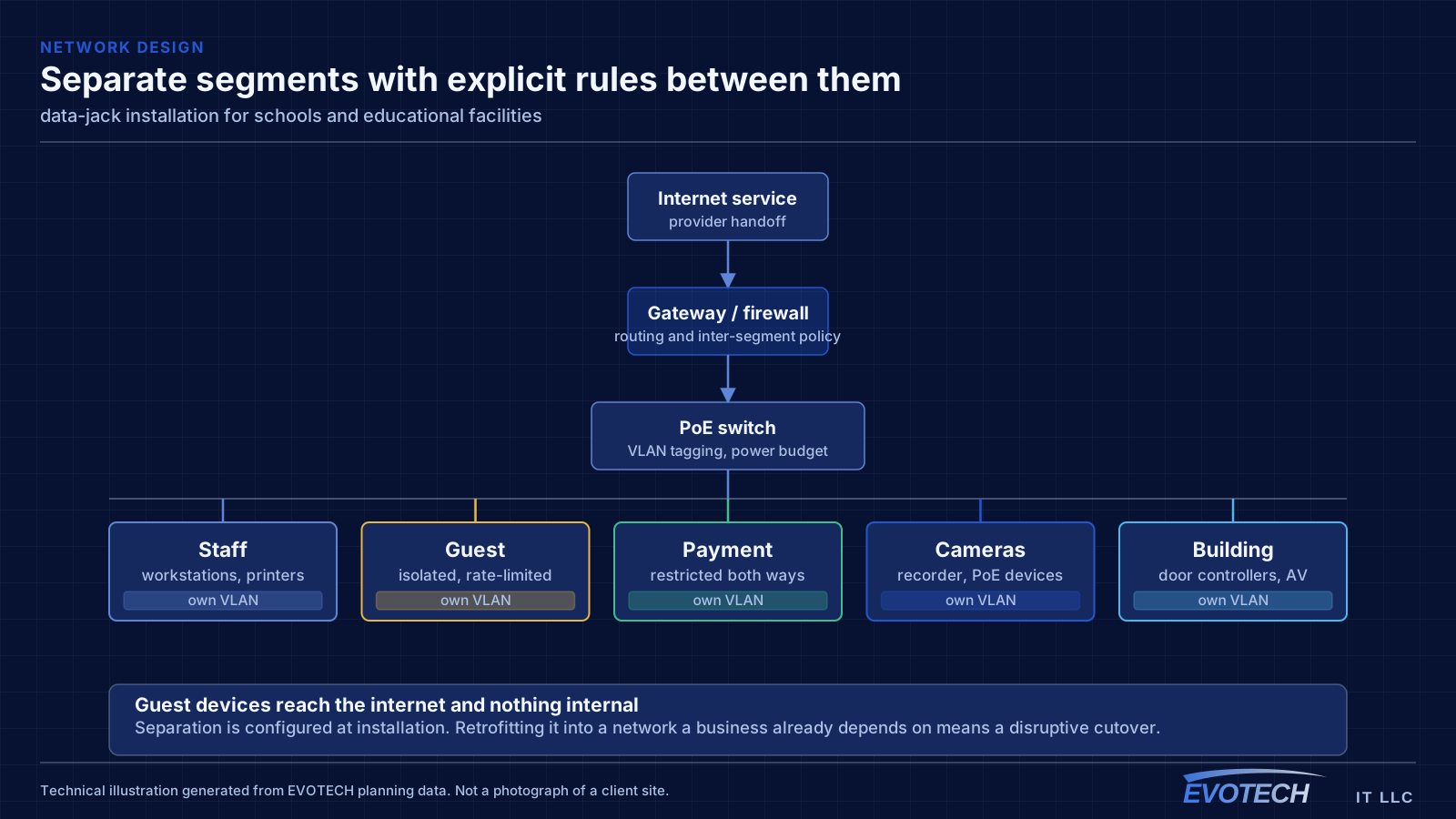
Segmentation separates student devices, staff devices, administrative systems, and building systems such as cameras and door controllers. Student access is typically the most restricted and the most heavily used, and separating it means student traffic cannot affect administrative systems.
- Capacity designed per classroom with a corridor-wide channel plan
- Fiber backbone between buildings and to per-building distribution
- Student, staff, administrative, and building-system segments
- Coverage for gymnasiums, libraries, cafeterias, and outdoor areas
- Portable classroom connectivity planned rather than improvised
Why the outlet decides the channel
A certification test measures the complete path: patch cord, patch panel, horizontal cable, and outlet. Insertion loss and crosstalk contributions from the connectors are a meaningful share of the total budget, particularly at the higher frequencies where Cat6 and Cat6A links have the least margin. A well-made termination preserves margin; a poor one consumes it.
- Connector contribution is a significant part of the total loss and crosstalk budget
- T568A or T568B, applied consistently across every run in the building
- Service loop retained in the wall for future re-termination
- Low-voltage bracket or box to take mechanical strain off the cable
- Jack category matched to the cable and the patch panel
Frequently asked questions
What changes about data-jack installation in schools and educational facilities?
The operating environment does. Schools and educational facilities bring specific constraints — how the space is used, when work can happen, and what has to keep running — and those shape the data-jack installation plan as much as the service's own technical requirements.
Why did a link start failing after a jack was replaced?
Usually untwist or category mismatch. If more pair was untwisted at the punch-down than the standard allows, crosstalk performance drops, and a link that previously passed with small margin can fail. If the replacement jack is a lower category than the cable, the whole channel is capped at the lower rating. Both show up immediately in a certification test.
How many access points does a classroom need?
It is a capacity question rather than a coverage one. A classroom with a full class on devices concentrates demand into one cell, and neighbouring classrooms on the same channel contend through the wall. That usually means one access point per classroom with a corridor-wide channel plan, rather than fewer access points at higher power.