

Why this page exists
NVR installation in The Woodlands is scoped around the same physical realities EVOTECH weighs everywhere — but read through The Woodlands's specific conditions: mature tree cover on many residential lots, attenuating outdoor wireless signal and generating constant motion in camera scenes. This page pairs what the service actually involves with what the The Woodlands market changes about it.
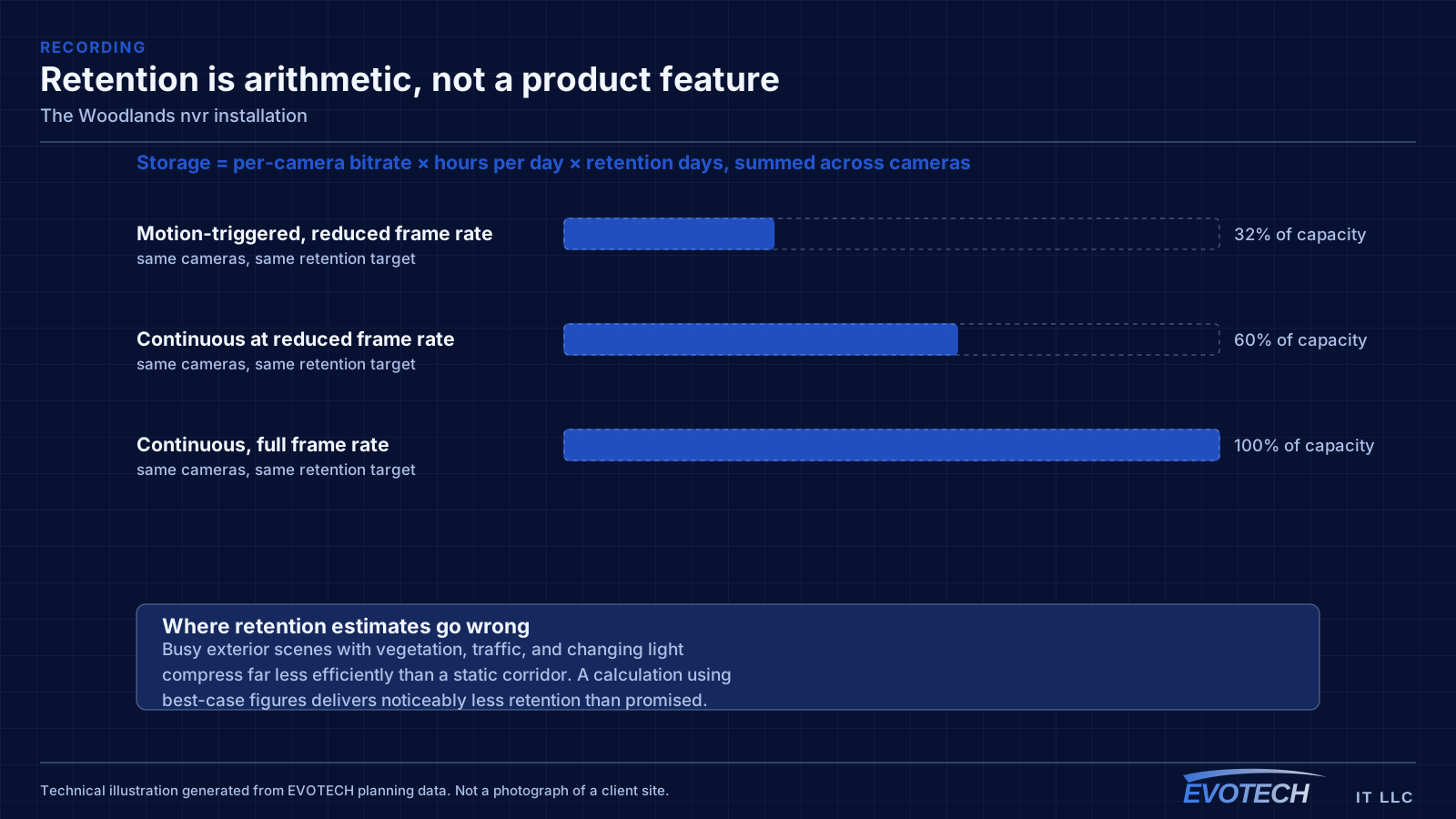
A network video recorder receives streams from the cameras, writes them to disk, and serves them back for review. Its capacity determines how far back the footage goes, and that number is arithmetic, not a product feature: camera count, resolution, frame rate, compression efficiency, and how much of the day actually gets recorded all multiply together against the drive capacity.
What nvr installation usually involves
The recurring problem is retention that does not match the expectation. It is rarely deception — it is usually that the estimate assumed motion-triggered recording, a modest frame rate, or a compression ratio that busy outdoor scenes do not deliver. A camera watching a parking area with moving trees generates far more data than one watching a quiet corridor.
The second problem is drive selection. Recorders write continuously to their drives, which is a different duty cycle from a desktop computer. Drives designed for continuous surveillance write loads last considerably longer in that role than general-purpose drives, and a recorder with no drive health monitoring will simply stop recording one day without announcing it.
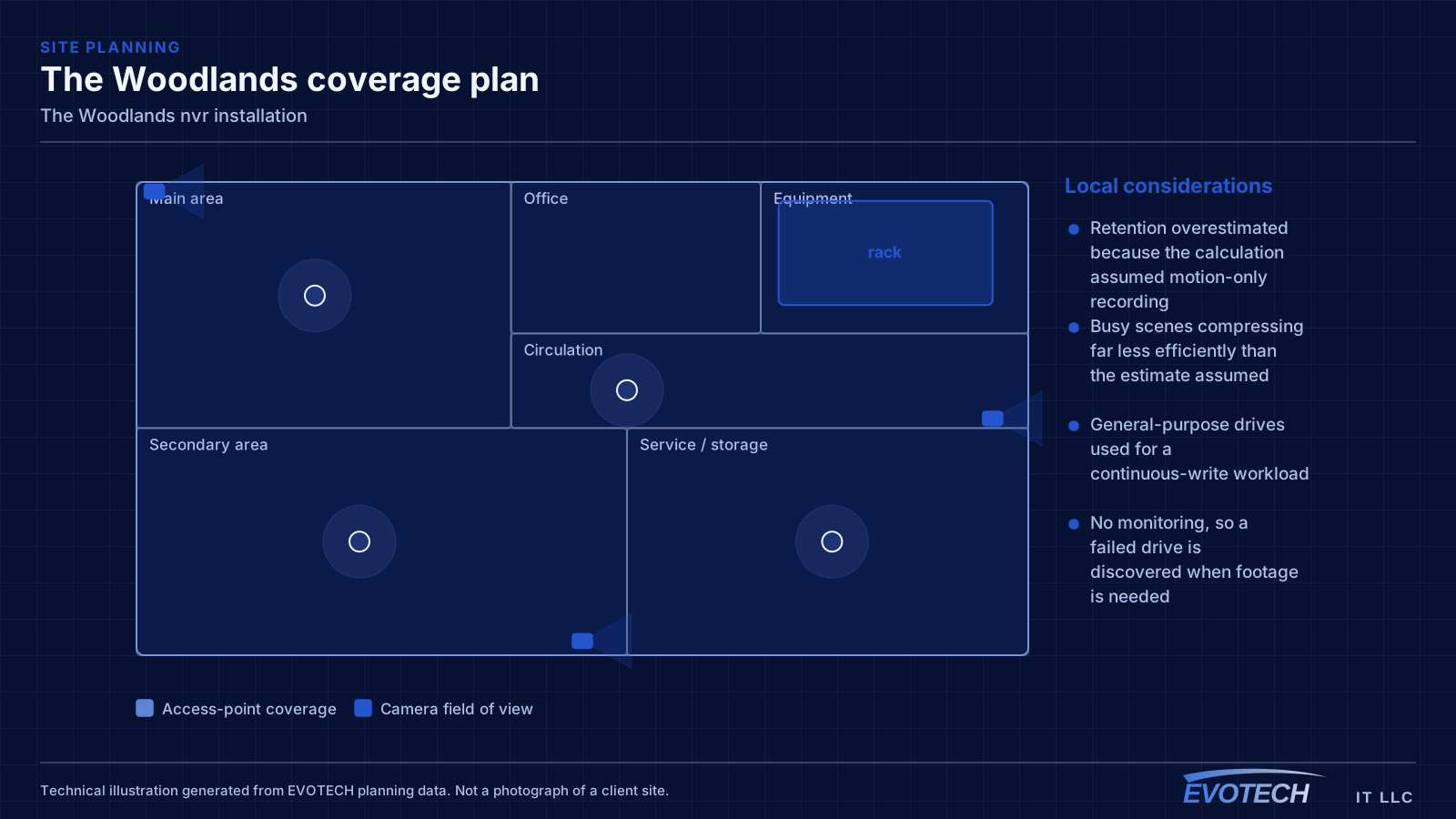
- Retention overestimated because the calculation assumed motion-only recording
- Busy scenes compressing far less efficiently than the estimate assumed
- General-purpose drives used for a continuous-write workload
- No monitoring, so a failed drive is discovered when footage is needed
- Recorder exposed directly to the internet for remote viewing
- Default credentials left in place
The Woodlands property conditions that change the plan
Office space here tends toward newer construction with accessible ceilings and reasonable existing pathway, which makes the physical work straightforward. What is less straightforward is capacity: these are offices with a lot of meeting rooms, and meeting rooms concentrate demand into single cells in a way that a coverage-based design will not anticipate.
Residential lots are often larger and heavily wooded, with detached garages, workshops, and pool structures that sit well beyond where house wireless can usefully reach. Those need their own cable or a deliberately designed link rather than an attempt to push coverage outward.
Foliage attenuates wireless signal, and unlike a wall it changes with season and moves constantly in wind. A link between a house and a detached workshop that works in winter can degrade noticeably once the canopy fills in. Where a wireless link is genuinely the only option, that seasonal variation is worth planning for rather than discovering.
- Newer commercial construction with accessible ceilings and existing pathway
- High meeting-room density concentrating wireless demand
- Larger residential lots with detached structures
- Mature tree cover between the house and outbuildings
- Outdoor amenity areas — patios, pool decks — needing rated equipment
- Cable to detached structures preferred over a wireless link through canopy
- Seasonal foliage variation accounted for where a wireless link is unavoidable
- Camera framing that excludes moving vegetation from the scene
- Detection zones tuned so wind does not generate constant events
- Meeting-room capacity planned explicitly on the commercial side
Getting nvr installation done in The Woodlands
Storage need is the product of per-camera bitrate, hours recorded per day, and retention days, summed across cameras. Bitrate rises with resolution and frame rate, and falls with more efficient compression — but compression efficiency depends on the scene. Static indoor views compress well; exterior views with moving foliage, traffic, or changing light compress poorly. A safe calculation uses the higher end of the expected bitrate range rather than the marketing figure.
Runs to detached structures on wooded lots are usually the most involved part of a residential project here — the route matters, and burial or conduit is generally preferable to anything aerial through trees. That is a planning conversation rather than an afternoon's work.
- Buried or conduit routes to outbuildings rather than aerial through trees
- Surge protection on any run between separate structures
- Exterior equipment rated for humidity and driven rain
- Commercial work scheduled around meeting-room availability
- Base-building rules confirmed for leased office space
Popular services nearby
Frequently searched near this area — the pages people look for most.
Frequently asked questions
Does EVOTECH have an office in The Woodlands?
No. This is a service-area page: EVOTECH serves The Woodlands without claiming a physical office there. The wording stays as coverage, not a location claim.
How much storage is needed for 30 days of footage?
It is a calculation, not a fixed number: per-camera bitrate multiplied by hours recorded per day multiplied by thirty, summed across cameras. Resolution, frame rate, recording mode, and how busy each scene is all move the result substantially. Two eight-camera systems can differ by a factor of three for the same retention target.
Can a detached workshop be covered by extending house Wi-Fi?
Rarely well, particularly with mature trees in between. Foliage attenuates signal and the attenuation changes with the season and with wind. A cable to the structure — buried or in conduit — gives a predictable result, and where the two structures are separately grounded, fiber removes the electrical risk that a copper run would introduce.