

Why this page exists
TV mounting in The Woodlands is scoped around the same physical realities EVOTECH weighs everywhere — but read through The Woodlands's specific conditions: mature tree cover on many residential lots, attenuating outdoor wireless signal and generating constant motion in camera scenes. This page pairs what the service actually involves with what the The Woodlands market changes about it.
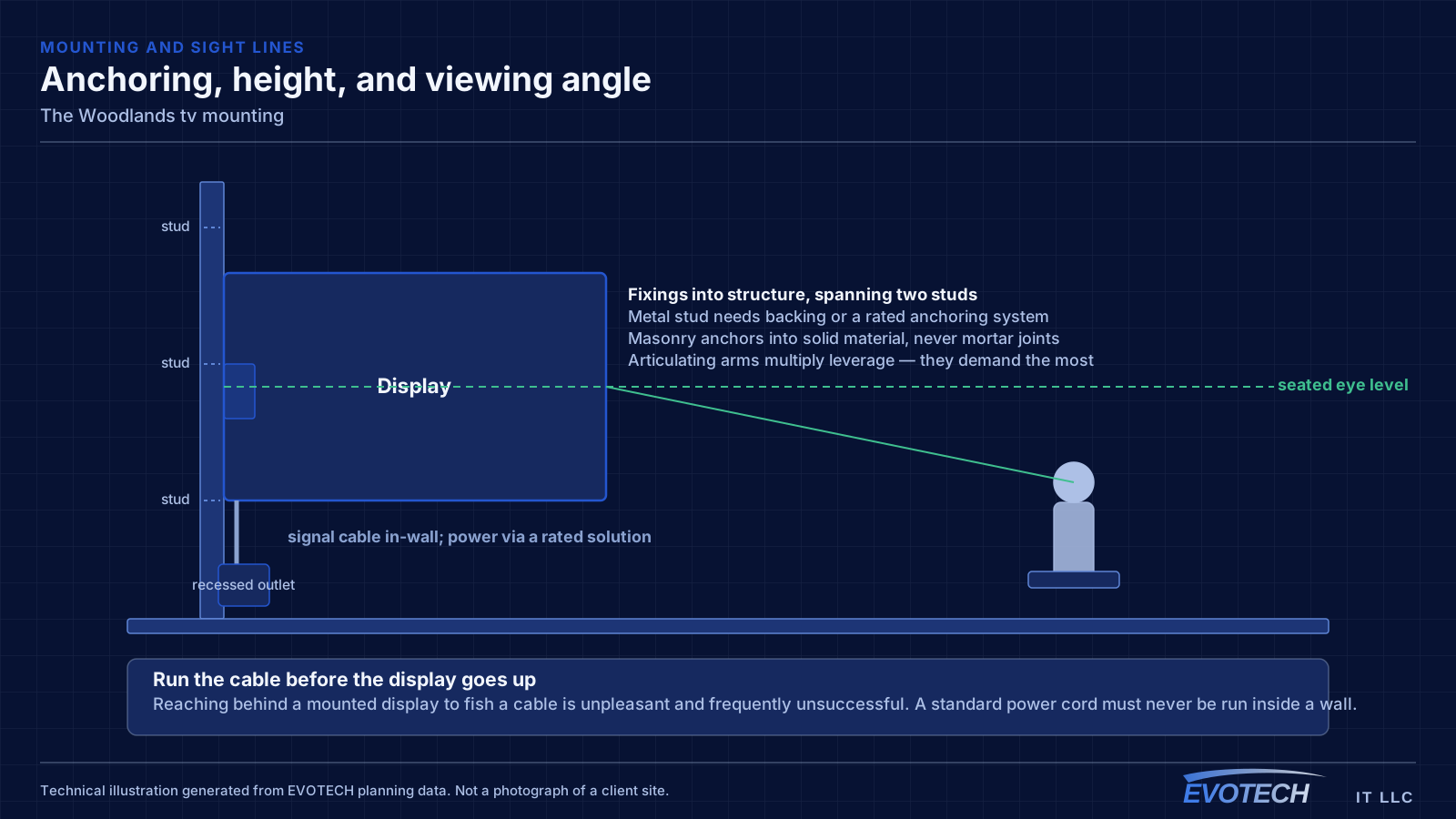
The mount has to transfer the display's weight into something structural. In wood-framed walls that means lag bolts into studs. In masonry it means appropriate anchors set into solid material rather than mortar joints. In metal-stud walls — common in commercial buildings — standard wood-stud technique does not apply, and larger displays generally need backing or a purpose-made metal-stud anchoring system.
What tv mounting usually involves
The serious problem is anchoring. A large display cantilevered on an articulating arm exerts substantial leverage on its fixings, and an arm anchored into drywall alone or into a single stud is a genuine hazard rather than an aesthetic issue. Metal-stud walls are the common commercial version of this, where fixings that feel solid during installation are not rated for sustained load.
The second problem is cabling. Running a power cord through a wall is not appropriate; the correct approach is either an in-wall rated power solution or a recessed outlet behind the display. Signal cables can be routed in-wall, but they need to be in place before the display goes up, because reaching behind a mounted display to fish a cable is unpleasant and often unsuccessful.
- Articulating arms anchored to insufficient structure
- Metal-stud walls treated as if they were wood framing
- Masonry anchors set into mortar joints rather than solid material
- Standard power cords routed inside walls
- Signal cables not run before mounting, leaving no route afterwards
- Viewing height chosen for the wall rather than for the seating
- Outdoor installations using indoor mounts that corrode
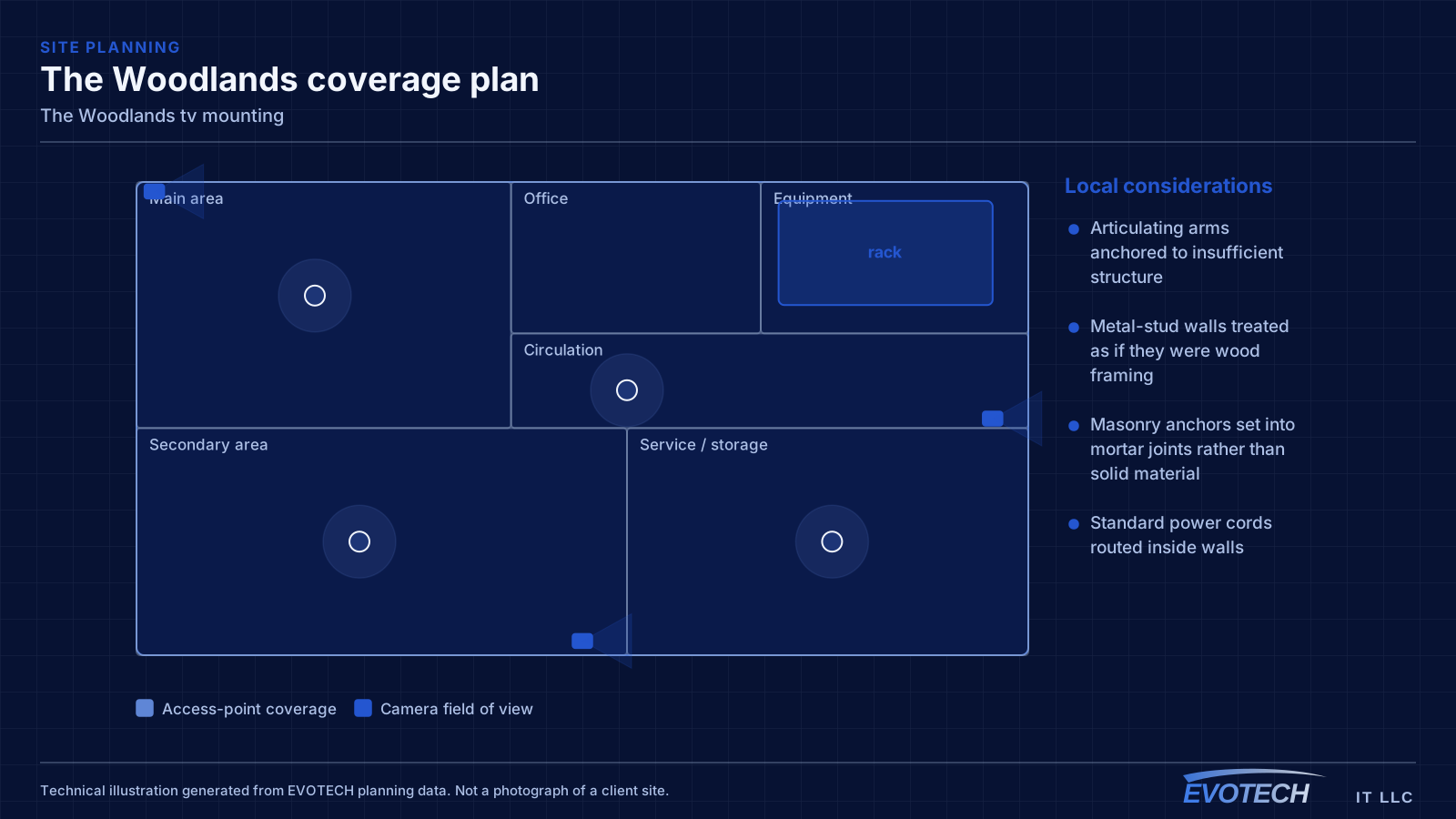
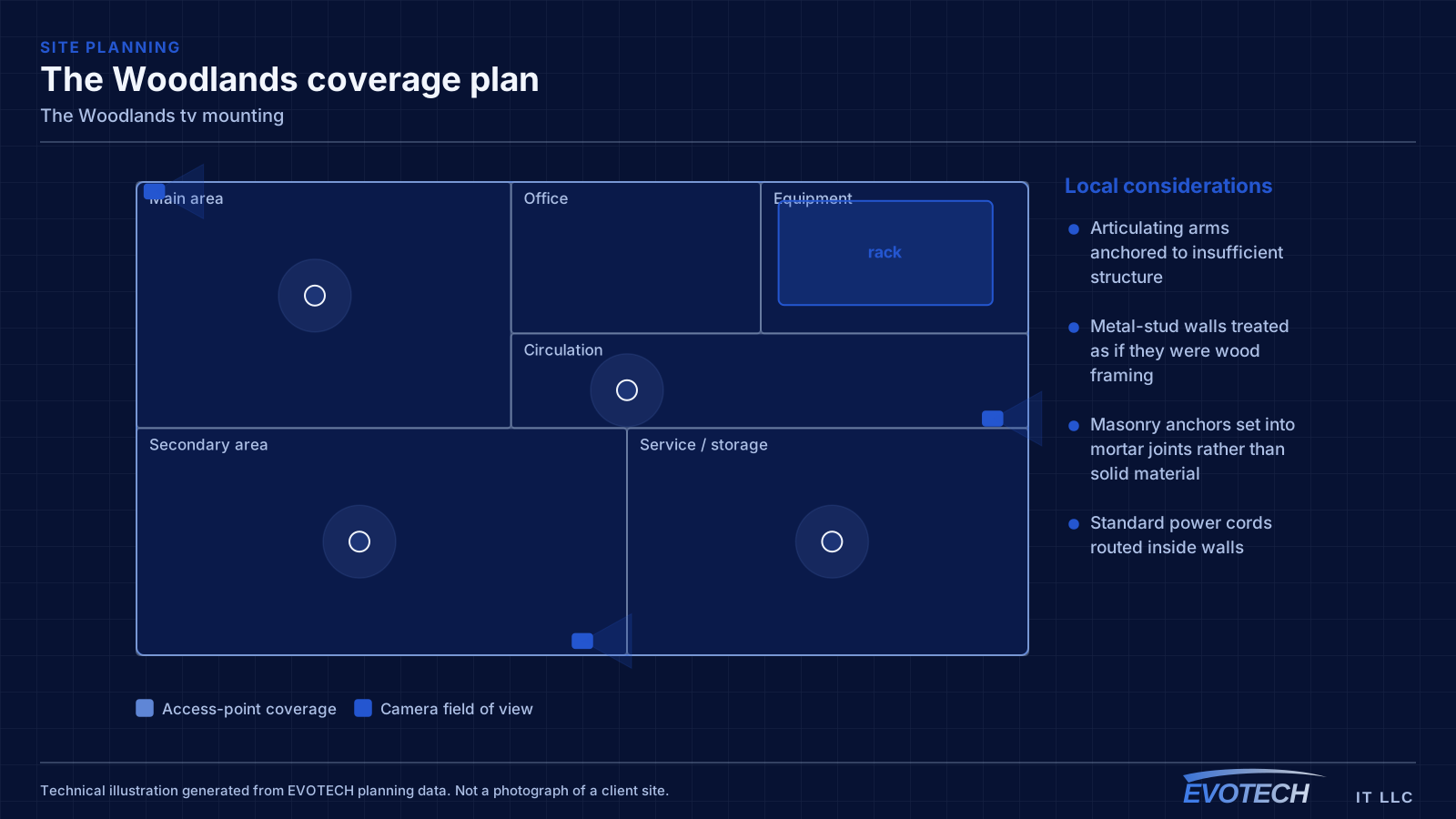
The Woodlands property conditions that change the plan
Office space here tends toward newer construction with accessible ceilings and reasonable existing pathway, which makes the physical work straightforward. What is less straightforward is capacity: these are offices with a lot of meeting rooms, and meeting rooms concentrate demand into single cells in a way that a coverage-based design will not anticipate.
Residential lots are often larger and heavily wooded, with detached garages, workshops, and pool structures that sit well beyond where house wireless can usefully reach. Those need their own cable or a deliberately designed link rather than an attempt to push coverage outward.
Foliage attenuates wireless signal, and unlike a wall it changes with season and moves constantly in wind. A link between a house and a detached workshop that works in winter can degrade noticeably once the canopy fills in. Where a wireless link is genuinely the only option, that seasonal variation is worth planning for rather than discovering.
- Newer commercial construction with accessible ceilings and existing pathway
- High meeting-room density concentrating wireless demand
- Larger residential lots with detached structures
- Mature tree cover between the house and outbuildings
- Outdoor amenity areas — patios, pool decks — needing rated equipment
- Cable to detached structures preferred over a wireless link through canopy
- Seasonal foliage variation accounted for where a wireless link is unavoidable
- Camera framing that excludes moving vegetation from the scene
- Detection zones tuned so wind does not generate constant events
- Meeting-room capacity planned explicitly on the commercial side
Getting tv mounting done in The Woodlands
In wood framing, fixings go into studs with lag bolts sized for the mount and the display weight, spanning two studs where the mount allows. In solid masonry, appropriate anchors go into the brick or block itself rather than the mortar, which is weaker. Metal-stud walls need either plywood backing installed behind the drywall — straightforward during construction, more involved afterwards — or a metal-stud anchoring system designed for the load, particularly for anything articulating.
Runs to detached structures on wooded lots are usually the most involved part of a residential project here — the route matters, and burial or conduit is generally preferable to anything aerial through trees. That is a planning conversation rather than an afternoon's work.
- Buried or conduit routes to outbuildings rather than aerial through trees
- Surge protection on any run between separate structures
- Exterior equipment rated for humidity and driven rain
- Commercial work scheduled around meeting-room availability
- Base-building rules confirmed for leased office space
Popular services nearby
Frequently searched near this area — the pages people look for most.
Frequently asked questions
Does EVOTECH have an office in The Woodlands?
No. This is a service-area page: EVOTECH serves The Woodlands without claiming a physical office there. The wording stays as coverage, not a location claim.
Can a TV be mounted on a metal-stud wall?
Yes, but not with wood-stud technique. Metal studs are thin and will not hold lag bolts under sustained load. The reliable approaches are plywood backing behind the drywall — easy during construction, more involved afterwards — or an anchoring system made for metal studs and rated for the display weight. This matters most with articulating arms, which multiply the load considerably.
Can a detached workshop be covered by extending house Wi-Fi?
Rarely well, particularly with mature trees in between. Foliage attenuates signal and the attenuation changes with the season and with wind. A cable to the structure — buried or in conduit — gives a predictable result, and where the two structures are separately grounded, fiber removes the electrical risk that a copper run would introduce.