

Why this page exists
Ethernet installation in The Woodlands is scoped around the same physical realities EVOTECH weighs everywhere — but read through The Woodlands's specific conditions: mature tree cover on many residential lots, attenuating outdoor wireless signal and generating constant motion in camera scenes. This page pairs what the service actually involves with what the The Woodlands market changes about it.
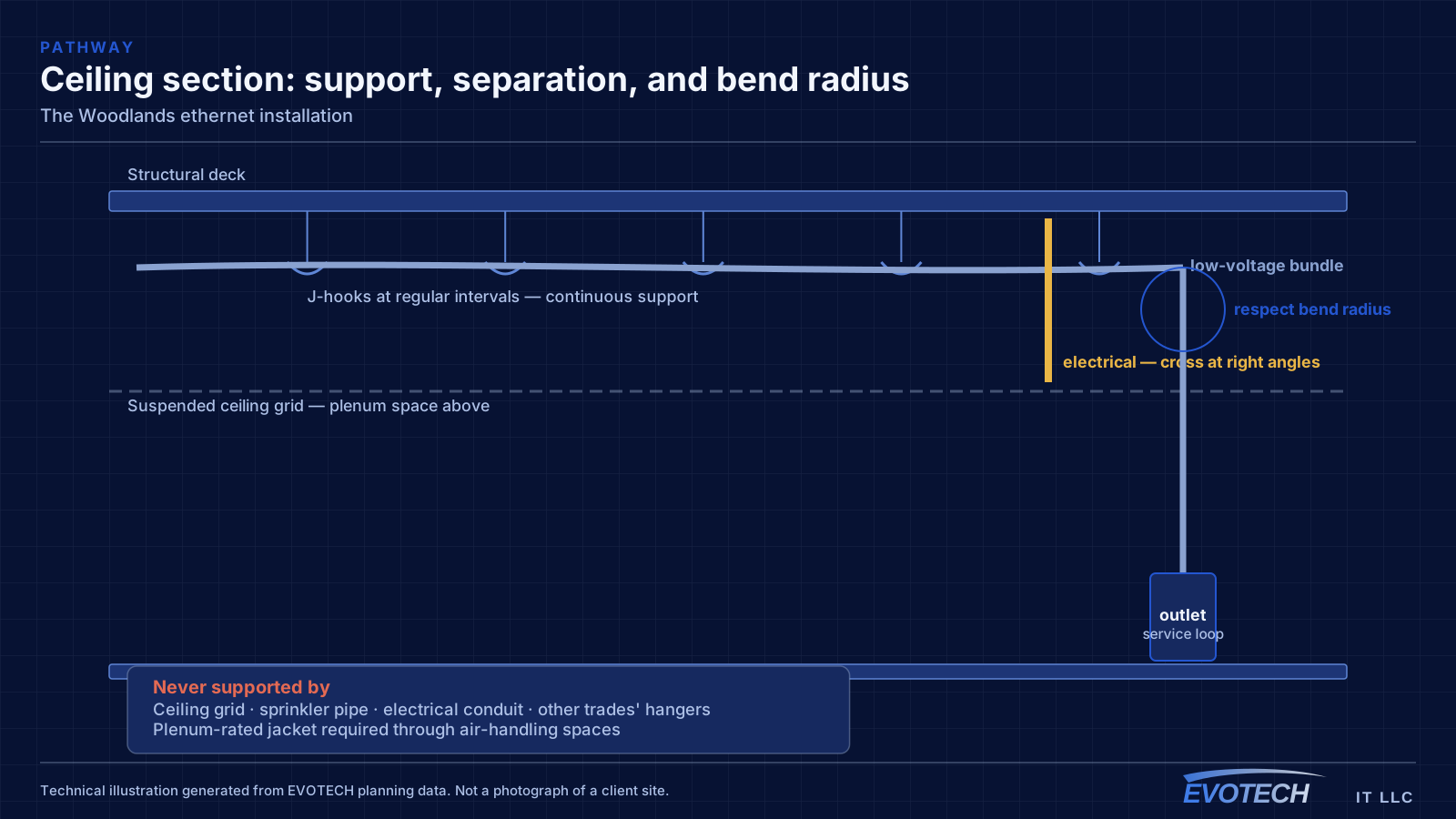
Ethernet installation in an existing building means finding a path from a central equipment position to each room that needs a wired connection, getting cable through that path without opening more wall than necessary, and terminating both ends cleanly. In a two-storey house with an accessible attic, that is often straightforward. In a single-storey house on a slab with a hard ceiling, it is the whole job.
What ethernet installation usually involves
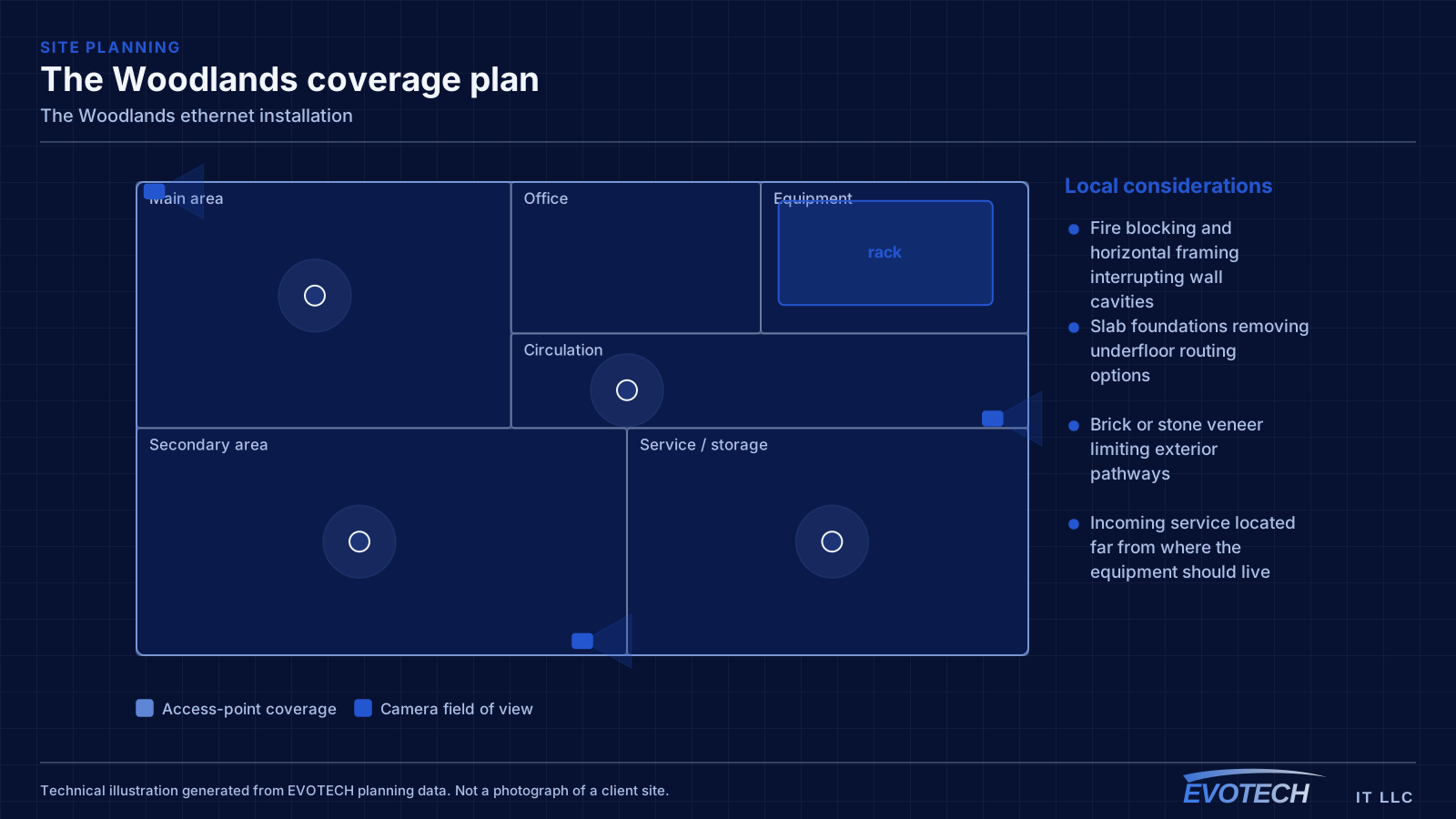
The problems in retrofit Ethernet work are physical rather than electrical. Fire blocking inside a wall cavity stops a fish tape halfway. A brick veneer means the exterior is not a viable path. A slab foundation removes the underfloor option entirely, which in much of the Houston area is the normal condition and pushes the route up into the attic.
The other recurring problem is equipment placement. The incoming internet service often lands somewhere inconvenient — a garage wall, a closet with no power, a corner of the living room — and the wired design has to either work from there or include moving the handoff to a better position.
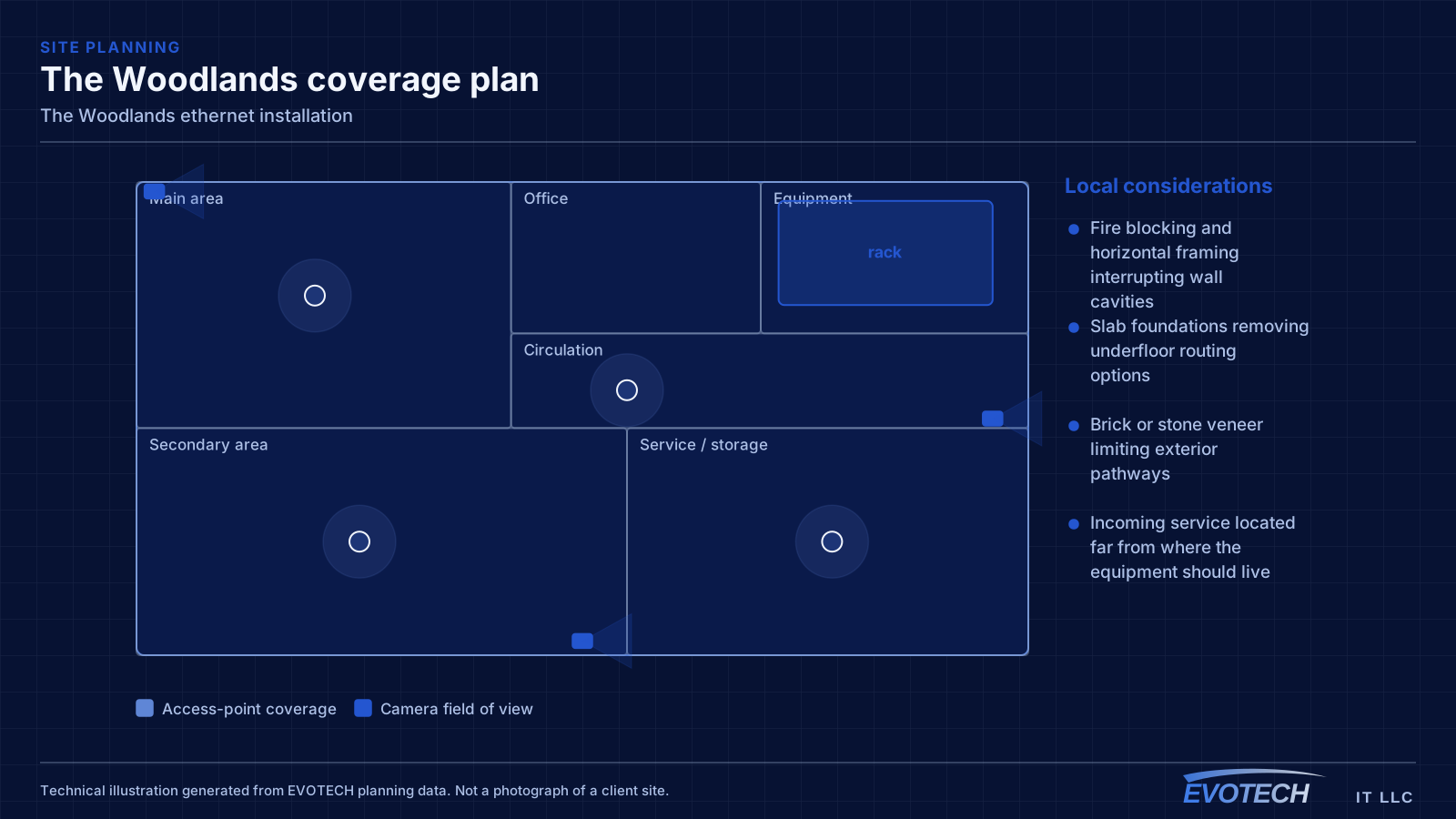
- Fire blocking and horizontal framing interrupting wall cavities
- Slab foundations removing underfloor routing options
- Brick or stone veneer limiting exterior pathways
- Incoming service located far from where the equipment should live
- No dedicated power at the intended equipment position
- Attic temperatures in summer constraining working hours and equipment placement
The Woodlands property conditions that change the plan
Office space here tends toward newer construction with accessible ceilings and reasonable existing pathway, which makes the physical work straightforward. What is less straightforward is capacity: these are offices with a lot of meeting rooms, and meeting rooms concentrate demand into single cells in a way that a coverage-based design will not anticipate.
Residential lots are often larger and heavily wooded, with detached garages, workshops, and pool structures that sit well beyond where house wireless can usefully reach. Those need their own cable or a deliberately designed link rather than an attempt to push coverage outward.
Foliage attenuates wireless signal, and unlike a wall it changes with season and moves constantly in wind. A link between a house and a detached workshop that works in winter can degrade noticeably once the canopy fills in. Where a wireless link is genuinely the only option, that seasonal variation is worth planning for rather than discovering.
- Newer commercial construction with accessible ceilings and existing pathway
- High meeting-room density concentrating wireless demand
- Larger residential lots with detached structures
- Mature tree cover between the house and outbuildings
- Outdoor amenity areas — patios, pool decks — needing rated equipment
- Cable to detached structures preferred over a wireless link through canopy
- Seasonal foliage variation accounted for where a wireless link is unavoidable
- Camera framing that excludes moving vegetation from the scene
- Detection zones tuned so wind does not generate constant events
- Meeting-room capacity planned explicitly on the commercial side
Getting ethernet installation done in The Woodlands
Most retrofit runs in a single-storey home go up into the attic, across, and down an interior wall. That works when the destination wall is interior, has an accessible top plate, and has no blocking in the way. Exterior walls are harder: insulation, bracing, and veneer all interfere, and drilling a top plate above an exterior wall is not always accessible.
Runs to detached structures on wooded lots are usually the most involved part of a residential project here — the route matters, and burial or conduit is generally preferable to anything aerial through trees. That is a planning conversation rather than an afternoon's work.
- Buried or conduit routes to outbuildings rather than aerial through trees
- Surge protection on any run between separate structures
- Exterior equipment rated for humidity and driven rain
- Commercial work scheduled around meeting-room availability
- Base-building rules confirmed for leased office space
Popular services nearby
Frequently searched near this area — the pages people look for most.
Frequently asked questions
Does EVOTECH have an office in The Woodlands?
No. This is a service-area page: EVOTECH serves The Woodlands without claiming a physical office there. The wording stays as coverage, not a location claim.
Can Ethernet be added without cutting into walls?
Often yes, when the destination is an interior wall reachable from an attic or crawl space and there is no blocking in the cavity. When there is no viable cavity path, the choices are a small access cut that then gets patched, a surface raceway, or moving the device to a wall that can be reached. Which one makes sense is worth deciding before work starts rather than mid-pull.
Can a detached workshop be covered by extending house Wi-Fi?
Rarely well, particularly with mature trees in between. Foliage attenuates signal and the attenuation changes with the season and with wind. A cable to the structure — buried or in conduit — gives a predictable result, and where the two structures are separately grounded, fiber removes the electrical risk that a copper run would introduce.