Why this page exists
Security-camera installation for multifamily properties is shaped by how the space is used, not just by the service itself. Multifamily properties bring their own operating constraints, and this page pairs what security-camera installation actually involves with what that environment changes about it.
The useful design question is not how many cameras a property needs. It is what each camera has to accomplish. Detecting that a person is present, recognising someone you already know, and identifying a stranger from footage are three different requirements, and they need increasing pixel density on the subject. Planning guidance commonly cited from industry standards puts detection in the region of ten pixels per foot of subject, recognition around forty, and identification around eighty.
Two audiences, one building
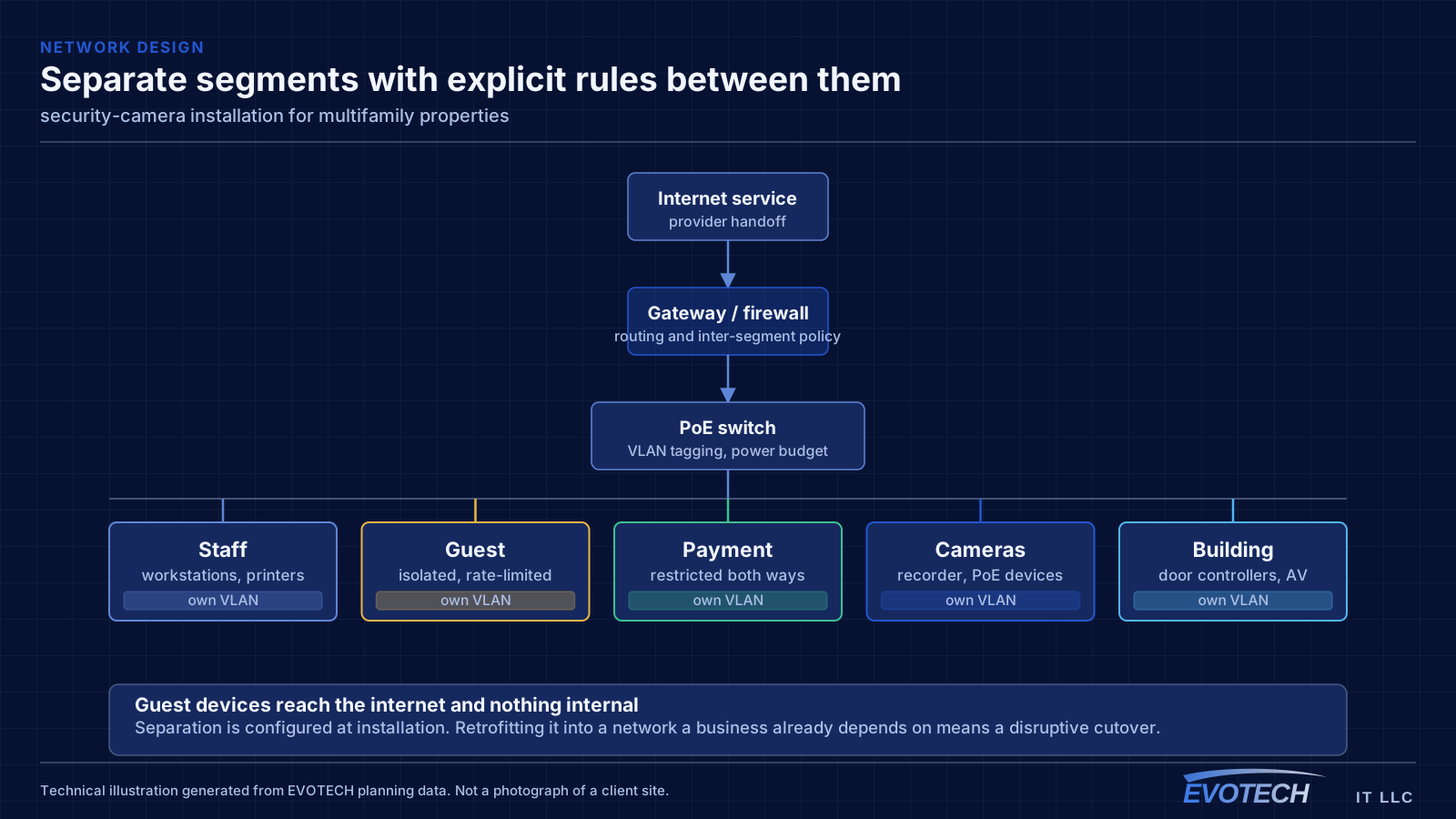
A multifamily property runs two distinct technology environments. Residents have their own connectivity inside their units, generally provided by whatever service they select. The property operates everything else: common-area wireless, controlled entry, intercom, package rooms, amenity spaces, cameras, and the office network.
The property-operated side is what needs design. It has to work for a resident population that turns over continuously, be administrable by on-site staff who also turn over, and survive being used by everyone in the building without a support desk.
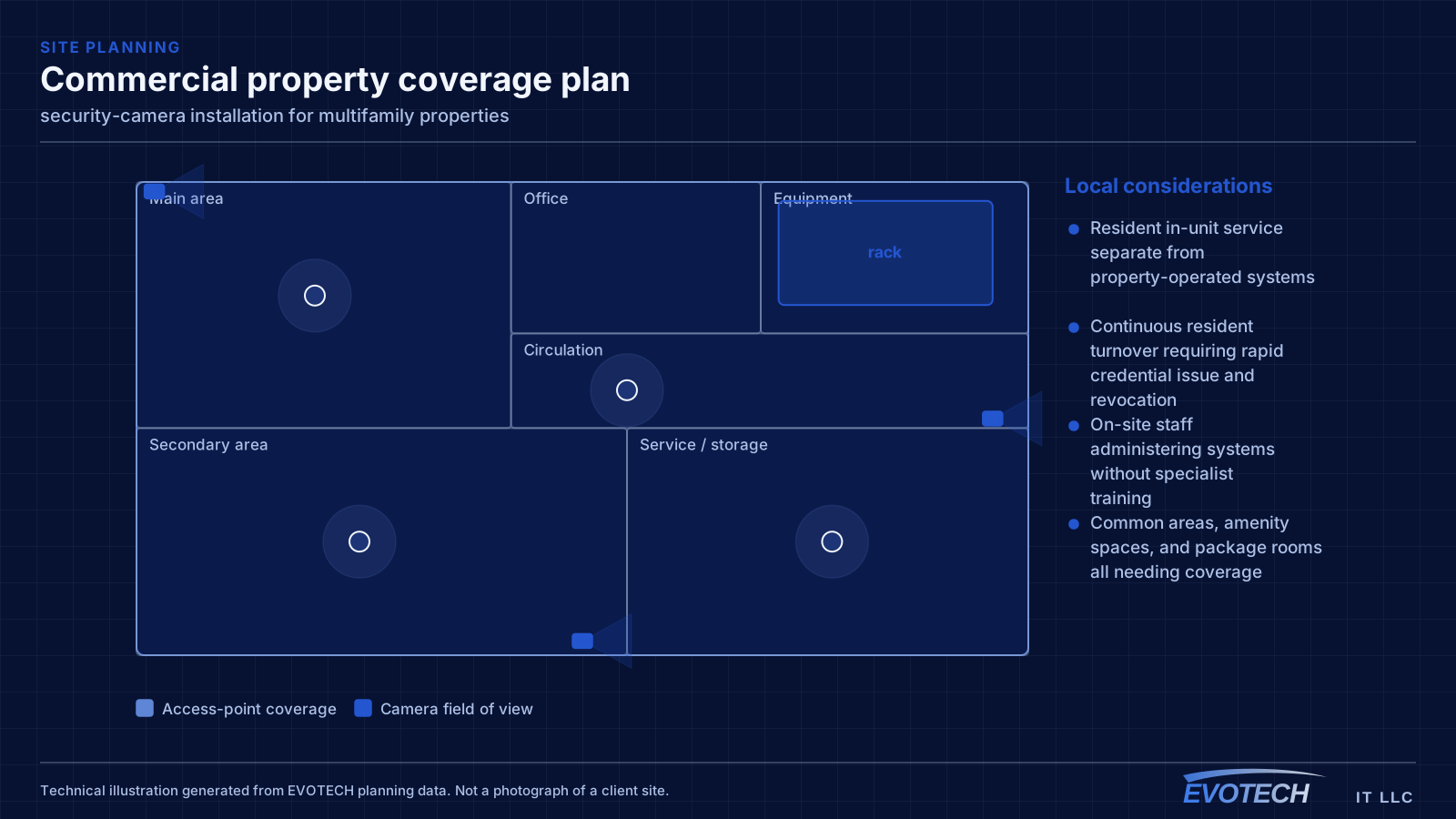
- Resident in-unit service separate from property-operated systems
- Continuous resident turnover requiring rapid credential issue and revocation
- On-site staff administering systems without specialist training
- Common areas, amenity spaces, and package rooms all needing coverage
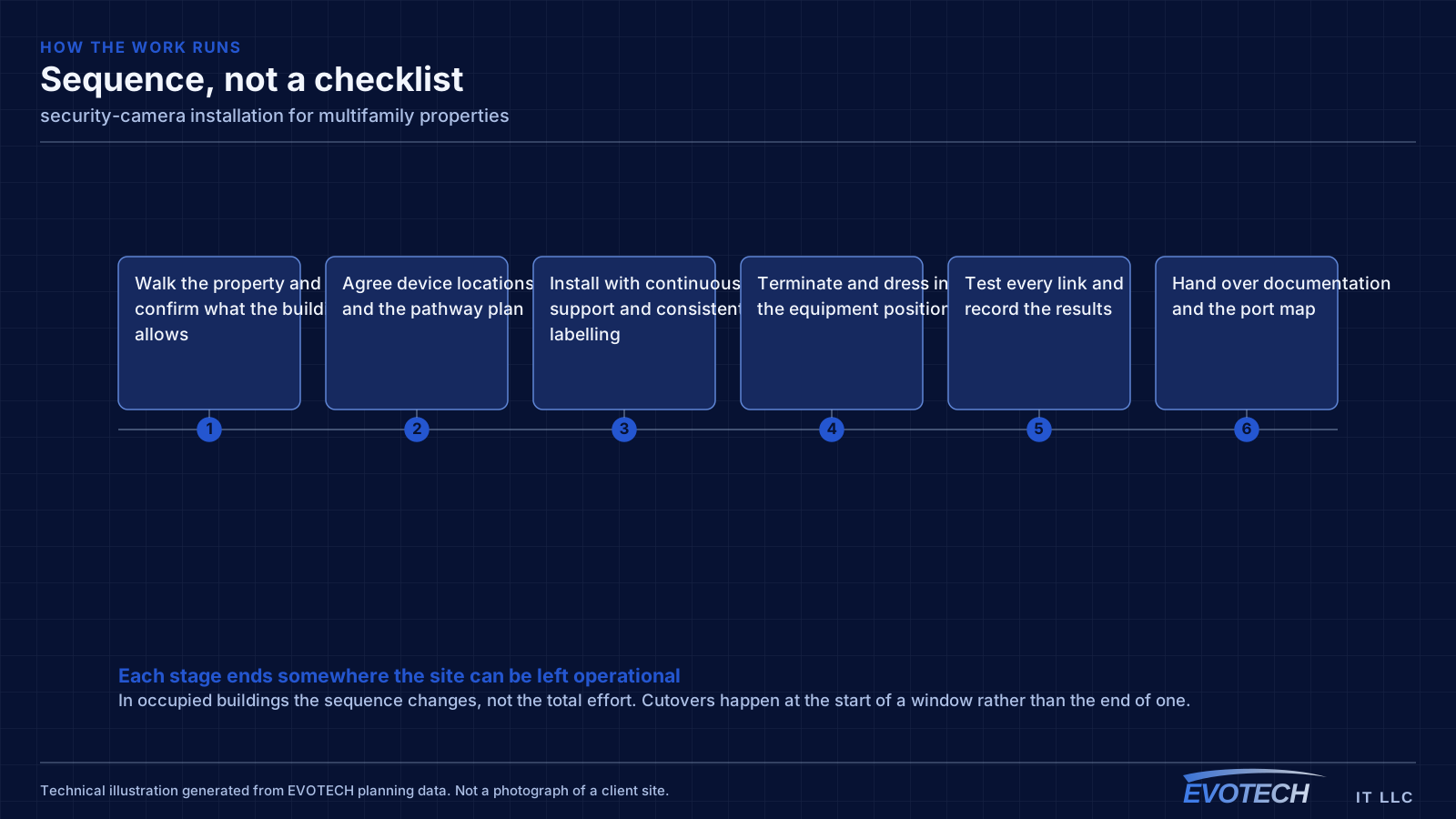
What security-camera installation usually involves
The dominant complaint about existing systems is footage that shows an event happened without showing anything useful about it. That is a design outcome: the camera was too far away, the lens too wide, or the scene lit so that the subject appears as a silhouette.
Backlighting is the specific and very common version of this. A camera pointed at a glass entrance during daylight sees a bright background and a dark figure. Wide dynamic range helps, but positioning that avoids shooting directly into the light source helps more.
- Wide-angle coverage that produces recognisable scenes but unidentifiable people
- Cameras pointed toward windows or the sky, silhouetting anyone in frame
- Infrared illumination reflecting off a nearby wall, soffit, or spider web and washing out the image
- Retention too short to be useful by the time an incident is noticed
- No remote access configured, so footage is only available on site
- Cameras mounted where they are exposed to tampering or weather they were not rated for
Property systems and common-area coverage
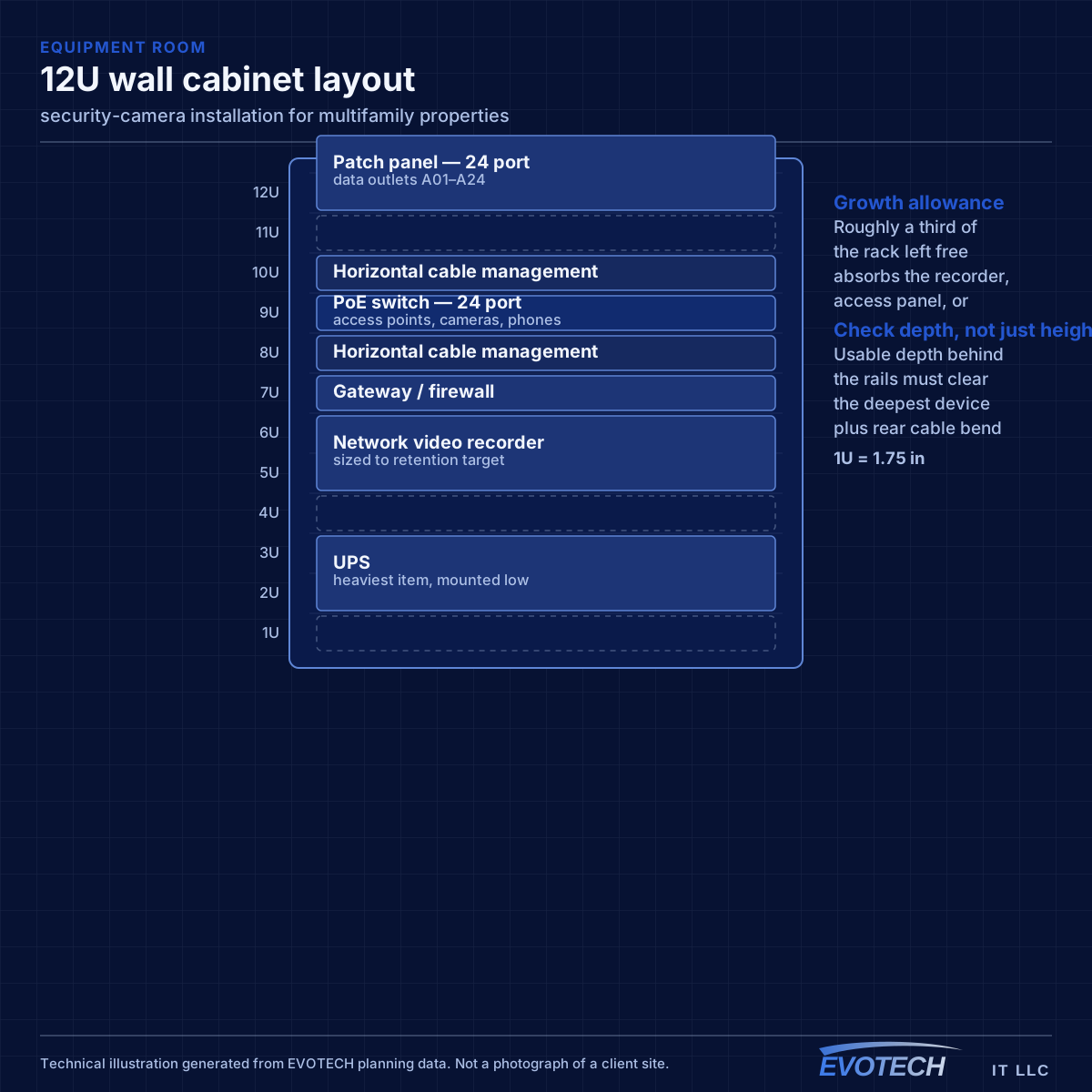
The property network carries cameras, door controllers, intercom, the leasing office, and common-area wireless. These belong on separate segments from each other — common-area guest wireless in particular should reach the internet and nothing else, since it is used by residents, visitors, and anyone within range of an amenity space.
Common-area coverage is a distributed problem. Lobbies, corridors, fitness rooms, clubhouses, pool areas, and parking structures each have different construction and different demand, and outdoor amenity areas need equipment rated for the exposure. Corridor coverage in particular tends to be underestimated, since corridors are long, narrow, and full of doors.
Where a property spans multiple buildings, the links between them are fiber, for the same distance and electrical-isolation reasons that apply on any campus.
- Property systems segmented from common-area guest wireless
- Amenity spaces, corridors, and outdoor areas as distinct coverage zones
- Outdoor-rated equipment for pool decks and exterior amenity areas
- Fiber between buildings on multi-building properties
- Leasing office network separated from resident-facing systems
Pixel density, lighting, field of view, and mounting height
Pixel density on the target is the governing figure. It falls off with distance and with wider fields of view, so the design pairs each camera's resolution and lens with the distance to the area it must cover. A camera intended for identification at an entry door is placed close and framed tightly; a camera intended to show general activity across a yard is framed wide and is not expected to identify anyone.
- Commonly cited planning targets: roughly 10 px/ft detection, 40 px/ft recognition, 80 px/ft identification
- Frame identification cameras tightly on the approach rather than across a whole area
- Avoid aiming into windows, sky, or fixed light sources
- Keep infrared illumination clear of nearby walls, soffits, and obstructions
- Balance mounting height against viewing angle; steep angles rarely identify anyone
- Match housing rating to the actual exposure, including driven rain and heat
Popular services nearby
Frequently searched near this area — the pages people look for most.
Frequently asked questions
What changes about security-camera installation in multifamily properties?
The operating environment does. Multifamily properties bring specific constraints — how the space is used, when work can happen, and what has to keep running — and those shape the security-camera installation plan as much as the service's own technical requirements.
How many cameras does a property need?
Count objectives, not walls. Each area needs a stated purpose — detect activity, recognise a known person, or identify a stranger — and the camera serving it is chosen for that purpose. A property with four well-framed cameras at the points that matter usually produces more useful footage than one with twelve wide shots covering everything approximately.
Does the property provide internet inside the units?
That varies by property and is a business decision rather than a technical one. What the property always operates is the common-area and building-systems side: entry, intercom, package rooms, amenity wireless, cameras, and the leasing office network. That is where the design work sits.