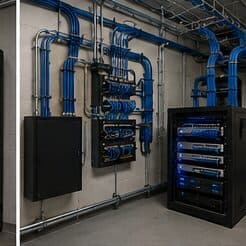
Why this page exists
Video-doorbell installation for multifamily properties is shaped by how the space is used, not just by the service itself. Multifamily properties bring their own operating constraints, and this page pairs what video-doorbell installation actually involves with what that environment changes about it.
A video doorbell is a small camera with a doorbell button, and the three things that make it work well are adequate power, a sensible viewing angle, and a solid network connection at the door. Existing doorbell wiring often provides power, but many older transformers were sized for a mechanical chime and do not supply enough for a camera that streams and records.
Two audiences, one building
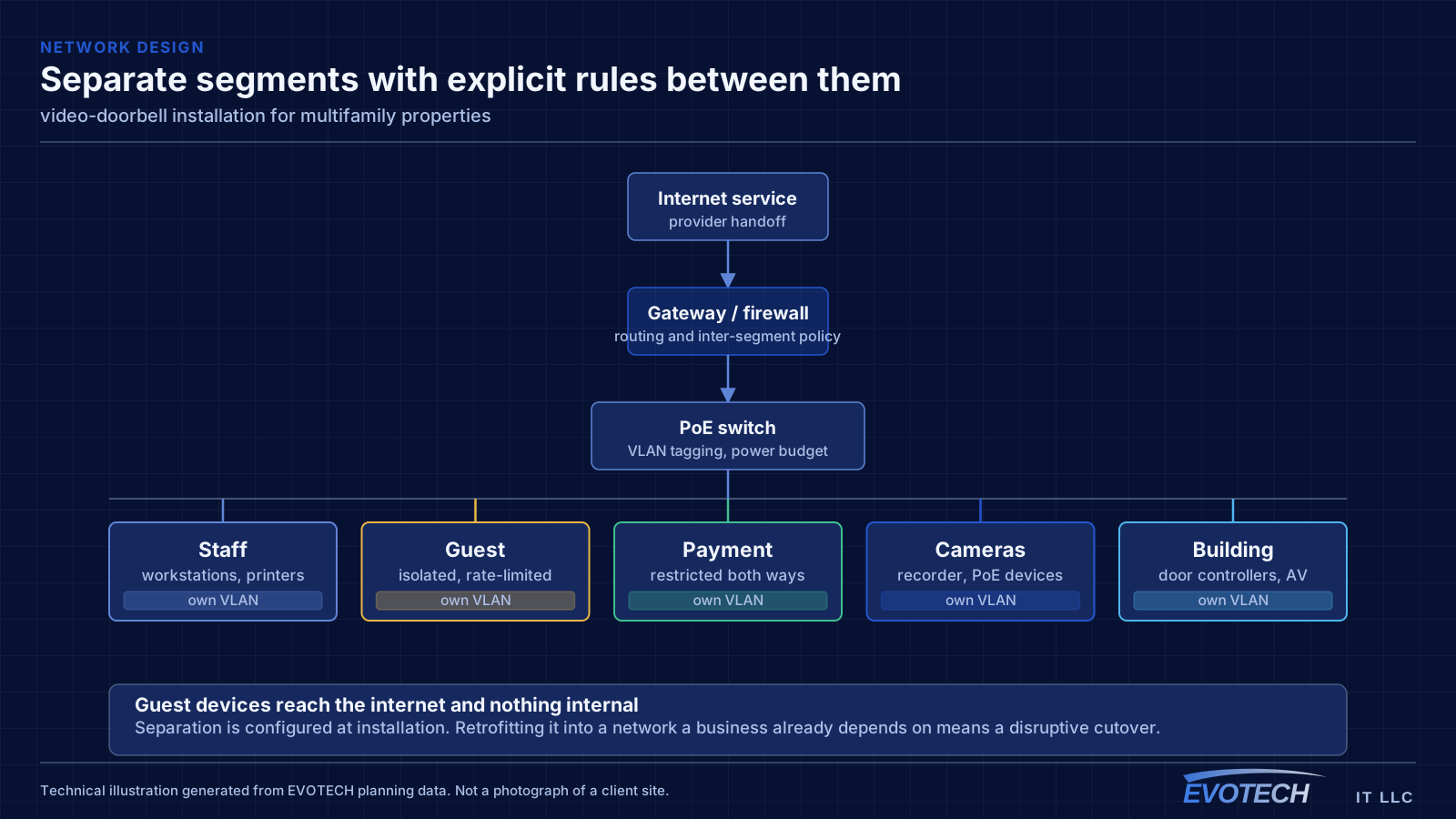
A multifamily property runs two distinct technology environments. Residents have their own connectivity inside their units, generally provided by whatever service they select. The property operates everything else: common-area wireless, controlled entry, intercom, package rooms, amenity spaces, cameras, and the office network.
The property-operated side is what needs design. It has to work for a resident population that turns over continuously, be administrable by on-site staff who also turn over, and survive being used by everyone in the building without a support desk.
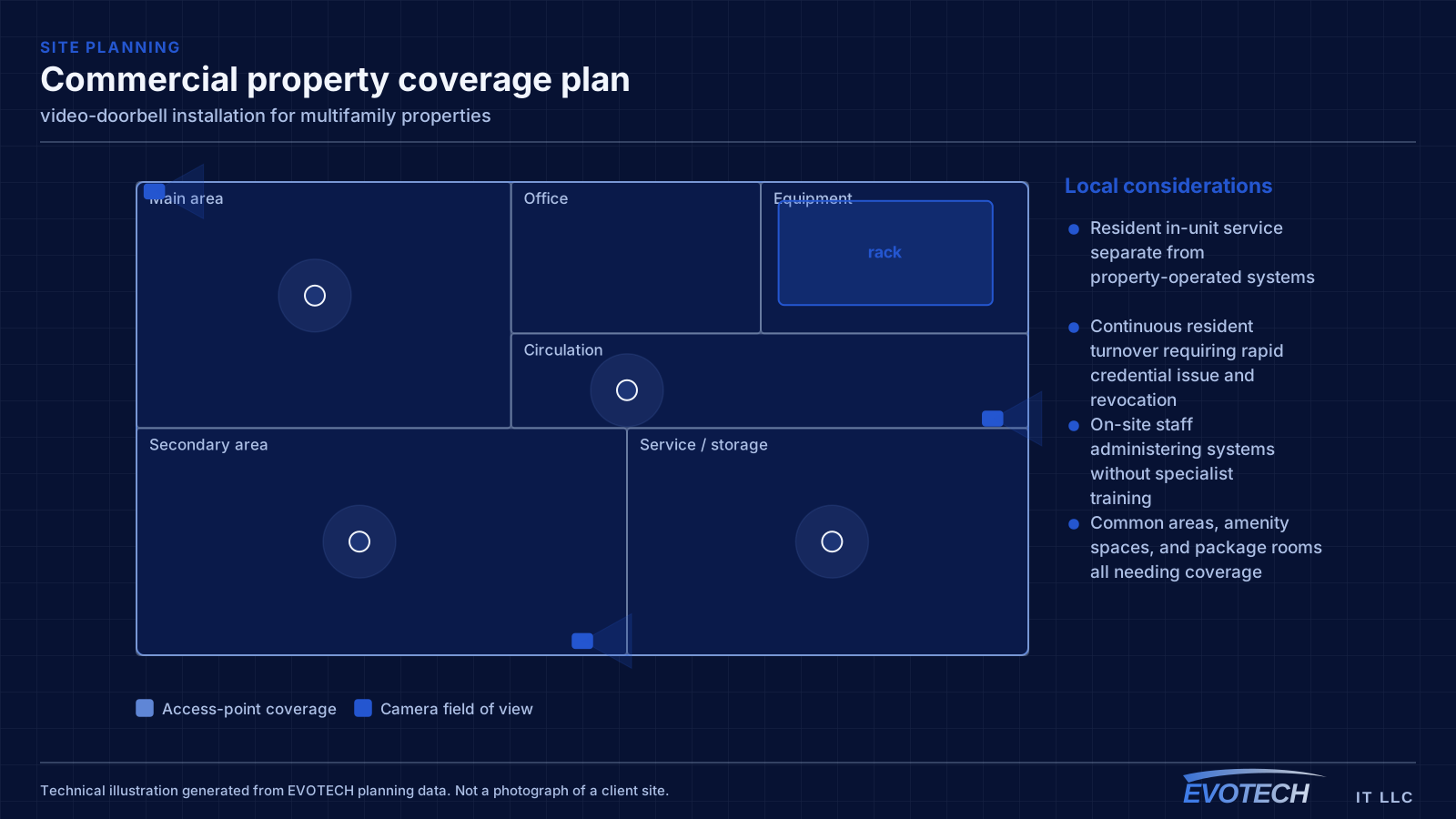
- Resident in-unit service separate from property-operated systems
- Continuous resident turnover requiring rapid credential issue and revocation
- On-site staff administering systems without specialist training
- Common areas, amenity spaces, and package rooms all needing coverage
What video-doorbell installation usually involves
The most common failure is a doorbell that works intermittently, drops its video, or reboots when someone presses the button. That pattern almost always indicates insufficient power — either a transformer below the required rating or a chime configuration the device cannot work with.
The second is wireless. The front door is frequently the furthest point from the router, often through an exterior wall and sometimes behind brick veneer. A device with a marginal connection produces delayed notifications and choppy video, and no amount of doorbell configuration fixes a signal problem.
- Transformer rated for a mechanical chime and insufficient for a camera doorbell
- Existing chime incompatible without the manufacturer's adapter
- Mounting height framing chests rather than faces
- Approach path off to one side, outside the camera's field of view
- Weak wireless signal at the door causing delays and dropped clips
- Direct sun or a bright background silhouetting visitors at certain times of day
Property systems and common-area coverage
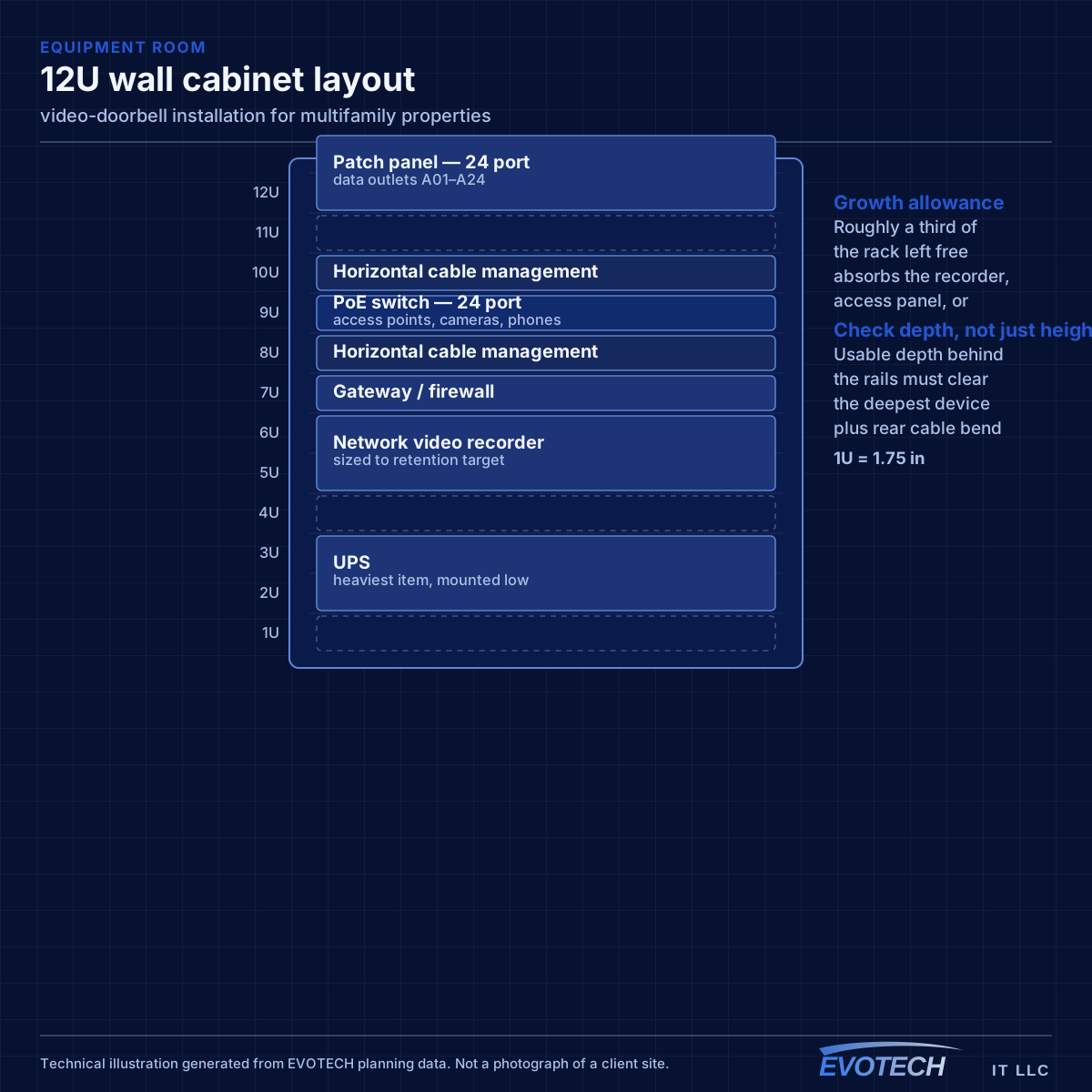
The property network carries cameras, door controllers, intercom, the leasing office, and common-area wireless. These belong on separate segments from each other — common-area guest wireless in particular should reach the internet and nothing else, since it is used by residents, visitors, and anyone within range of an amenity space.
Common-area coverage is a distributed problem. Lobbies, corridors, fitness rooms, clubhouses, pool areas, and parking structures each have different construction and different demand, and outdoor amenity areas need equipment rated for the exposure. Corridor coverage in particular tends to be underestimated, since corridors are long, narrow, and full of doors.
Where a property spans multiple buildings, the links between them are fiber, for the same distance and electrical-isolation reasons that apply on any campus.
- Property systems segmented from common-area guest wireless
- Amenity spaces, corridors, and outdoor areas as distinct coverage zones
- Outdoor-rated equipment for pool decks and exterior amenity areas
- Fiber between buildings on multi-building properties
- Leasing office network separated from resident-facing systems
Transformer capacity, chime handling, and mounting angle
Camera doorbells specify a voltage and minimum VA rating for their transformer. Many houses have transformers sized only for a mechanical chime, which is a much smaller load. When the supply is marginal the device may appear to work and then fail when the camera and radio draw peak current — typically at the moment the button is pressed. Replacing the transformer with one meeting the device specification resolves a large share of these cases.
- Transformer must meet the device's voltage and VA specification
- Mechanical chimes generally need the manufacturer's bypass module
- Mount for the approach path, not just for button convenience
- Angled wedges for side approaches and recessed entries
- Verify wireless signal strength at the door before finalising the position
- Consider sun direction and bright backgrounds at the times that matter
Frequently asked questions
What changes about video-doorbell installation in multifamily properties?
The operating environment does. Multifamily properties bring specific constraints — how the space is used, when work can happen, and what has to keep running — and those shape the video-doorbell installation plan as much as the service's own technical requirements.
Why does the doorbell keep going offline or restarting?
Most often the transformer. Many houses have a transformer sized for a mechanical chime, which is a much smaller load than a camera doorbell. The device appears to work until it draws peak current — usually at the button press — and then drops. Confirming the transformer meets the device's stated voltage and VA rating resolves a large share of these cases.
Does the property provide internet inside the units?
That varies by property and is a business decision rather than a technical one. What the property always operates is the common-area and building-systems side: entry, intercom, package rooms, amenity wireless, cameras, and the leasing office network. That is where the design work sits.