Why this page exists
Floodlight camera installation for multifamily properties is shaped by how the space is used, not just by the service itself. Multifamily properties bring their own operating constraints, and this page pairs what floodlight camera installation actually involves with what that environment changes about it.
A floodlight camera combines a motion-activated light with a camera, so an area lights up and records when something moves — good for deterrence and for usable colour footage at night. The catch is that the camera is looking into its own light source, so placement has to give useful footage without the floodlight washing out the near field or throwing hard shadows, and the motion detection has to trigger on people rather than every passing car or swaying tree.
Two audiences, one building
A multifamily property runs two distinct technology environments. Residents have their own connectivity inside their units, generally provided by whatever service they select. The property operates everything else: common-area wireless, controlled entry, intercom, package rooms, amenity spaces, cameras, and the office network.
The property-operated side is what needs design. It has to work for a resident population that turns over continuously, be administrable by on-site staff who also turn over, and survive being used by everyone in the building without a support desk.
- Resident in-unit service separate from property-operated systems
- Continuous resident turnover requiring rapid credential issue and revocation
- On-site staff administering systems without specialist training
- Common areas, amenity spaces, and package rooms all needing coverage
What floodlight camera installation usually involves
The signature problem is the camera fighting its own light: mounted or aimed poorly, the floodlight blows out the near field, casts hard shadows, or reflects off a nearby wall back into the lens, so the footage is worse than a plain camera would give. Placement that keeps the light on the scene and off the lens's immediate foreground is what makes the combined unit work.
The second is nuisance triggering. A floodlight camera aimed to catch a wide area lights up and records every passing car, pedestrian, and swaying branch, which fills storage and trains everyone to ignore the alerts. Motion zones tuned to the actual approach path are what keep the triggers meaningful.
- Floodlight washing out the near field or reflecting into the lens
- Hard shadows from a poorly angled light hiding the subject
- Nuisance triggering on traffic, pedestrians, and foliage
- Mounted too low for tamper resistance and useful angle
- Depending on battery and Wi-Fi for a device meant to always watch
- Aimed for wide area rather than the approach that matters
Property systems and common-area coverage
The property network carries cameras, door controllers, intercom, the leasing office, and common-area wireless. These belong on separate segments from each other — common-area guest wireless in particular should reach the internet and nothing else, since it is used by residents, visitors, and anyone within range of an amenity space.
Common-area coverage is a distributed problem. Lobbies, corridors, fitness rooms, clubhouses, pool areas, and parking structures each have different construction and different demand, and outdoor amenity areas need equipment rated for the exposure. Corridor coverage in particular tends to be underestimated, since corridors are long, narrow, and full of doors.
Where a property spans multiple buildings, the links between them are fiber, for the same distance and electrical-isolation reasons that apply on any campus.
- Property systems segmented from common-area guest wireless
- Amenity spaces, corridors, and outdoor areas as distinct coverage zones
- Outdoor-rated equipment for pool decks and exterior amenity areas
- Fiber between buildings on multi-building properties
- Leasing office network separated from resident-facing systems
Height and angle, glare, motion zones, and reliable power
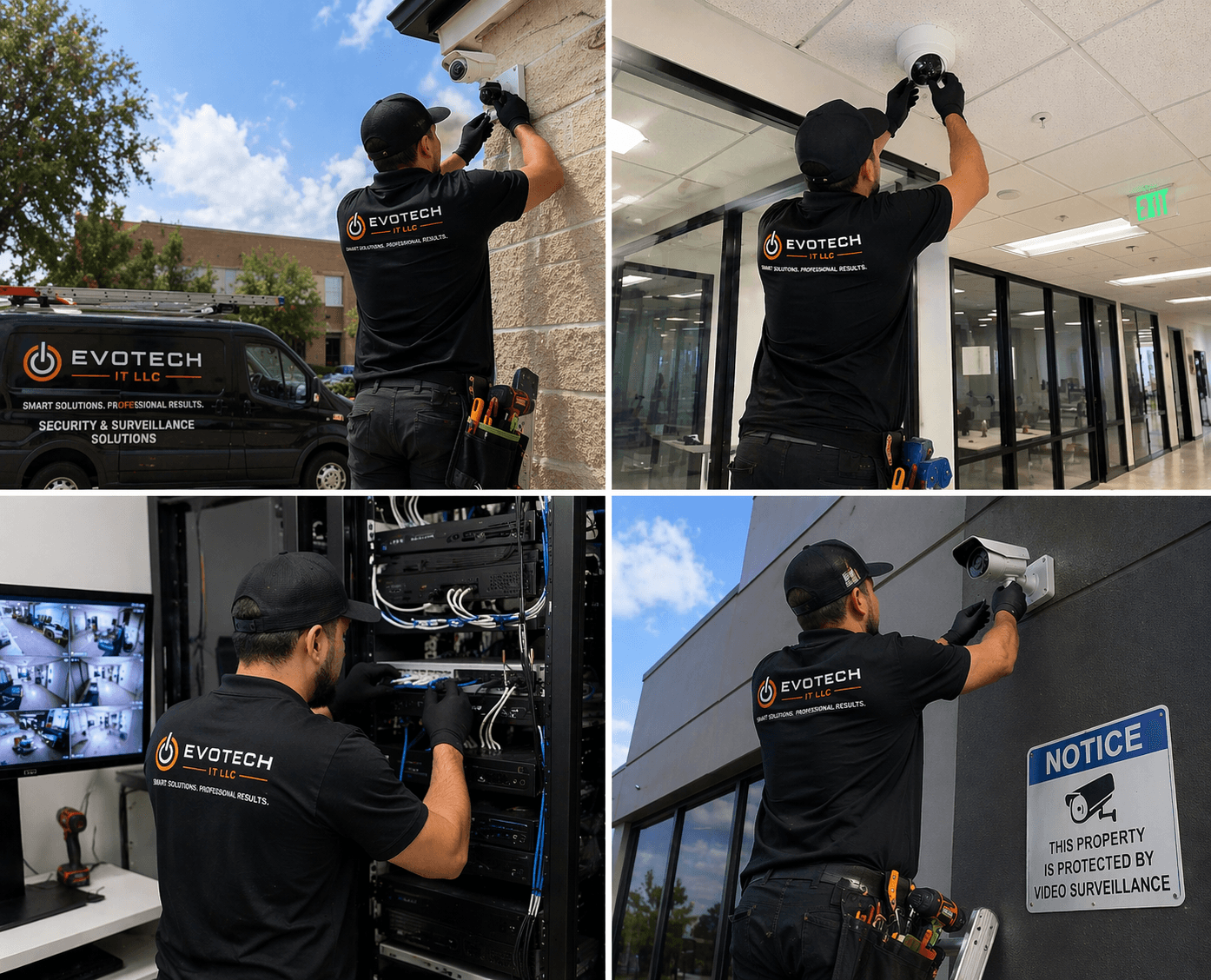
Mounting height and angle balance deterrence, coverage, and tamper resistance. High enough to be out of easy reach and to light the approach, angled so the light falls on the scene rather than into the camera's near foreground, and positioned so a person approaching is lit from a useful angle rather than silhouetted or shadowed. Keeping the light off nearby reflective surfaces — a light wall, a soffit — stops it bouncing back into the lens.
- Mounted high enough for reach and useful angle, out of tamper range
- Light aimed at the scene, off the lens's near field and reflective surfaces
- Subject lit from a useful angle, not silhouetted or shadowed
- Motion zones shaped to the real approach path
- Two-way audio for live deterrence where fitted
- Wired power and a reliable connection for a device meant to always watch
Frequently asked questions
What changes about floodlight camera installation in multifamily properties?
The operating environment does. Multifamily properties bring specific constraints — how the space is used, when work can happen, and what has to keep running — and those shape the floodlight camera installation plan as much as the service's own technical requirements.
Why is my floodlight camera's footage washed out at night?
The camera is fighting its own light. If the floodlight blows out the near field or reflects off a nearby wall or soffit back into the lens, the footage is worse than a plain camera would give. Aiming the light onto the scene and off the lens's immediate foreground — and away from reflective surfaces — is what fixes it.
Does the property provide internet inside the units?
That varies by property and is a business decision rather than a technical one. What the property always operates is the common-area and building-systems side: entry, intercom, package rooms, amenity wireless, cameras, and the leasing office network. That is where the design work sits.