Why this page exists
Access-control installation for multifamily properties is shaped by how the space is used, not just by the service itself. Multifamily properties bring their own operating constraints, and this page pairs what access-control installation actually involves with what that environment changes about it.
An access-control system manages who may open which door and when, and records each attempt. The immediate operational benefit over keys is revocation: a lost credential is disabled in seconds instead of prompting a rekey. The secondary benefit is the audit record, which turns 'who was here on Saturday' into a query rather than a guess.
Two audiences, one building
A multifamily property runs two distinct technology environments. Residents have their own connectivity inside their units, generally provided by whatever service they select. The property operates everything else: common-area wireless, controlled entry, intercom, package rooms, amenity spaces, cameras, and the office network.
The property-operated side is what needs design. It has to work for a resident population that turns over continuously, be administrable by on-site staff who also turn over, and survive being used by everyone in the building without a support desk.
- Resident in-unit service separate from property-operated systems
- Continuous resident turnover requiring rapid credential issue and revocation
- On-site staff administering systems without specialist training
- Common areas, amenity spaces, and package rooms all needing coverage
What access-control installation usually involves
Most operational access-control problems come from doors, not from software. A door that does not close fully leaves a held-open alarm that people learn to ignore. A misaligned strike causes intermittent failures that get blamed on credentials. A magnetic lock installed without correct release arrangements is a genuine safety issue rather than an inconvenience.
The second cluster is administrative. Credentials issued to people who left, shared credentials that make the audit log meaningless, and no defined process for issuing or revoking access all erode the value the system was installed to provide.
- Door closers and alignment causing intermittent latch failures
- Held-open alarms so frequent they get ignored
- Credentials never revoked when someone leaves
- Shared credentials making the audit trail unusable
- Request-to-exit devices missing, misaligned, or not covering the approach
- Controllers installed on the unsecured side of the door they control
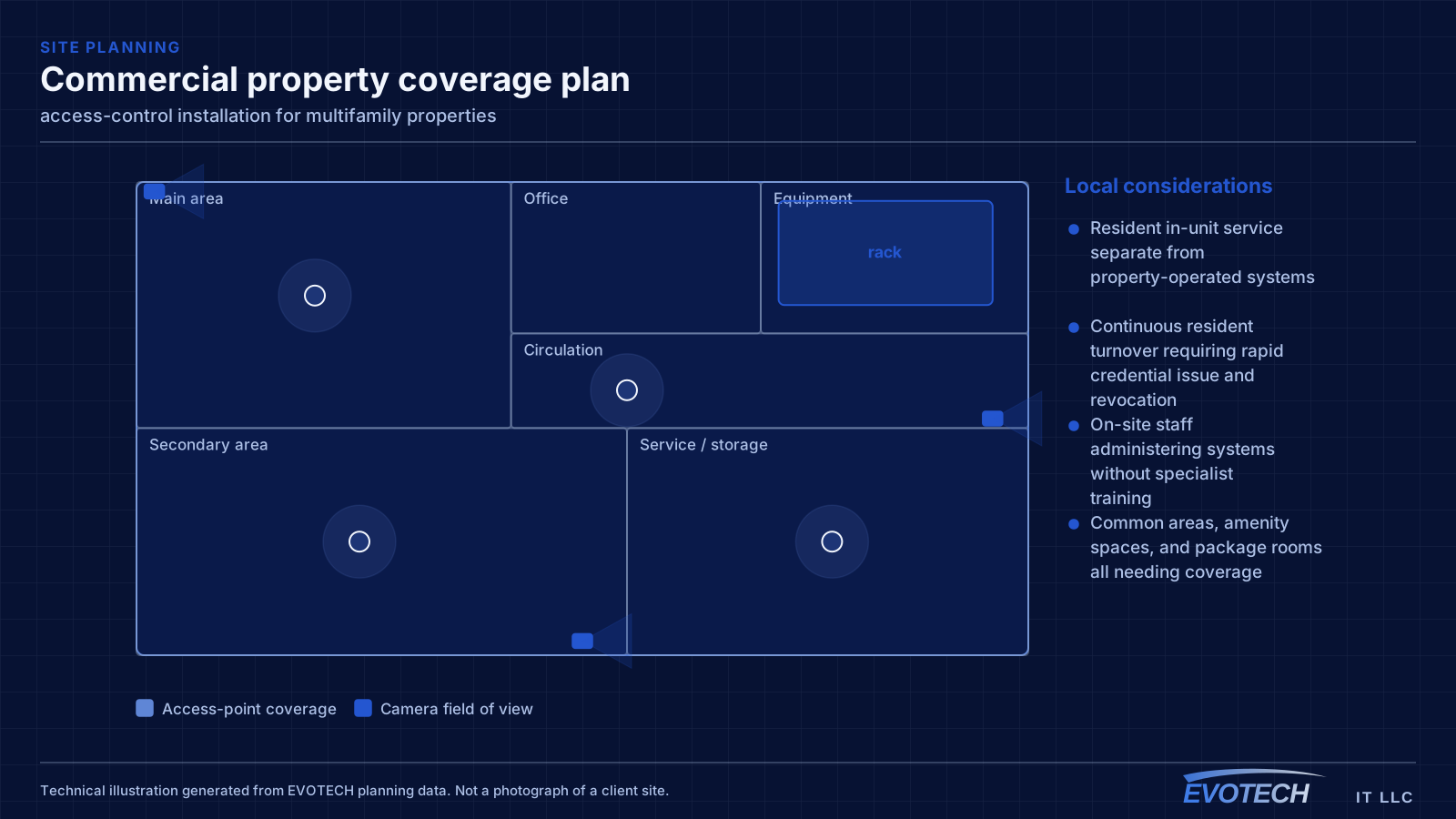
Property systems and common-area coverage
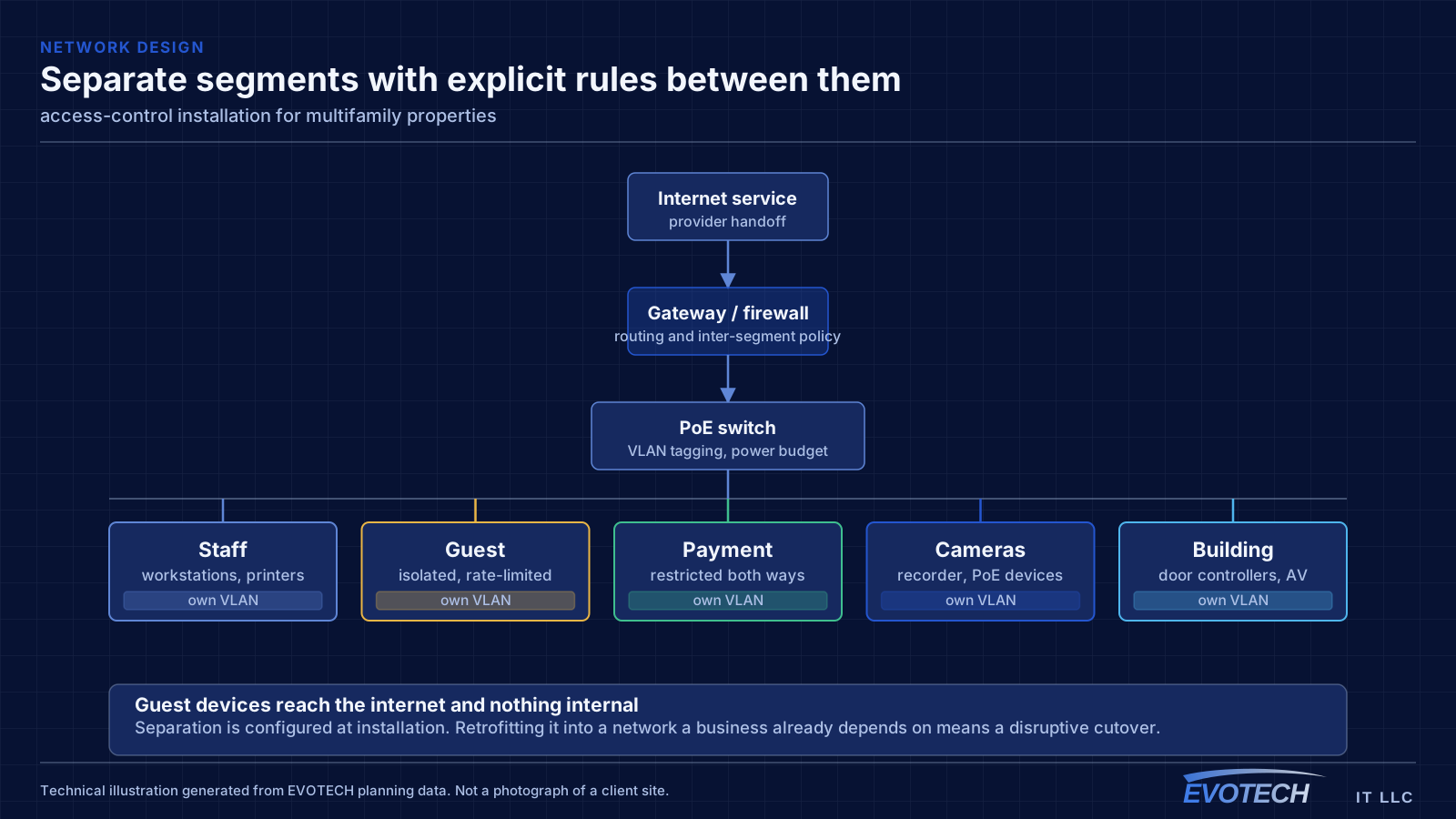
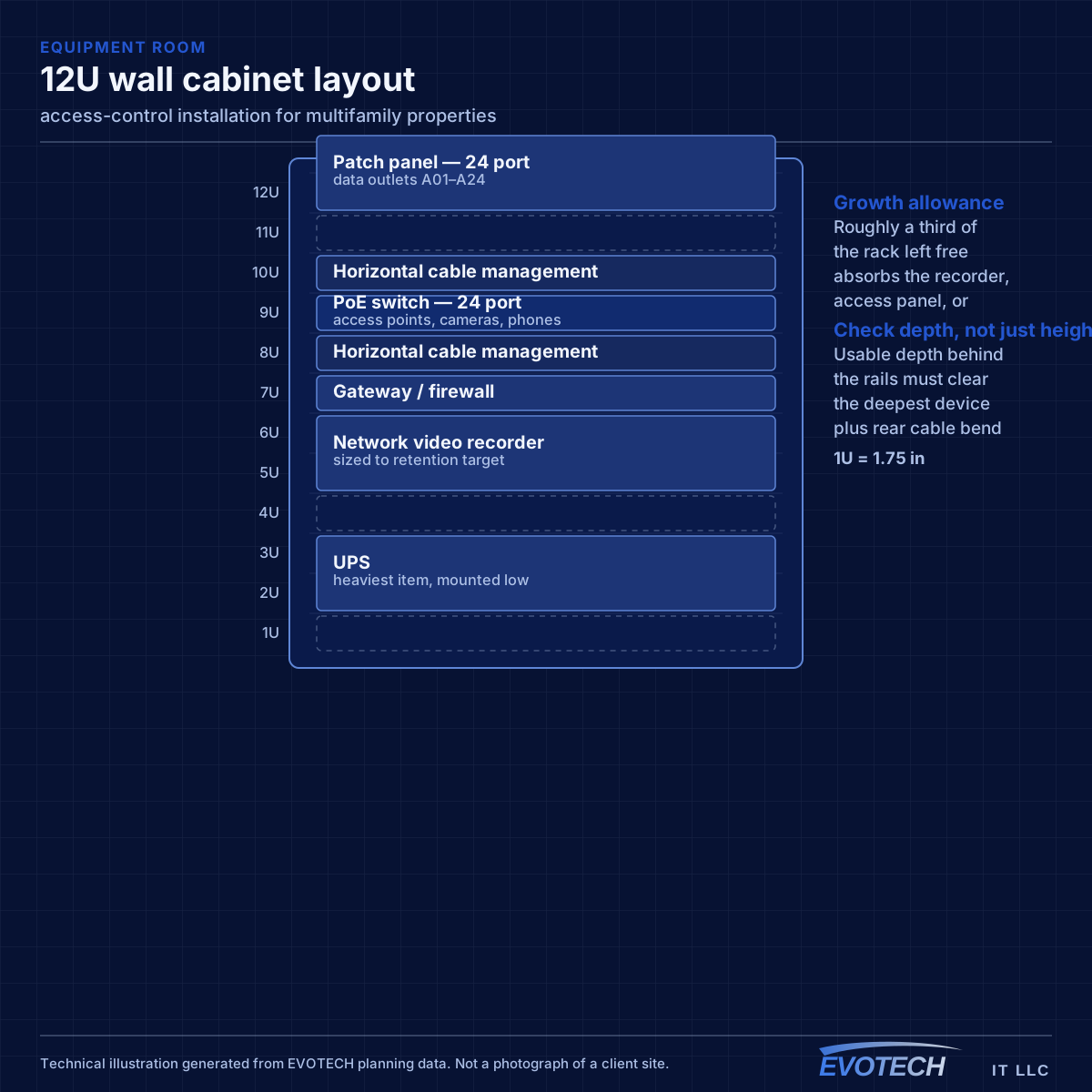
The property network carries cameras, door controllers, intercom, the leasing office, and common-area wireless. These belong on separate segments from each other — common-area guest wireless in particular should reach the internet and nothing else, since it is used by residents, visitors, and anyone within range of an amenity space.
Common-area coverage is a distributed problem. Lobbies, corridors, fitness rooms, clubhouses, pool areas, and parking structures each have different construction and different demand, and outdoor amenity areas need equipment rated for the exposure. Corridor coverage in particular tends to be underestimated, since corridors are long, narrow, and full of doors.
Where a property spans multiple buildings, the links between them are fiber, for the same distance and electrical-isolation reasons that apply on any campus.
- Property systems segmented from common-area guest wireless
- Amenity spaces, corridors, and outdoor areas as distinct coverage zones
- Outdoor-rated equipment for pool decks and exterior amenity areas
- Fiber between buildings on multi-building properties
- Leasing office network separated from resident-facing systems
Locks, egress, and where the controller belongs
Electric strikes and magnetic locks behave oppositely on power loss. A magnetic lock is fail-safe — it releases when power is removed, so the door is passable during an outage or alarm. A standard electric strike is typically fail-secure — it stays locked without power, though the door can still be opened from the inside by its mechanical hardware. Which is appropriate depends on the door's role and on the applicable life-safety requirements, and it is not an interchangeable preference.
- Magnetic locks fail safe on power loss; standard electric strikes fail secure
- Free egress must be preserved by mechanical hardware and request-to-exit devices
- Fire-alarm interface required where controlled doors must release on alarm
- Controller and wiring on the secured side of the door
- Prefer modern encrypted or mobile credentials over legacy proximity formats
- Door position sensors to detect held-open and forced conditions
Frequently asked questions
What changes about access-control installation in multifamily properties?
The operating environment does. Multifamily properties bring specific constraints — how the space is used, when work can happen, and what has to keep running — and those shape the access-control installation plan as much as the service's own technical requirements.
What is the difference between fail-safe and fail-secure?
It describes what happens when power is lost. Fail-safe hardware — typically a magnetic lock — releases and the door becomes passable. Fail-secure hardware — typically a standard electric strike — stays locked, though the door can still be opened from the inside by its mechanical hardware. Which is correct for a given opening depends on its role and on applicable life-safety requirements, so it is a design decision rather than a preference.
Does the property provide internet inside the units?
That varies by property and is a business decision rather than a technical one. What the property always operates is the common-area and building-systems side: entry, intercom, package rooms, amenity wireless, cameras, and the leasing office network. That is where the design work sits.