Why this page exists
Technology for multifamily properties in Midtown and the Museum District sits where two things meet: how multifamily properties actually operate, and what Midtown and the Museum District specifically brings to the building. 77004 spans dense Midtown mid-rise, the Museum District, and parts of the historic Third Ward, so the building stock ranges from new apartment blocks to century-old wood-frame homes within the same ZIP.
The systems residents notice are entry and packages. An entry system that reliably lets residents in and lets them grant access to visitors, and a package room that works, generate more satisfaction than any other technology on the property.
Entry, packages, and common-area coverage
The systems residents notice are entry and packages. An entry system that reliably lets residents in and lets them grant access to visitors, and a package room that works, generate more satisfaction than any other technology on the property.
Behind those, common-area wireless coverage in amenity spaces, and camera coverage at entries, parking, and package areas, cover most of what the property needs.
- Controlled entry with fast credential issue and revocation at turnover
- Intercom that lets residents grant visitor access reliably
- Package room access controlled and recorded
- Common-area and amenity-space wireless coverage
- Camera coverage at entries, parking, and package areas
Midtown and the Museum District: what the location adds
In Midtown and the Museum District, the plan is built outward from the conditions that are actually here. 77004 spans dense Midtown mid-rise, the Museum District, and parts of the historic Third Ward, so the building stock ranges from new apartment blocks to century-old wood-frame homes within the same ZIP. Historic wood-frame homes here have knob-and-tube-era wall cavities and plaster walls, where fishing cable takes care and sometimes surface pathways instead. Mid-rise multifamily needs riser coordination and property-management access, unlike the single-family blocks a few streets over. Each one changes where cable can run, where equipment can sit, and how coverage is shaped, which is why a walkthrough settles a Midtown and the Museum District scope faster than any generic estimate.
- 77004 spans dense Midtown mid-rise, the Museum District, and parts of the historic Third Ward, so the building stock ranges from new apartment blocks to century-old wood-frame homes within the same ZIP
- Historic wood-frame homes here have knob-and-tube-era wall cavities and plaster walls, where fishing cable takes care and sometimes surface pathways instead
- Mid-rise multifamily needs riser coordination and property-management access, unlike the single-family blocks a few streets over
- Mature live oaks and narrow lots affect where exterior cameras and wireless links can actually see
- The mix of institutional, cultural, and residential use means one street's scope is commercial-grade and the next is residential retrofit
Property systems and common-area coverage
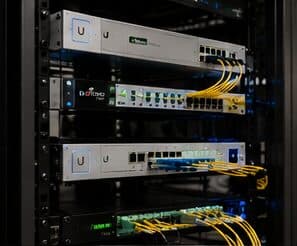
The property network carries cameras, door controllers, intercom, the leasing office, and common-area wireless. These belong on separate segments from each other — common-area guest wireless in particular should reach the internet and nothing else, since it is used by residents, visitors, and anyone within range of an amenity space.
Common-area coverage is a distributed problem. Lobbies, corridors, fitness rooms, clubhouses, pool areas, and parking structures each have different construction and different demand, and outdoor amenity areas need equipment rated for the exposure. Corridor coverage in particular tends to be underestimated, since corridors are long, narrow, and full of doors.
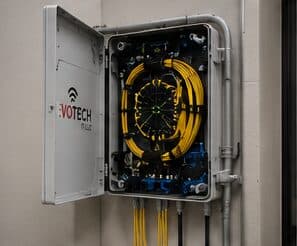
Where a property spans multiple buildings, the links between them are fiber, for the same distance and electrical-isolation reasons that apply on any campus.
- Property systems segmented from common-area guest wireless
- Amenity spaces, corridors, and outdoor areas as distinct coverage zones
- Outdoor-rated equipment for pool decks and exterior amenity areas
- Fiber between buildings on multi-building properties
- Leasing office network separated from resident-facing systems
Installing in Midtown and the Museum District
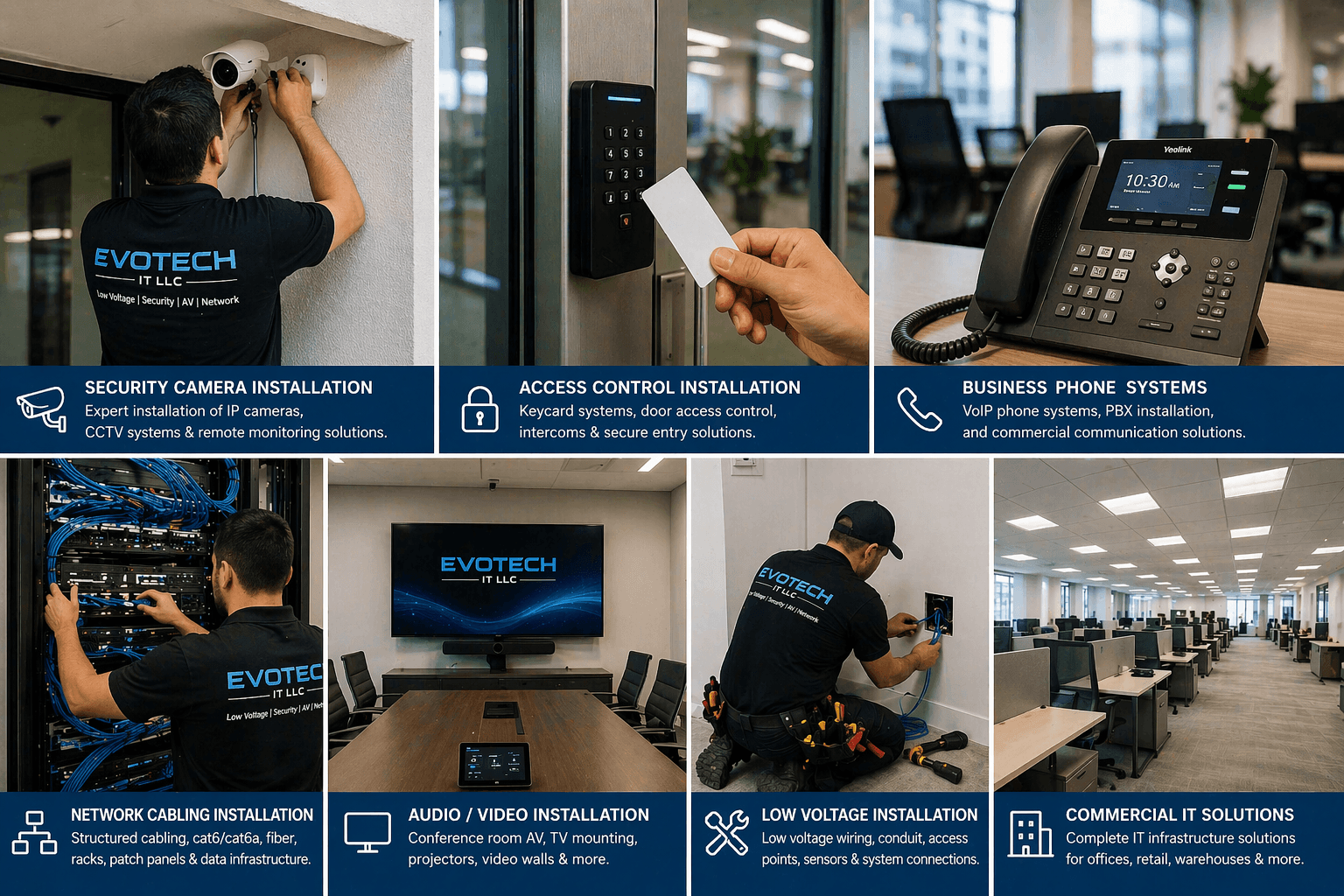
Camera coverage focuses on the points where the property has a legitimate operational interest: building entries, package rooms, parking areas and garages, amenity spaces, and the leasing office. Framing at entries should be tight enough for identification; parking coverage is usually about vehicle movement rather than identifying individuals.
On site, the schedule and working method turn on conditions like these. Mature live oaks and narrow lots affect where exterior cameras and wireless links can actually see. The mix of institutional, cultural, and residential use means one street's scope is commercial-grade and the next is residential retrofit. Both shape how and when a crew can actually operate, which is why EVOTECH scopes each Midtown and the Museum District job from the property itself rather than assuming one approach fits every address. Coverage is stated as a service area, never an office claim, and anything about Midtown and the Museum District that cannot be verified is left out instead of invented.
Popular services nearby
Frequently searched near this area — the pages people look for most.
Frequently asked questions
What do multifamily properties in Midtown and the Museum District usually need first?
It varies by site, but the pattern for multifamily properties holds in Midtown and the Museum District: get the network and cabling backbone right, then layer cameras and access on top. What Midtown and the Museum District changes is the physical install — the conditions listed above drive routes and equipment placement more than the sector alone does.
Does the property provide internet inside the units?
That varies by property and is a business decision rather than a technical one. What the property always operates is the common-area and building-systems side: entry, intercom, package rooms, amenity wireless, cameras, and the leasing office network. That is where the design work sits.