Why this page exists
Conference-room AV for churches is shaped by how the space is used, not just by the service itself. Churches bring their own operating constraints, and this page pairs what conference-room av actually involves with what that environment changes about it.
The complaint that ends meetings early is almost always audio. Remote participants tolerate a mediocre picture indefinitely and abandon a call with poor sound within minutes. So microphone coverage — enough pickup for everyone in the room, positioned for the actual seating, in a room whose acoustics do not fight it — is the first design decision, ahead of the display.
Built for volunteers, used intermittently
The defining constraint in church technology is who operates it. Systems are typically run by volunteers who rotate, may have limited technical background, and are operating live in front of a congregation. A system that requires specialist knowledge to start is a system that will fail publicly.
The second constraint is the building. Sanctuaries are large, often with high ceilings and hard reflective surfaces, and were frequently not designed with audio or cable pathways in mind. Older buildings add masonry walls, limited ceiling access, and additions built across several decades.
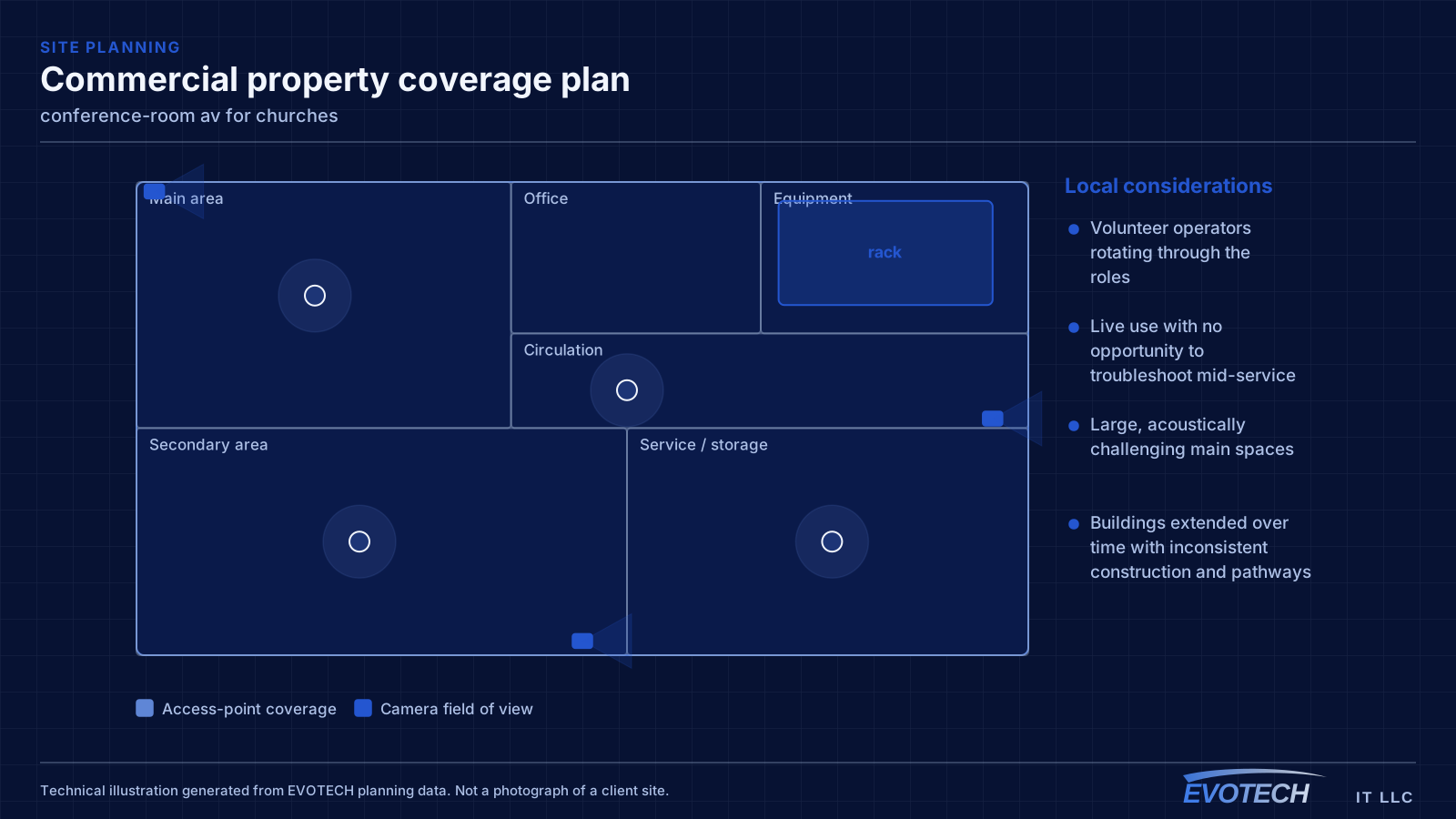
- Volunteer operators rotating through the roles
- Live use with no opportunity to troubleshoot mid-service
- Large, acoustically challenging main spaces
- Buildings extended over time with inconsistent construction and pathways
- Many small rooms used intermittently rather than continuously
What conference-room av usually involves
Room acoustics cause more audio failures than microphones do. Glass walls, hard tables, and bare drywall reflect sound, and a microphone in that environment picks up the reflections along with the speech. The remote participants hear a room rather than a person. Some soft surface — acoustic panels, carpet, fabric furnishings — improves intelligibility more reliably than upgrading the microphone.
The second recurring problem is coverage geometry. A single table microphone in a twelve-person room serves the four people nearest to it well and everyone else poorly. People at the far end get asked to repeat themselves, and the meeting slows down.
- Reflective rooms producing echo and reduced intelligibility
- One microphone attempting to cover a table sized for many more
- Cameras positioned so participants appear in profile rather than facing the lens
- Display sized or mounted so the far seats cannot read shared content
- Cable clutter on the table because connections were not planned
- Joining procedures complex enough that meetings start late
Campus coverage and the systems that share it
Church networks often have to cover a surprising spread: a sanctuary, classrooms, offices, a fellowship hall, and sometimes separate buildings. Where separate structures are involved, the link between them should be fiber rather than copper, both for distance and because a copper run between buildings carries genuine electrical risk.
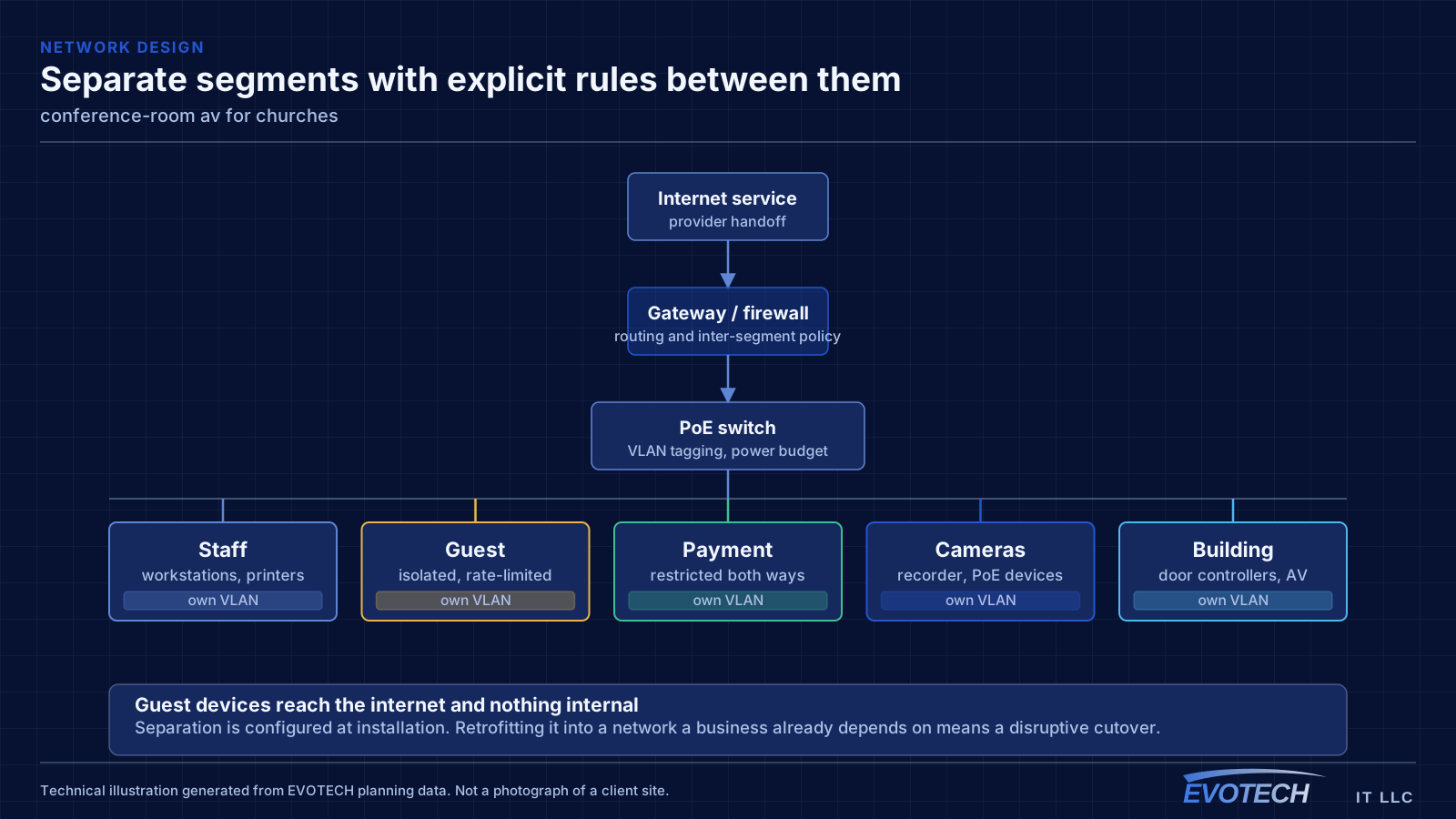
Segmentation is worth doing here for a specific reason: churches typically offer guest wireless, run children's-ministry check-in systems, operate AV equipment on the network, and have office computers handling sensitive information. Those should not share one flat network, and separating them is straightforward at installation.
Streaming has become a standard requirement, and it adds an upload-bandwidth dependency that most other building systems do not have. Confirming the circuit's upload capacity, and separating streaming traffic so it does not contend with guest use during a service, is worth doing before rather than after the first stream.
- Fiber between separate buildings on the campus
- Separate segments for guest, office, AV, and check-in systems
- Upload bandwidth confirmed where services are streamed
- Coverage extended to classrooms and fellowship areas, not just the sanctuary
- AV control devices wired rather than depending on wireless during a service
Microphone coverage, camera placement, and display sizing
Microphone selection follows the room. Table microphones give close pickup for seats near them and suit smaller rooms. Ceiling microphones cover a defined zone and keep the table clear, which suits larger rooms and rooms where the table layout changes — provided the ceiling height and room acoustics suit them. Larger rooms usually need multiple pickup points rather than one better microphone.
- Match microphone type and count to room size, seating, and acoustics
- Camera at the display wall, near seated eye level, framing faces rather than profiles
- Size the display for legibility from the furthest seat
- Treat reflective rooms acoustically rather than compensating electronically
- Plan table connectivity so cables are not improvised
- One obvious control that starts the meeting
Popular services nearby
Frequently searched near this area — the pages people look for most.
Frequently asked questions
What changes about conference-room av in churches?
The operating environment does. Churches bring specific constraints — how the space is used, when work can happen, and what has to keep running — and those shape the conference-room av plan as much as the service's own technical requirements.
Why do remote participants say the room sounds echoey?
Reflections. Glass, hard tables, and bare walls send sound back into the microphone alongside the speech, and the far end hears the room. Adding some soft surface — panels, carpet, fabric furnishings — usually improves intelligibility more than changing microphones, because it addresses the cause rather than compensating for it.
What makes a church AV system volunteer-friendly?
A small number of clearly labeled controls that produce the normal configuration reliably, with complexity hidden behind them. If starting a service requires selecting sources, adjusting levels, and remembering a sequence, it will eventually fail during a service. The design goal is that a new volunteer can run the routine case on their first attempt.