Why this page exists
Network cabling for churches is shaped by how the space is used, not just by the service itself. Churches bring their own operating constraints, and this page pairs what network cabling actually involves with what that environment changes about it.
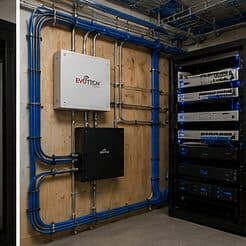
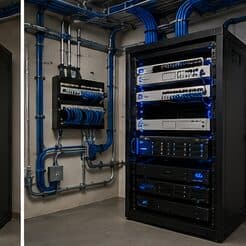
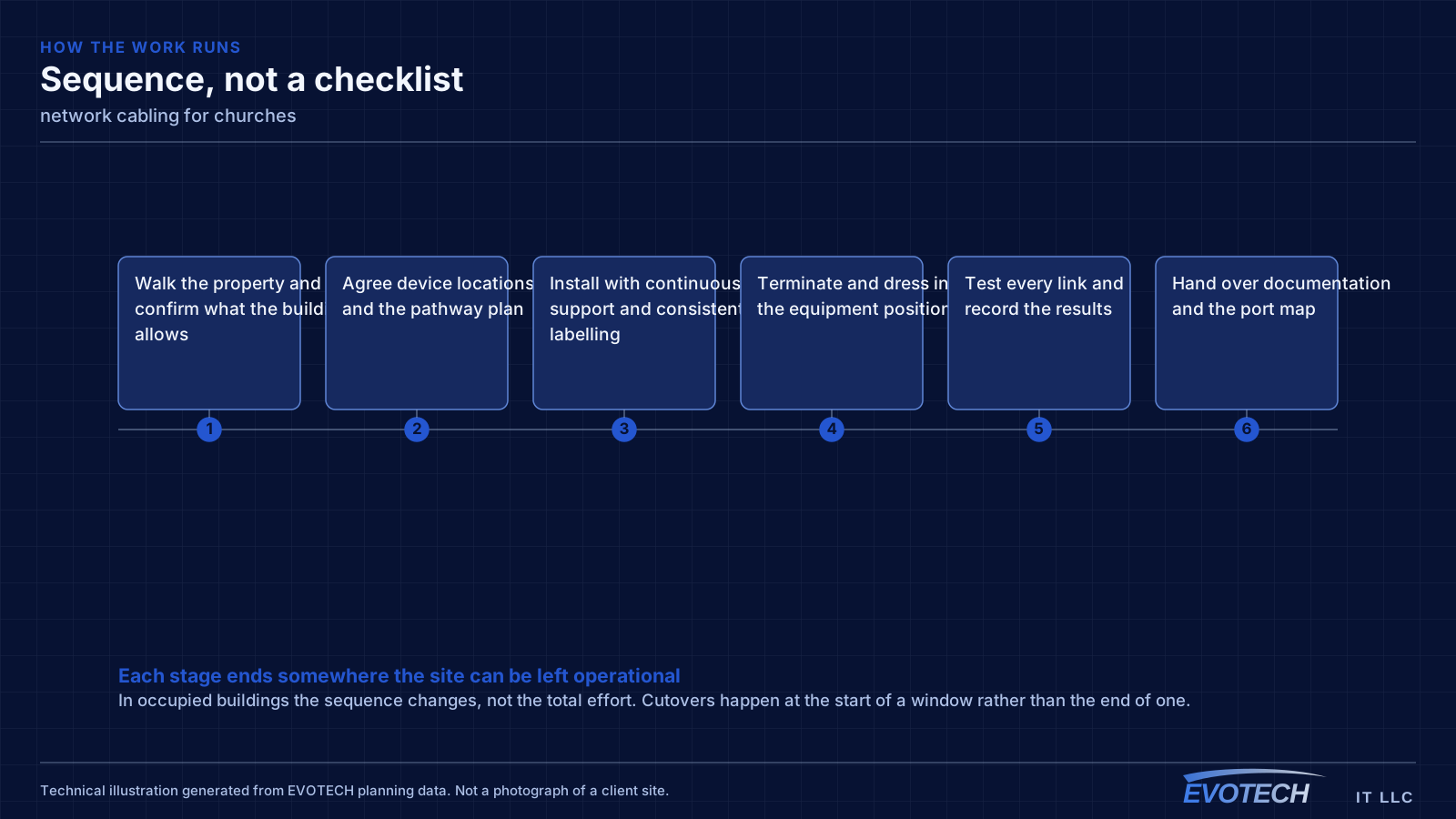
Network cabling is the permanent copper and fiber pathway between a building's equipment room and every device location. Done properly it is a structured system — horizontal runs from a patch panel out to labeled outlets, each one under the 90-metre permanent-link limit, each one tested and documented. Done casually it is a bundle of unlabeled patch cords stapled to a joist, and every future change costs someone an afternoon of tracing.
Built for volunteers, used intermittently
The defining constraint in church technology is who operates it. Systems are typically run by volunteers who rotate, may have limited technical background, and are operating live in front of a congregation. A system that requires specialist knowledge to start is a system that will fail publicly.
The second constraint is the building. Sanctuaries are large, often with high ceilings and hard reflective surfaces, and were frequently not designed with audio or cable pathways in mind. Older buildings add masonry walls, limited ceiling access, and additions built across several decades.
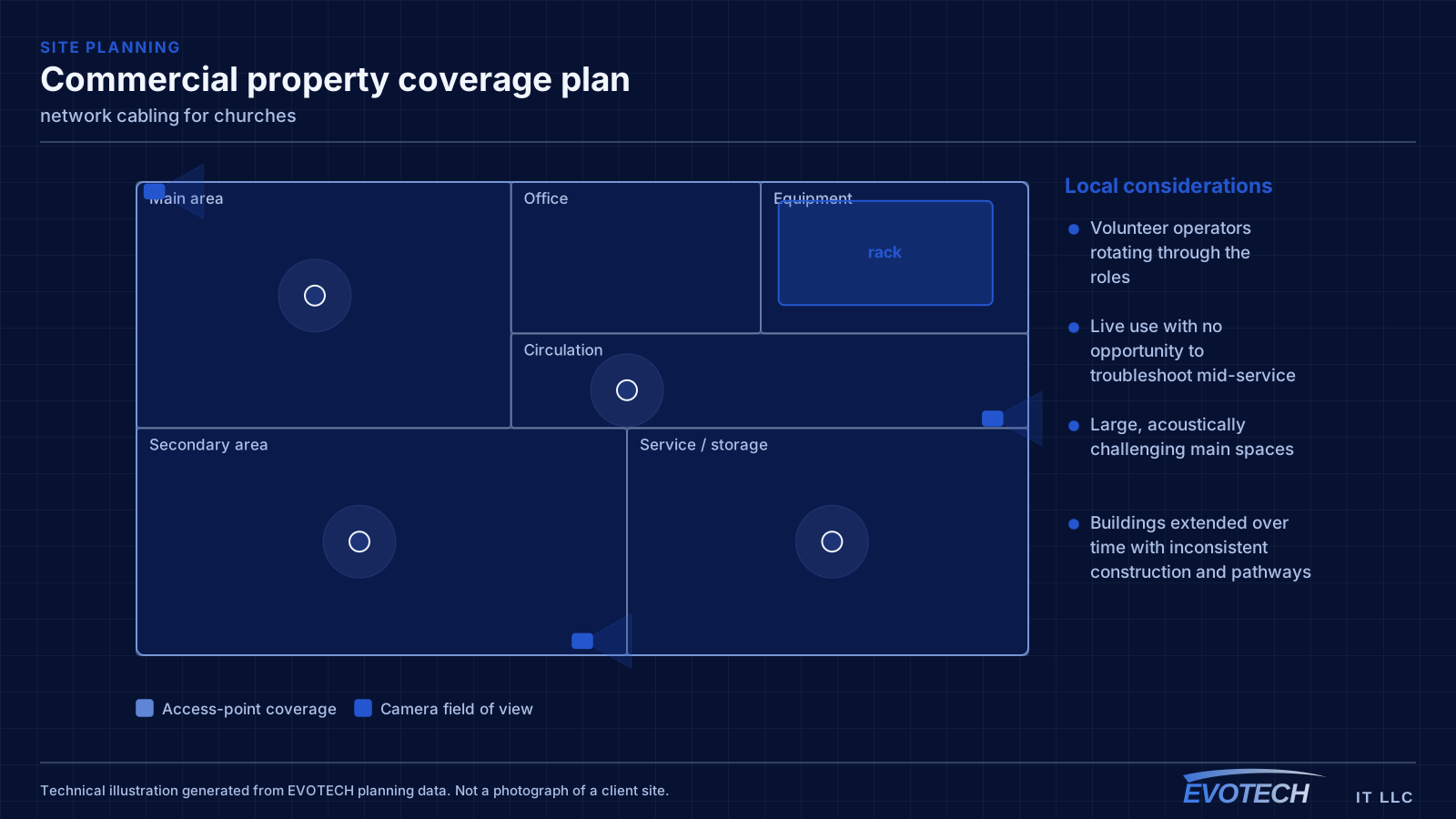
- Volunteer operators rotating through the roles
- Live use with no opportunity to troubleshoot mid-service
- Large, acoustically challenging main spaces
- Buildings extended over time with inconsistent construction and pathways
- Many small rooms used intermittently rather than continuously
What network cabling usually involves
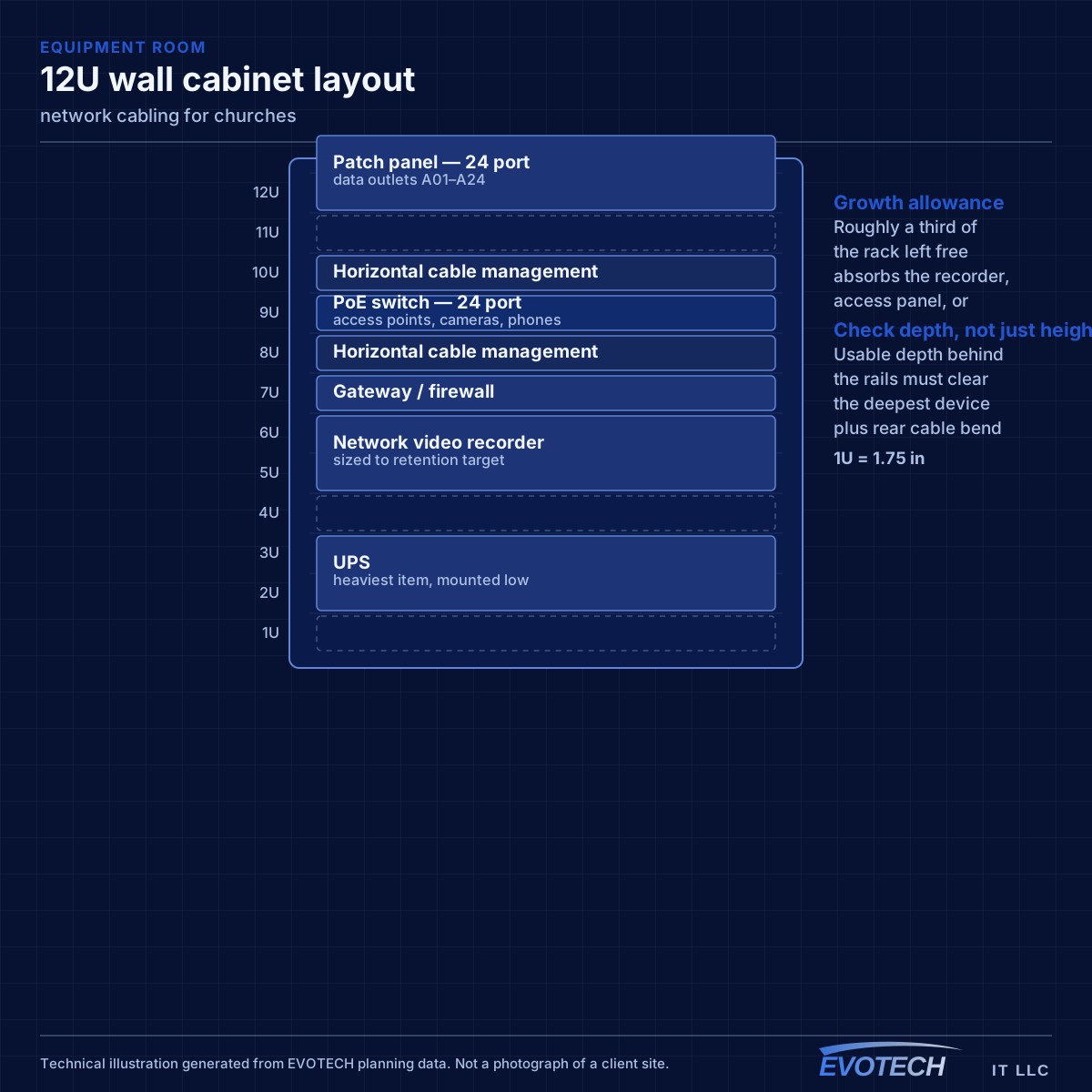
Most cabling complaints are not really about speed. They are about traceability and change cost. When nobody can tell which jack feeds which port, a five-minute move becomes a two-hour investigation, and the temptation is to run one more cable rather than fix the underlying mess.
The second cluster of problems is physical: runs that exceed distance limits, cable that has been kinked or over-tensioned during the pull, terminations that violate the pair twist, and shared pathways with electrical conduit that inject noise the switch then has to correct for.
- Unlabeled outlets and patch panels that make every move-add-change expensive
- Runs pushed past the 90-metre permanent-link limit, so the link negotiates down or drops
- Untwisted pairs at the termination point degrading crosstalk performance
- Cable draped on ceiling grid or tie-wrapped to sprinkler pipe rather than supported properly
- No spare capacity, so every new device triggers a new pull
Campus coverage and the systems that share it
Church networks often have to cover a surprising spread: a sanctuary, classrooms, offices, a fellowship hall, and sometimes separate buildings. Where separate structures are involved, the link between them should be fiber rather than copper, both for distance and because a copper run between buildings carries genuine electrical risk.
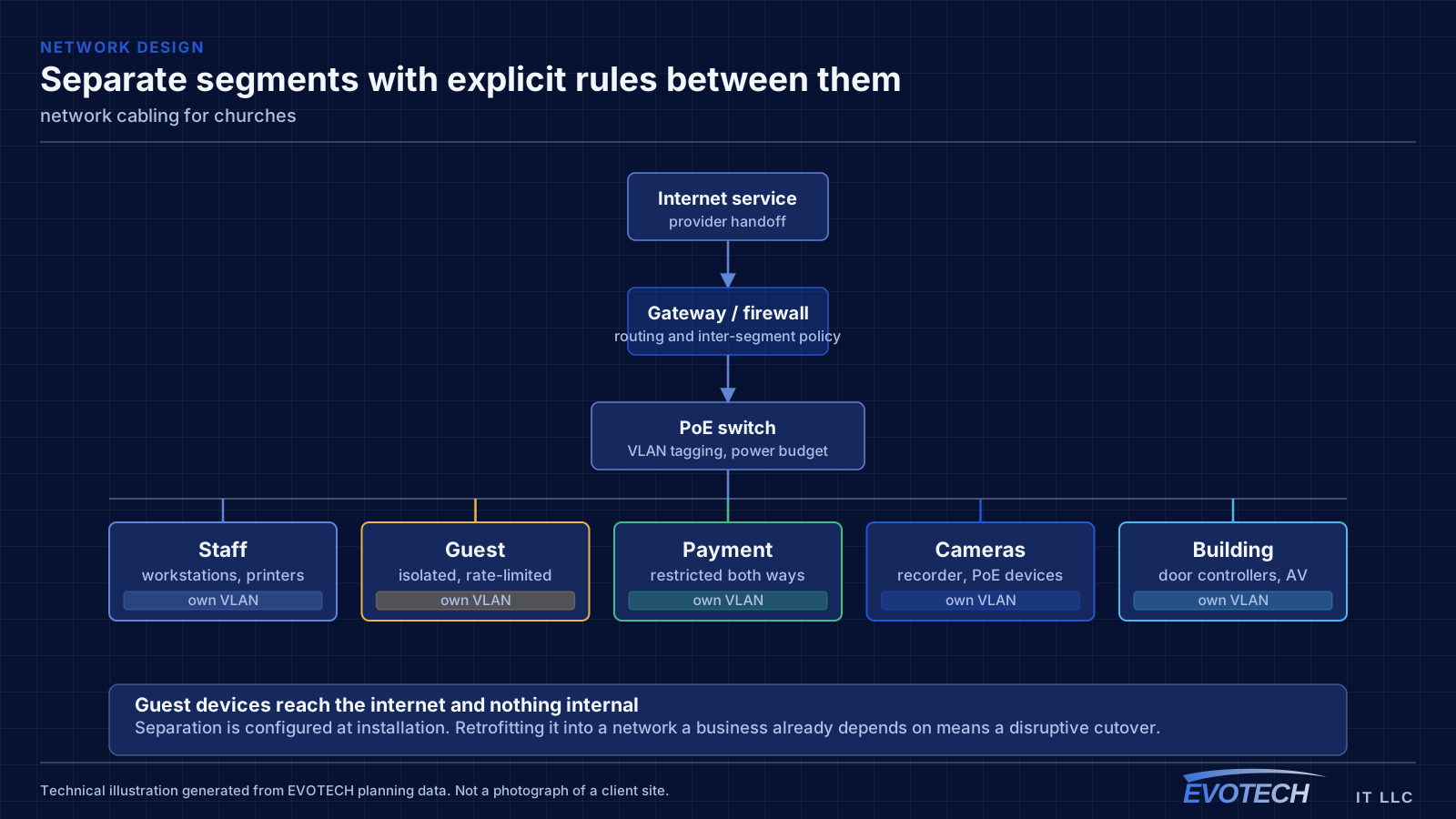
Segmentation is worth doing here for a specific reason: churches typically offer guest wireless, run children's-ministry check-in systems, operate AV equipment on the network, and have office computers handling sensitive information. Those should not share one flat network, and separating them is straightforward at installation.
Streaming has become a standard requirement, and it adds an upload-bandwidth dependency that most other building systems do not have. Confirming the circuit's upload capacity, and separating streaming traffic so it does not contend with guest use during a service, is worth doing before rather than after the first stream.
- Fiber between separate buildings on the campus
- Separate segments for guest, office, AV, and check-in systems
- Upload bandwidth confirmed where services are streamed
- Coverage extended to classrooms and fellowship areas, not just the sanctuary
- AV control devices wired rather than depending on wireless during a service
Distance, pathway, and pair-twist decisions that set the outcome
The governing number is the 90-metre permanent link: the fixed cable from patch panel to outlet. Adding patch cords at both ends brings the total channel to 100 metres. That budget disappears faster than people expect once the cable goes up into the ceiling, across the building, down a wall, and back. A run that measures 70 metres on a floor plan can easily land at 95 metres in reality.
- 90 m permanent link, 100 m total channel including patch cords
- Continuous cable support rather than ceiling-tile or pipe bearing
- Separation from parallel electrical runs; cross at right angles where unavoidable
- Bend radius respected at corners, in the rack, and behind the outlet
- Plenum-rated jacket where the pathway shares an air-handling space
Popular services nearby
Frequently searched near this area — the pages people look for most.
Frequently asked questions
What changes about network cabling in churches?
The operating environment does. Churches bring specific constraints — how the space is used, when work can happen, and what has to keep running — and those shape the network cabling plan as much as the service's own technical requirements.
How long can a single network cable run be?
The fixed cable between patch panel and outlet is limited to 90 metres, with patch cords at each end bringing the total channel to 100 metres. Beyond that, the answer is not a longer cable — it is either an intermediate equipment location or a fiber link to a secondary switch.
What makes a church AV system volunteer-friendly?
A small number of clearly labeled controls that produce the normal configuration reliably, with complexity hidden behind them. If starting a service requires selecting sources, adjusting levels, and remembering a sequence, it will eventually fail during a service. The design goal is that a new volunteer can run the routine case on their first attempt.