Why this page exists
Ethernet installation for medical offices is shaped by how the space is used, not just by the service itself. Medical offices bring their own operating constraints, and this page pairs what ethernet installation actually involves with what that environment changes about it.
Ethernet installation in an existing building means finding a path from a central equipment position to each room that needs a wired connection, getting cable through that path without opening more wall than necessary, and terminating both ends cleanly. In a two-storey house with an accessible attic, that is often straightforward. In a single-storey house on a slab with a hard ceiling, it is the whole job.
Controlled areas and uninterruptible systems
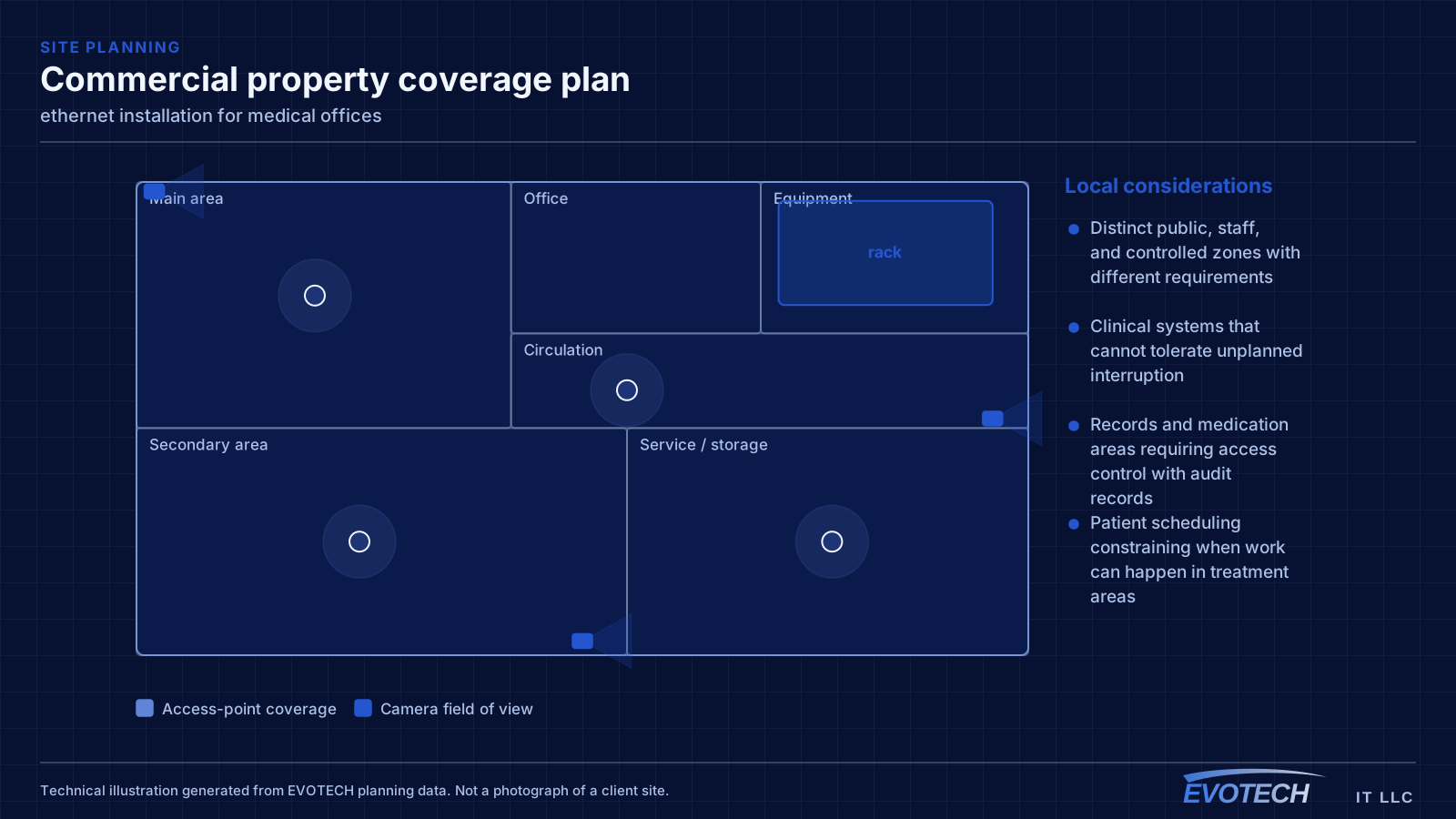
A medical office has a clear division between public, staff, and controlled areas, and the technology follows that division. Waiting areas need guest connectivity that reaches nothing internal. Treatment rooms need reliable connectivity for clinical systems. Records areas and medication storage need controlled access with a usable audit trail.
The other defining characteristic is that some systems cannot simply be taken down for an afternoon. Practice management, imaging, and anything connected to patient scheduling has a real cost when interrupted, so cutover planning matters more here than in most commercial environments.
- Distinct public, staff, and controlled zones with different requirements
- Clinical systems that cannot tolerate unplanned interruption
- Records and medication areas requiring access control with audit records
- Patient scheduling constraining when work can happen in treatment areas
What ethernet installation usually involves
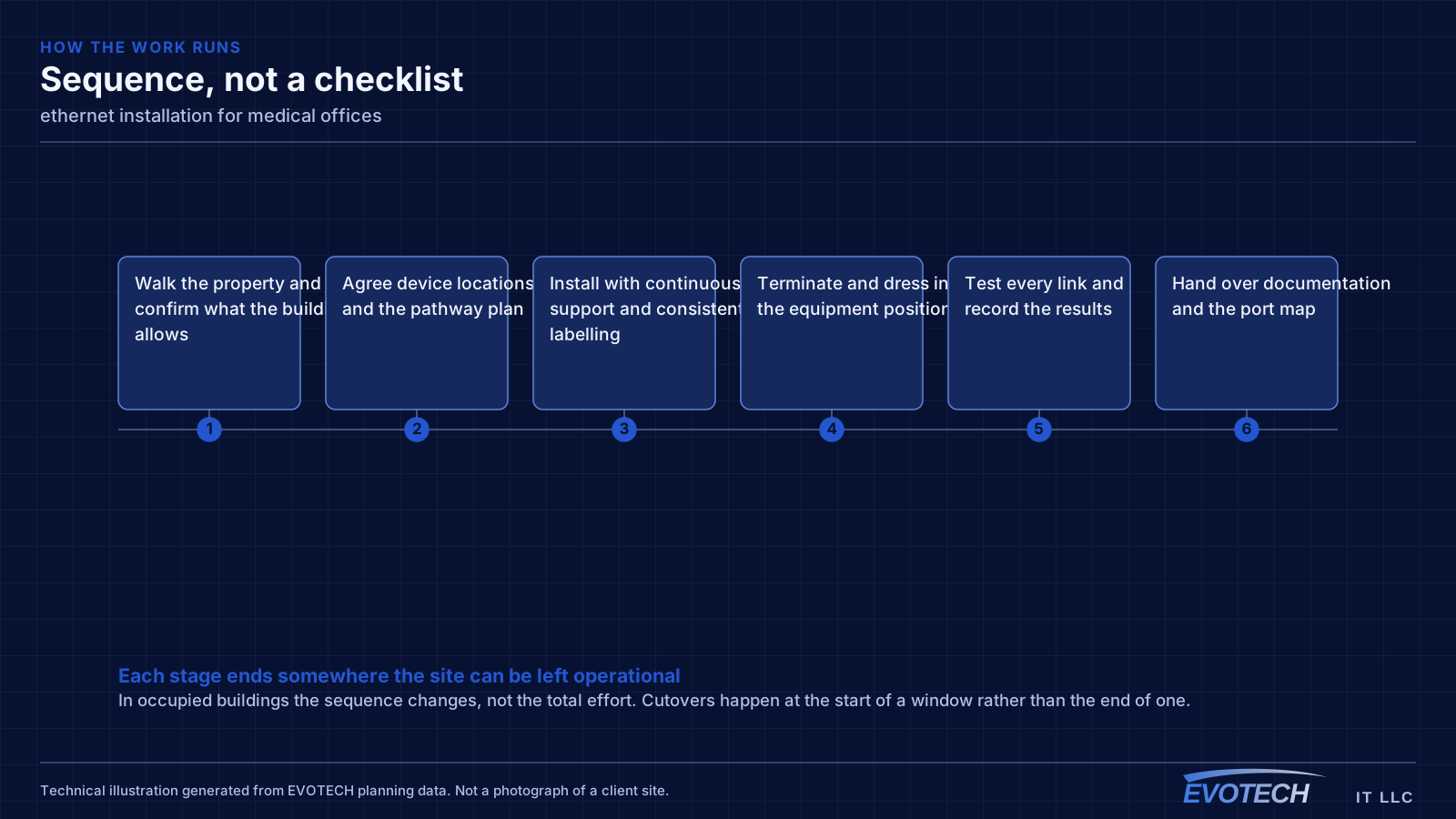
The problems in retrofit Ethernet work are physical rather than electrical. Fire blocking inside a wall cavity stops a fish tape halfway. A brick veneer means the exterior is not a viable path. A slab foundation removes the underfloor option entirely, which in much of the Houston area is the normal condition and pushes the route up into the attic.
The other recurring problem is equipment placement. The incoming internet service often lands somewhere inconvenient — a garage wall, a closet with no power, a corner of the living room — and the wired design has to either work from there or include moving the handoff to a better position.
- Fire blocking and horizontal framing interrupting wall cavities
- Slab foundations removing underfloor routing options
- Brick or stone veneer limiting exterior pathways
- Incoming service located far from where the equipment should live
- No dedicated power at the intended equipment position
- Attic temperatures in summer constraining working hours and equipment placement
Segmentation and clinical connectivity
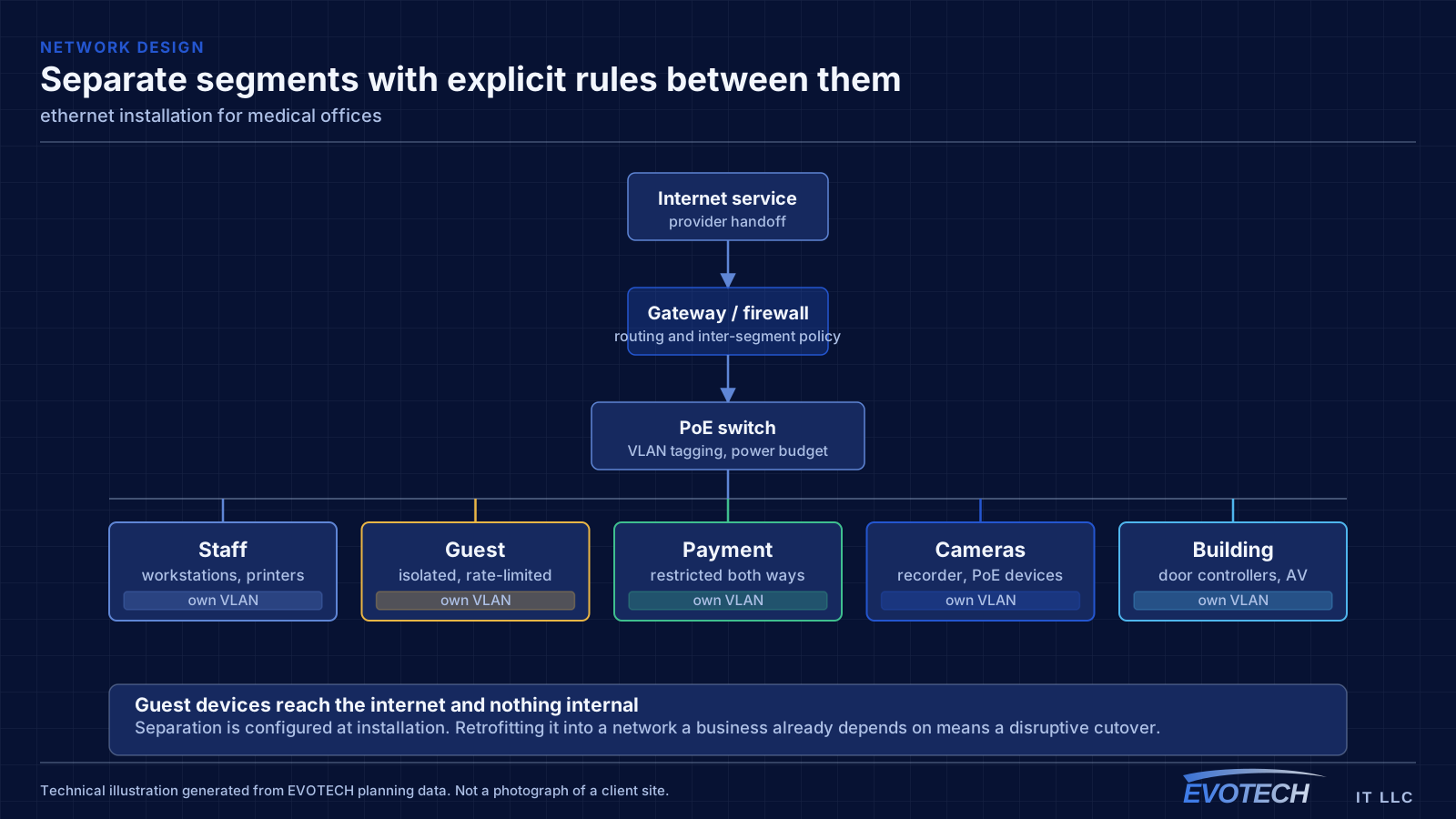
Clinical systems belong on their own segment, separate from staff general-purpose devices, separate again from patient guest access, and separate from building systems such as cameras and door controllers. This limits what any single compromised device can reach and makes the network far easier to reason about when something misbehaves.
For clinical equipment that moves large files — imaging in particular — wired connections are worth insisting on where the equipment supports them. Wireless is fine for tablets and general staff use, but a modality pushing studies across a congested wireless cell produces exactly the kind of intermittent slowness that is difficult to diagnose and disruptive to a clinic day.
Guest access in a waiting area should be isolated from everything internal and rate-limited. It is a courtesy, and it should be architecturally incapable of touching anything clinical.
- Clinical, staff, guest, and building-system traffic on separate segments
- Wired connections for imaging and other high-throughput clinical equipment
- Waiting-area guest access isolated and capped
- Access points placed for coverage in treatment rooms without relying on corridor spill
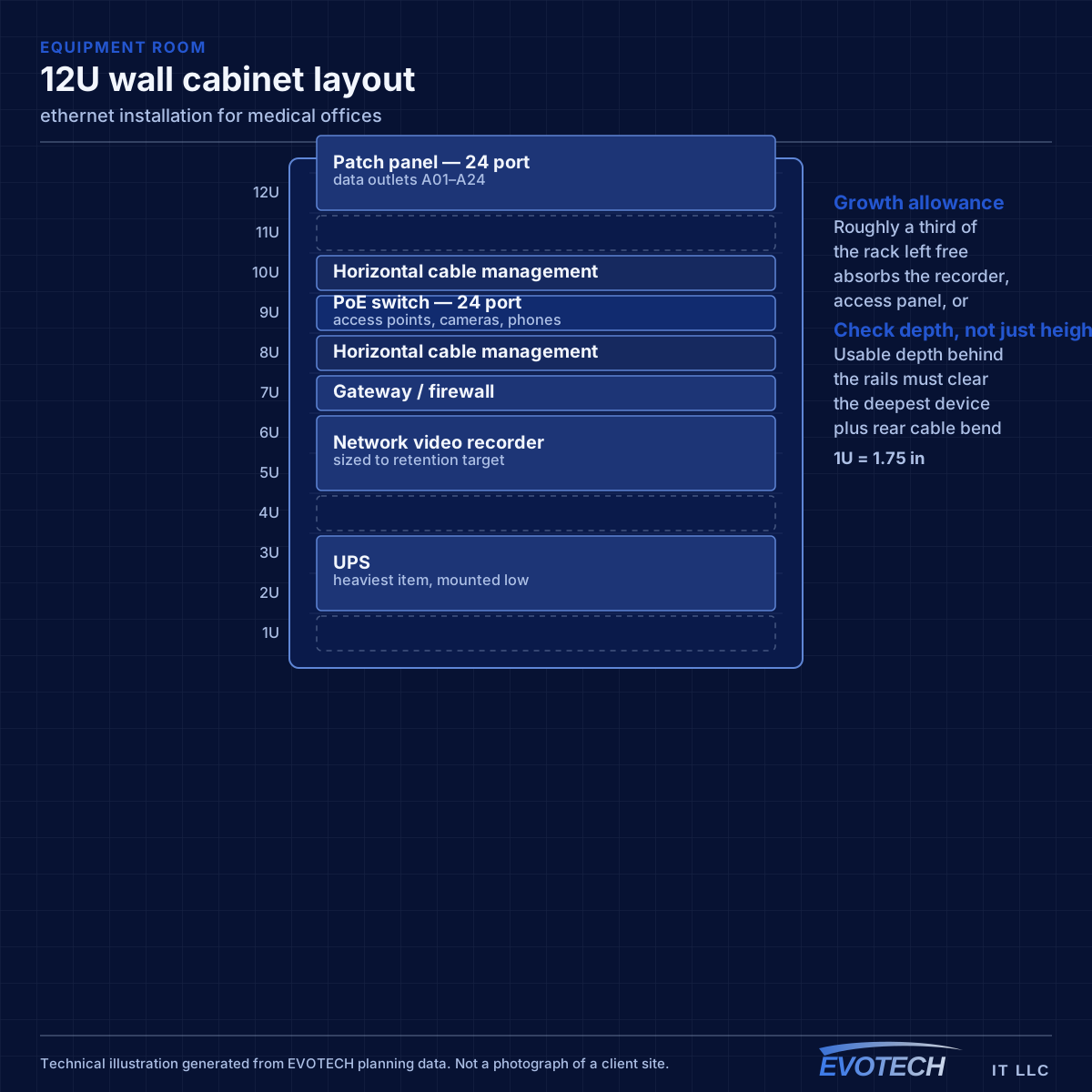
- Equipment room secured, since it holds the systems everything depends on
Routing through finished construction
Most retrofit runs in a single-storey home go up into the attic, across, and down an interior wall. That works when the destination wall is interior, has an accessible top plate, and has no blocking in the way. Exterior walls are harder: insulation, bracing, and veneer all interfere, and drilling a top plate above an exterior wall is not always accessible.
- Attic-to-interior-wall routing as the default in single-storey slab construction
- Top-plate access confirmed before committing to a wall drop
- Cable kept clear of recessed lighting and other heat sources
- Surface raceway as an honest fallback where no cavity path exists
- Equipment position chosen for power, ventilation, and future access
Frequently asked questions
What changes about ethernet installation in medical offices?
The operating environment does. Medical offices bring specific constraints — how the space is used, when work can happen, and what has to keep running — and those shape the ethernet installation plan as much as the service's own technical requirements.
Can Ethernet be added without cutting into walls?
Often yes, when the destination is an interior wall reachable from an attic or crawl space and there is no blocking in the cavity. When there is no viable cavity path, the choices are a small access cut that then gets patched, a surface raceway, or moving the device to a wall that can be reached. Which one makes sense is worth deciding before work starts rather than mid-pull.
Should patient guest Wi-Fi be offered?
It is common in waiting areas, and the requirement is that it is architecturally isolated: unable to reach clinical systems, staff devices, or building systems, and rate-limited so it cannot affect anything operational. Configured that way it is a low-risk courtesy; configured as a shared flat network it is not.