Why this page exists
NVR installation for medical offices is shaped by how the space is used, not just by the service itself. Medical offices bring their own operating constraints, and this page pairs what nvr installation actually involves with what that environment changes about it.
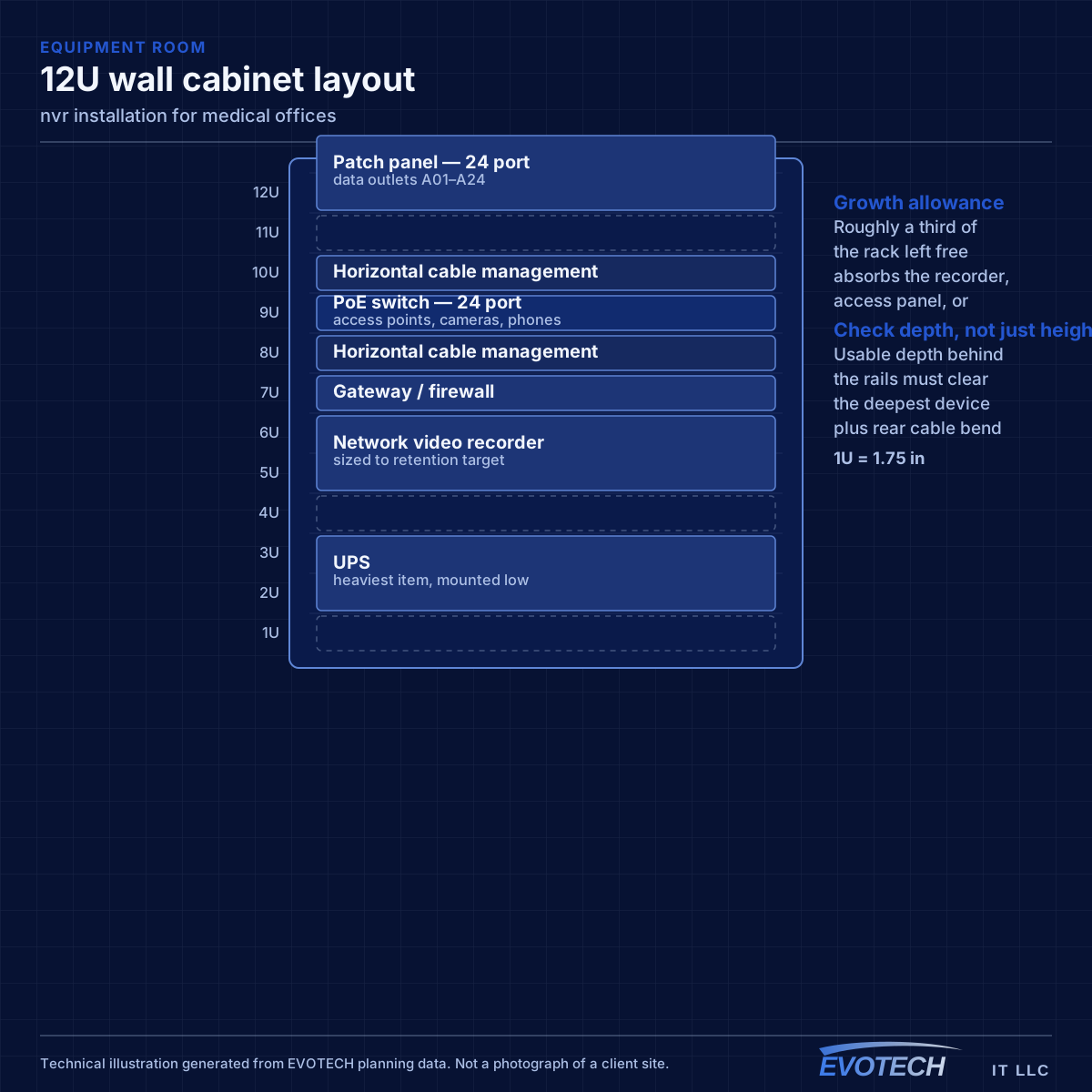
A network video recorder receives streams from the cameras, writes them to disk, and serves them back for review. Its capacity determines how far back the footage goes, and that number is arithmetic, not a product feature: camera count, resolution, frame rate, compression efficiency, and how much of the day actually gets recorded all multiply together against the drive capacity.
Controlled areas and uninterruptible systems
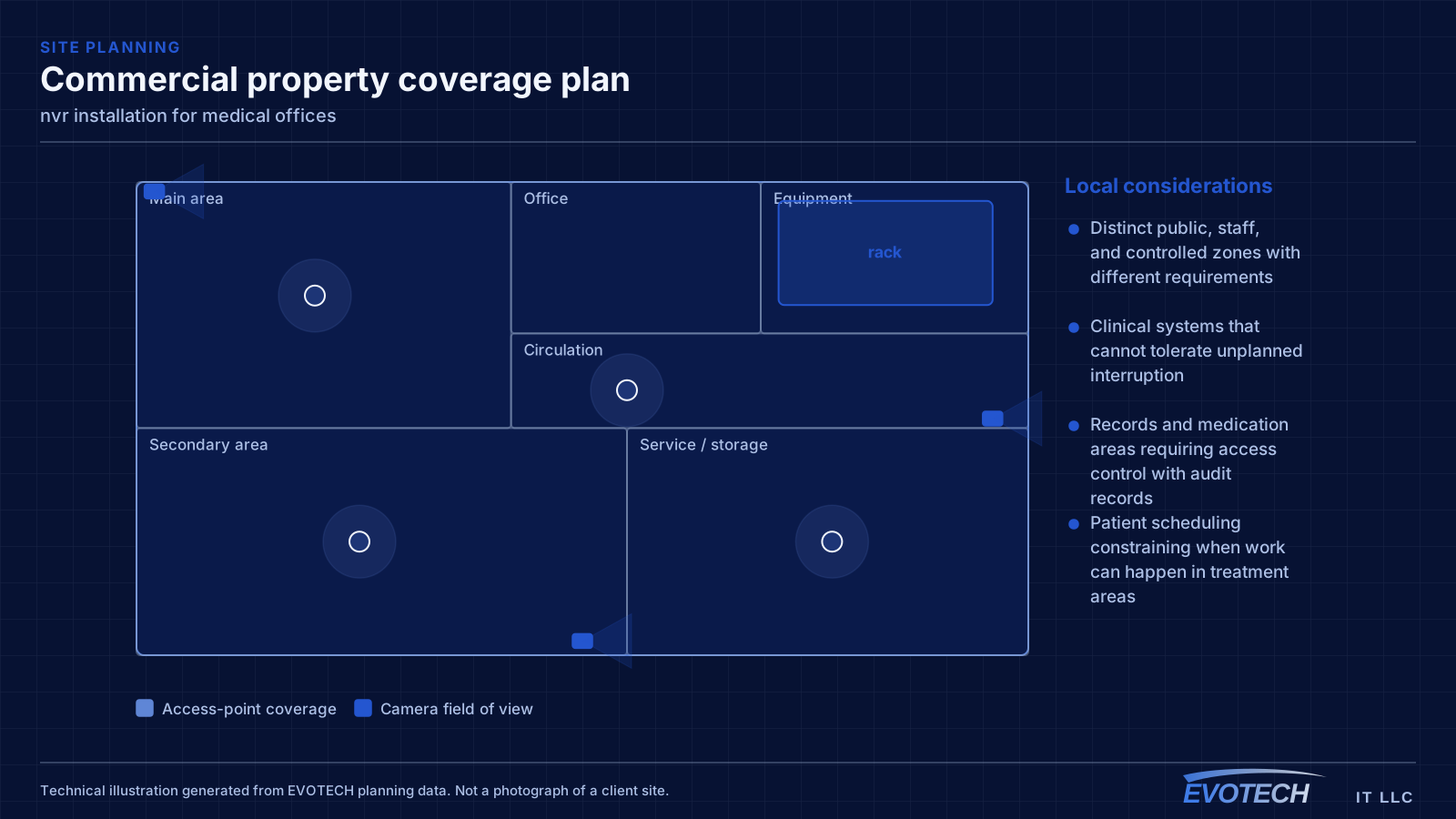
A medical office has a clear division between public, staff, and controlled areas, and the technology follows that division. Waiting areas need guest connectivity that reaches nothing internal. Treatment rooms need reliable connectivity for clinical systems. Records areas and medication storage need controlled access with a usable audit trail.
The other defining characteristic is that some systems cannot simply be taken down for an afternoon. Practice management, imaging, and anything connected to patient scheduling has a real cost when interrupted, so cutover planning matters more here than in most commercial environments.
- Distinct public, staff, and controlled zones with different requirements
- Clinical systems that cannot tolerate unplanned interruption
- Records and medication areas requiring access control with audit records
- Patient scheduling constraining when work can happen in treatment areas
What nvr installation usually involves
The recurring problem is retention that does not match the expectation. It is rarely deception — it is usually that the estimate assumed motion-triggered recording, a modest frame rate, or a compression ratio that busy outdoor scenes do not deliver. A camera watching a parking area with moving trees generates far more data than one watching a quiet corridor.
The second problem is drive selection. Recorders write continuously to their drives, which is a different duty cycle from a desktop computer. Drives designed for continuous surveillance write loads last considerably longer in that role than general-purpose drives, and a recorder with no drive health monitoring will simply stop recording one day without announcing it.
- Retention overestimated because the calculation assumed motion-only recording
- Busy scenes compressing far less efficiently than the estimate assumed
- General-purpose drives used for a continuous-write workload
- No monitoring, so a failed drive is discovered when footage is needed
- Recorder exposed directly to the internet for remote viewing
- Default credentials left in place
Segmentation and clinical connectivity
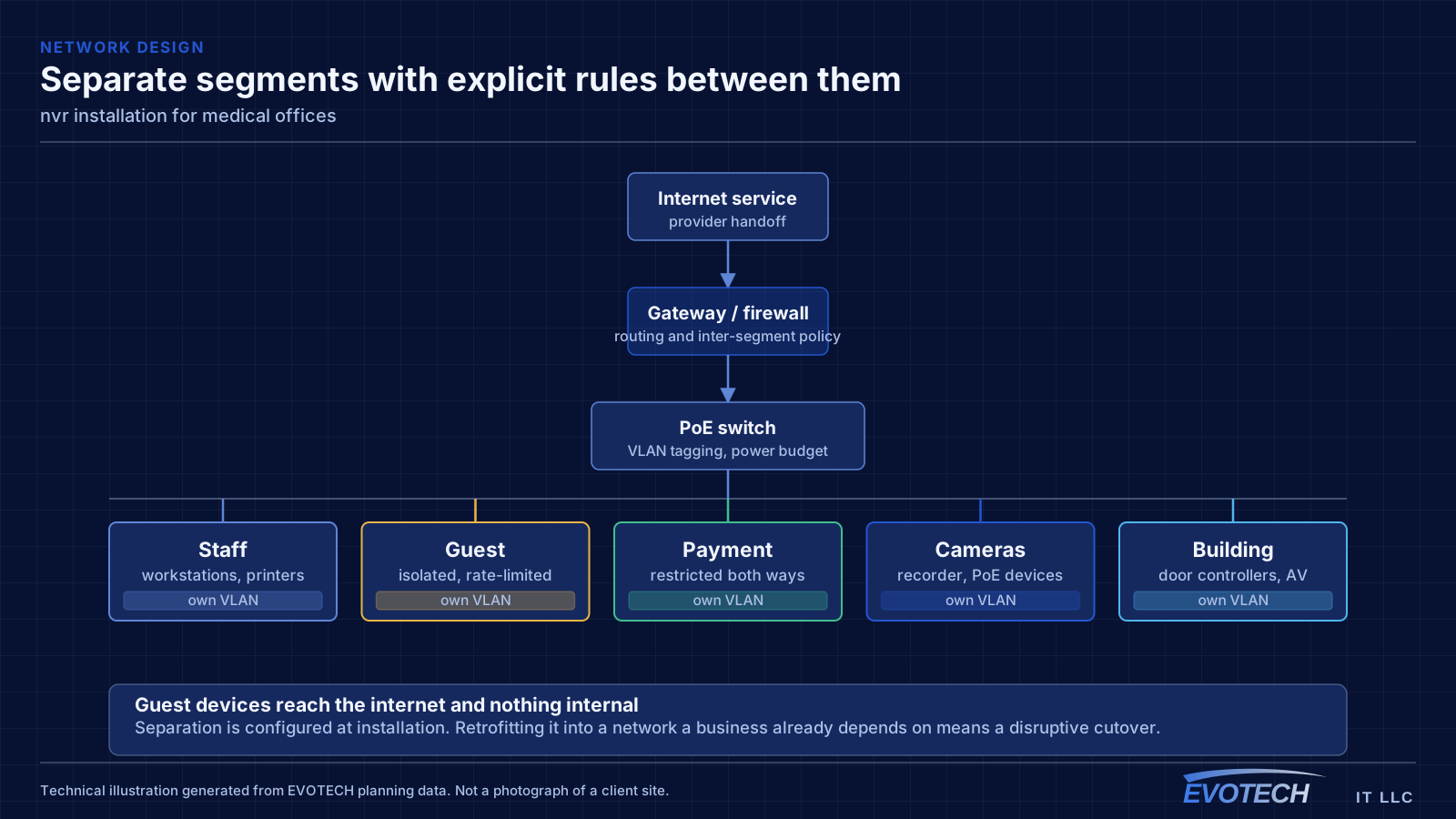
Clinical systems belong on their own segment, separate from staff general-purpose devices, separate again from patient guest access, and separate from building systems such as cameras and door controllers. This limits what any single compromised device can reach and makes the network far easier to reason about when something misbehaves.
For clinical equipment that moves large files — imaging in particular — wired connections are worth insisting on where the equipment supports them. Wireless is fine for tablets and general staff use, but a modality pushing studies across a congested wireless cell produces exactly the kind of intermittent slowness that is difficult to diagnose and disruptive to a clinic day.
Guest access in a waiting area should be isolated from everything internal and rate-limited. It is a courtesy, and it should be architecturally incapable of touching anything clinical.
- Clinical, staff, guest, and building-system traffic on separate segments
- Wired connections for imaging and other high-throughput clinical equipment
- Waiting-area guest access isolated and capped
- Access points placed for coverage in treatment rooms without relying on corridor spill
- Equipment room secured, since it holds the systems everything depends on
Storage arithmetic, recording modes, and access control
Storage need is the product of per-camera bitrate, hours recorded per day, and retention days, summed across cameras. Bitrate rises with resolution and frame rate, and falls with more efficient compression — but compression efficiency depends on the scene. Static indoor views compress well; exterior views with moving foliage, traffic, or changing light compress poorly. A safe calculation uses the higher end of the expected bitrate range rather than the marketing figure.
- Storage = per-camera bitrate × hours per day × retention days, summed
- Use realistic bitrates for the actual scenes, not best-case figures
- Continuous, motion-triggered, or a hybrid rate — the choice dominates capacity
- Drives rated for continuous surveillance workloads
- Individual user accounts with appropriate permissions; no shared default logins
- Supported remote-access path rather than direct port exposure
Frequently asked questions
What changes about nvr installation in medical offices?
The operating environment does. Medical offices bring specific constraints — how the space is used, when work can happen, and what has to keep running — and those shape the nvr installation plan as much as the service's own technical requirements.
How much storage is needed for 30 days of footage?
It is a calculation, not a fixed number: per-camera bitrate multiplied by hours recorded per day multiplied by thirty, summed across cameras. Resolution, frame rate, recording mode, and how busy each scene is all move the result substantially. Two eight-camera systems can differ by a factor of three for the same retention target.
Should patient guest Wi-Fi be offered?
It is common in waiting areas, and the requirement is that it is architecturally isolated: unable to reach clinical systems, staff devices, or building systems, and rate-limited so it cannot affect anything operational. Configured that way it is a low-risk courtesy; configured as a shared flat network it is not.