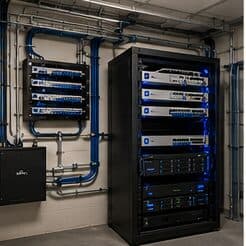
Why this page exists
TV mounting for medical offices is shaped by how the space is used, not just by the service itself. Medical offices bring their own operating constraints, and this page pairs what tv mounting actually involves with what that environment changes about it.
The mount has to transfer the display's weight into something structural. In wood-framed walls that means lag bolts into studs. In masonry it means appropriate anchors set into solid material rather than mortar joints. In metal-stud walls — common in commercial buildings — standard wood-stud technique does not apply, and larger displays generally need backing or a purpose-made metal-stud anchoring system.
Controlled areas and uninterruptible systems
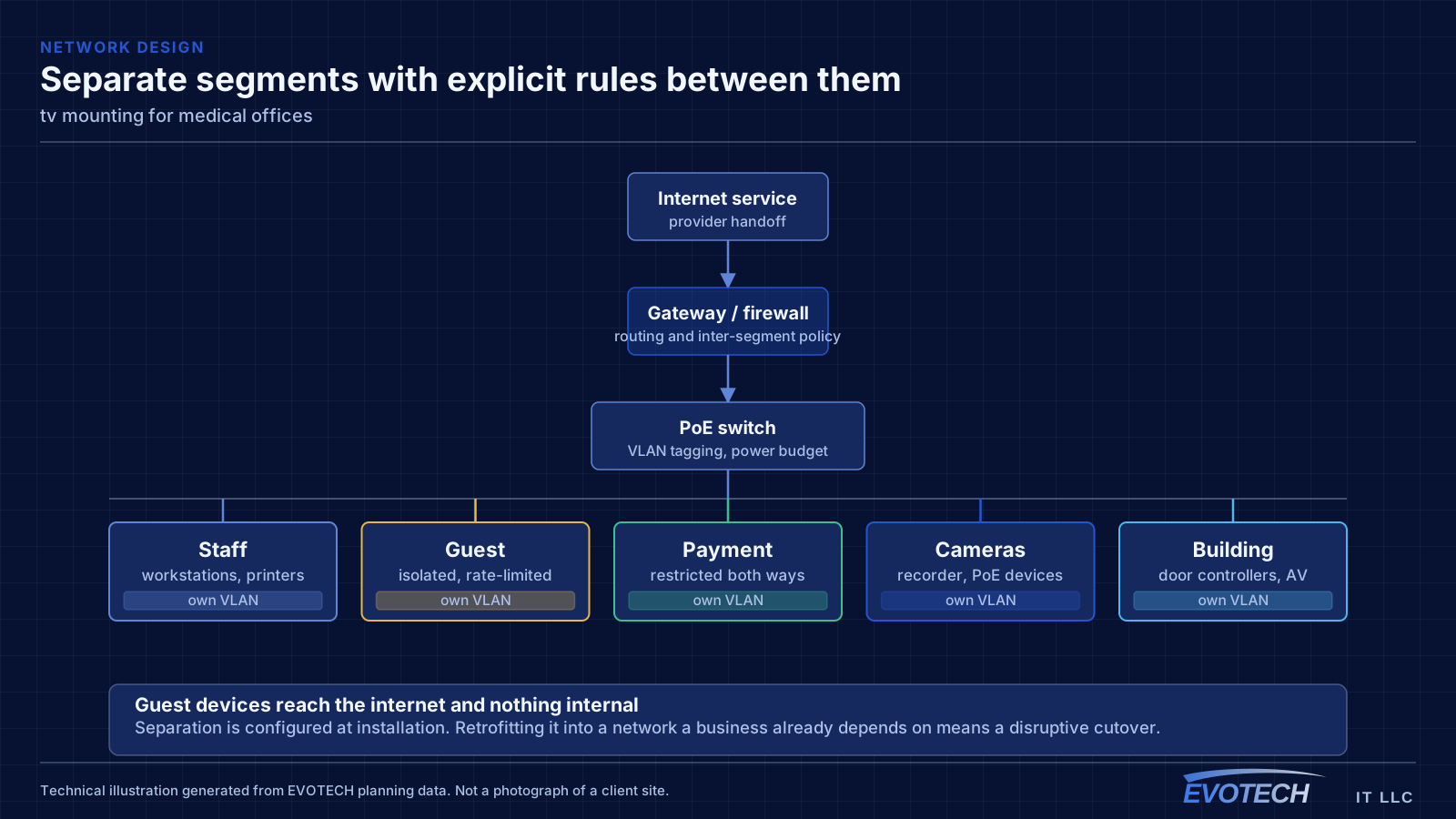
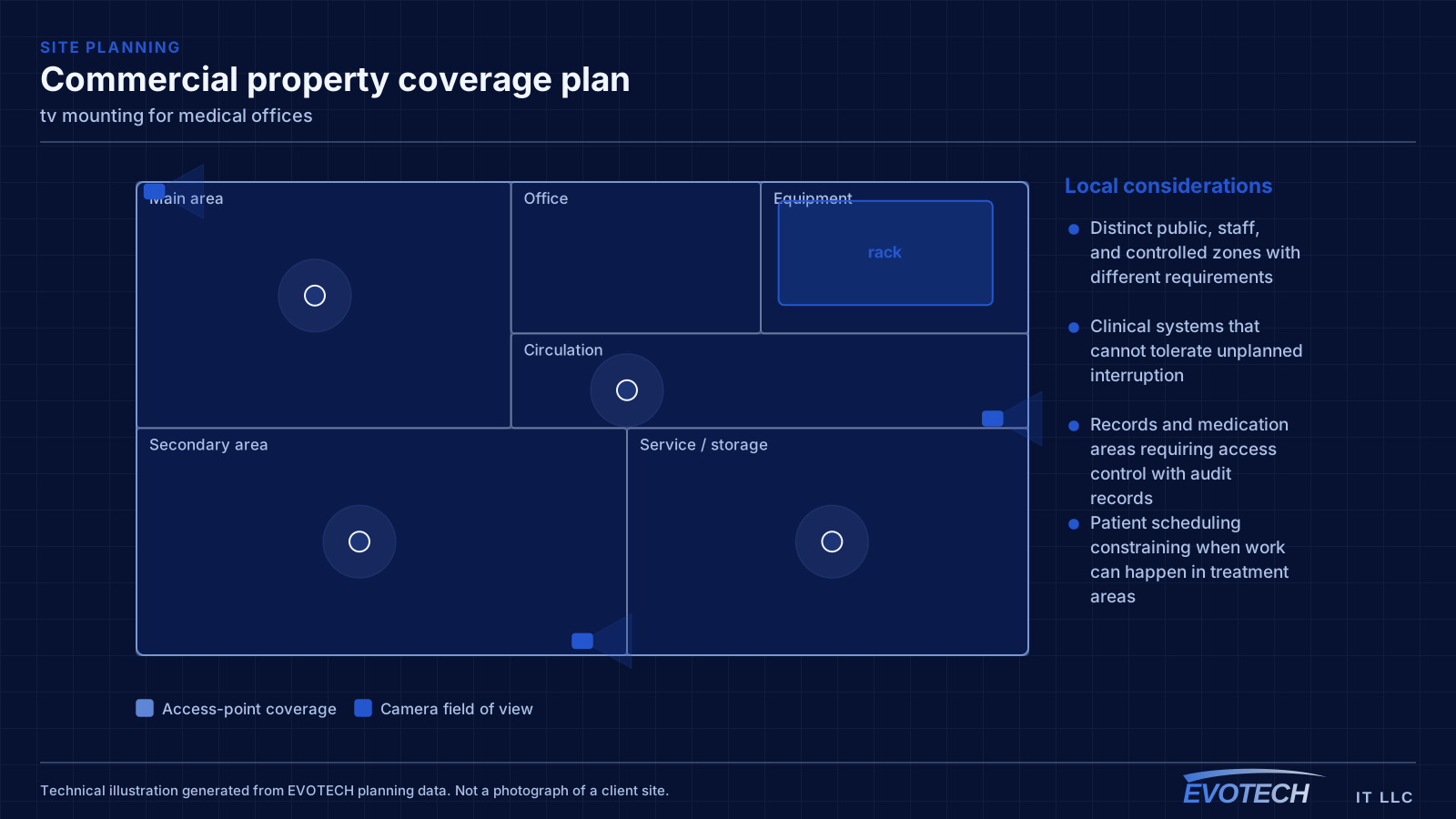
A medical office has a clear division between public, staff, and controlled areas, and the technology follows that division. Waiting areas need guest connectivity that reaches nothing internal. Treatment rooms need reliable connectivity for clinical systems. Records areas and medication storage need controlled access with a usable audit trail.
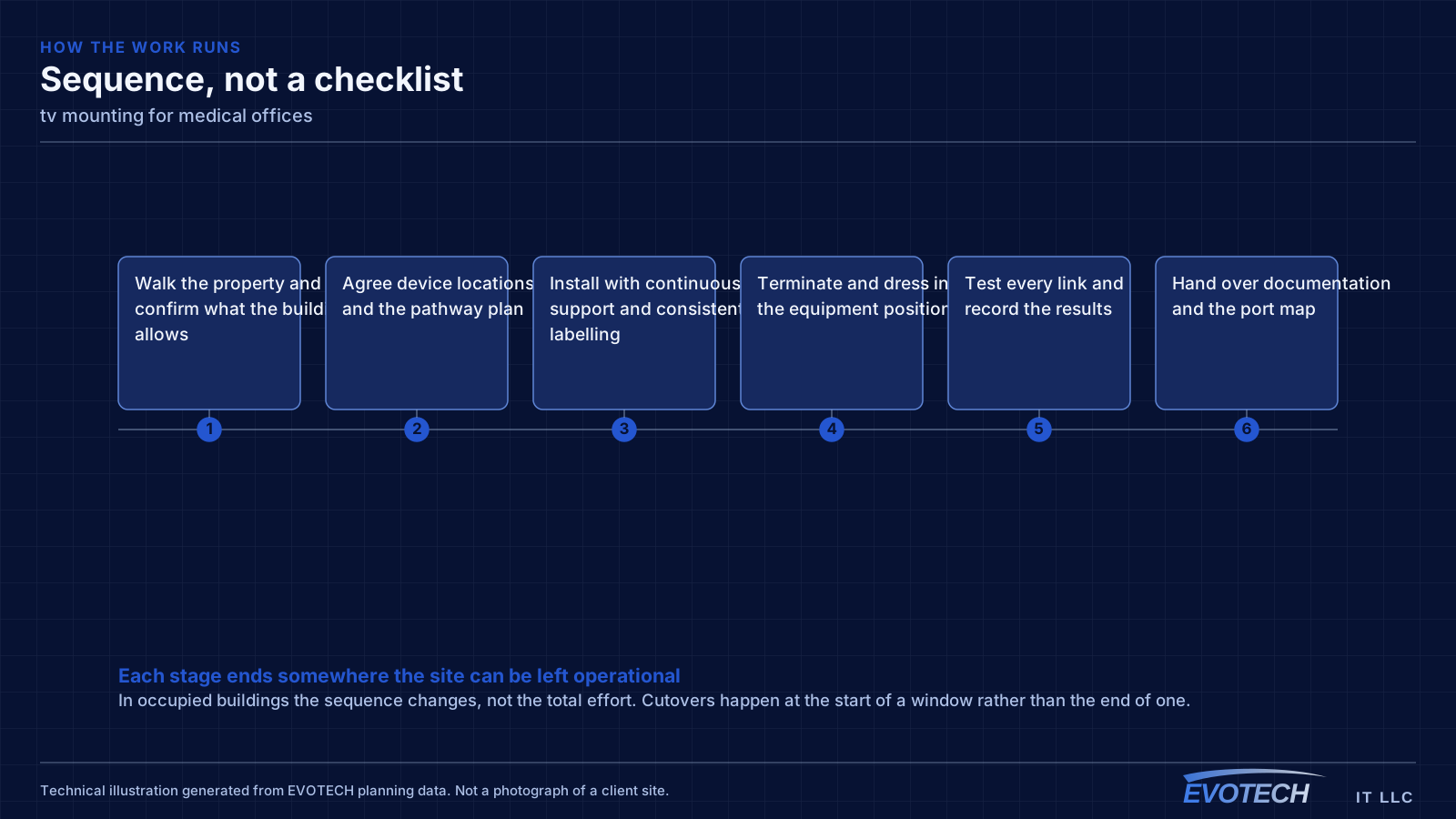
The other defining characteristic is that some systems cannot simply be taken down for an afternoon. Practice management, imaging, and anything connected to patient scheduling has a real cost when interrupted, so cutover planning matters more here than in most commercial environments.
- Distinct public, staff, and controlled zones with different requirements
- Clinical systems that cannot tolerate unplanned interruption
- Records and medication areas requiring access control with audit records
- Patient scheduling constraining when work can happen in treatment areas
What tv mounting usually involves
The serious problem is anchoring. A large display cantilevered on an articulating arm exerts substantial leverage on its fixings, and an arm anchored into drywall alone or into a single stud is a genuine hazard rather than an aesthetic issue. Metal-stud walls are the common commercial version of this, where fixings that feel solid during installation are not rated for sustained load.
The second problem is cabling. Running a power cord through a wall is not appropriate; the correct approach is either an in-wall rated power solution or a recessed outlet behind the display. Signal cables can be routed in-wall, but they need to be in place before the display goes up, because reaching behind a mounted display to fish a cable is unpleasant and often unsuccessful.
- Articulating arms anchored to insufficient structure
- Metal-stud walls treated as if they were wood framing
- Masonry anchors set into mortar joints rather than solid material
- Standard power cords routed inside walls
- Signal cables not run before mounting, leaving no route afterwards
- Viewing height chosen for the wall rather than for the seating
- Outdoor installations using indoor mounts that corrode
Segmentation and clinical connectivity
Clinical systems belong on their own segment, separate from staff general-purpose devices, separate again from patient guest access, and separate from building systems such as cameras and door controllers. This limits what any single compromised device can reach and makes the network far easier to reason about when something misbehaves.
For clinical equipment that moves large files — imaging in particular — wired connections are worth insisting on where the equipment supports them. Wireless is fine for tablets and general staff use, but a modality pushing studies across a congested wireless cell produces exactly the kind of intermittent slowness that is difficult to diagnose and disruptive to a clinic day.
Guest access in a waiting area should be isolated from everything internal and rate-limited. It is a courtesy, and it should be architecturally incapable of touching anything clinical.
- Clinical, staff, guest, and building-system traffic on separate segments
- Wired connections for imaging and other high-throughput clinical equipment
- Waiting-area guest access isolated and capped
- Access points placed for coverage in treatment rooms without relying on corridor spill
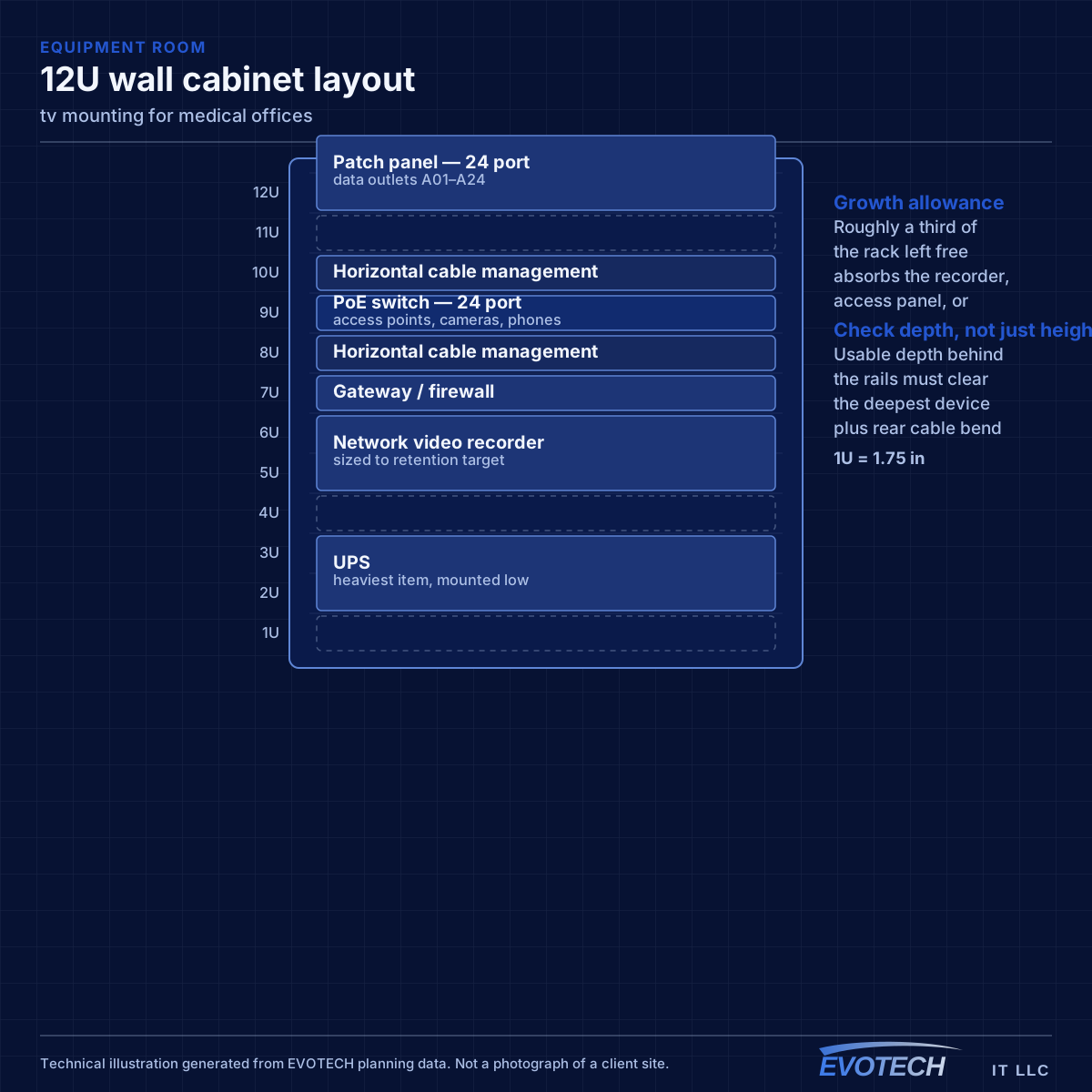
- Equipment room secured, since it holds the systems everything depends on
Anchoring by wall type, and getting the height right
In wood framing, fixings go into studs with lag bolts sized for the mount and the display weight, spanning two studs where the mount allows. In solid masonry, appropriate anchors go into the brick or block itself rather than the mortar, which is weaker. Metal-stud walls need either plywood backing installed behind the drywall — straightforward during construction, more involved afterwards — or a metal-stud anchoring system designed for the load, particularly for anything articulating.
- Wood framing: lag bolts into studs, spanning two where possible
- Masonry: anchors into solid material, not mortar joints
- Metal stud: plywood backing or a rated metal-stud anchoring system
- Articulating arms multiply leverage and demand the most anchoring
- Centre the display near seated eye level where the layout allows
- In-wall rated power solutions or a recessed outlet — never a standard cord in the wall
Popular services nearby
Frequently searched near this area — the pages people look for most.
Frequently asked questions
What changes about tv mounting in medical offices?
The operating environment does. Medical offices bring specific constraints — how the space is used, when work can happen, and what has to keep running — and those shape the tv mounting plan as much as the service's own technical requirements.
Can a TV be mounted on a metal-stud wall?
Yes, but not with wood-stud technique. Metal studs are thin and will not hold lag bolts under sustained load. The reliable approaches are plywood backing behind the drywall — easy during construction, more involved afterwards — or an anchoring system made for metal studs and rated for the display weight. This matters most with articulating arms, which multiply the load considerably.
Should patient guest Wi-Fi be offered?
It is common in waiting areas, and the requirement is that it is architecturally isolated: unable to reach clinical systems, staff devices, or building systems, and rate-limited so it cannot affect anything operational. Configured that way it is a low-risk courtesy; configured as a shared flat network it is not.