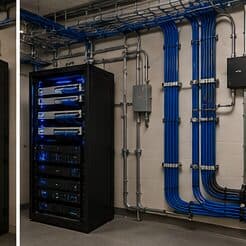
Why this page exists
Cat6A cabling for medical offices is shaped by how the space is used, not just by the service itself. Medical offices bring their own operating constraints, and this page pairs what cat6a cabling actually involves with what that environment changes about it.
Cat6A is specified to 500 MHz and supports 10GBASE-T across a full 100-metre channel. It achieves that mainly by controlling alien crosstalk — the interference between adjacent cables that constrains Cat6 at 10G — through larger construction, tighter pair geometry, and in shielded variants a foil layer.
Controlled areas and uninterruptible systems
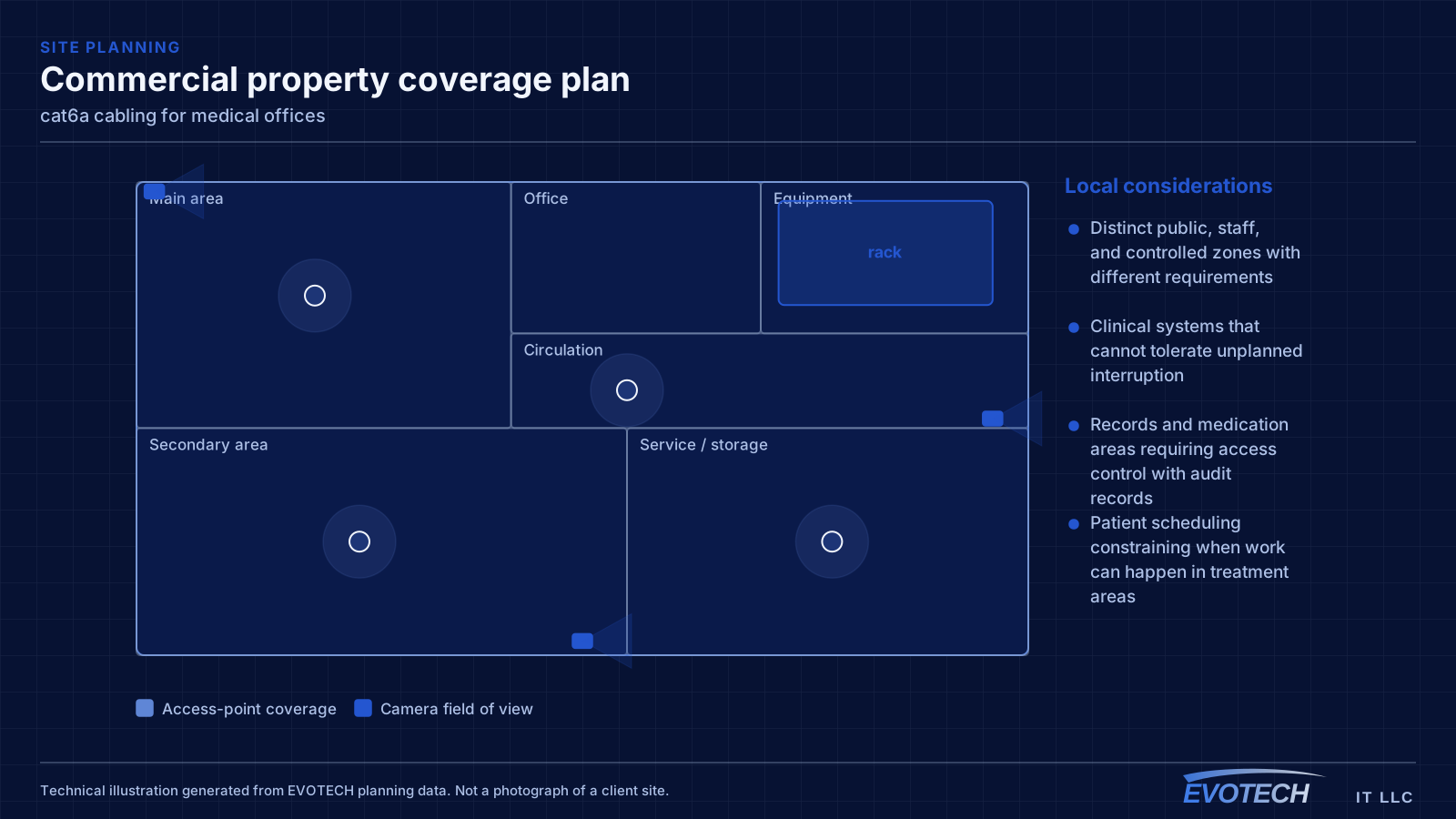
A medical office has a clear division between public, staff, and controlled areas, and the technology follows that division. Waiting areas need guest connectivity that reaches nothing internal. Treatment rooms need reliable connectivity for clinical systems. Records areas and medication storage need controlled access with a usable audit trail.
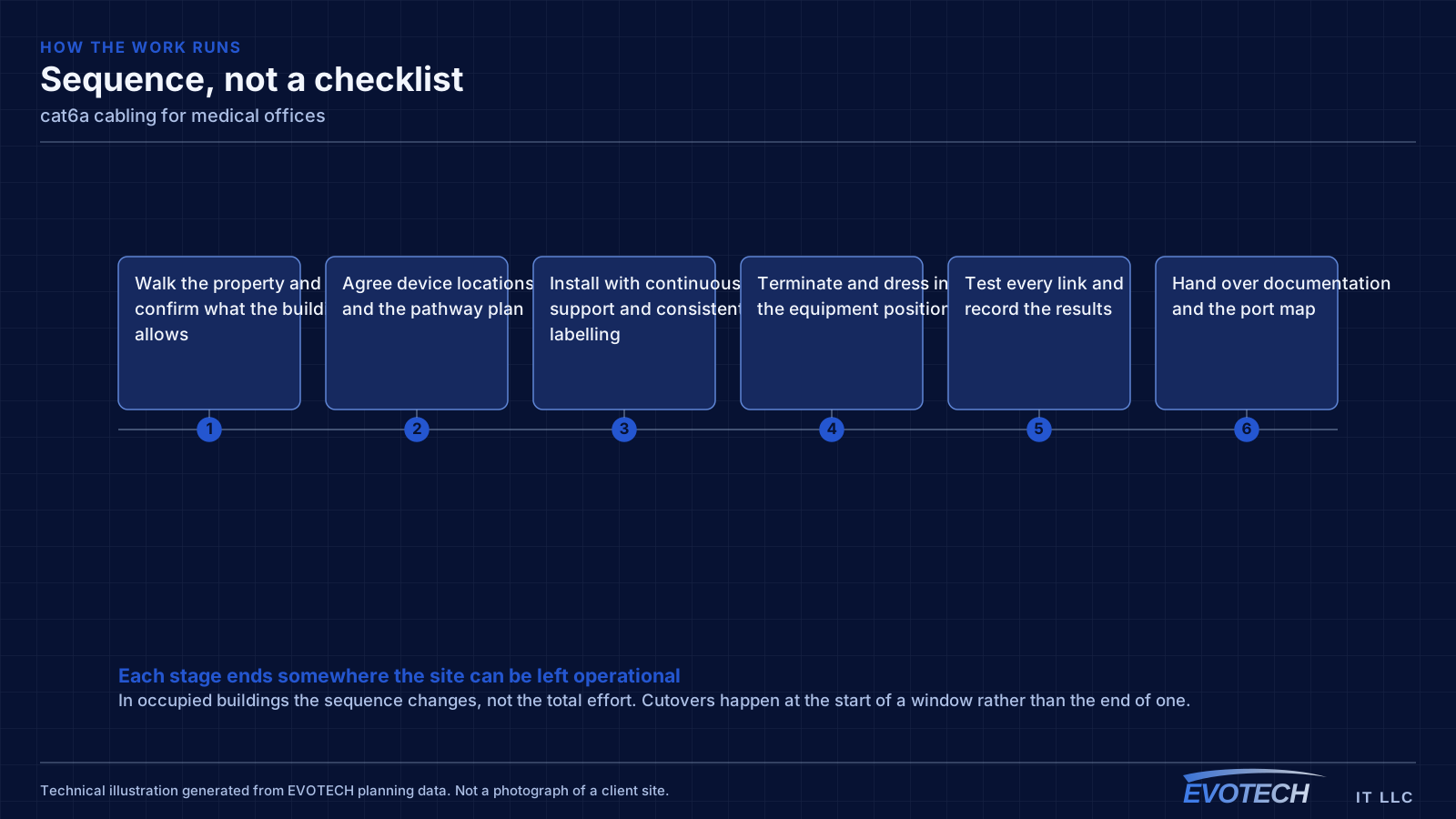
The other defining characteristic is that some systems cannot simply be taken down for an afternoon. Practice management, imaging, and anything connected to patient scheduling has a real cost when interrupted, so cutover planning matters more here than in most commercial environments.
- Distinct public, staff, and controlled zones with different requirements
- Clinical systems that cannot tolerate unplanned interruption
- Records and medication areas requiring access control with audit records
- Patient scheduling constraining when work can happen in treatment areas
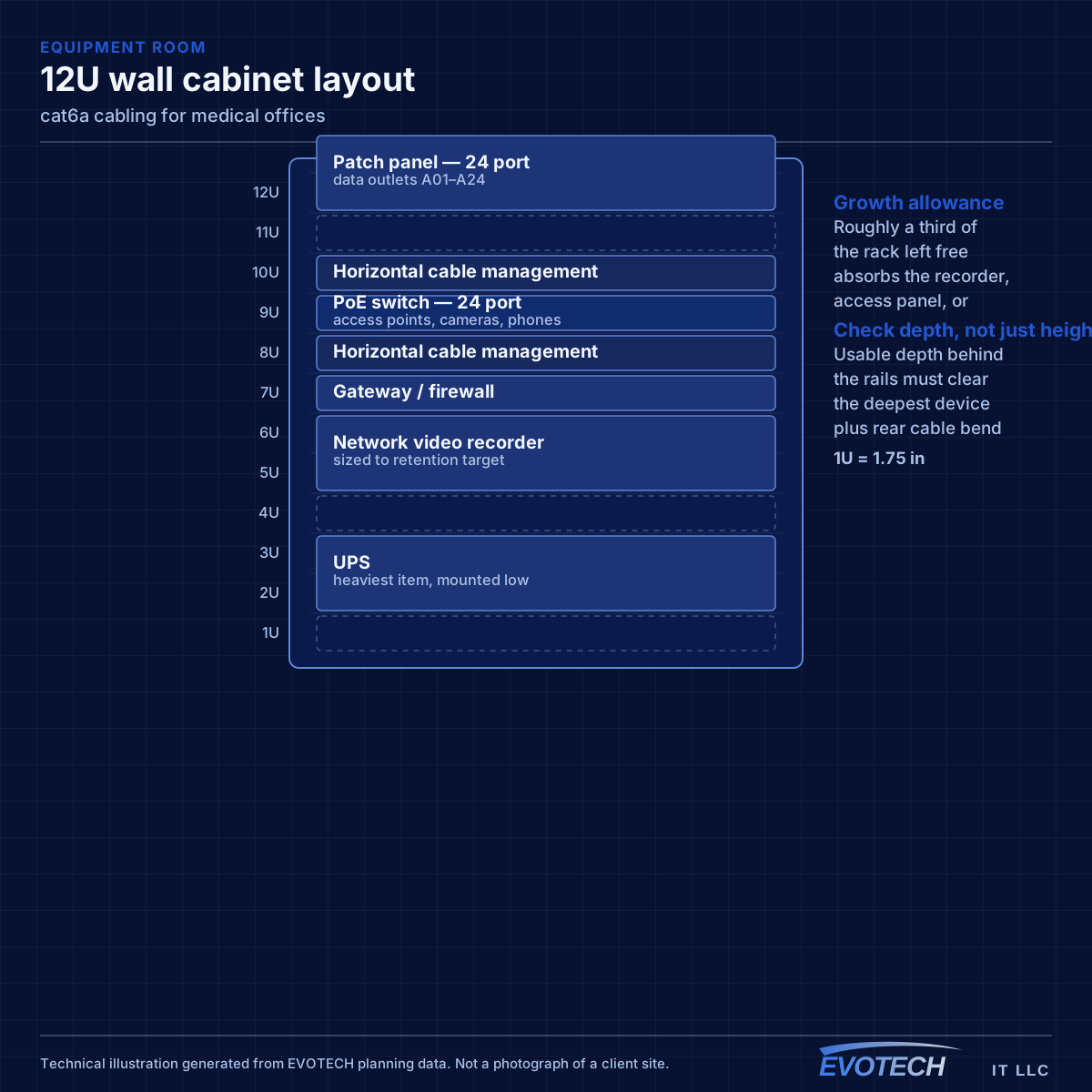
What cat6a cabling usually involves
The problems Cat6A solves are specific and measurable. In dense bundles, alien crosstalk raises the noise floor for every cable in the group, and 10G links are the first to suffer. In high-power PoE bundles, conductor heating raises insertion loss, which reduces margin at exactly the frequencies 10G depends on.
The problems Cat6A creates are logistical. A pathway sized for Cat6 may not accept the same count in Cat6A. A rack designed for tidy Cat6 dressing gets crowded. Shielded terminations demand consistent bonding, and inconsistent bonding is worse than no shield at all.
- Alien crosstalk in dense bundles degrading 10G links
- PoE-driven temperature rise increasing insertion loss and reducing margin
- Pathway fill limits reached sooner than planned
- Shield continuity broken at one termination, undermining the whole run
- Tight bend radius in the rack deforming a stiffer cable more than it would Cat6
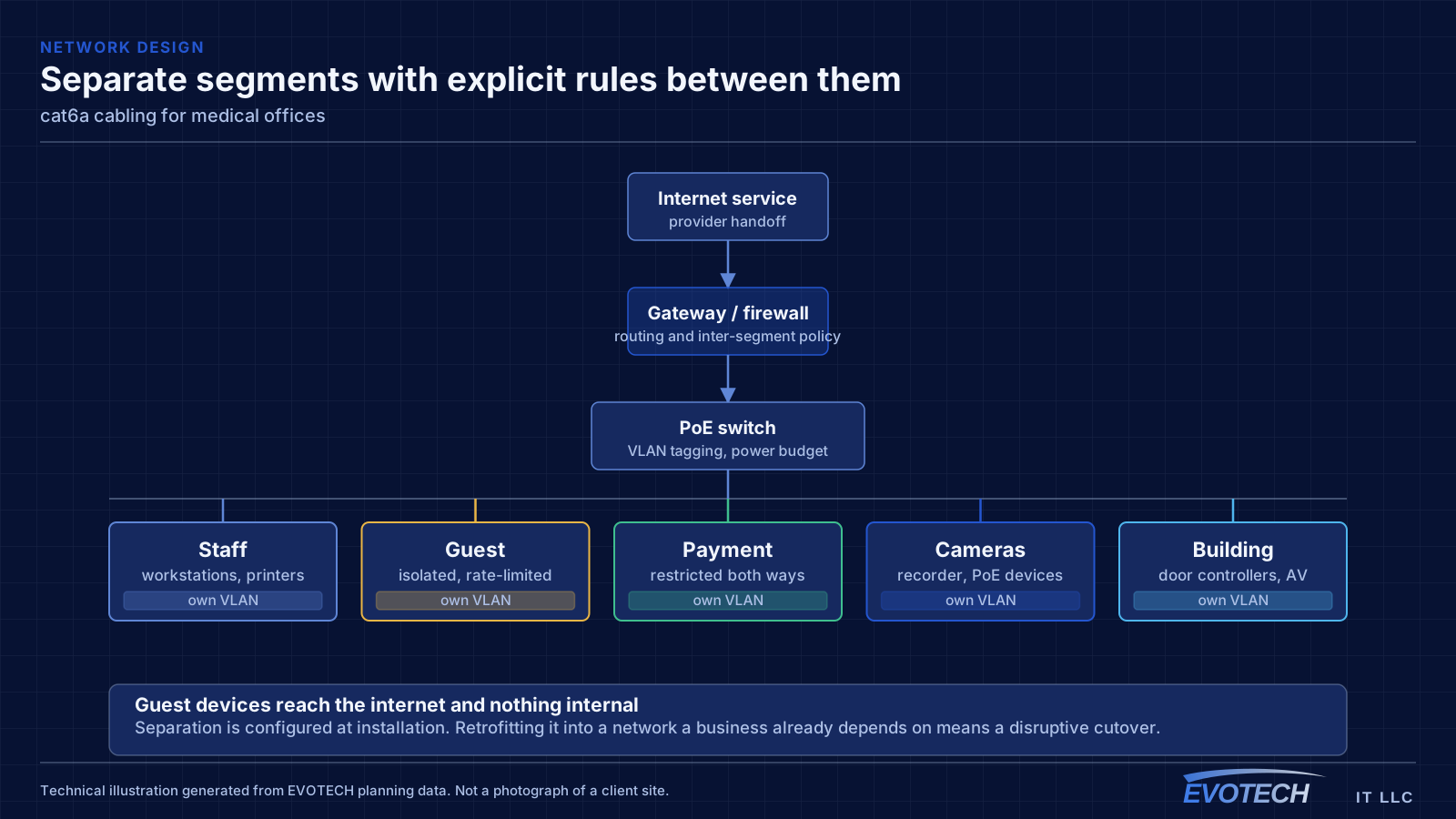
Segmentation and clinical connectivity
Clinical systems belong on their own segment, separate from staff general-purpose devices, separate again from patient guest access, and separate from building systems such as cameras and door controllers. This limits what any single compromised device can reach and makes the network far easier to reason about when something misbehaves.
For clinical equipment that moves large files — imaging in particular — wired connections are worth insisting on where the equipment supports them. Wireless is fine for tablets and general staff use, but a modality pushing studies across a congested wireless cell produces exactly the kind of intermittent slowness that is difficult to diagnose and disruptive to a clinic day.
Guest access in a waiting area should be isolated from everything internal and rate-limited. It is a courtesy, and it should be architecturally incapable of touching anything clinical.
- Clinical, staff, guest, and building-system traffic on separate segments
- Wired connections for imaging and other high-throughput clinical equipment
- Waiting-area guest access isolated and capped
- Access points placed for coverage in treatment rooms without relying on corridor spill
- Equipment room secured, since it holds the systems everything depends on
Bandwidth headroom, bundle heat, and shield bonding
The 500 MHz specification is the headline, but the parameter that distinguishes Cat6A in practice is power sum alien near-end crosstalk. That is the measurement that describes how much a cable is disturbed by its neighbours, and it is the reason Cat6A cable is physically larger — separation between cables is part of the design, not an accident of manufacturing.
- 500 MHz specification supporting 10GBASE-T to 100 m
- Power sum alien crosstalk control through physical construction
- PoE heat rise increases insertion loss; bundle size and airflow are design inputs
- Shield continuity and bonding must be consistent end to end
- Larger diameter changes pathway fill calculations
Frequently asked questions
What changes about cat6a cabling in medical offices?
The operating environment does. Medical offices bring specific constraints — how the space is used, when work can happen, and what has to keep running — and those shape the cat6a cabling plan as much as the service's own technical requirements.
Is Cat6A worth it if nothing today runs 10 gigabit?
Sometimes. The argument for it is that reopening a ceiling is far more expensive than the cable premium, so runs that are hard to reach and likely to matter later are good candidates. The argument against blanket use is pathway fill and labour. A common middle path is Cat6A on uplinks, dense areas, and inaccessible runs, with Cat6 elsewhere.
Should patient guest Wi-Fi be offered?
It is common in waiting areas, and the requirement is that it is architecturally isolated: unable to reach clinical systems, staff devices, or building systems, and rate-limited so it cannot affect anything operational. Configured that way it is a low-risk courtesy; configured as a shared flat network it is not.