Why this page exists
Low-voltage installation for medical offices is shaped by how the space is used, not just by the service itself. Medical offices bring their own operating constraints, and this page pairs what low-voltage installation actually involves with what that environment changes about it.
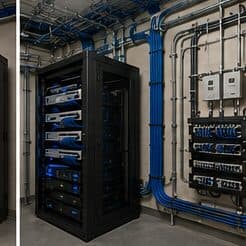
Low-voltage work covers the systems that run on cable rather than mains power: data, wireless, cameras, door access, intercoms, and audio-visual. In a new build or a fit-out these systems share pathways, share an equipment position, and increasingly share a network — so planning them together during rough-in costs far less than adding each one separately after the walls close.
Controlled areas and uninterruptible systems
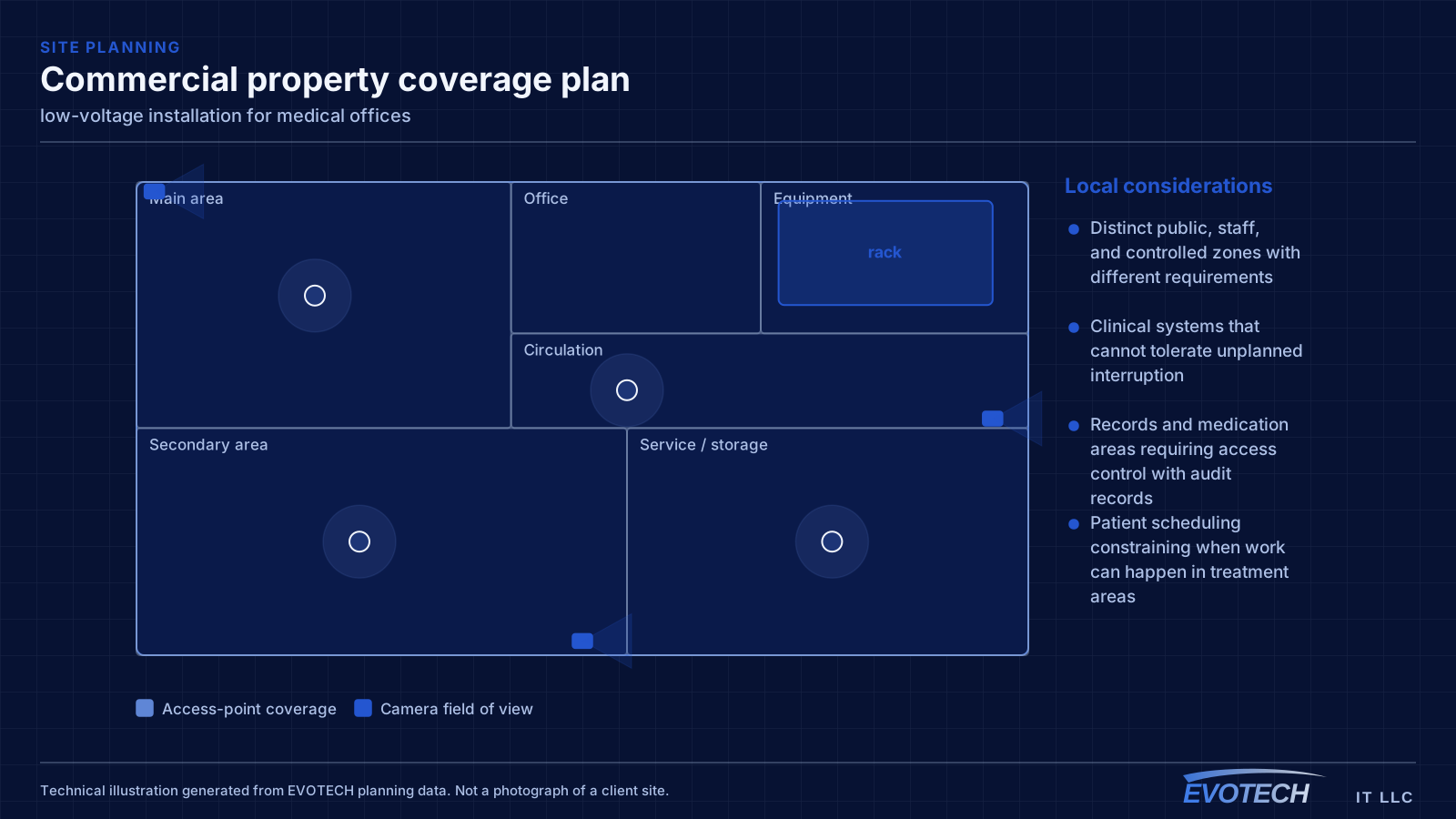
A medical office has a clear division between public, staff, and controlled areas, and the technology follows that division. Waiting areas need guest connectivity that reaches nothing internal. Treatment rooms need reliable connectivity for clinical systems. Records areas and medication storage need controlled access with a usable audit trail.
The other defining characteristic is that some systems cannot simply be taken down for an afternoon. Practice management, imaging, and anything connected to patient scheduling has a real cost when interrupted, so cutover planning matters more here than in most commercial environments.
- Distinct public, staff, and controlled zones with different requirements
- Clinical systems that cannot tolerate unplanned interruption
- Records and medication areas requiring access control with audit records
- Patient scheduling constraining when work can happen in treatment areas
What low-voltage installation usually involves
The characteristic problem is systems planned in isolation. Cameras get specified after the ceiling closes, so their cable runs surface-mount. The access-control panel arrives with no allocated space in the equipment room. The AV system needs a run to a wall the network design never considered. Each individually is a small compromise; together they produce a building where nothing is quite where it should be.
The second problem is pathway conflict. Low voltage shares ceiling space with mechanical, electrical, plumbing, and fire protection, and the low-voltage trade is usually last in. Pathways claimed early are pathways available; pathways assumed are frequently full by the time anyone arrives.
- Systems specified at different times, each retrofitting around the last
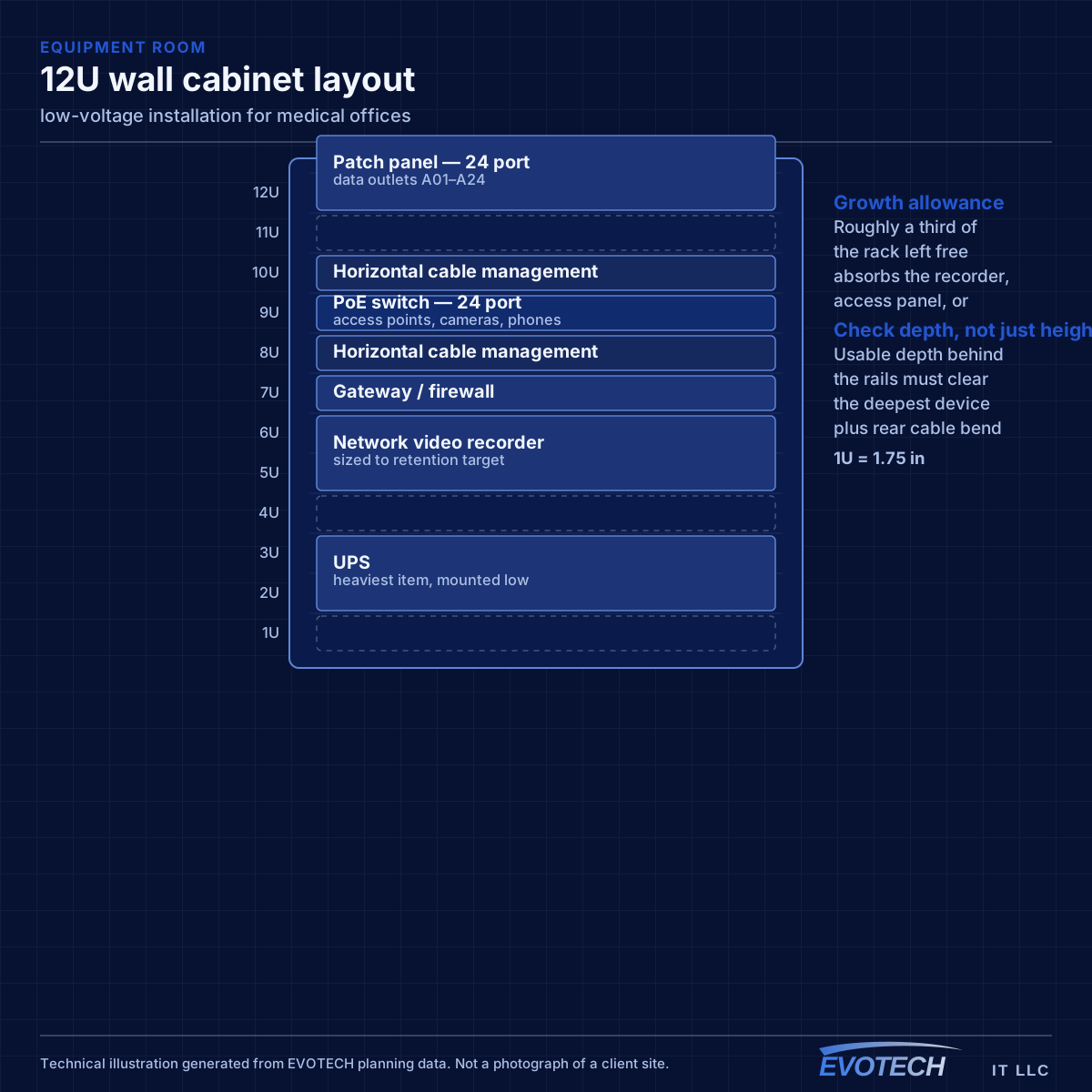
- Equipment room sized for the network and not for recorders, access panels, and AV
- Pathway congestion because low voltage was scheduled after the other trades
- Device locations unresolved at rough-in, forcing best guesses that get moved later
- Fire-rated penetrations made without proper sleeving and firestopping
- Rough-in complete but the finish scope unscheduled, leaving cable coiled in walls for months
Segmentation and clinical connectivity
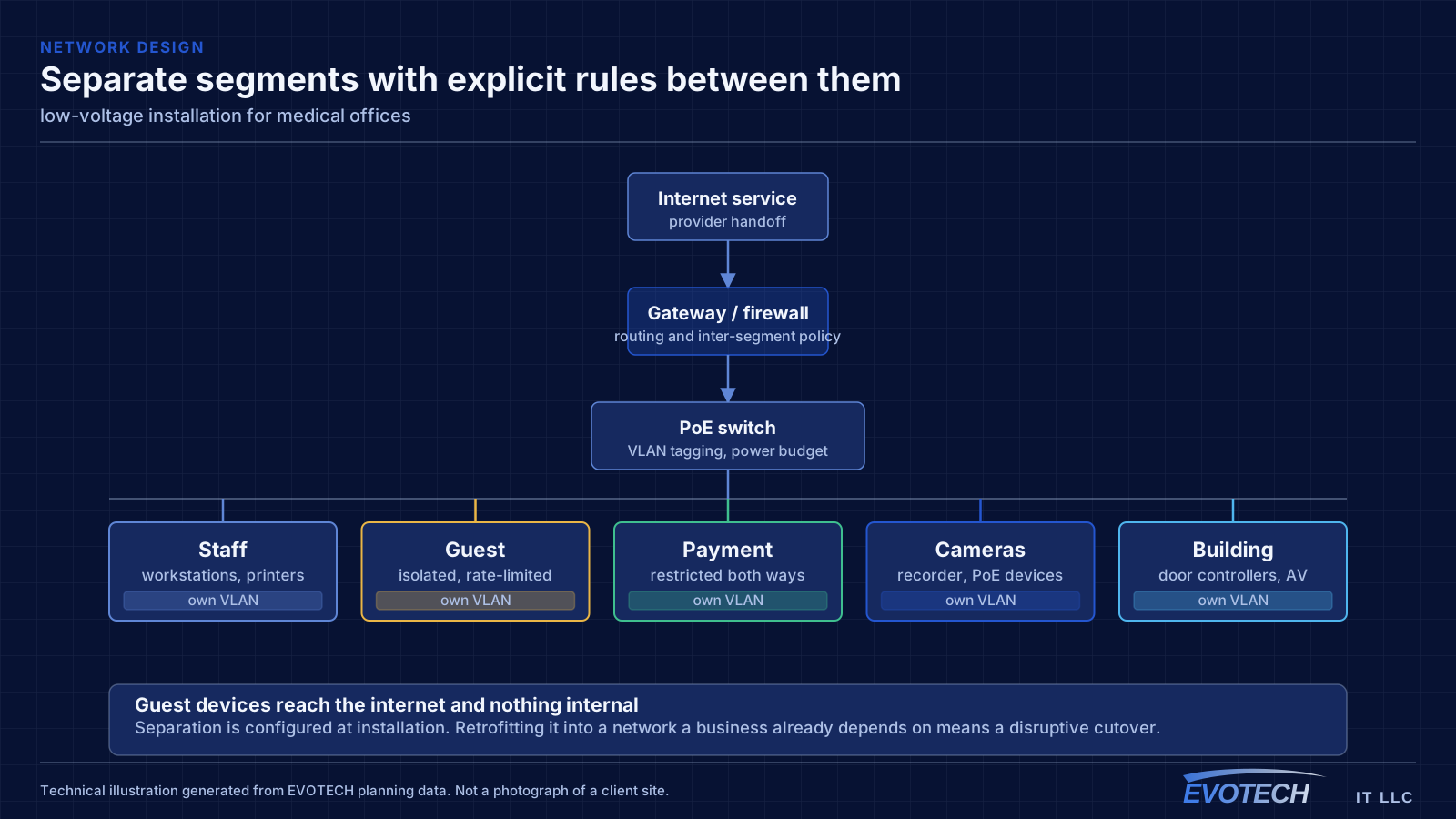
Clinical systems belong on their own segment, separate from staff general-purpose devices, separate again from patient guest access, and separate from building systems such as cameras and door controllers. This limits what any single compromised device can reach and makes the network far easier to reason about when something misbehaves.
For clinical equipment that moves large files — imaging in particular — wired connections are worth insisting on where the equipment supports them. Wireless is fine for tablets and general staff use, but a modality pushing studies across a congested wireless cell produces exactly the kind of intermittent slowness that is difficult to diagnose and disruptive to a clinic day.
Guest access in a waiting area should be isolated from everything internal and rate-limited. It is a courtesy, and it should be architecturally incapable of touching anything clinical.
- Clinical, staff, guest, and building-system traffic on separate segments
- Wired connections for imaging and other high-throughput clinical equipment
- Waiting-area guest access isolated and capped
- Access points placed for coverage in treatment rooms without relying on corridor spill
- Equipment room secured, since it holds the systems everything depends on
Pathways, separation, and coordinating with the other trades
Pathway planning is the core technical activity. Low-voltage cable needs continuous support — tray, J-hooks, or conduit — at regular intervals, routed to keep separation from parallel electrical runs and to cross them at right angles where they must meet. Penetrations through fire-rated walls and floors need proper sleeves and firestopping, which is a coordination item and not an afterthought.
- Continuous pathway with support at regular intervals
- Separation from parallel electrical, crossing at right angles where needed
- Proper sleeving and firestopping at rated penetrations
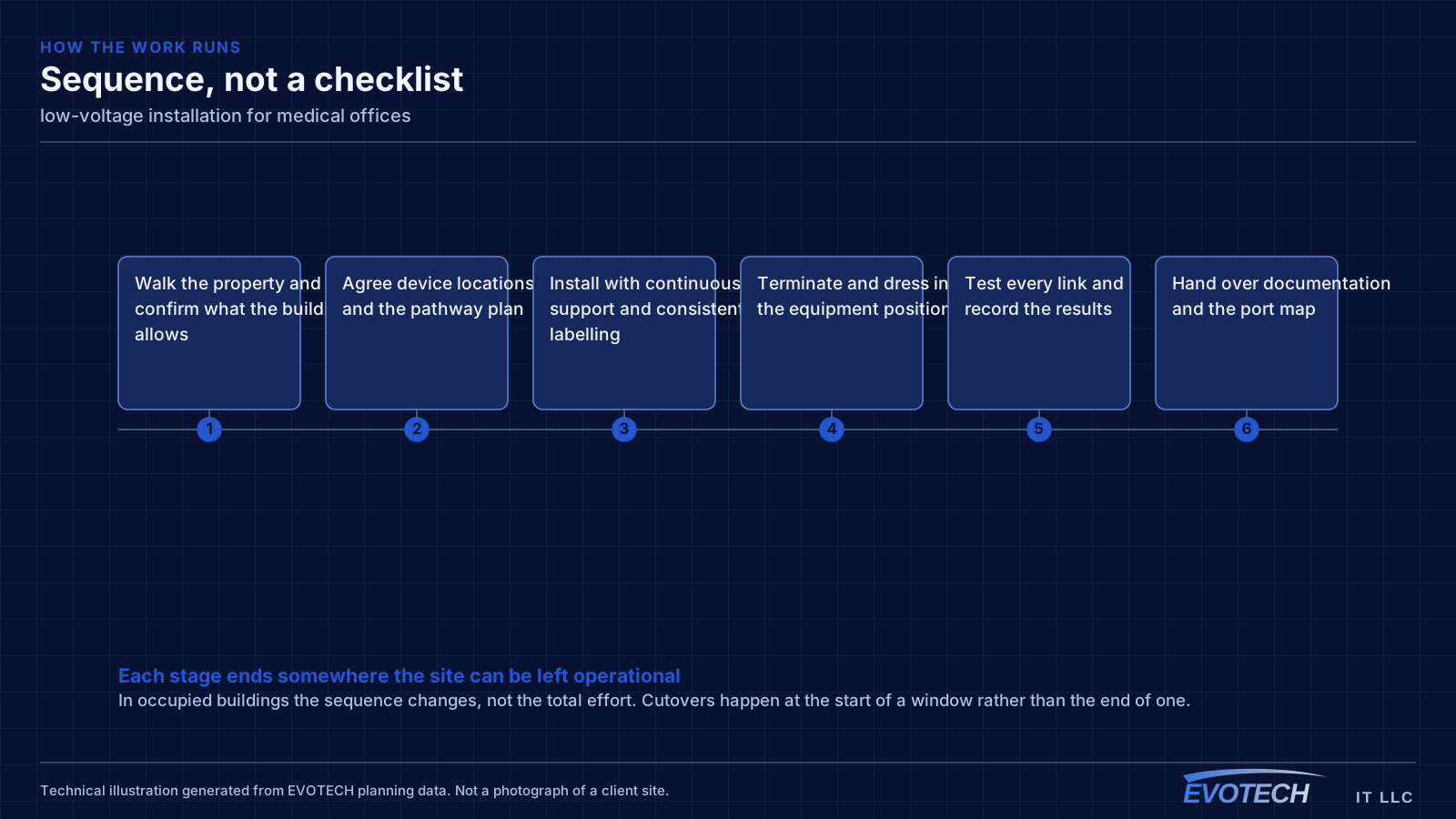
- Rough-in between electrical and drywall; finish after paint and ceiling
- Cable protected and identified during the gap between rough-in and finish
- Equipment room sized for every system, not only the network
Frequently asked questions
What changes about low-voltage installation in medical offices?
The operating environment does. Medical offices bring specific constraints — how the space is used, when work can happen, and what has to keep running — and those shape the low-voltage installation plan as much as the service's own technical requirements.
When should low-voltage work happen in a construction schedule?
Rough-in sits after electrical and framing and before insulation and drywall. Finish work — terminations, device mounting, and commissioning — happens after paint and ceilings. The risk is that upstream delays compress the rough-in window, so having device locations and pathway plans settled in advance is what keeps that window usable.
Should patient guest Wi-Fi be offered?
It is common in waiting areas, and the requirement is that it is architecturally isolated: unable to reach clinical systems, staff devices, or building systems, and rate-limited so it cannot affect anything operational. Configured that way it is a low-risk courtesy; configured as a shared flat network it is not.