

Why this page exists
Intercom installation in Houston is scoped around the same physical realities EVOTECH weighs everywhere — but read through Houston's specific conditions: building stock spanning multiple construction eras within short distances, producing very different ceiling and pathway conditions. This page pairs what the service actually involves with what the Houston market changes about it.
An intercom connects an entry station to one or more answering points, so someone inside can see and speak to a visitor and release the door or gate without walking to it. The design work is deciding where the answering points are, whether they are physical stations or applications on phones, and how the door release is wired.
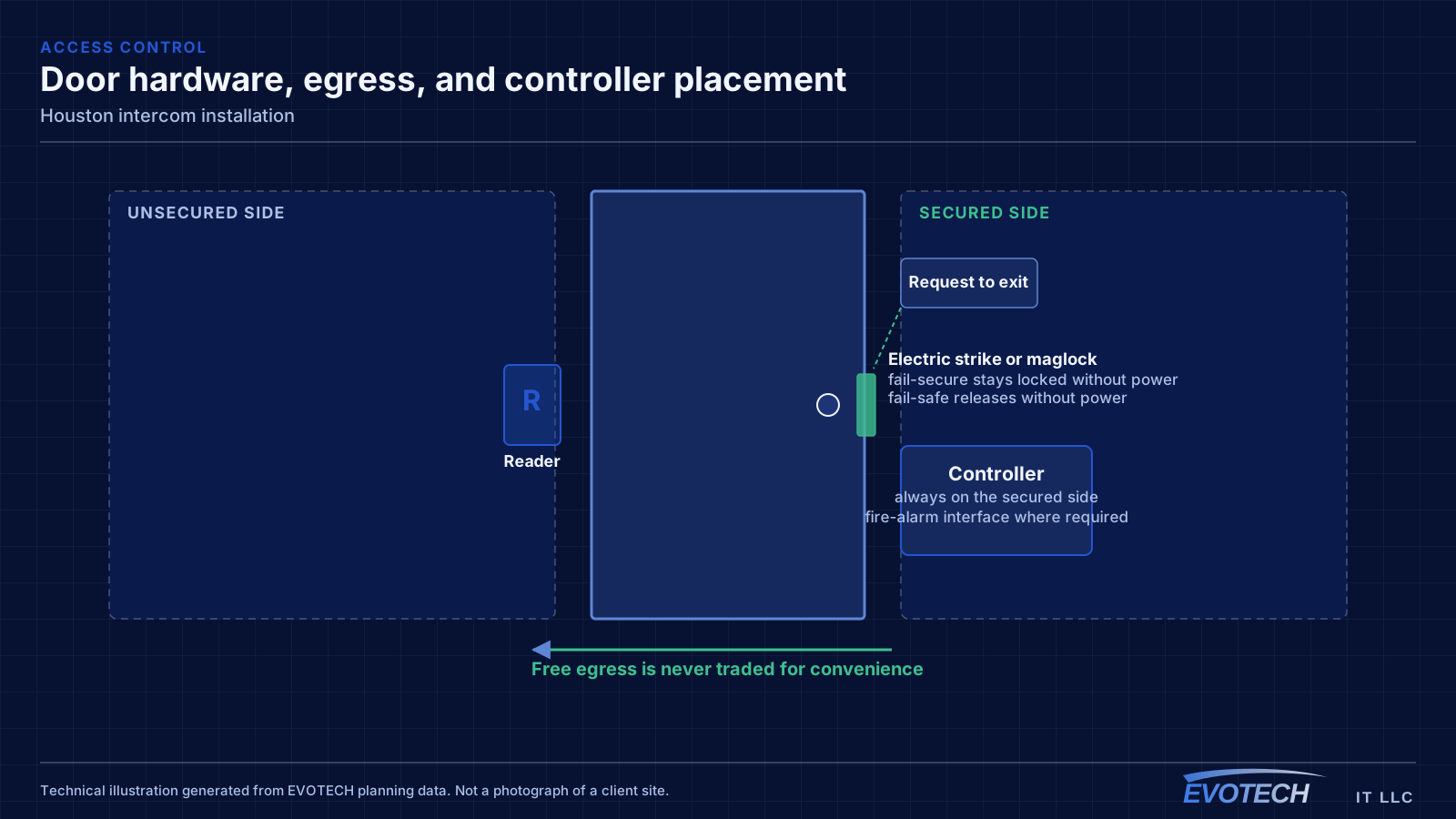
What intercom installation usually involves
The most common problem is intelligibility rather than video. Entry stations sit outdoors near traffic, air-conditioning units, and hard reflective surfaces, and a station positioned without regard to that produces audio nobody can understand. Placement away from noise sources and out of direct wind exposure does more than any setting.
The second is exposure. An entry station on a west-facing wall in this climate takes sustained afternoon sun and heat, and a gate station takes driven rain. Stations installed without appropriate rating or without a hood weather badly, and the failure shows up as a dead station months later.
- Entry-station audio degraded by traffic, mechanical noise, or wind
- Camera at the station backlit by afternoon sun or a bright background
- Stations exposed to driven rain or sustained direct sun without protection
- Long gate runs with power and network reach not planned for
- Door release wired without regard to egress requirements
- No answering point where people actually are during the day

Houston property conditions that change the plan
Commercial stock in Houston divides roughly into three pathway situations. Older buildings frequently have hard-lid ceilings, limited or fully occupied existing pathway, and equipment rooms that were sized for a phone system. Warehouse and industrial conversions usually have open structure overhead, which makes pathway easy but leaves cable exposed and requires proper support and containment. Newer suburban commercial is generally the most straightforward — suspended grid, accessible plenum, and existing tray in many cases.
Residential stock is similarly varied but with a consistent structural theme: slab-on-grade construction is the norm, which removes the underfloor routing option almost entirely. Retrofit runs go up into the attic and down interior walls, and the practical question becomes whether the destination wall is interior and whether its top plate is reachable.
Because the building drives everything, the useful early questions are all physical. What is the ceiling? Is there existing pathway and is it full? Where does the service enter, and where can the equipment actually live? Is the space occupied, and if so what hours are available?
- Older commercial: hard-lid ceilings, congested or absent pathway, undersized equipment rooms
- Conversions: open structure, easy routing, but exposed cable needing proper support
- Newer commercial: suspended grid and often existing tray
- Residential: slab foundations, attic routing, interior-wall drops
- Multi-tenant buildings: base-building rules on riser and core access vary considerably
- Ceiling construction, and how much of it is genuinely accessible
- Existing pathway, its condition, and its remaining capacity
- Equipment room location, power, and ventilation
- Occupancy and available working hours
- Base-building rules where the space is leased
- Whether the work is a fit-out, a retrofit, or a remediation of existing installation
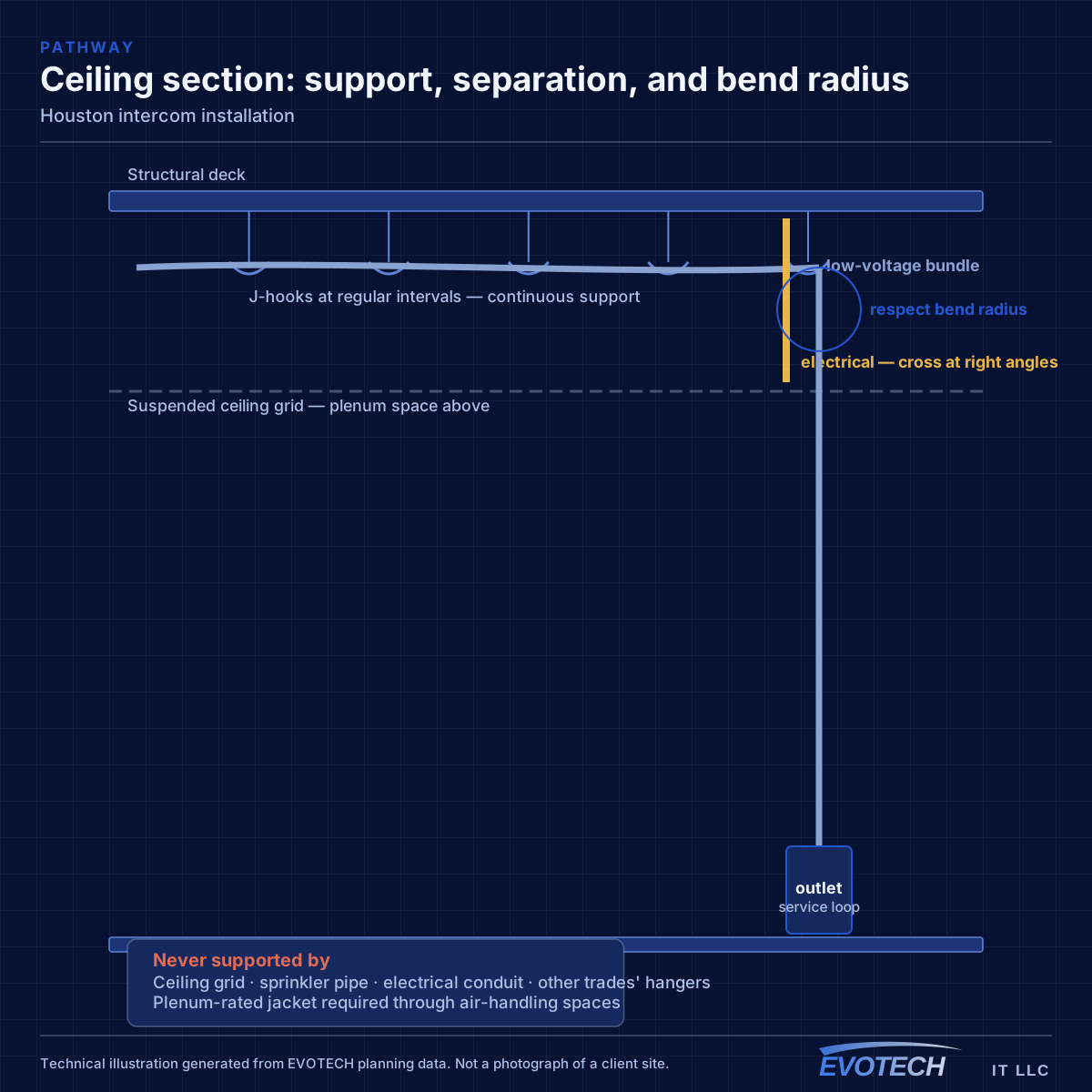
Getting intercom installation done in Houston
Entry stations should sit at a height that frames a standing adult's face, sheltered where possible, and away from the loudest nearby sources. A recessed or hooded mount helps with both sun and rain. Where the station faces west, a hood is close to essential in this climate.
Two environmental factors show up consistently. Summer attic temperatures make residential retrofit work a morning activity for much of the year, which affects scheduling more than it affects scope. And Gulf Coast humidity with heavy rainfall events means exterior equipment — cameras, entry stations, outdoor access points — needs appropriate sealing, drip loops, and housings rated for driven rain rather than for nominal weather resistance.
- Residential attic work scheduled early during summer months
- Exterior penetrations sealed with proper drip loops
- Housings and enclosures rated for driven rain, not nominal weather resistance
- Equipment positions chosen with ambient temperature in mind, especially near unconditioned space
- Surge protection considered on exterior and between-building runs

Popular services nearby
Frequently searched near this area — the pages people look for most.
Frequently asked questions
Does EVOTECH have an office in Houston?
No. This is a service-area page: EVOTECH serves Houston without claiming a physical office there. The wording stays as coverage, not a location claim.
Can an intercom release the door as well as show who is there?
Yes, and that is usually the point. The release is wired to the door's lock hardware, and the choice of lock determines power-loss behaviour. Where the door is also part of an access-control system, the two should be coordinated so the release is logged and the systems do not conflict over the same hardware.
Does EVOTECH have an office in Houston?
This site does not publish a business address, in Houston or anywhere else, because one has not been confirmed for publication. Houston is described here as the primary market served — that is a coverage statement, not an office claim, and the distinction is deliberate.