
Why this page exists
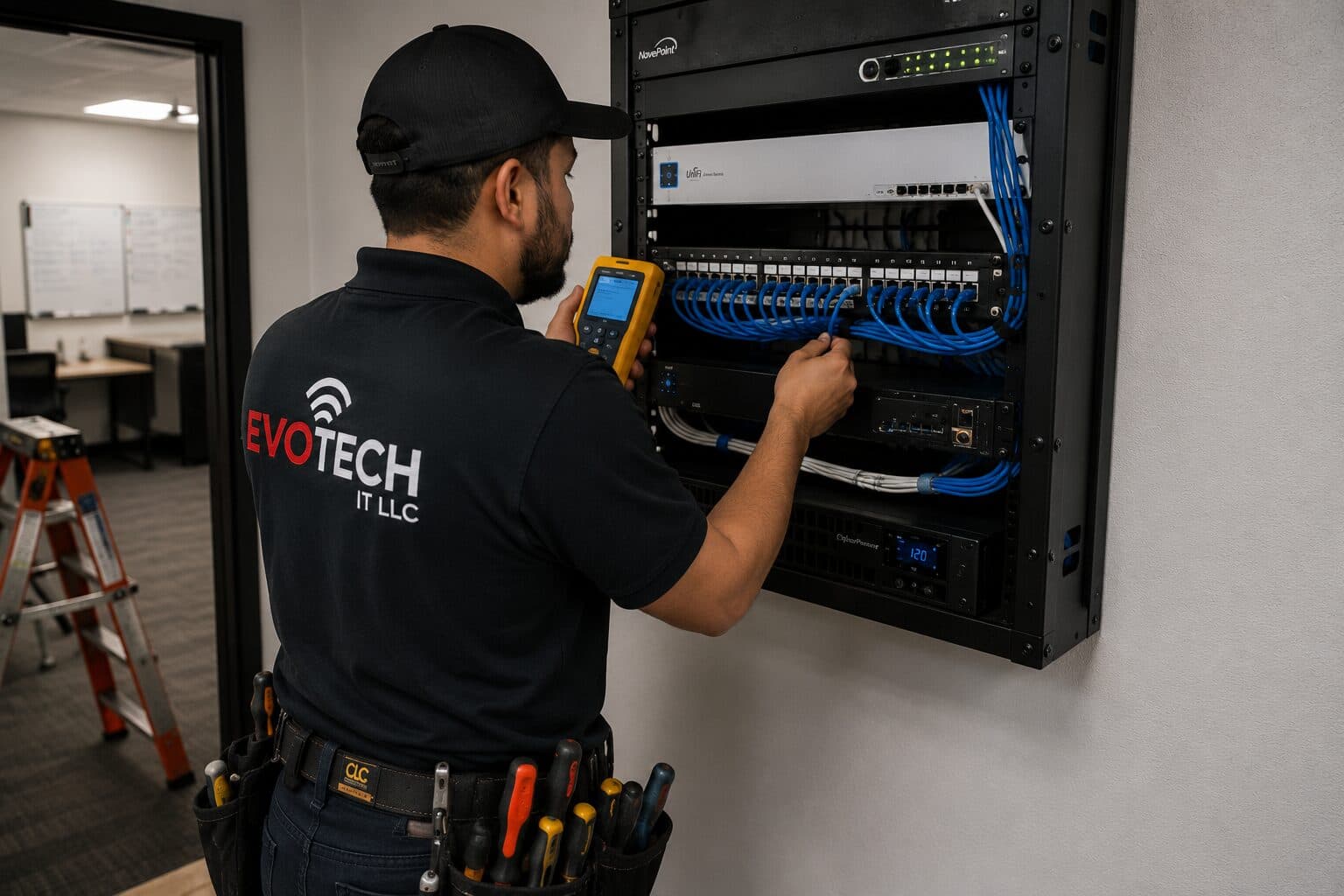
Network troubleshooting in Houston is scoped around the same physical realities EVOTECH weighs everywhere — but read through Houston's specific conditions: building stock spanning multiple construction eras within short distances, producing very different ceiling and pathway conditions. This page pairs what the service actually involves with what the Houston market changes about it.
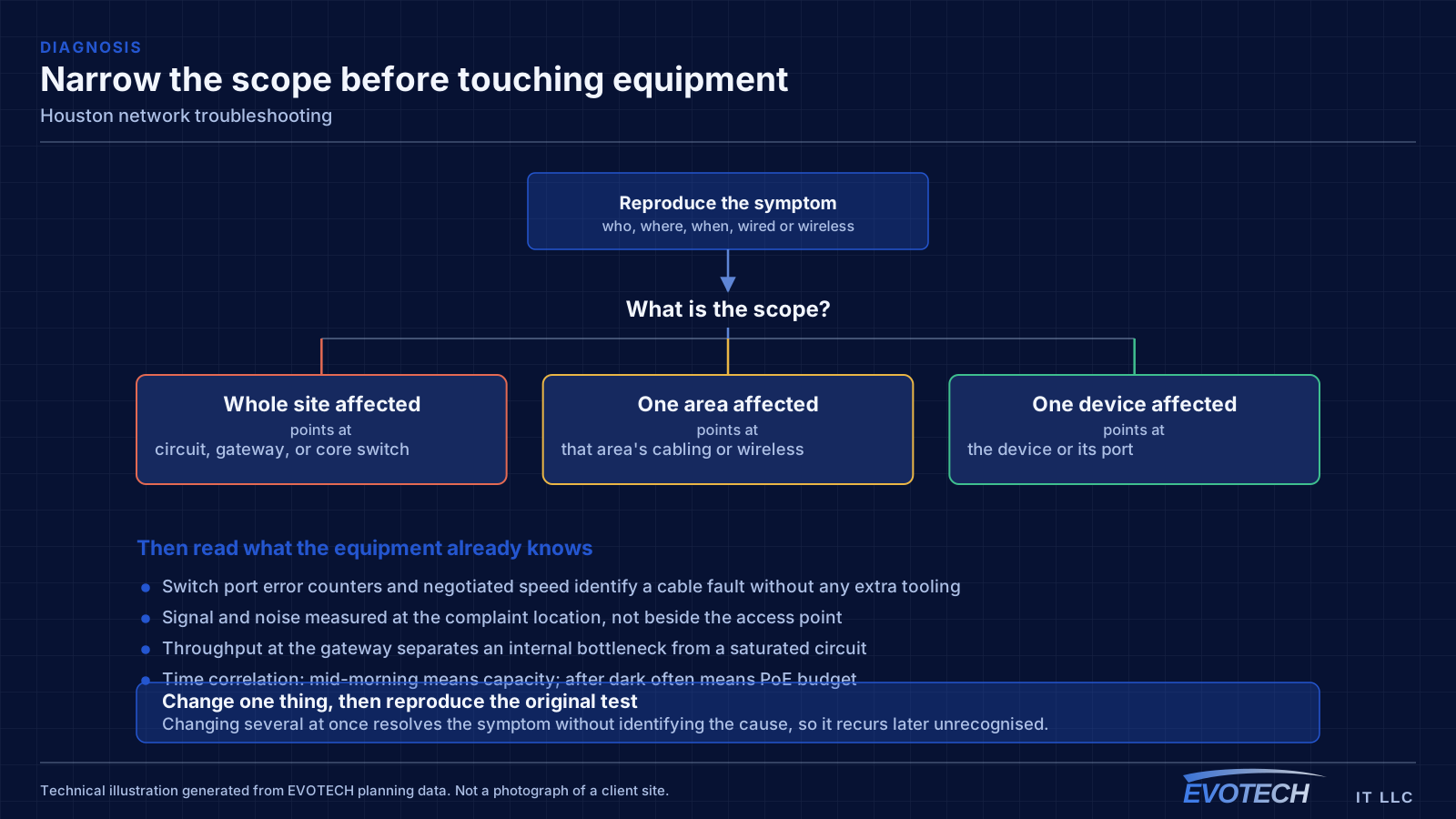
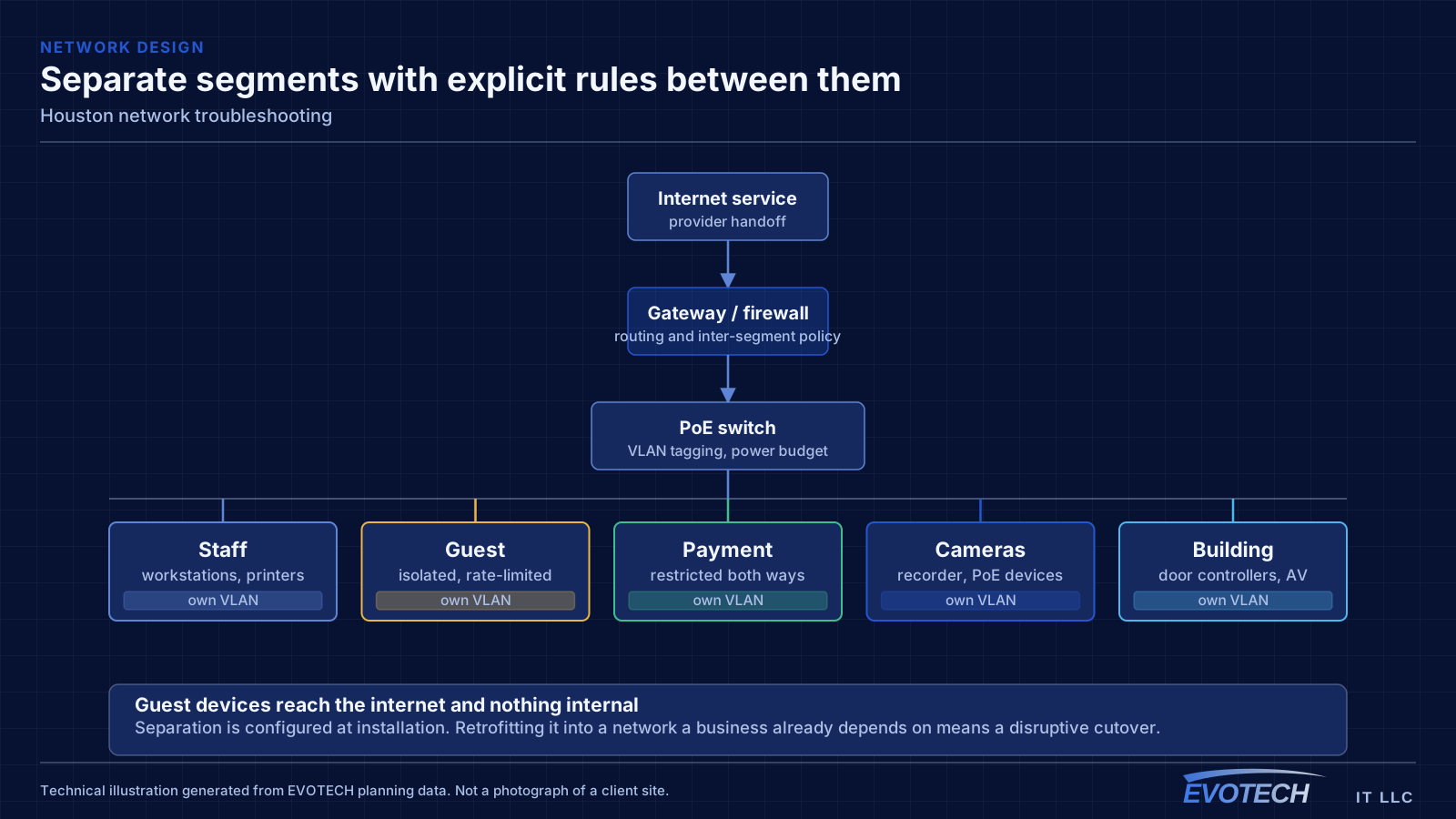
Effective troubleshooting is a process of elimination against a specific, reproducible symptom. 'The internet is slow' is not yet a diagnosis — slow for whom, on which devices, wired or wireless, at what times, to which destinations. Those answers usually point at a layer before any equipment is touched.
What network troubleshooting usually involves
The single most useful distinction is between a problem affecting everything and a problem affecting one device or area. Everything at once points toward the shared path — the circuit, the gateway, or the main switch. One area points toward that area's cabling, its access point, or its switch. One device points at the device or its port.
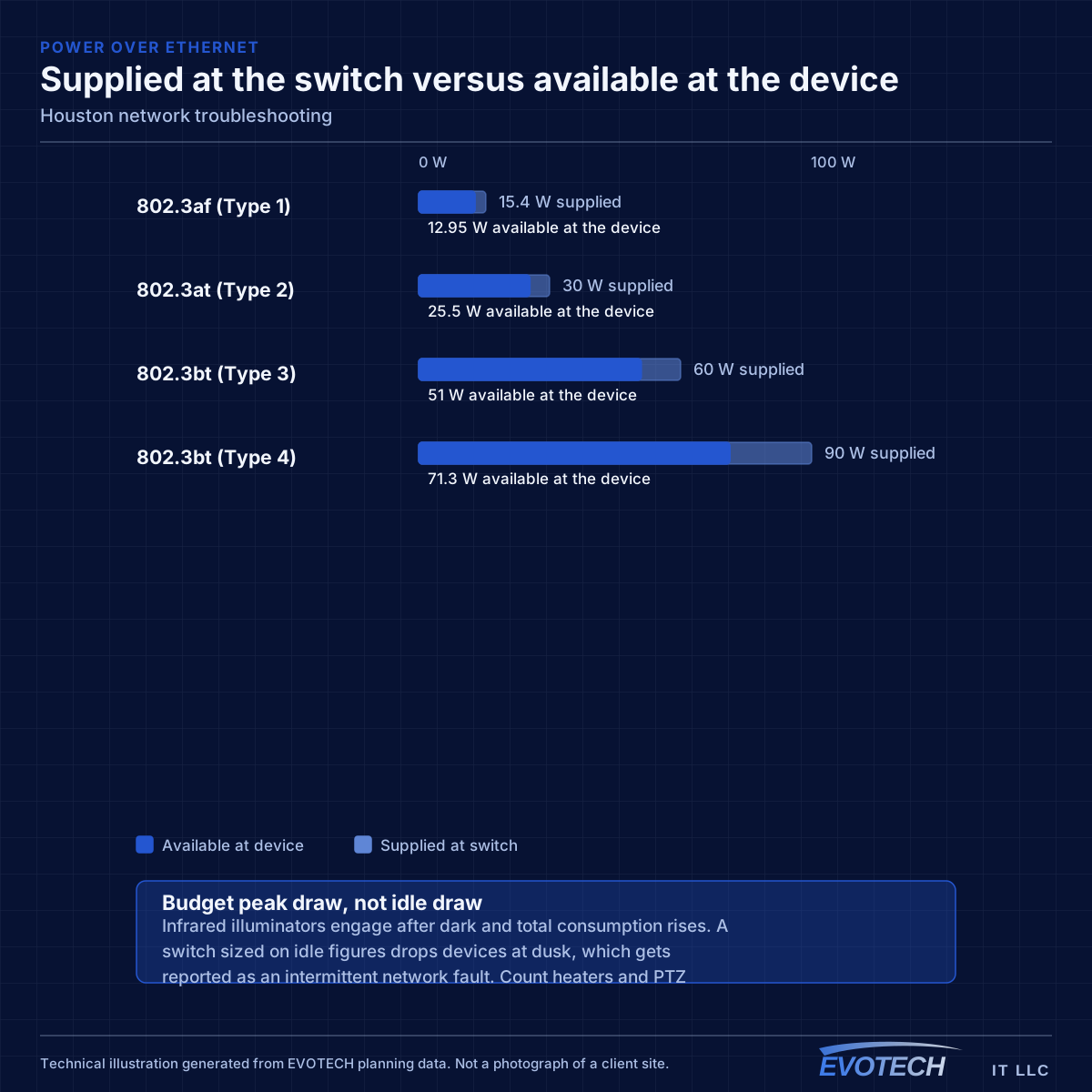
Timing is the second most useful clue. A problem that appears mid-morning and disappears at night is capacity related. A problem that appears after dark suggests something engaging on a schedule — camera illuminators pushing a PoE budget over is the classic example. A problem that appears at random is more often physical: a marginal termination, a failing port, or a cable that moves.
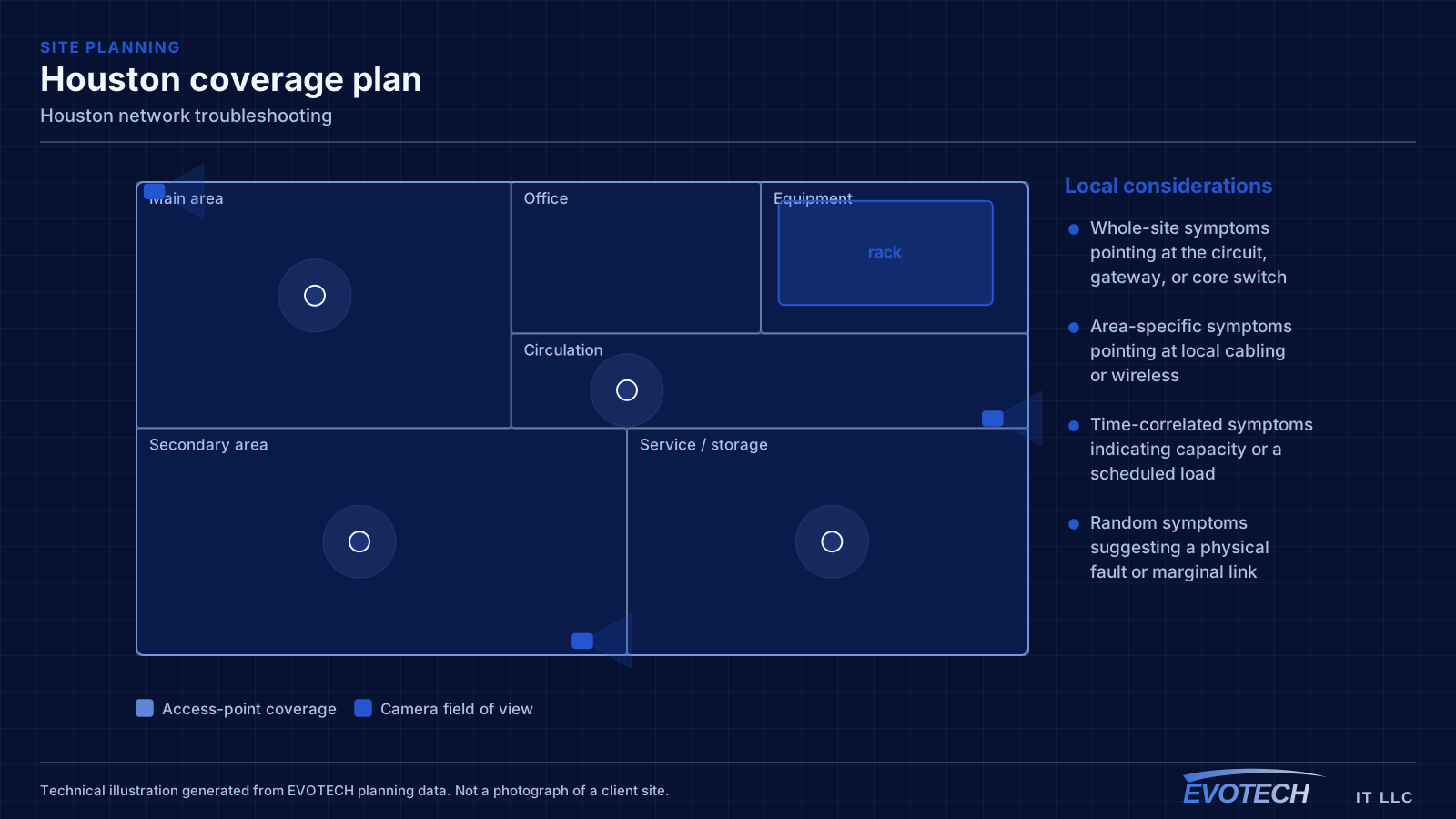
- Whole-site symptoms pointing at the circuit, gateway, or core switch
- Area-specific symptoms pointing at local cabling or wireless
- Time-correlated symptoms indicating capacity or a scheduled load
- Random symptoms suggesting a physical fault or marginal link
- Duplicate addressing or a rogue device handing out addresses
- Switching loops flooding a network after a cable was patched in twice
- Speed or duplex mismatches producing errors rather than outright failure
Houston property conditions that change the plan
Commercial stock in Houston divides roughly into three pathway situations. Older buildings frequently have hard-lid ceilings, limited or fully occupied existing pathway, and equipment rooms that were sized for a phone system. Warehouse and industrial conversions usually have open structure overhead, which makes pathway easy but leaves cable exposed and requires proper support and containment. Newer suburban commercial is generally the most straightforward — suspended grid, accessible plenum, and existing tray in many cases.
Residential stock is similarly varied but with a consistent structural theme: slab-on-grade construction is the norm, which removes the underfloor routing option almost entirely. Retrofit runs go up into the attic and down interior walls, and the practical question becomes whether the destination wall is interior and whether its top plate is reachable.
Because the building drives everything, the useful early questions are all physical. What is the ceiling? Is there existing pathway and is it full? Where does the service enter, and where can the equipment actually live? Is the space occupied, and if so what hours are available?
- Older commercial: hard-lid ceilings, congested or absent pathway, undersized equipment rooms
- Conversions: open structure, easy routing, but exposed cable needing proper support
- Newer commercial: suspended grid and often existing tray
- Residential: slab foundations, attic routing, interior-wall drops
- Multi-tenant buildings: base-building rules on riser and core access vary considerably
- Ceiling construction, and how much of it is genuinely accessible
- Existing pathway, its condition, and its remaining capacity
- Equipment room location, power, and ventilation
- Occupancy and available working hours
- Base-building rules where the space is leased
- Whether the work is a fit-out, a retrofit, or a remediation of existing installation
Getting network troubleshooting done in Houston
Switch port statistics are the most underused diagnostic resource on most networks. Error counters, discards, and negotiated speed for each port are already being recorded, and a port showing rising errors identifies a cable or connector problem without any additional testing. A port that negotiated 100 Mbps when it should be at 1 Gbps points at a damaged pair or a marginal termination.
Two environmental factors show up consistently. Summer attic temperatures make residential retrofit work a morning activity for much of the year, which affects scheduling more than it affects scope. And Gulf Coast humidity with heavy rainfall events means exterior equipment — cameras, entry stations, outdoor access points — needs appropriate sealing, drip loops, and housings rated for driven rain rather than for nominal weather resistance.
- Residential attic work scheduled early during summer months
- Exterior penetrations sealed with proper drip loops
- Housings and enclosures rated for driven rain, not nominal weather resistance
- Equipment positions chosen with ambient temperature in mind, especially near unconditioned space
- Surge protection considered on exterior and between-building runs
Popular services nearby
Frequently searched near this area — the pages people look for most.
Frequently asked questions
Does EVOTECH have an office in Houston?
No. This is a service-area page: EVOTECH serves Houston without claiming a physical office there. The wording stays as coverage, not a location claim.
Why is the network slow only in the afternoon?
Time-correlated symptoms usually mean capacity rather than a fault. Something is consuming the shared resource at that time — backups, updates, more people on site, or a scheduled process. Measuring at the gateway during the slow period, and comparing it to a quiet period, distinguishes a saturated circuit from an internal bottleneck quickly.
Does EVOTECH have an office in Houston?
This site does not publish a business address, in Houston or anywhere else, because one has not been confirmed for publication. Houston is described here as the primary market served — that is a coverage statement, not an office claim, and the distinction is deliberate.