
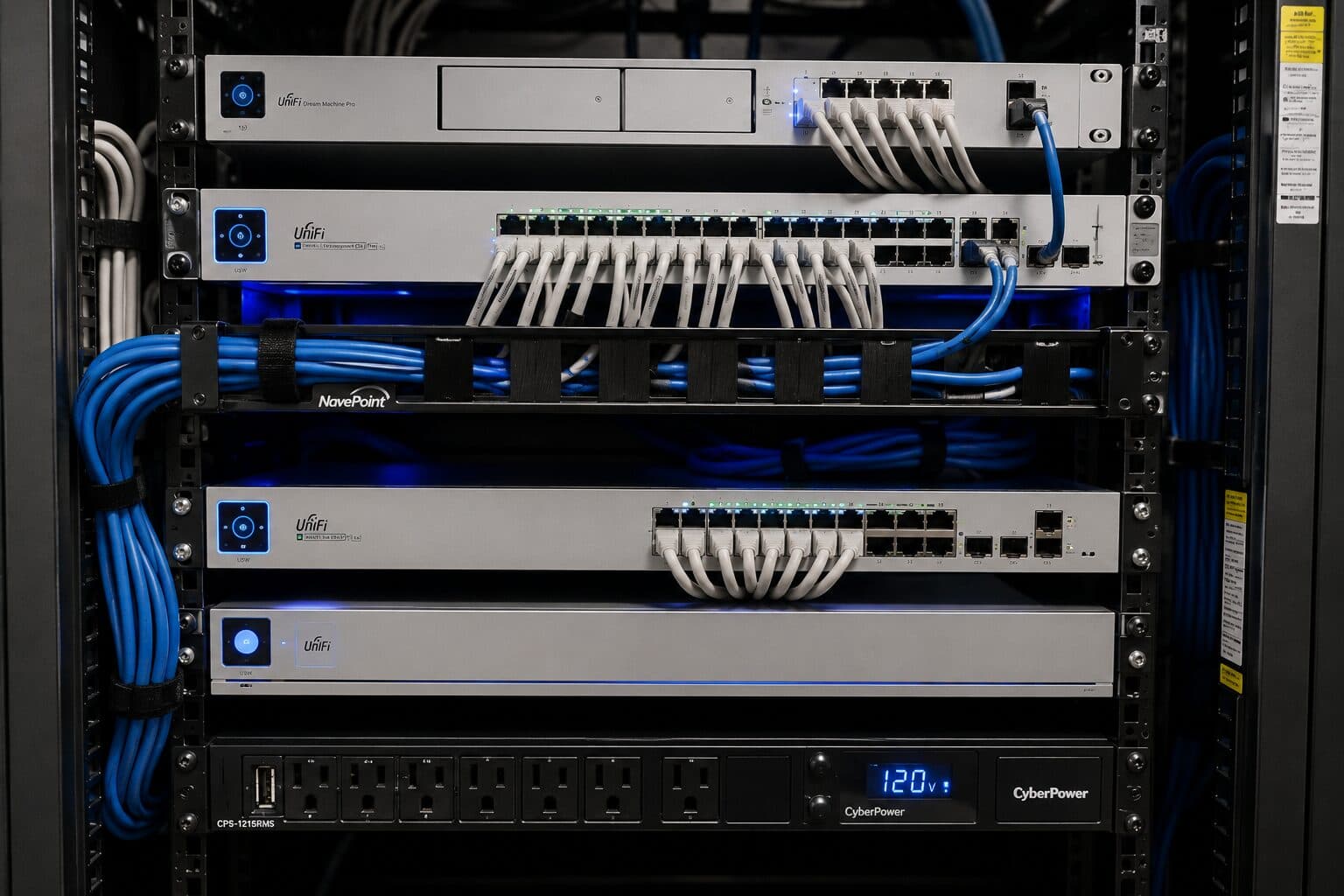
Why this page exists
This pairing exists because the region's older commercial stock consistently presents undersized, unventilated equipment closets, and high ambient temperatures make the ventilation question more consequential here than in cooler markets.
Equipment rooms in older buildings were sized for a phone system and a punch-down block. A modern requirement — patch panels, a switch, a camera recorder, an access-control panel, and a UPS — does not fit that closet comfortably, and forcing it in produces a hot, unserviceable position that shortens everything inside it.
Heat is the part that matters most here. Ambient temperatures are high for much of the year, and a sealed closet with no airflow path simply accumulates whatever the equipment dissipates. That is a slow failure rather than an obvious one, which is why it gets overlooked.
Sizing from a real device list
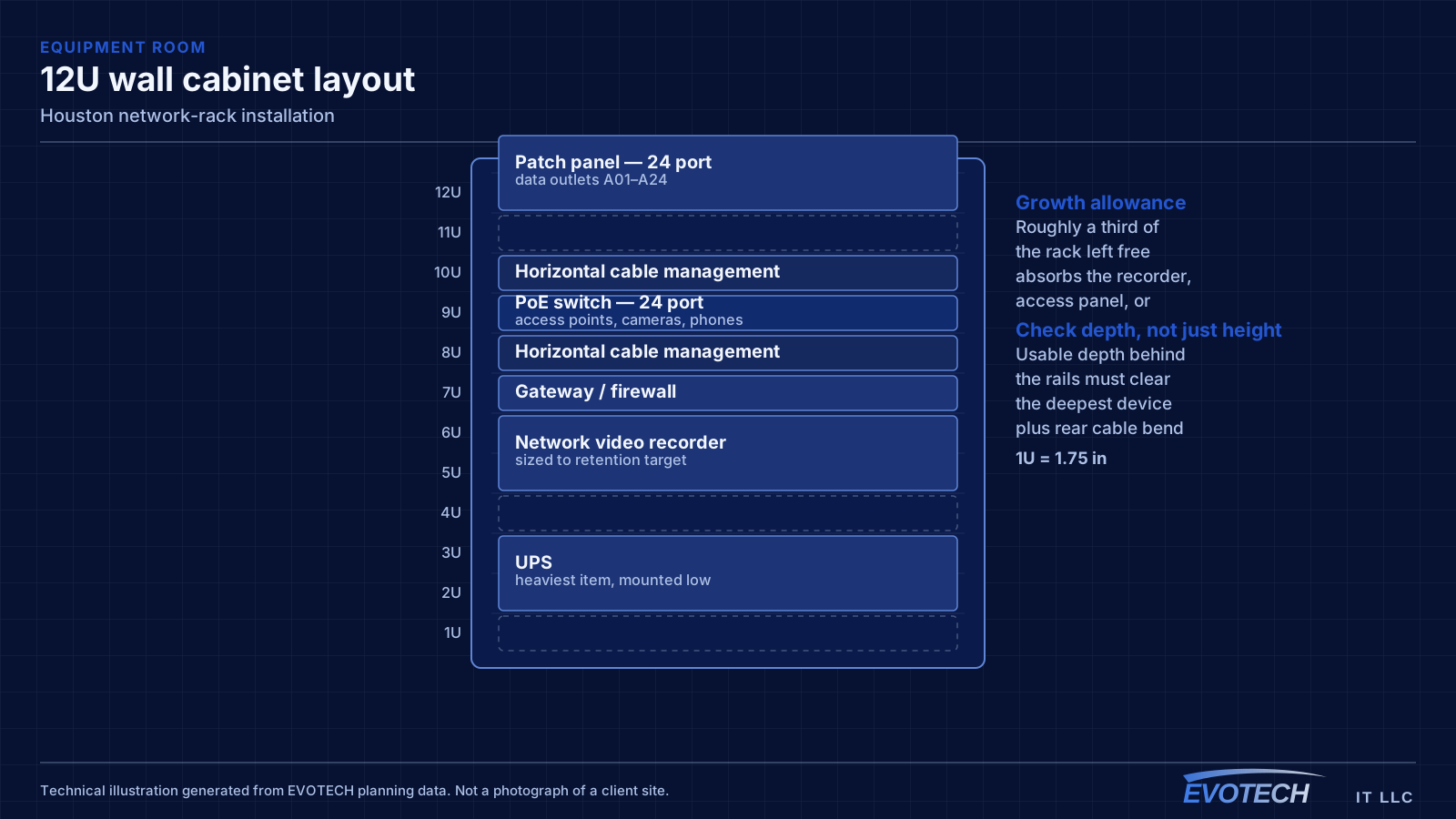
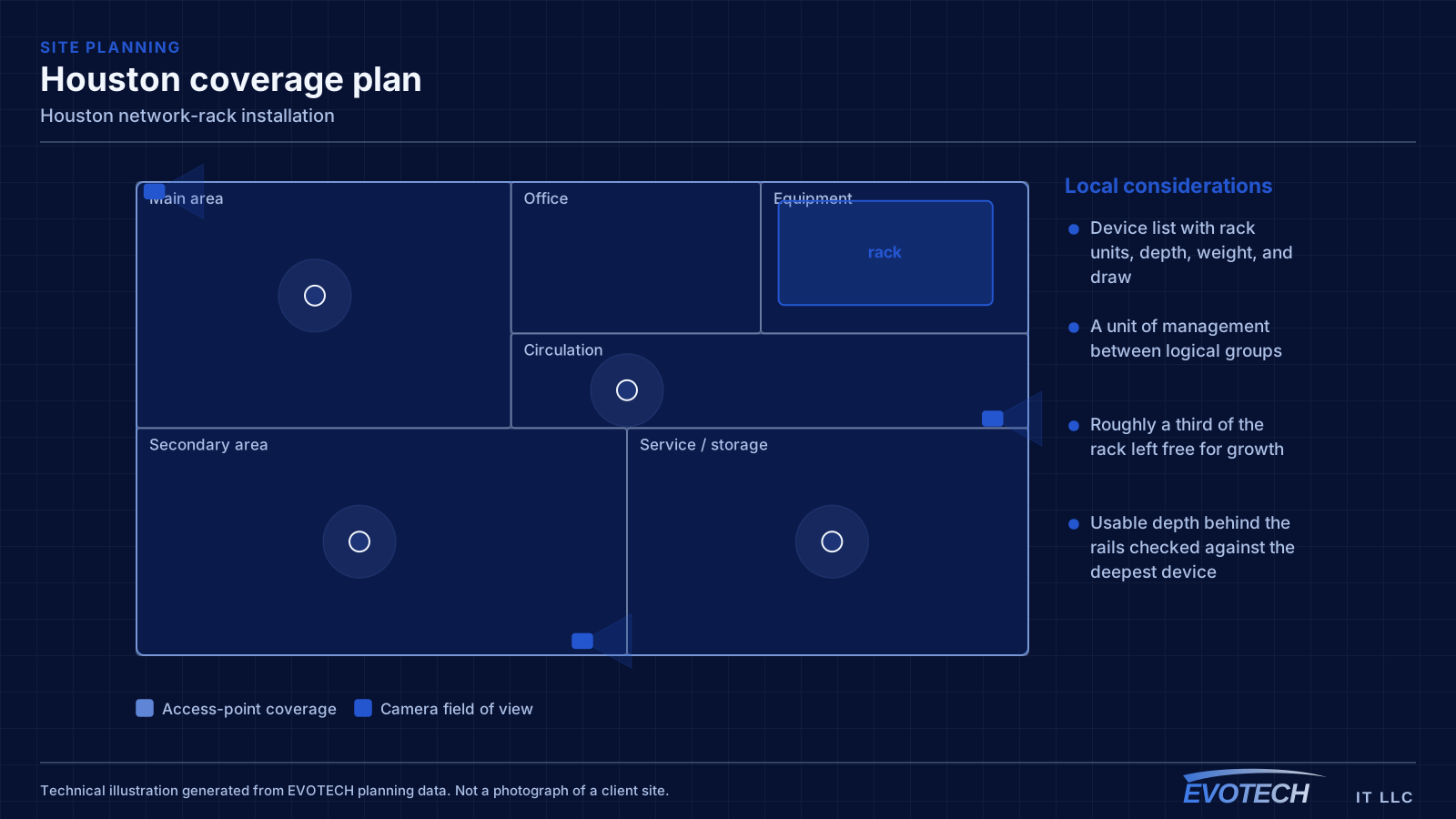
Sizing starts from an inventory with each device's rack units, depth, weight, and power draw. Add a unit of horizontal management between logical groups, add the patch panels, then add roughly a third for growth. The answer is usually a size or two above the first instinct.
Depth catches people more often than height. A shallow wall cabinet chosen to fit a corridor will not accept a deeper recorder or UPS once rear cable bend is allowed for, and that discovery normally happens after the cabinet is on the wall.
- Device list with rack units, depth, weight, and draw
- A unit of management between logical groups
- Roughly a third of the rack left free for growth
- Usable depth behind the rails checked against the deepest device
- Heavier items positioned low, with mounting into structure
Ventilation, power, and serviceability
An enclosed cabinet needs a genuine airflow path — vented door and top vent for passive convection, fans where the load justifies it — and the closet itself needs somewhere for that heat to go. A ventilated cabinet in a sealed closet only moves the problem a few centimetres.
Power means a dedicated circuit and a mounted PDU rather than daisy-chained consumer strips. Serviceability means clearance to work at the front and, where the rack allows, the rear — a rack that cannot be worked on turns every future change into an awkward job.
- Genuine airflow path for enclosed cabinets, and for the room itself
- Dedicated circuit and a mounted PDU
- UPS sized for the load, with its weight accounted for in mounting
- Working clearance at the front and, where possible, the rear
- Horizontal management rather than patch cords woven across the face
Building the rack and handing it over
Where existing cable is being brought into a new rack, re-terminating into new panels and dressing it properly is usually the larger part of the work. It is also what determines whether the rack stays tidy, because a rack built around an untidy existing bundle reverts within months.
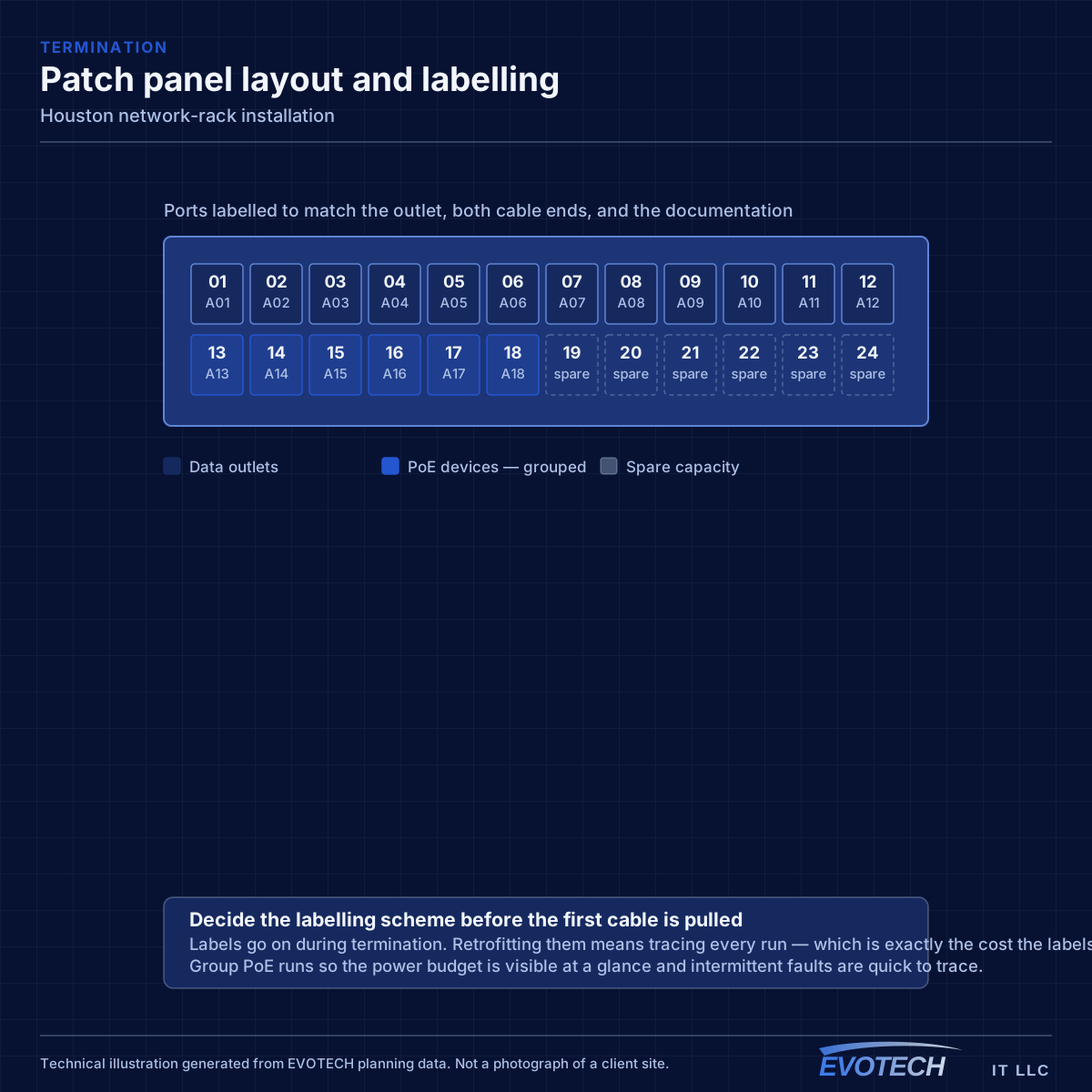
Handover is labels and documentation: panel and port labels applied consistently, a port-to-location map, and power and device labeling. That is what makes the next change cheap.
- Existing cable re-terminated into new panels where practical
- Cable dressed to management bars rather than bundled loosely
- Panels, ports, devices, and power all labeled consistently
- Temperature checked under load after installation
- Port-to-location map handed over with the rack layout
Popular services nearby
Frequently searched near this area — the pages people look for most.
Frequently asked questions
How much bigger than the current equipment should a rack be?
Roughly a third larger after management space and patch panels are counted. Racks only ever fill up, and the cost difference between sizes is small compared with replacing an undersized cabinet or watching equipment get stacked on top of it because there is nowhere to mount it.
Does a network cabinet really need ventilation in an air-conditioned building?
Yes, because the cabinet is its own microclimate. Equipment dissipates heat into an enclosed volume, and without a path out that volume simply gets warmer than the room around it. In this region the room itself is often warm to start with, particularly where the closet sits against unconditioned space.
What is the most common sizing mistake?
Depth. Height and width get checked; usable depth behind the mounting rails — allowing for cable bend at the rear — frequently does not. A cabinet that fits the corridor but not the recorder is a problem discovered after it is already mounted on the wall.