

Why this page exists
PoE camera installation in Pearland is scoped around the same physical realities EVOTECH weighs everywhere — but read through Pearland's specific conditions: newer residential subdivisions with wide floor plans and builder-installed structured cable of variable quality. This page pairs what the service actually involves with what the Pearland market changes about it.
A PoE camera takes its power from the same Ethernet cable that carries its video, which removes the need for a local outlet at every mounting position. That is the entire practical appeal: one run per camera, no electrician at each soffit, and centralised power that can sit behind a UPS so the cameras stay up during a short outage.
What poe camera installation usually involves
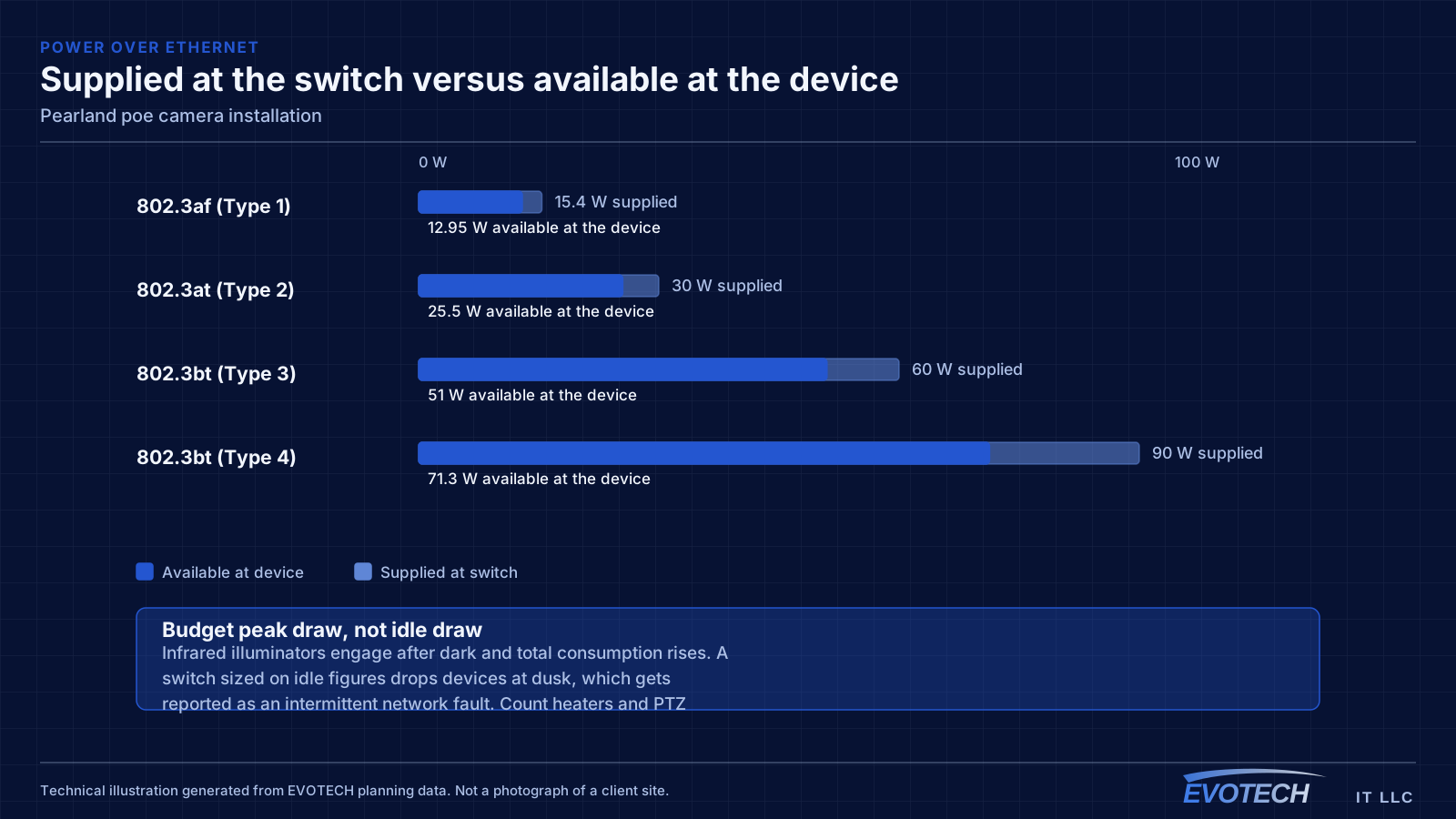
The characteristic PoE problem is a camera that reboots under specific conditions — usually at night when its infrared illuminator switches on and its draw rises. If the switch is near its budget, the additional load pushes it over and devices drop. Because it happens after dark, it often gets reported as an intermittent network fault.
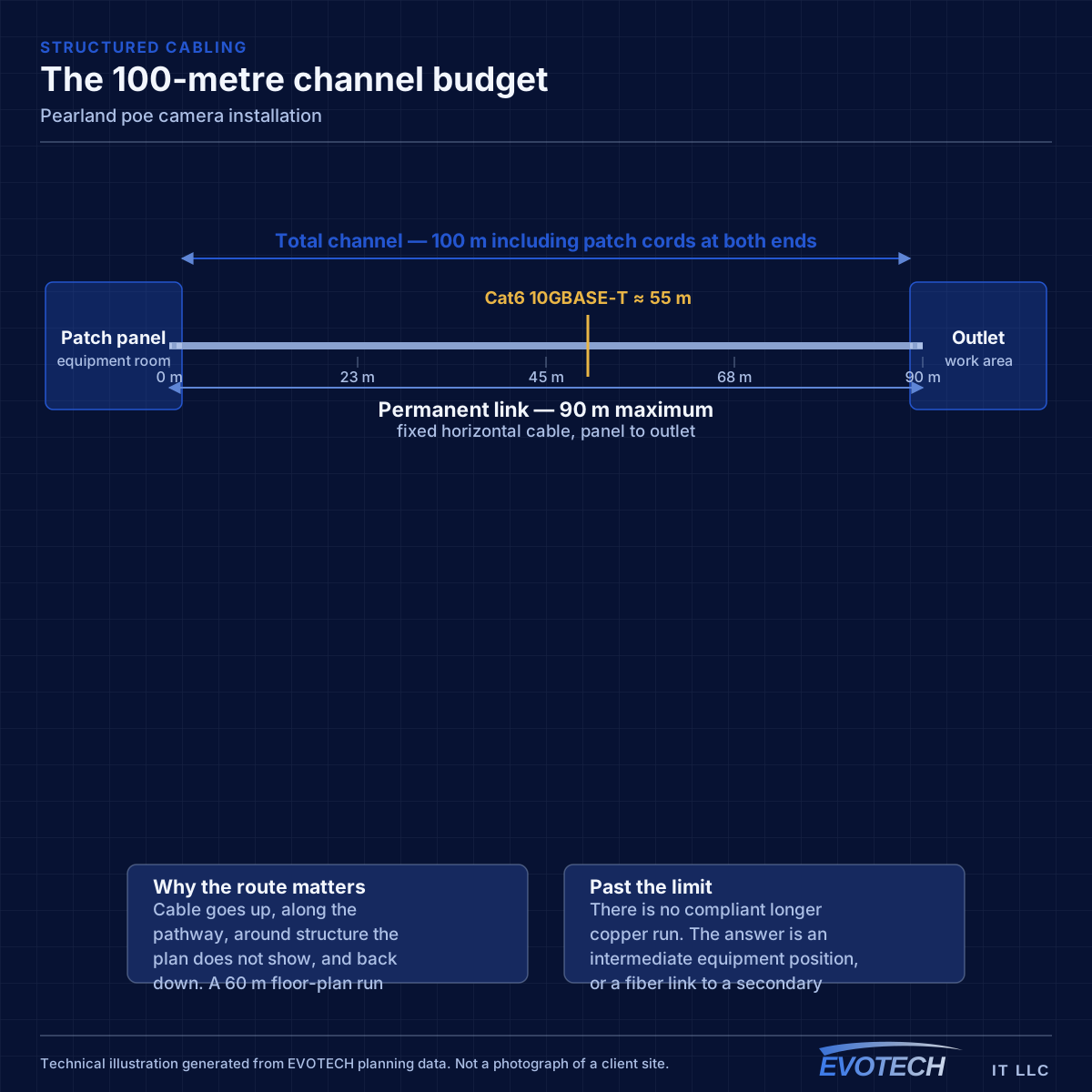
The second problem is distance. PoE inherits the same 100-metre channel limit as any Ethernet run, and voltage drop over long runs on thin conductors reduces the power actually reaching the camera. A run that works at 60 metres may be marginal at 95 with a high-draw device on the end.
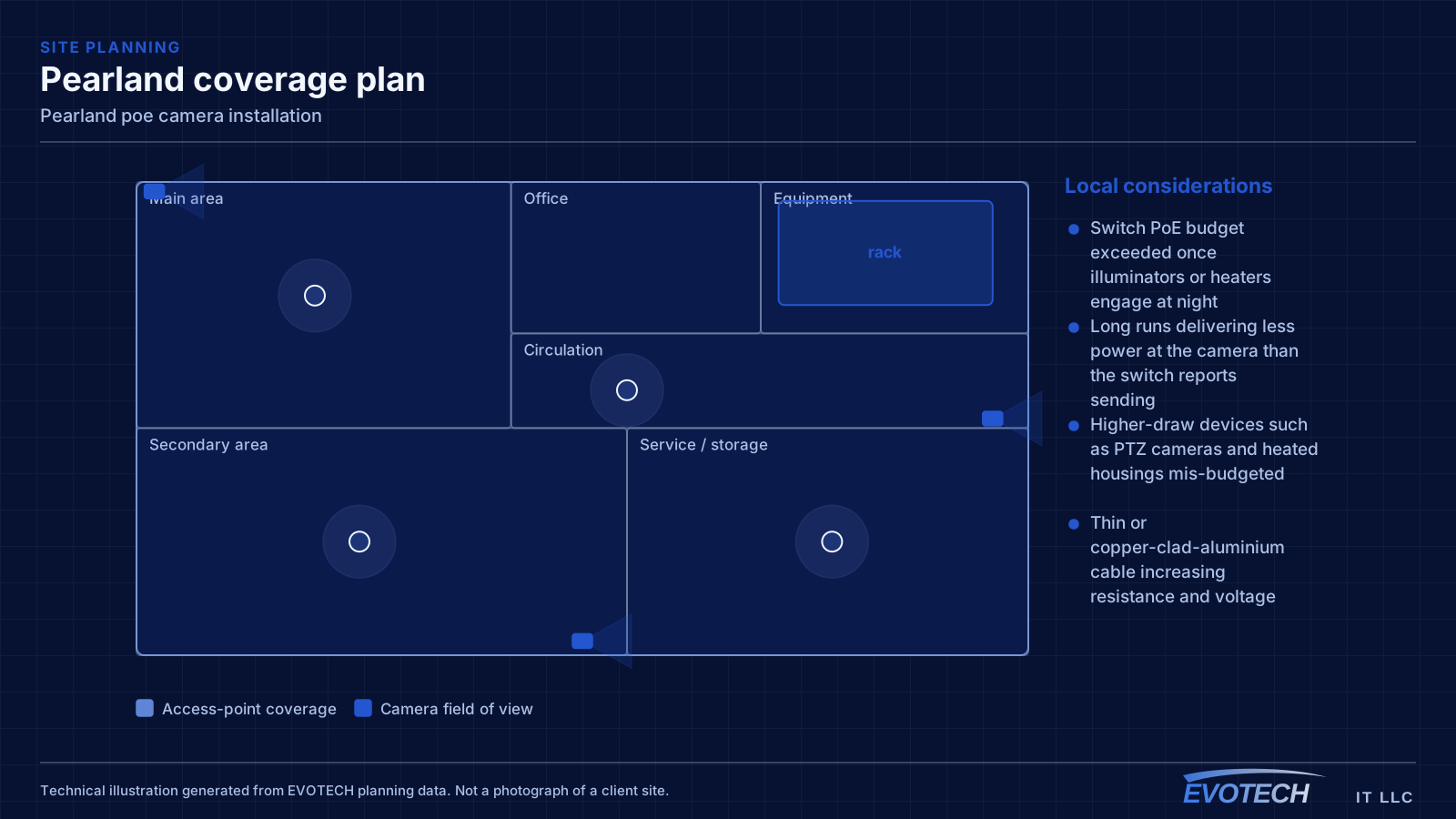
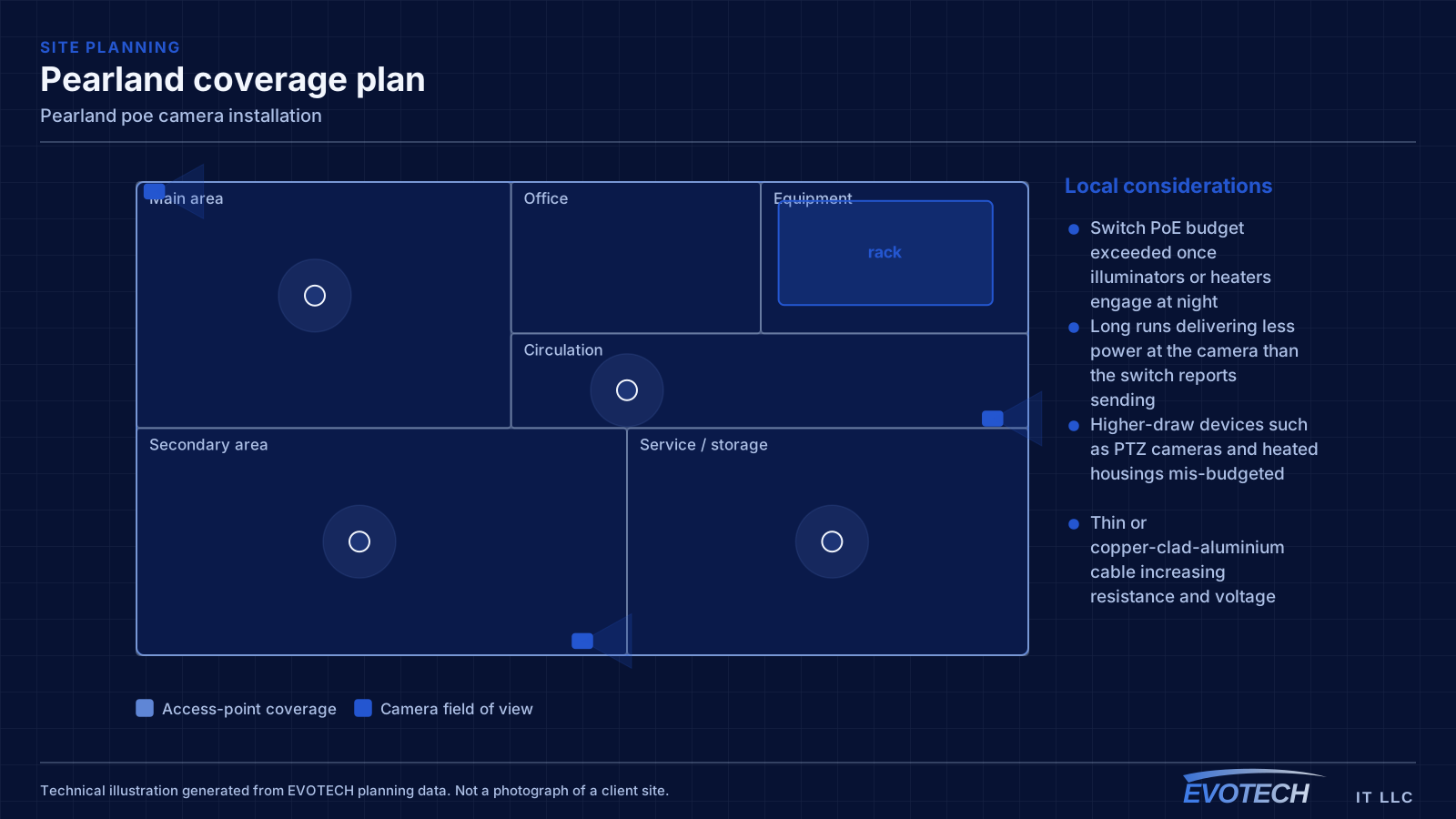
- Switch PoE budget exceeded once illuminators or heaters engage at night
- Long runs delivering less power at the camera than the switch reports sending
- Higher-draw devices such as PTZ cameras and heated housings mis-budgeted
- Thin or copper-clad-aluminium cable increasing resistance and voltage drop
- Dense PoE bundles heating and raising insertion loss
- No UPS on the switch, so cameras drop with any brief power interruption
Pearland property conditions that change the plan
Residential construction is recent enough that attic access is generally good and builder cable is often present. As elsewhere in the newer suburbs, that cable typically terminates at wall outlets rather than ceiling positions, so the work involves testing what exists and adding what is missing.
Commercial space is newer too, which helps — suspended grid and reasonable pathway are the norm. The complications are behavioural rather than structural: medical suites have controlled areas and clinical schedules, and restaurants have kitchen conditions and service hours.
Residential projects here scope around the same three questions as elsewhere in the newer suburbs: what exists and does it test clean, where do the access points need to be, and where should the equipment live so it is not sitting in an unconditioned garage.
- Recent residential construction with good attic access
- Builder cable present but usually terminating at wall outlets only
- Newer commercial with suspended grid and usable pathway
- Medical suites with controlled areas and clinical scheduling
- Food service with kitchen environment and narrow work windows
- Existing residential cable tested before being designed around
- Ceiling access-point positions added where builders did not provide them
- Controlled-area and camera boundaries agreed for medical suites
- Payment-system segmentation established at installation for food service
- Equipment positions chosen for temperature, not just cable convenience
Getting poe camera installation done in Pearland
The standards define escalating power classes. Type 1 (802.3af) supplies up to about 15.4 W at the switch with roughly 12.95 W available at the device. Type 2 (802.3at) raises that to about 30 W supplied and 25.5 W available. Type 3 and Type 4 under 802.3bt reach roughly 60 W and 90 W supplied, with about 51 W and 71 W available respectively. The gap between supplied and available is the loss in the cable, and it grows with length and with thinner conductors.
The two commercial environments have opposite scheduling profiles. Medical work happens around clinical sessions, typically early, late, or on non-clinical days. Food service happens outside service hours, with each session ending with the site operational for the next opening.
- Medical work scheduled around clinical sessions
- Food-service work outside service hours, site operational at each session's end
- Residential attic work early during summer months
- Dust containment in clinical and occupied residential spaces
- Exterior equipment rated for regional humidity and rainfall
Frequently asked questions
Does EVOTECH have an office in Pearland?
No. This is a service-area page: EVOTECH serves Pearland without claiming a physical office there. The wording stays as coverage, not a location claim.
Why do cameras reboot at night but work fine during the day?
Almost always PoE budget. Infrared illuminators engage after dark and the total draw rises, pushing the switch past its budget. It presents as intermittent camera dropouts and gets misdiagnosed as a network fault. The fix is a switch with sufficient budget and headroom, calculated from peak draw rather than idle.
Is builder-installed cable in newer homes here usable?
Frequently, after testing. The runs are often sound and can be re-terminated and patched into a proper switch. What they rarely include is ceiling positions for access points, which is usually the addition that actually solves the coverage complaint.