

Why this page exists
PoE camera installation in Spring is scoped around the same physical realities EVOTECH weighs everywhere — but read through Spring's specific conditions: retail and food-service commercial base where payment-system separation is a standing requirement. This page pairs what the service actually involves with what the Spring market changes about it.
A PoE camera takes its power from the same Ethernet cable that carries its video, which removes the need for a local outlet at every mounting position. That is the entire practical appeal: one run per camera, no electrician at each soffit, and centralised power that can sit behind a UPS so the cameras stay up during a short outage.
What poe camera installation usually involves
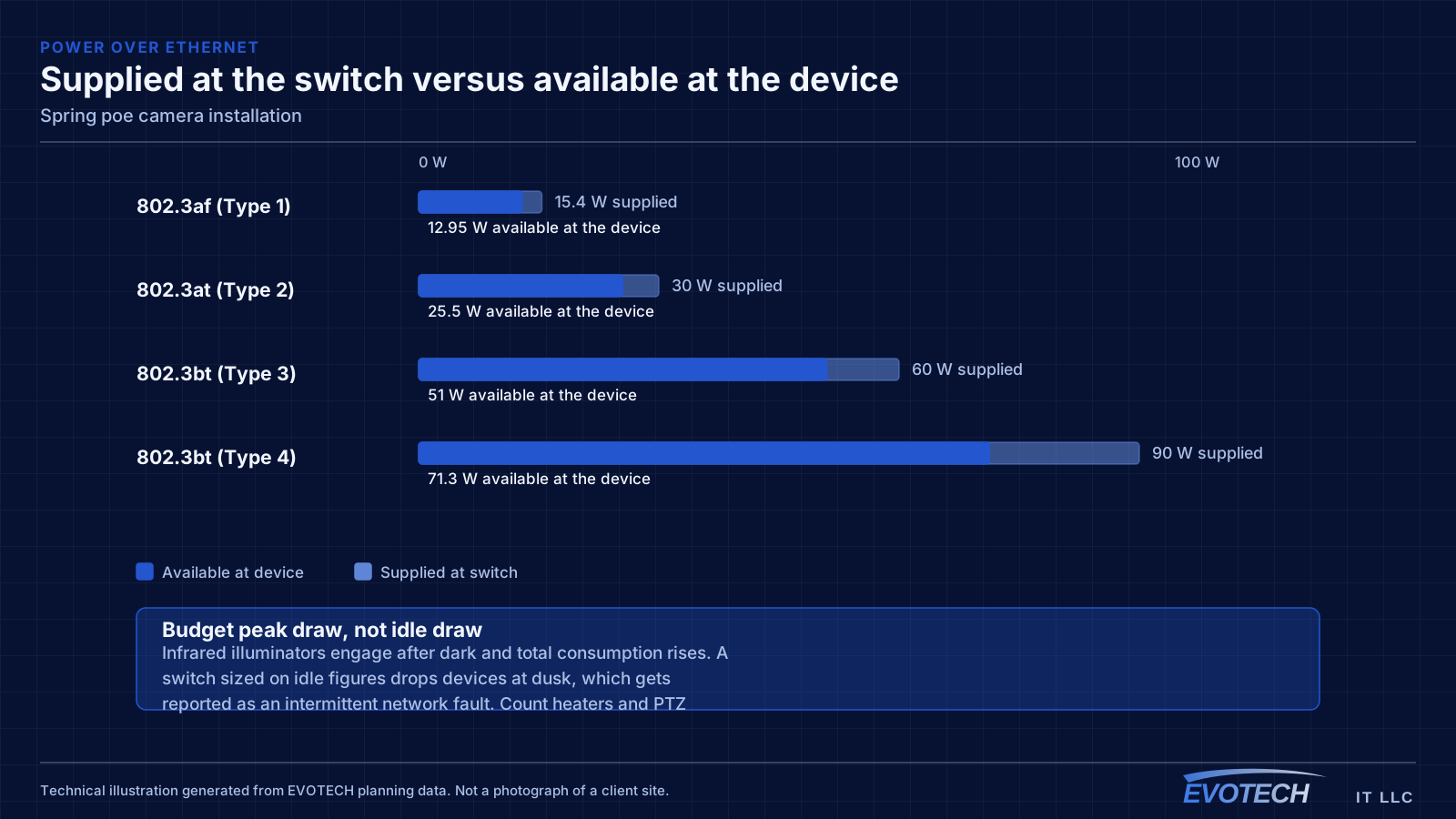
The characteristic PoE problem is a camera that reboots under specific conditions — usually at night when its infrared illuminator switches on and its draw rises. If the switch is near its budget, the additional load pushes it over and devices drop. Because it happens after dark, it often gets reported as an intermittent network fault.
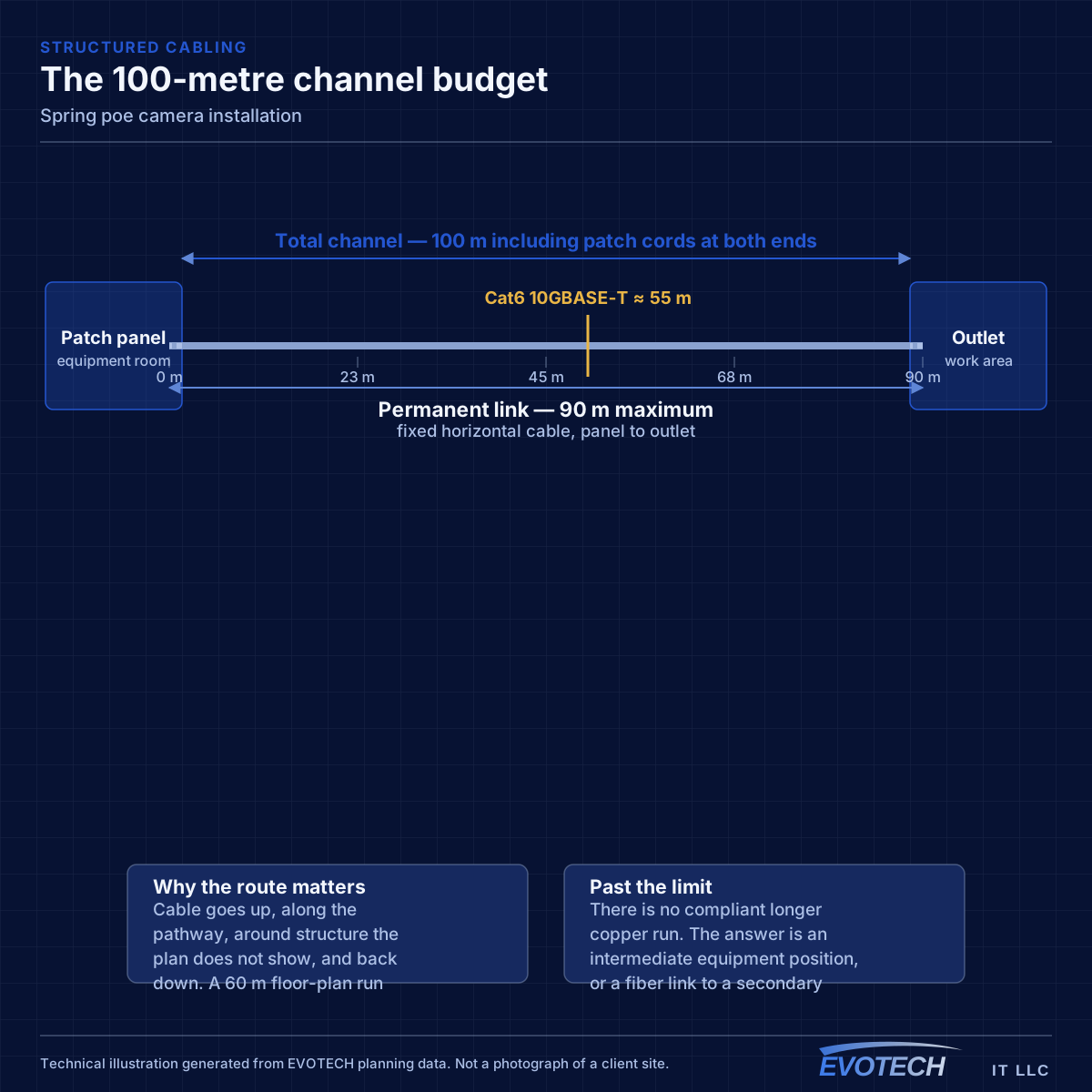
The second problem is distance. PoE inherits the same 100-metre channel limit as any Ethernet run, and voltage drop over long runs on thin conductors reduces the power actually reaching the camera. A run that works at 60 metres may be marginal at 95 with a high-draw device on the end.
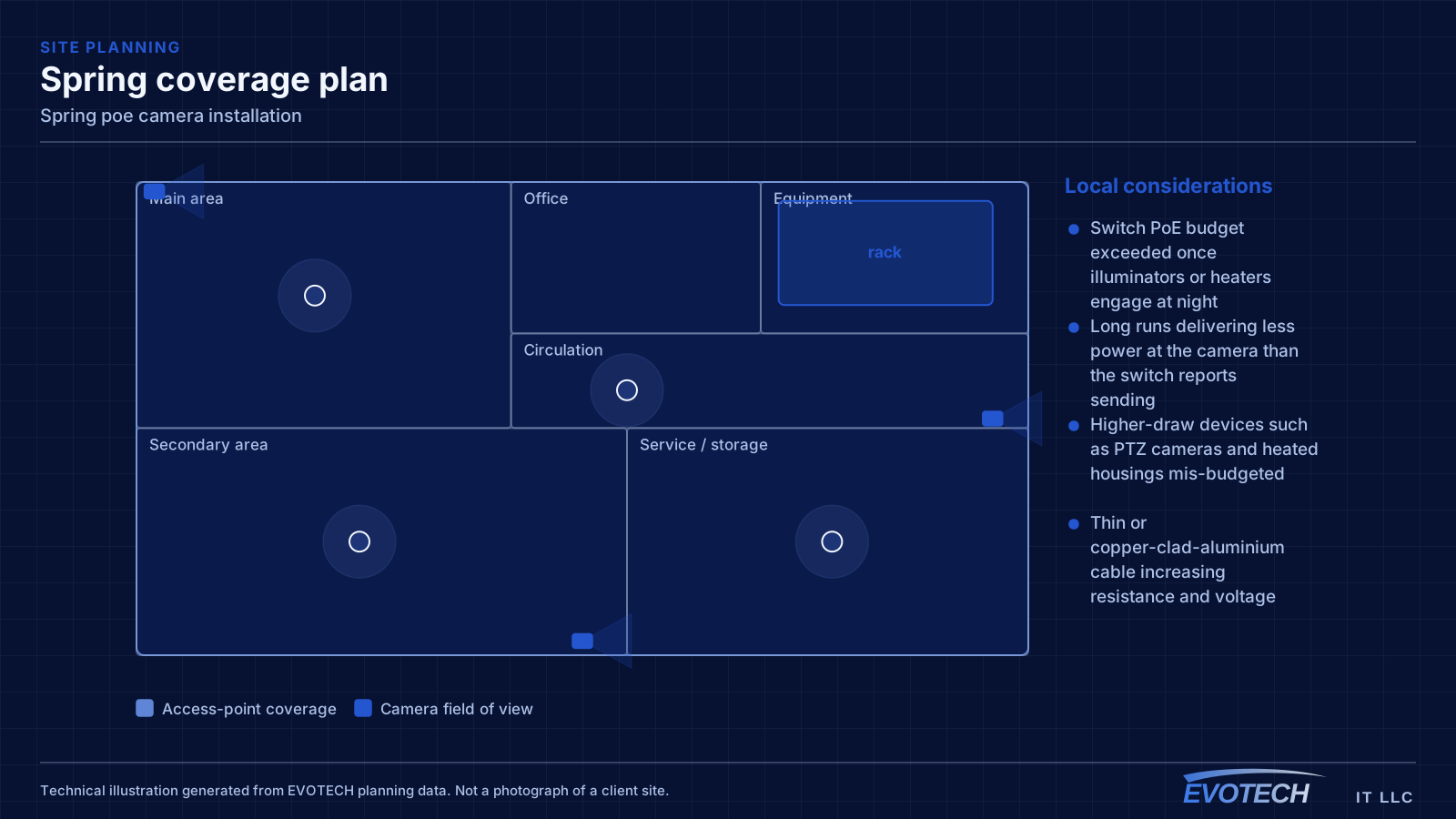
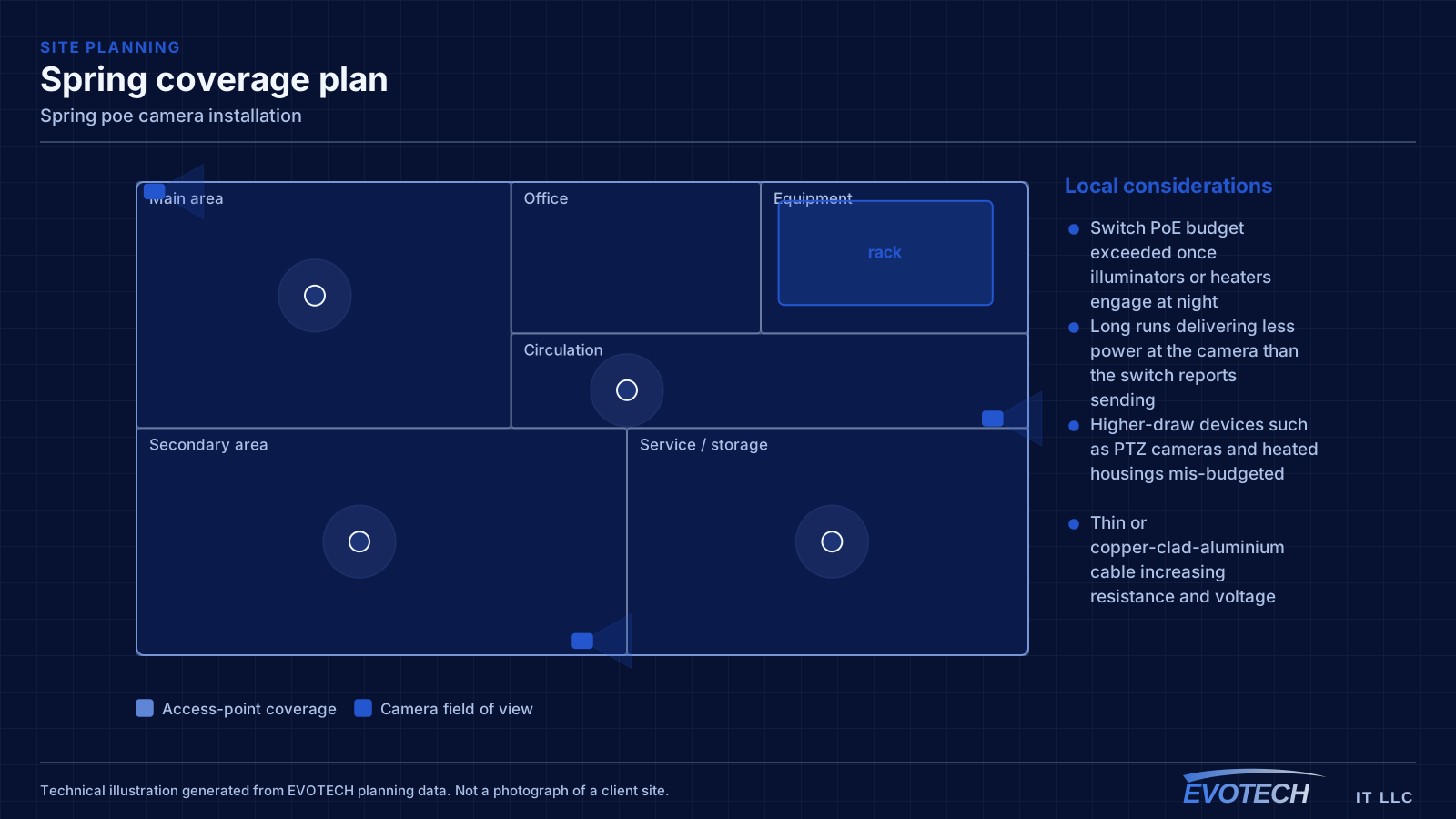
- Switch PoE budget exceeded once illuminators or heaters engage at night
- Long runs delivering less power at the camera than the switch reports sending
- Higher-draw devices such as PTZ cameras and heated housings mis-budgeted
- Thin or copper-clad-aluminium cable increasing resistance and voltage drop
- Dense PoE bundles heating and raising insertion loss
- No UPS on the switch, so cameras drop with any brief power interruption
Spring property conditions that change the plan
Retail and restaurant units in this area span several construction types. A converted space may have open structure overhead and easy routing; a mall unit may be hard lid throughout; a newer pad site usually has suspended grid. The scope difference between these is significant even when the floor area and outlet count are identical.
What stays constant across all of them is the network requirement: separate segments for payment, operations, and guest, with guest isolated and rate-limited. That is a configuration matter rather than a construction one, and it applies regardless of what the ceiling looks like.
For commercial work: what the ceiling actually is across the whole unit, where the equipment can live so it stays cool and dry, how the networks will be separated, and what the available working window is.
- Ceiling construction varying widely between adjacent units
- Payment, operations, and guest separation required consistently
- Kitchen environments constraining equipment placement in food service
- Storefront glazing affecting entrance camera framing
- Landlord rules applying in leased and centre units
- Ceiling construction confirmed across the whole unit, not just the front
- Equipment position away from kitchen heat and moisture
- Network segmentation agreed before installation
- Entrance camera positioned to avoid daylight backlighting
- Working window and landlord permissions established
Getting poe camera installation done in Spring
The standards define escalating power classes. Type 1 (802.3af) supplies up to about 15.4 W at the switch with roughly 12.95 W available at the device. Type 2 (802.3at) raises that to about 30 W supplied and 25.5 W available. Type 3 and Type 4 under 802.3bt reach roughly 60 W and 90 W supplied, with about 51 W and 71 W available respectively. The gap between supplied and available is the loss in the cable, and it grows with length and with thinner conductors.
Food-service work happens outside service hours, with each session ending with the site operational for the next opening. Retail work can often proceed during trading with containment and barriered ladder areas, though anything over the sales floor or noisy is better placed before opening.
- Food-service work outside service hours
- Retail work during trading with containment where feasible
- Merchandise and surface protection throughout
- Sessions ending with the site fully operational
- Residential attic work scheduled early during summer
Frequently asked questions
Does EVOTECH have an office in Spring?
No. This is a service-area page: EVOTECH serves Spring without claiming a physical office there. The wording stays as coverage, not a location claim.
Why do cameras reboot at night but work fine during the day?
Almost always PoE budget. Infrared illuminators engage after dark and the total draw rises, pushing the switch past its budget. It presents as intermittent camera dropouts and gets misdiagnosed as a network fault. The fix is a switch with sufficient budget and headroom, calculated from peak draw rather than idle.
Why does payment-system separation come up on every retail and restaurant project?
Because it addresses both a security and an operational risk. A payment terminal sharing a flat network with guest devices is reachable from those devices, and guest usage can also saturate the connection payment processing depends on. Separating them at installation is straightforward; doing it later in a running business is not.