

Why this page exists
Residential Wi-Fi in Pearland is scoped around the same physical realities EVOTECH weighs everywhere — but read through Pearland's specific conditions: newer residential subdivisions with wide floor plans and builder-installed structured cable of variable quality. This page pairs what the service actually involves with what the Pearland market changes about it.
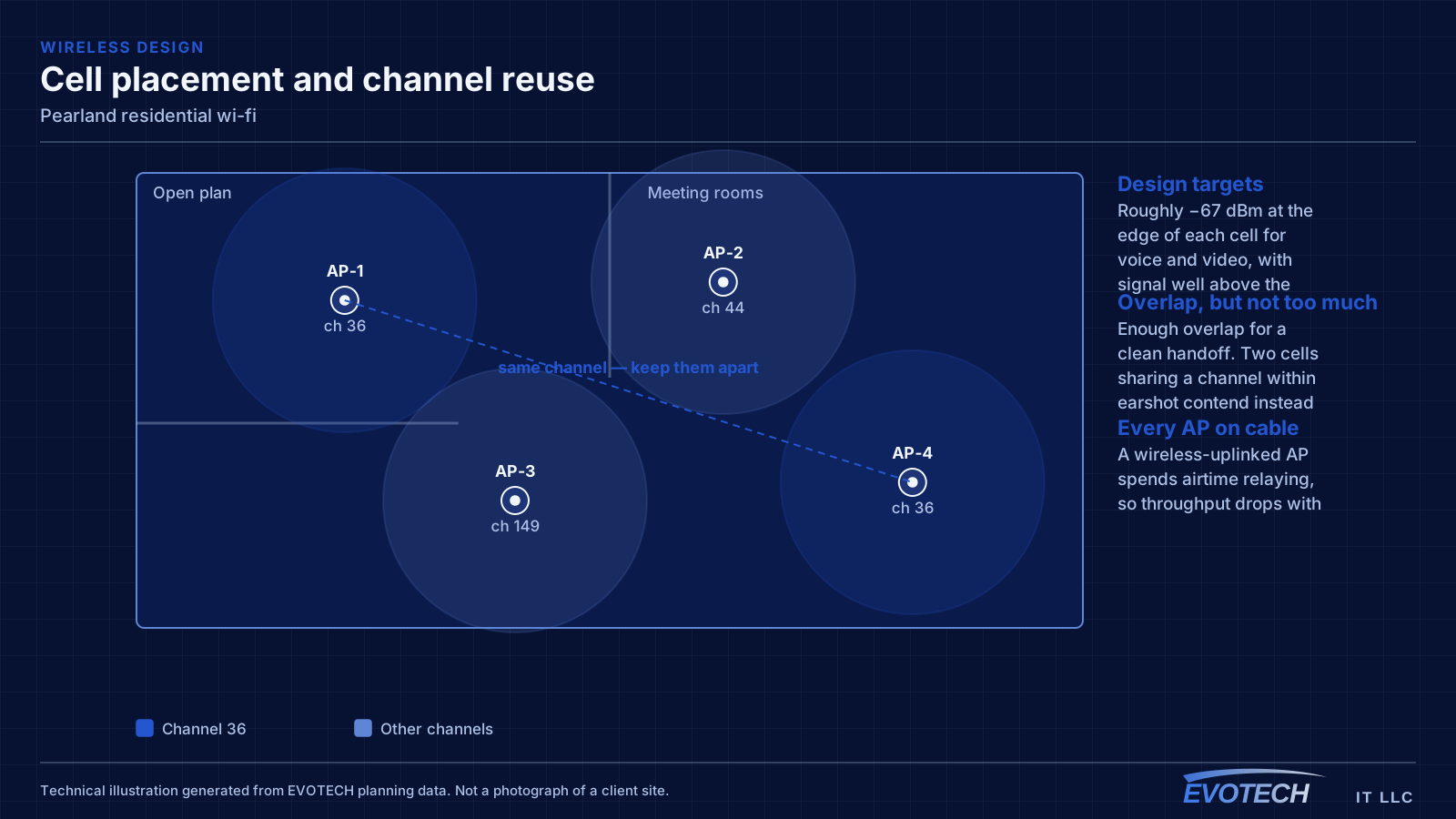
A single router placed wherever the internet service happens to enter the house is the root of most residential wireless complaints. That position is frequently a corner of the garage or a front closet, which means a large share of the signal is heading outdoors. Coverage improves dramatically when access points are placed centrally in the areas people use, and fed by cable.
What residential wi-fi usually involves
Range extenders are the most common cause of a network that looks fine and behaves badly. An extender receives and retransmits on the same radio, so throughput drops with each hop, and devices often stay connected to the extender long after they have walked back within range of the main router.
The second cause is construction. Tile, masonry, brick veneer, foil-backed insulation, mirrors, and metal-framed glass all attenuate signal noticeably. A floor plan will not tell you which wall is the problem — walking the house with a measurement tool will.
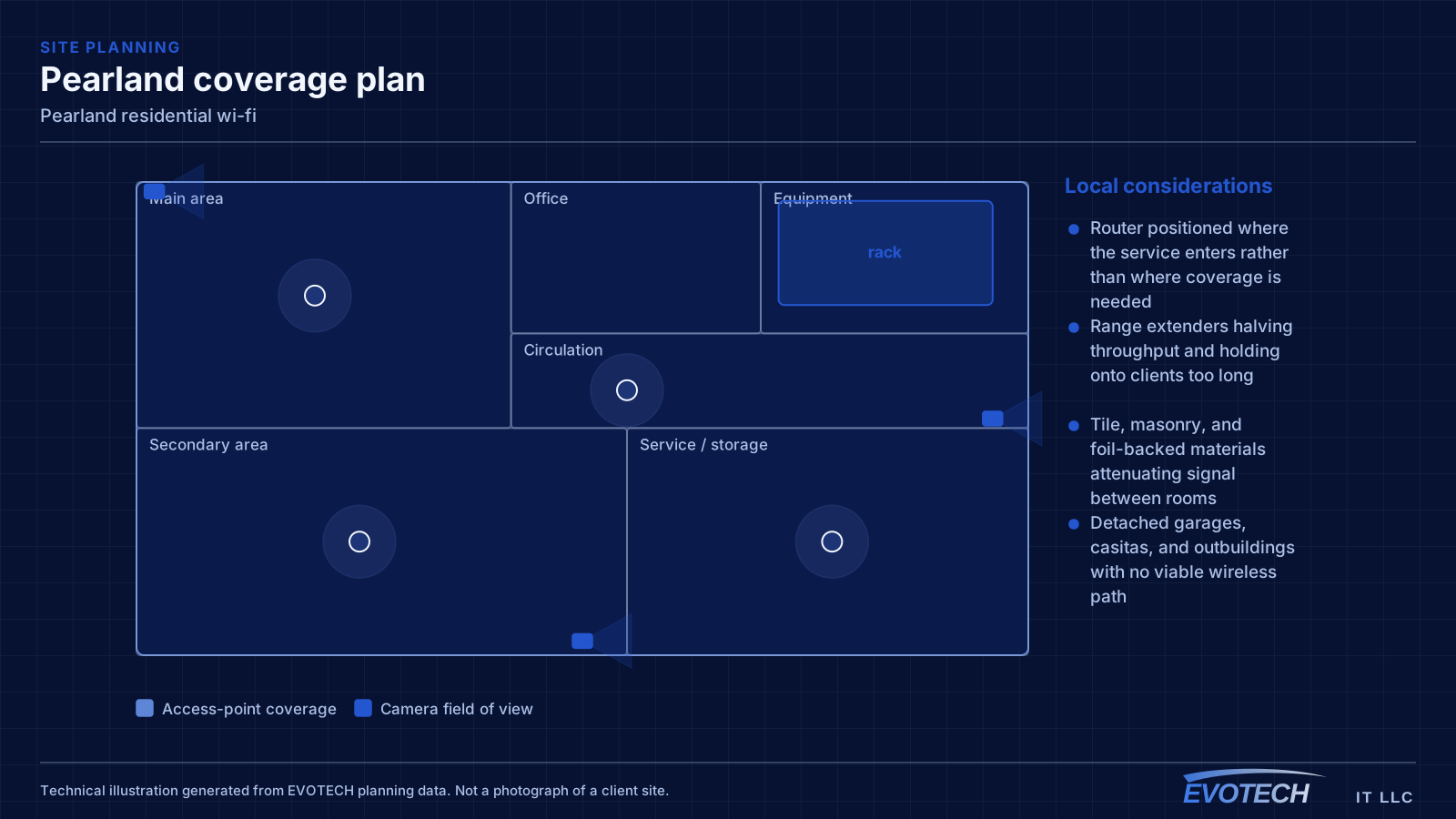
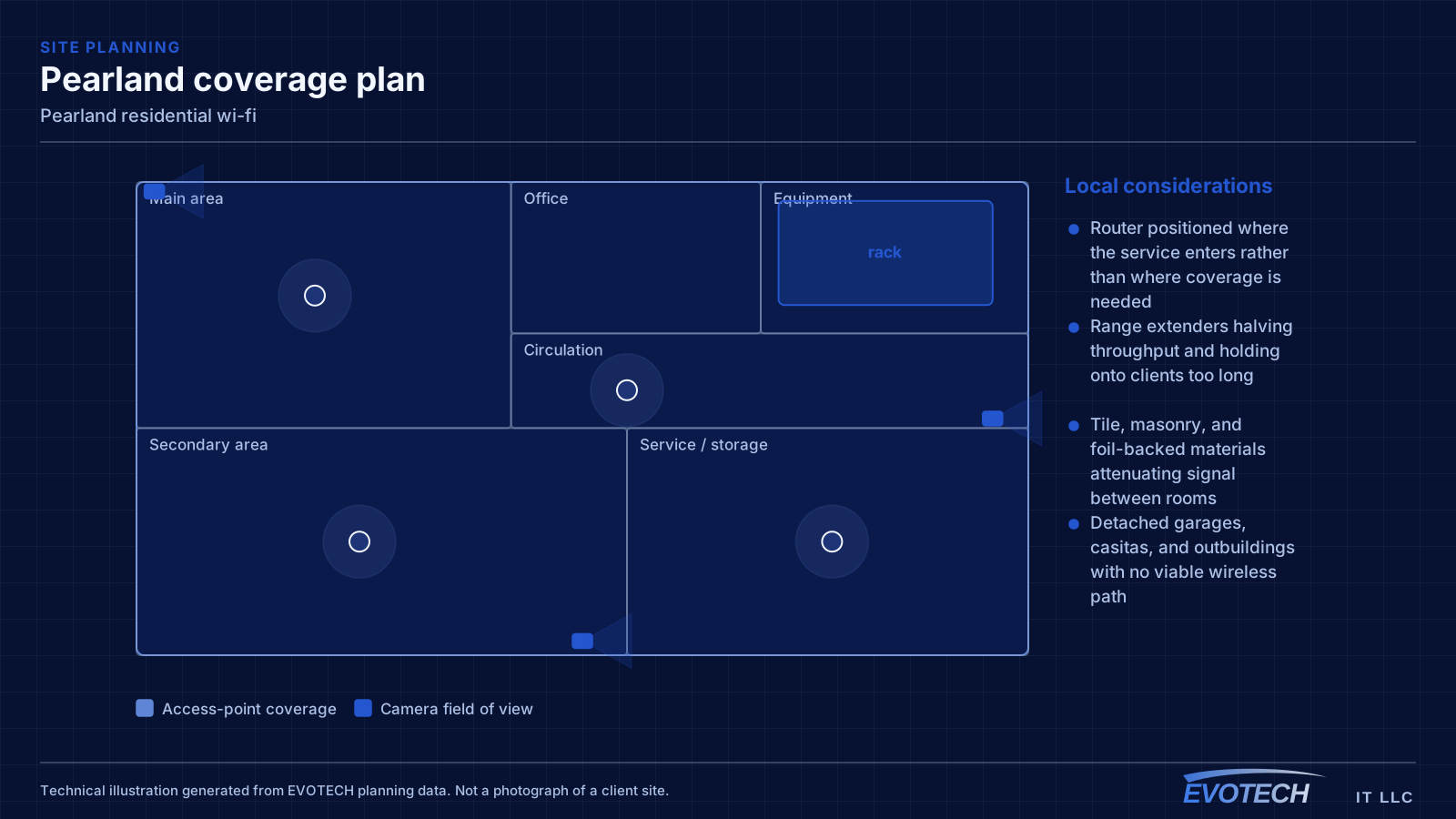
- Router positioned where the service enters rather than where coverage is needed
- Range extenders halving throughput and holding onto clients too long
- Tile, masonry, and foil-backed materials attenuating signal between rooms
- Detached garages, casitas, and outbuildings with no viable wireless path
- Equipment stacked in a closed cabinet with no ventilation
- Neighbouring networks congesting 2.4 GHz in dense subdivisions
Pearland property conditions that change the plan
Residential construction is recent enough that attic access is generally good and builder cable is often present. As elsewhere in the newer suburbs, that cable typically terminates at wall outlets rather than ceiling positions, so the work involves testing what exists and adding what is missing.
Commercial space is newer too, which helps — suspended grid and reasonable pathway are the norm. The complications are behavioural rather than structural: medical suites have controlled areas and clinical schedules, and restaurants have kitchen conditions and service hours.
Residential projects here scope around the same three questions as elsewhere in the newer suburbs: what exists and does it test clean, where do the access points need to be, and where should the equipment live so it is not sitting in an unconditioned garage.
- Recent residential construction with good attic access
- Builder cable present but usually terminating at wall outlets only
- Newer commercial with suspended grid and usable pathway
- Medical suites with controlled areas and clinical scheduling
- Food service with kitchen environment and narrow work windows
- Existing residential cable tested before being designed around
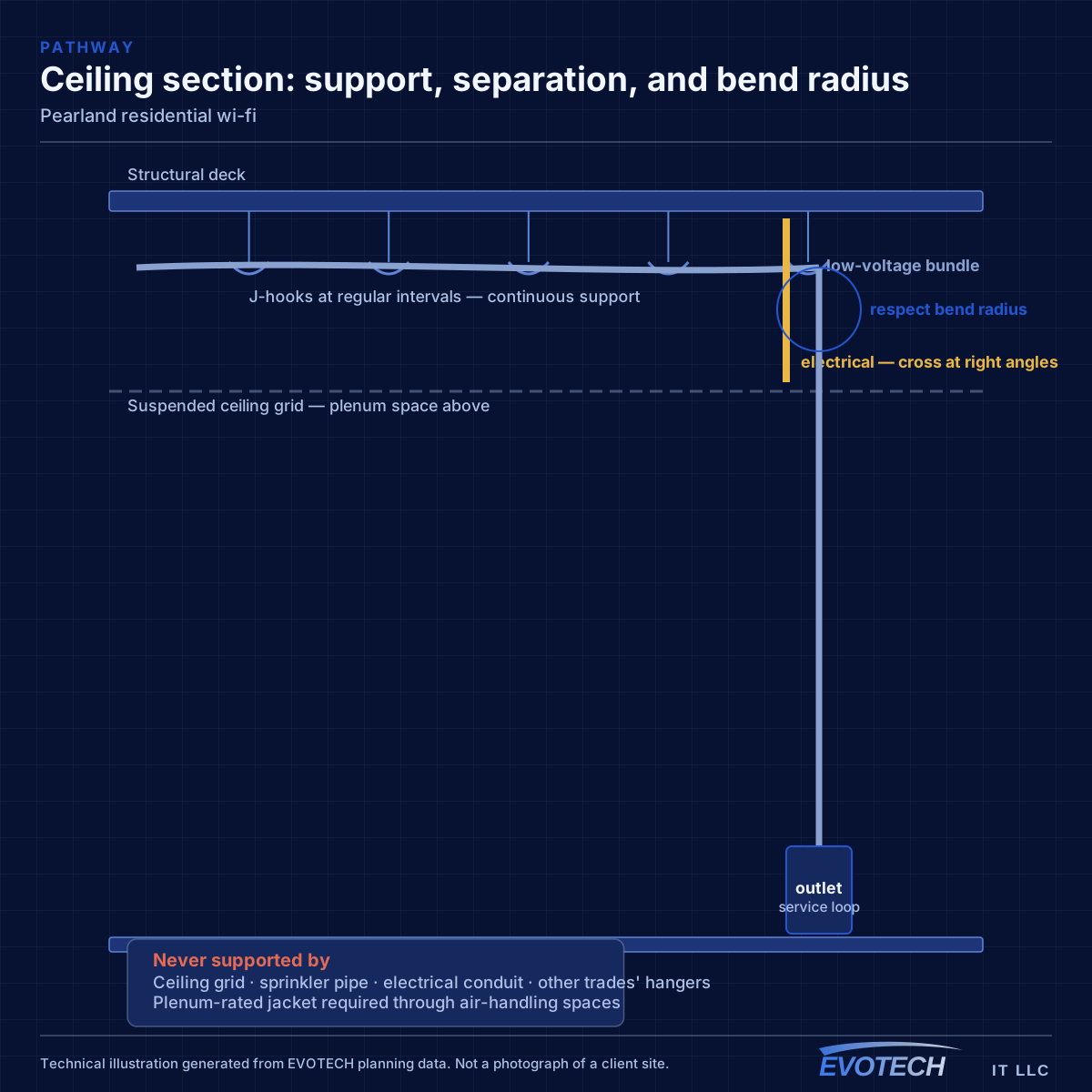
- Ceiling access-point positions added where builders did not provide them
- Controlled-area and camera boundaries agreed for medical suites
- Payment-system segmentation established at installation for food service
- Equipment positions chosen for temperature, not just cable convenience
Getting residential wi-fi done in Pearland
Signal passes through a floor with significant loss, which is why a downstairs router rarely serves upstairs bedrooms properly. The reliable arrangement in a two-storey home is one access point per floor, positioned centrally in the used areas rather than at the perimeter, with the two connected by cable.
The two commercial environments have opposite scheduling profiles. Medical work happens around clinical sessions, typically early, late, or on non-clinical days. Food service happens outside service hours, with each session ending with the site operational for the next opening.
- Medical work scheduled around clinical sessions
- Food-service work outside service hours, site operational at each session's end
- Residential attic work early during summer months
- Dust containment in clinical and occupied residential spaces
- Exterior equipment rated for regional humidity and rainfall
Frequently asked questions
Does EVOTECH have an office in Pearland?
No. This is a service-area page: EVOTECH serves Pearland without claiming a physical office there. The wording stays as coverage, not a location claim.
Why is upstairs Wi-Fi bad when the router is right below?
Signal loses a meaningful amount of strength passing through a floor, and the router's pattern is not aimed upward. Turning the power up mostly increases interference. The dependable arrangement is a second access point upstairs, placed centrally and connected by cable to the equipment position downstairs.
Is builder-installed cable in newer homes here usable?
Frequently, after testing. The runs are often sound and can be re-terminated and patched into a proper switch. What they rarely include is ceiling positions for access points, which is usually the addition that actually solves the coverage complaint.