
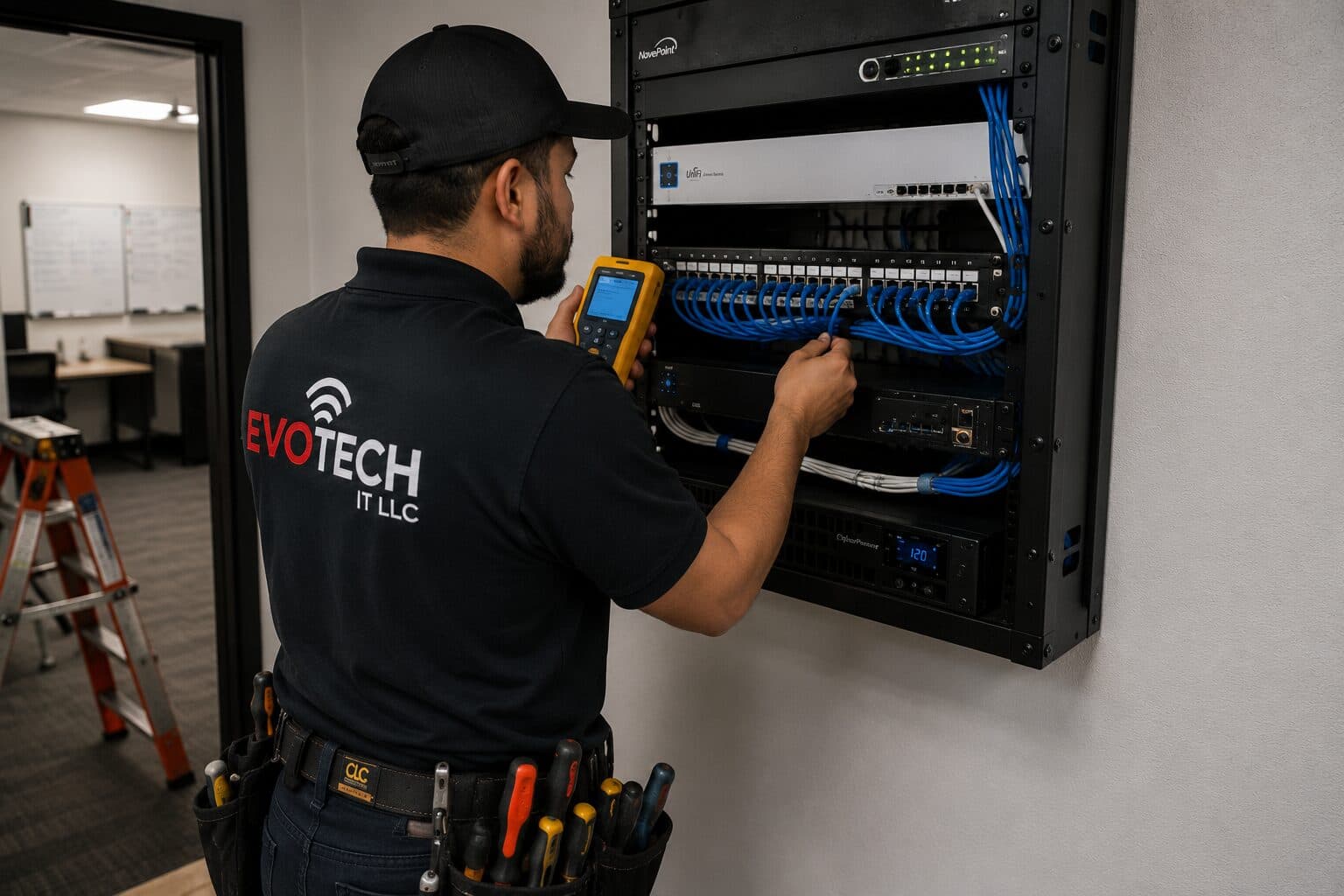
Why this page exists
Network troubleshooting in Fulshear is scoped around the same physical realities EVOTECH weighs everywhere — but read through Fulshear's specific conditions: predominantly recent residential construction, so prewire timing rather than retrofit access is the usual constraint. This page pairs what the service actually involves with what the Fulshear market changes about it.
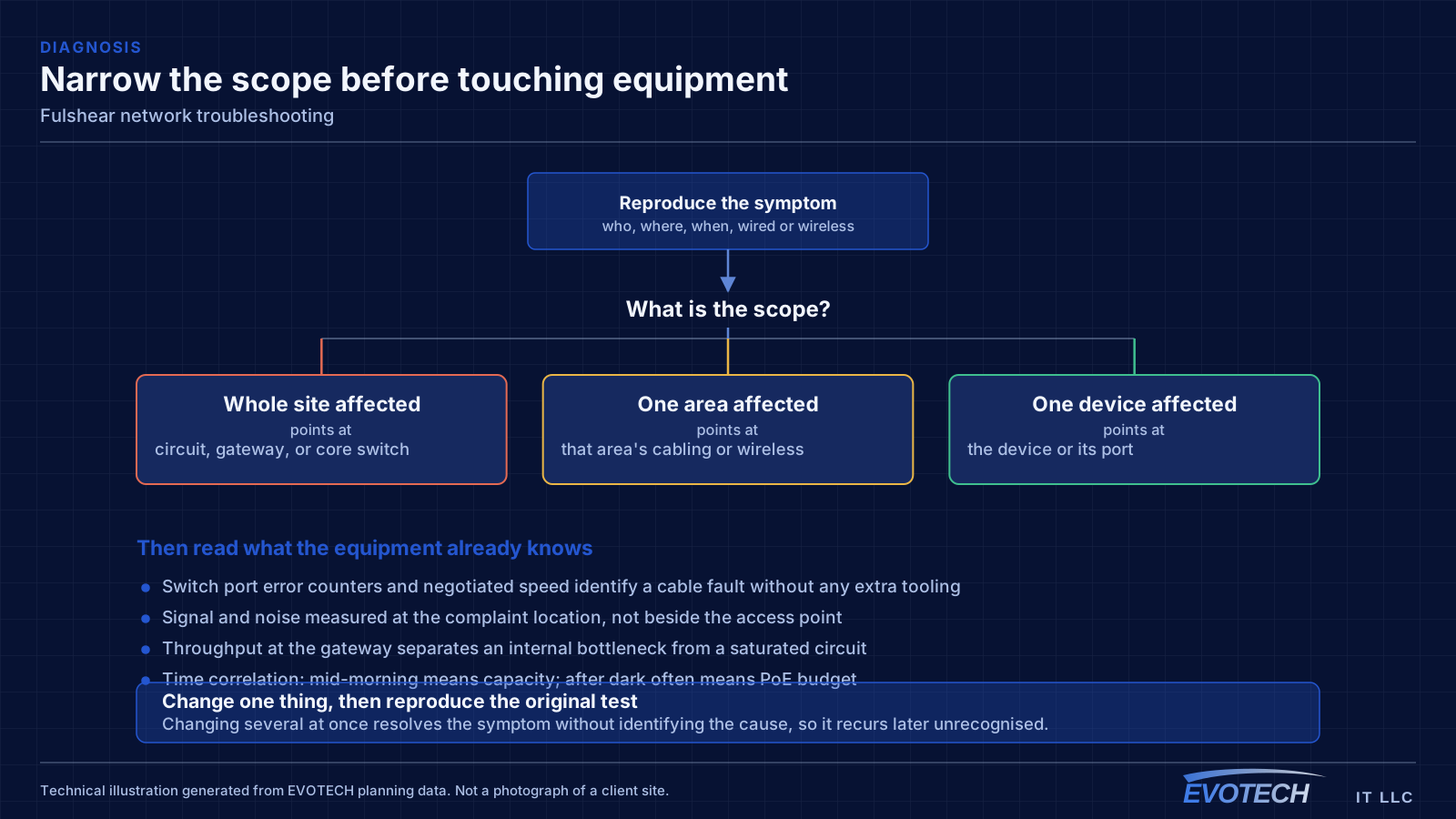
Effective troubleshooting is a process of elimination against a specific, reproducible symptom. 'The internet is slow' is not yet a diagnosis — slow for whom, on which devices, wired or wireless, at what times, to which destinations. Those answers usually point at a layer before any equipment is touched.
What network troubleshooting usually involves
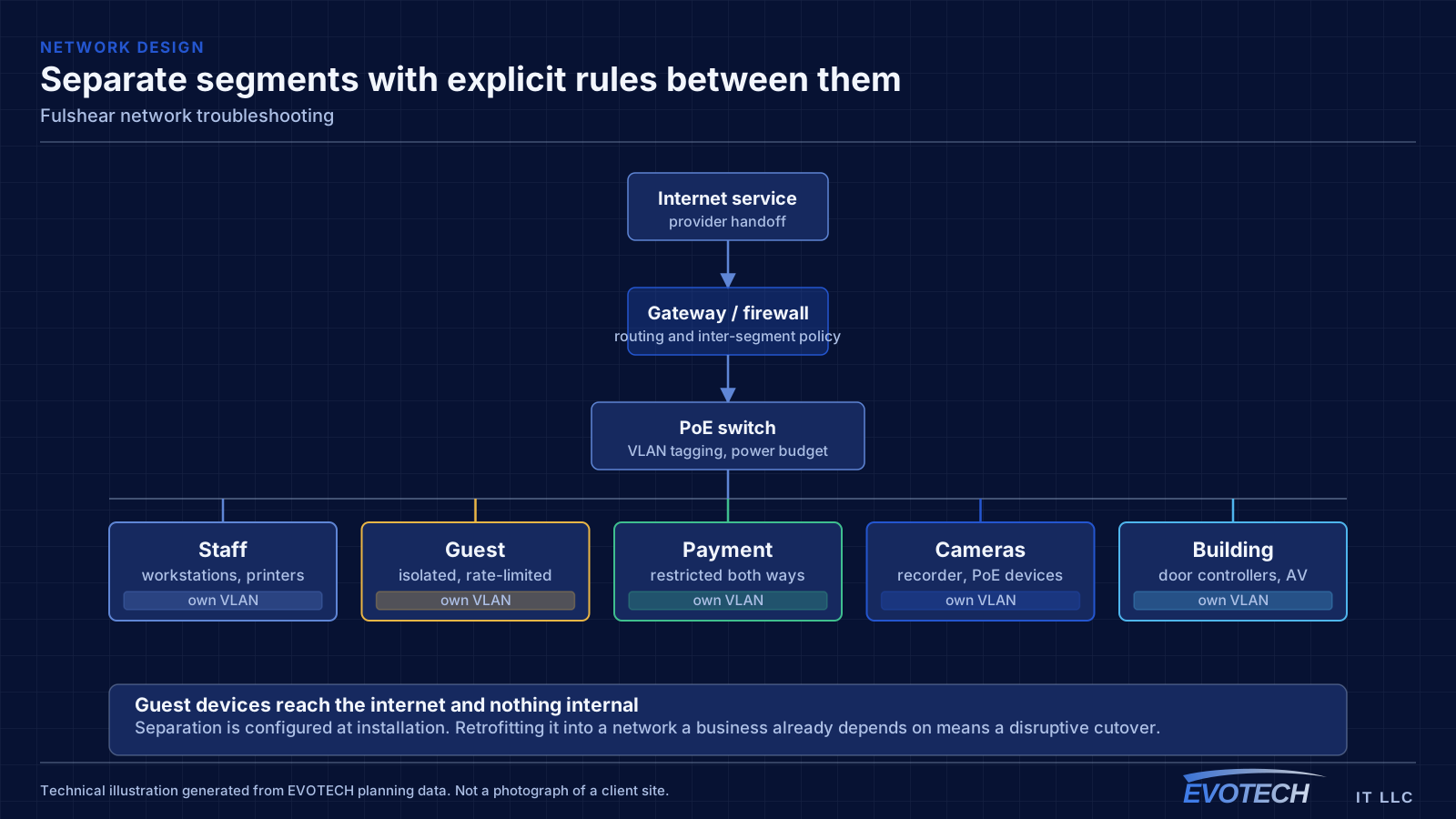
The single most useful distinction is between a problem affecting everything and a problem affecting one device or area. Everything at once points toward the shared path — the circuit, the gateway, or the main switch. One area points toward that area's cabling, its access point, or its switch. One device points at the device or its port.
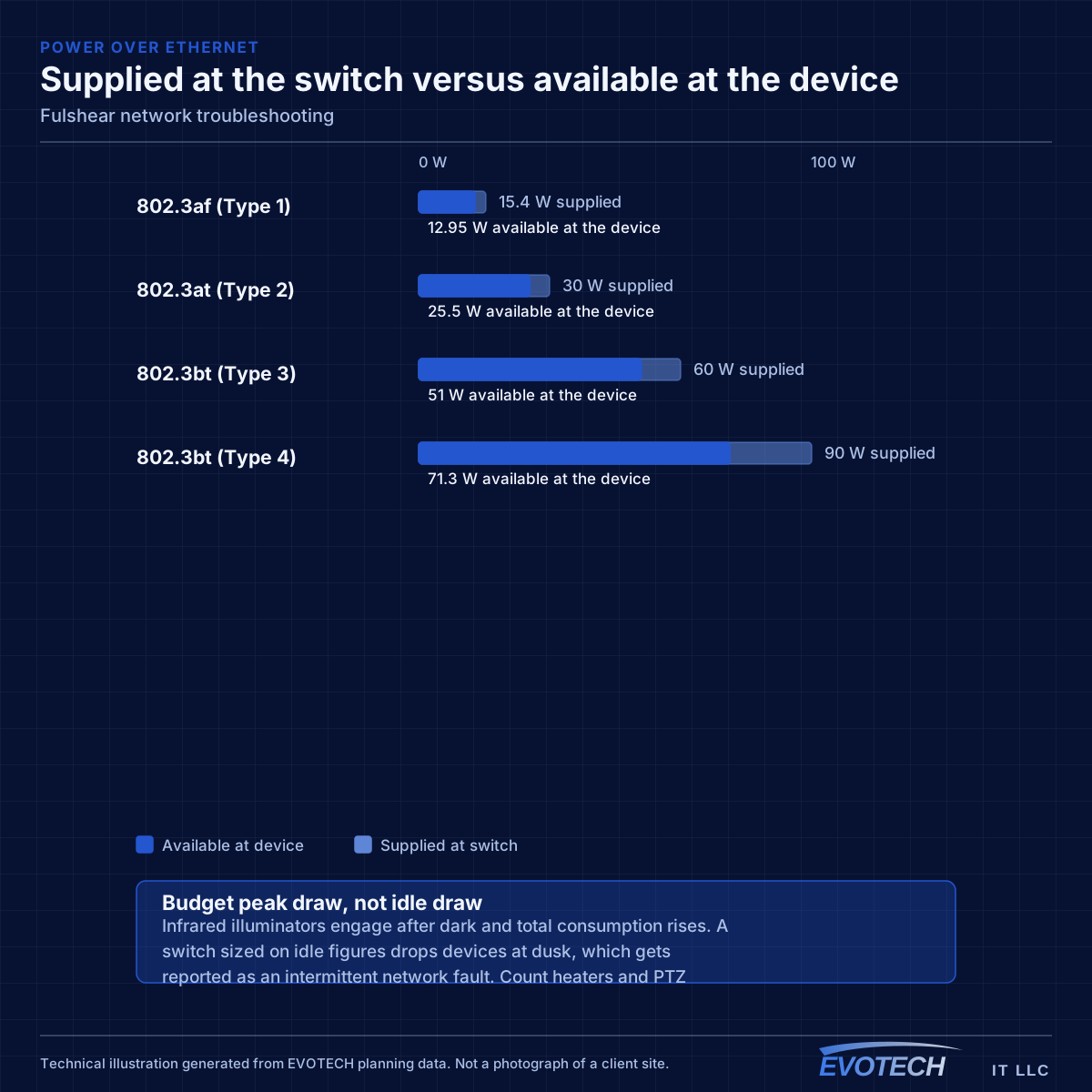
Timing is the second most useful clue. A problem that appears mid-morning and disappears at night is capacity related. A problem that appears after dark suggests something engaging on a schedule — camera illuminators pushing a PoE budget over is the classic example. A problem that appears at random is more often physical: a marginal termination, a failing port, or a cable that moves.
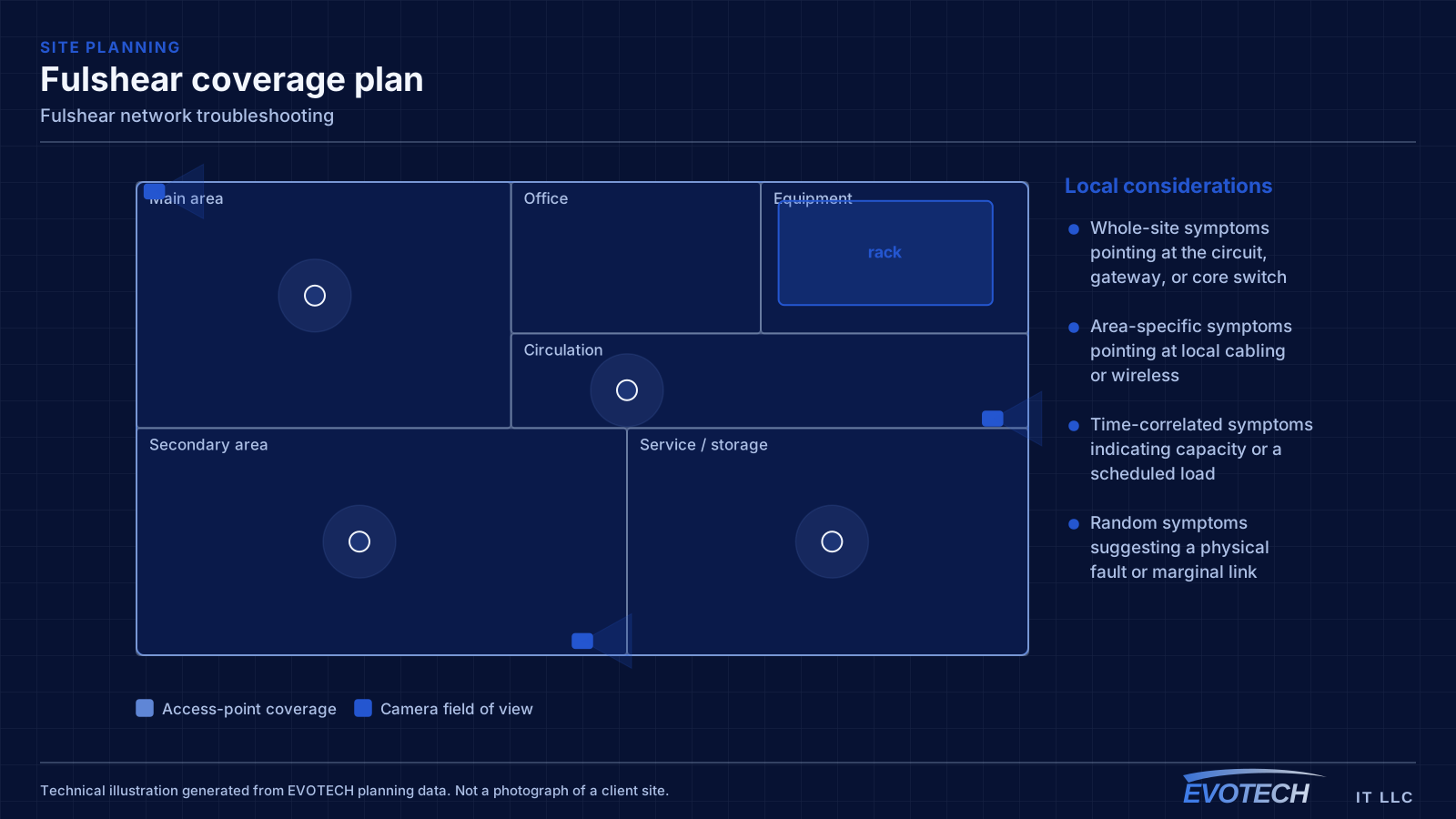
- Whole-site symptoms pointing at the circuit, gateway, or core switch
- Area-specific symptoms pointing at local cabling or wireless
- Time-correlated symptoms indicating capacity or a scheduled load
- Random symptoms suggesting a physical fault or marginal link
- Duplicate addressing or a rogue device handing out addresses
- Switching loops flooding a network after a cable was patched in twice
- Speed or duplex mismatches producing errors rather than outright failure
Fulshear property conditions that change the plan
A builder media enclosure is designed to terminate cable, not to house an active network. They are frequently shallow, unventilated, and located in a garage or utility area. Putting a switch, a router, and a small recorder into one produces a hot box that shortens everything inside it.
The practical answers are either a larger ventilated enclosure or splitting the arrangement — leaving the builder panel as a termination point and siting active equipment somewhere conditioned with power and access. Either decision is much easier made during construction than after.
The list that repays itself: ceiling positions for access points on each floor, two runs at each likely equipment position, a doorbell run, camera runs to the entry and driveway approaches, runs to television positions, and an equipment location with power, ventilation, and enough depth for real equipment.
- Builder enclosures sized for termination, not for active equipment
- Ventilation frequently absent, and heat the main cause of shortened equipment life
- Garage and utility positions common and often unconditioned
- Larger ventilated enclosure or a split arrangement as the usual fix
- Ceiling access-point positions rarely included by builders
- Central ceiling positions for access points on each floor
- Two runs at each equipment and television position
- Doorbell and entry camera runs
- Driveway and approach camera positions
- Conduit to detached structures before hardscape
- Equipment location with power, ventilation, and depth
Getting network troubleshooting done in Fulshear
Switch port statistics are the most underused diagnostic resource on most networks. Error counters, discards, and negotiated speed for each port are already being recorded, and a port showing rising errors identifies a cable or connector problem without any additional testing. A port that negotiated 100 Mbps when it should be at 1 Gbps points at a damaged pair or a marginal termination.
For homes under construction, the rough-in window governs everything and it is set by trades upstream. For completed homes, attic access is generally good and the constraint is summer heat, so work is scheduled early in the day during the warmer months.
- Rough-in window controlling new-construction scheduling
- Good attic access in completed homes, constrained by summer heat
- Dust control and daily clear-down in occupied homes
- Drywall access, patching, and paint agreed before any cutting
- Detached-structure routes planned before landscaping
Frequently asked questions
Does EVOTECH have an office in Fulshear?
No. This is a service-area page: EVOTECH serves Fulshear without claiming a physical office there. The wording stays as coverage, not a location claim.
Why is the network slow only in the afternoon?
Time-correlated symptoms usually mean capacity rather than a fault. Something is consuming the shared resource at that time — backups, updates, more people on site, or a scheduled process. Measuring at the gateway during the slow period, and comparing it to a quiet period, distinguishes a saturated circuit from an internal bottleneck quickly.
What should be prewired in a new home even if it is not needed yet?
Ceiling positions for access points on each floor, a doorbell run, camera runs to the entry and driveway approaches, and television positions. Each costs very little while the walls are open, and each is disproportionately awkward to retrofit — particularly the exterior camera positions, which end up behind finished soffit.