
Why this page exists
NVR installation in Fulshear is scoped around the same physical realities EVOTECH weighs everywhere — but read through Fulshear's specific conditions: predominantly recent residential construction, so prewire timing rather than retrofit access is the usual constraint. This page pairs what the service actually involves with what the Fulshear market changes about it.
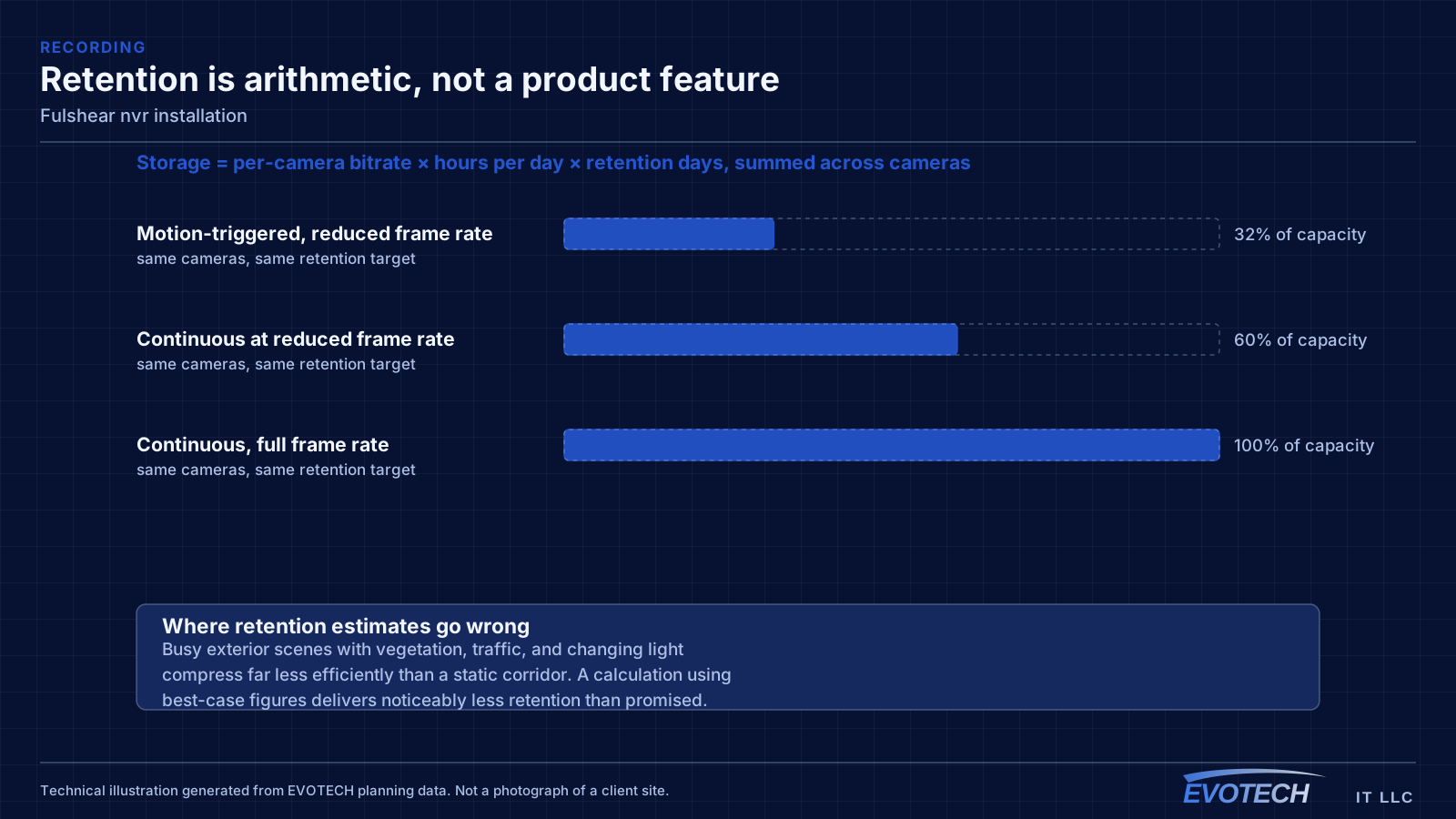
A network video recorder receives streams from the cameras, writes them to disk, and serves them back for review. Its capacity determines how far back the footage goes, and that number is arithmetic, not a product feature: camera count, resolution, frame rate, compression efficiency, and how much of the day actually gets recorded all multiply together against the drive capacity.
What nvr installation usually involves
The recurring problem is retention that does not match the expectation. It is rarely deception — it is usually that the estimate assumed motion-triggered recording, a modest frame rate, or a compression ratio that busy outdoor scenes do not deliver. A camera watching a parking area with moving trees generates far more data than one watching a quiet corridor.
The second problem is drive selection. Recorders write continuously to their drives, which is a different duty cycle from a desktop computer. Drives designed for continuous surveillance write loads last considerably longer in that role than general-purpose drives, and a recorder with no drive health monitoring will simply stop recording one day without announcing it.
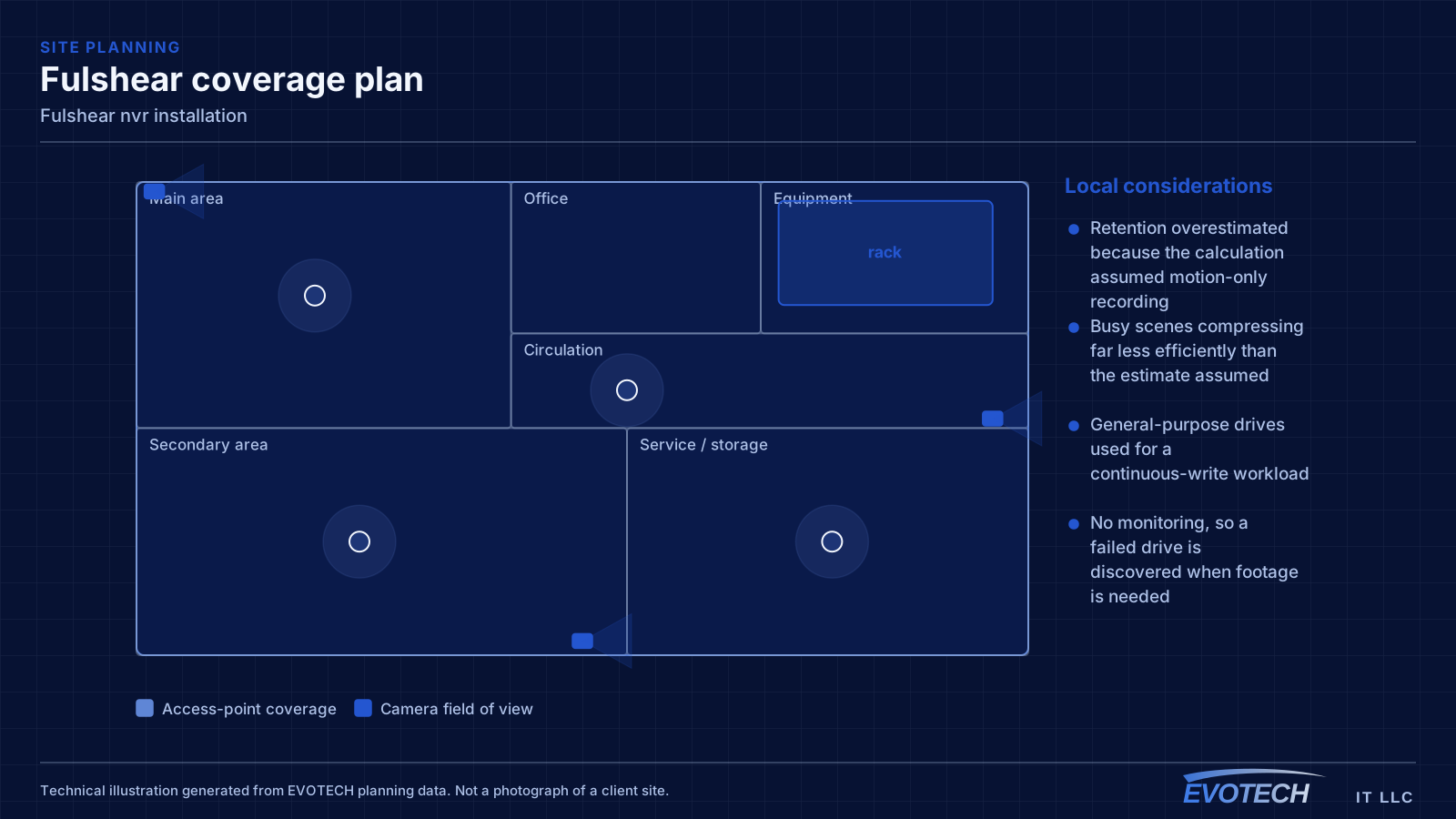
- Retention overestimated because the calculation assumed motion-only recording
- Busy scenes compressing far less efficiently than the estimate assumed
- General-purpose drives used for a continuous-write workload
- No monitoring, so a failed drive is discovered when footage is needed
- Recorder exposed directly to the internet for remote viewing
- Default credentials left in place
Fulshear property conditions that change the plan
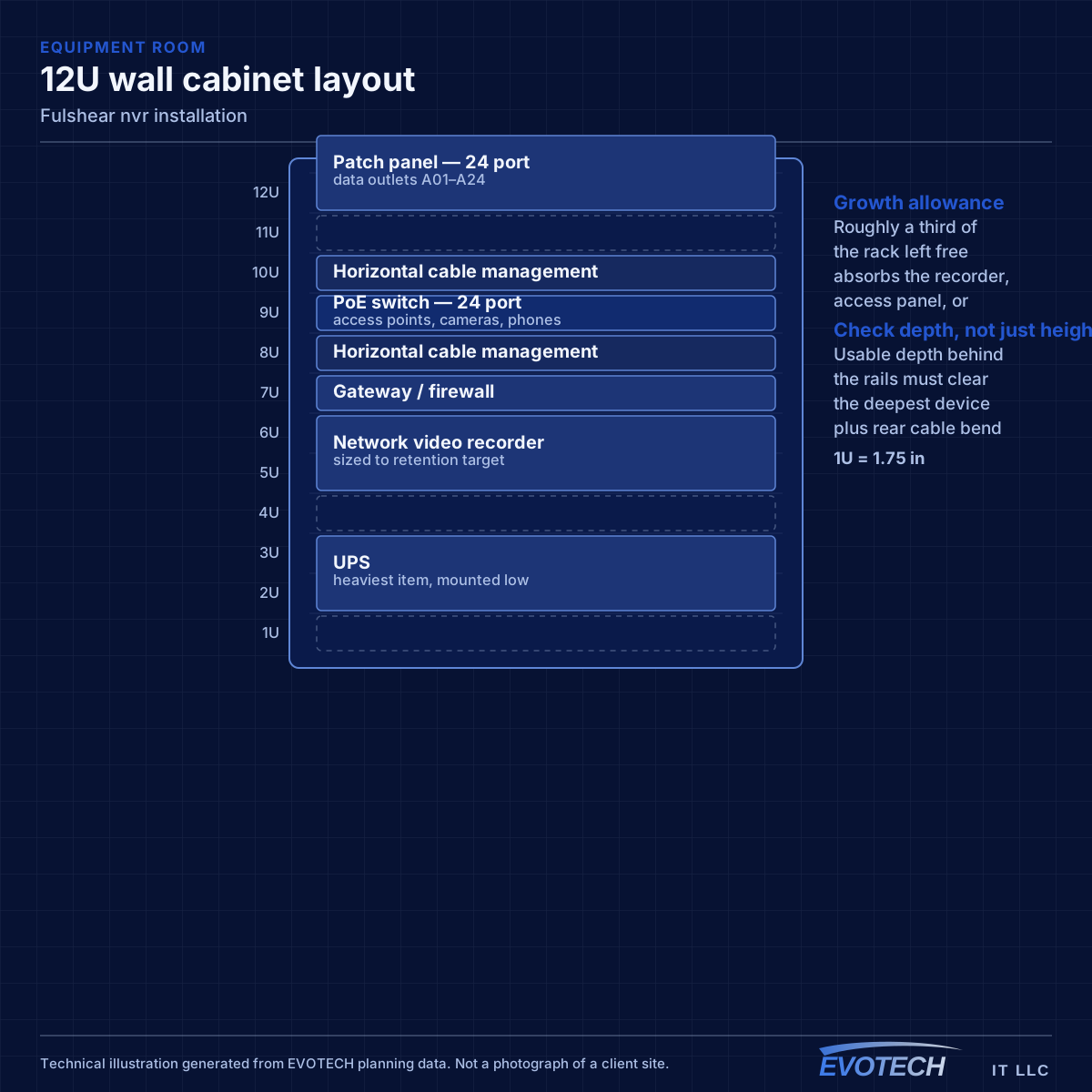
A builder media enclosure is designed to terminate cable, not to house an active network. They are frequently shallow, unventilated, and located in a garage or utility area. Putting a switch, a router, and a small recorder into one produces a hot box that shortens everything inside it.
The practical answers are either a larger ventilated enclosure or splitting the arrangement — leaving the builder panel as a termination point and siting active equipment somewhere conditioned with power and access. Either decision is much easier made during construction than after.
The list that repays itself: ceiling positions for access points on each floor, two runs at each likely equipment position, a doorbell run, camera runs to the entry and driveway approaches, runs to television positions, and an equipment location with power, ventilation, and enough depth for real equipment.
- Builder enclosures sized for termination, not for active equipment
- Ventilation frequently absent, and heat the main cause of shortened equipment life
- Garage and utility positions common and often unconditioned
- Larger ventilated enclosure or a split arrangement as the usual fix
- Ceiling access-point positions rarely included by builders
- Central ceiling positions for access points on each floor
- Two runs at each equipment and television position
- Doorbell and entry camera runs
- Driveway and approach camera positions
- Conduit to detached structures before hardscape
- Equipment location with power, ventilation, and depth
Getting nvr installation done in Fulshear
Storage need is the product of per-camera bitrate, hours recorded per day, and retention days, summed across cameras. Bitrate rises with resolution and frame rate, and falls with more efficient compression — but compression efficiency depends on the scene. Static indoor views compress well; exterior views with moving foliage, traffic, or changing light compress poorly. A safe calculation uses the higher end of the expected bitrate range rather than the marketing figure.
For homes under construction, the rough-in window governs everything and it is set by trades upstream. For completed homes, attic access is generally good and the constraint is summer heat, so work is scheduled early in the day during the warmer months.
- Rough-in window controlling new-construction scheduling
- Good attic access in completed homes, constrained by summer heat
- Dust control and daily clear-down in occupied homes
- Drywall access, patching, and paint agreed before any cutting
- Detached-structure routes planned before landscaping
Frequently asked questions
Does EVOTECH have an office in Fulshear?
No. This is a service-area page: EVOTECH serves Fulshear without claiming a physical office there. The wording stays as coverage, not a location claim.
How much storage is needed for 30 days of footage?
It is a calculation, not a fixed number: per-camera bitrate multiplied by hours recorded per day multiplied by thirty, summed across cameras. Resolution, frame rate, recording mode, and how busy each scene is all move the result substantially. Two eight-camera systems can differ by a factor of three for the same retention target.
What should be prewired in a new home even if it is not needed yet?
Ceiling positions for access points on each floor, a doorbell run, camera runs to the entry and driveway approaches, and television positions. Each costs very little while the walls are open, and each is disproportionately awkward to retrofit — particularly the exterior camera positions, which end up behind finished soffit.