

Why this page exists
TV mounting in Rosenberg is scoped around the same physical realities EVOTECH weighs everywhere — but read through Rosenberg's specific conditions: warehousing and light-industrial buildings along the highway corridor, with metal construction that reflects wireless signal and needs proper cable support. This page pairs what the service actually involves with what the Rosenberg market changes about it.
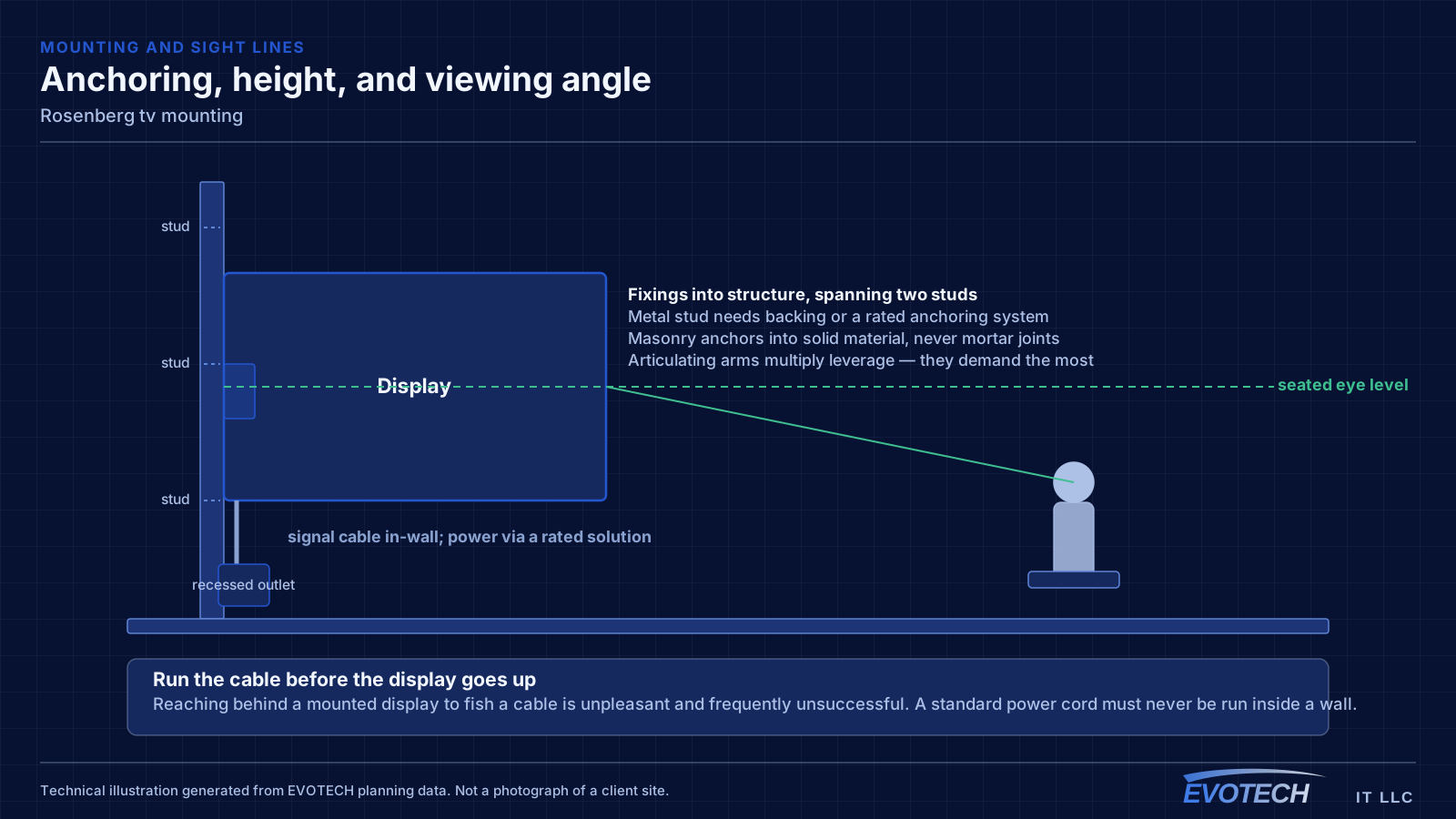
The mount has to transfer the display's weight into something structural. In wood-framed walls that means lag bolts into studs. In masonry it means appropriate anchors set into solid material rather than mortar joints. In metal-stud walls — common in commercial buildings — standard wood-stud technique does not apply, and larger displays generally need backing or a purpose-made metal-stud anchoring system.
What tv mounting usually involves
The serious problem is anchoring. A large display cantilevered on an articulating arm exerts substantial leverage on its fixings, and an arm anchored into drywall alone or into a single stud is a genuine hazard rather than an aesthetic issue. Metal-stud walls are the common commercial version of this, where fixings that feel solid during installation are not rated for sustained load.
The second problem is cabling. Running a power cord through a wall is not appropriate; the correct approach is either an in-wall rated power solution or a recessed outlet behind the display. Signal cables can be routed in-wall, but they need to be in place before the display goes up, because reaching behind a mounted display to fish a cable is unpleasant and often unsuccessful.
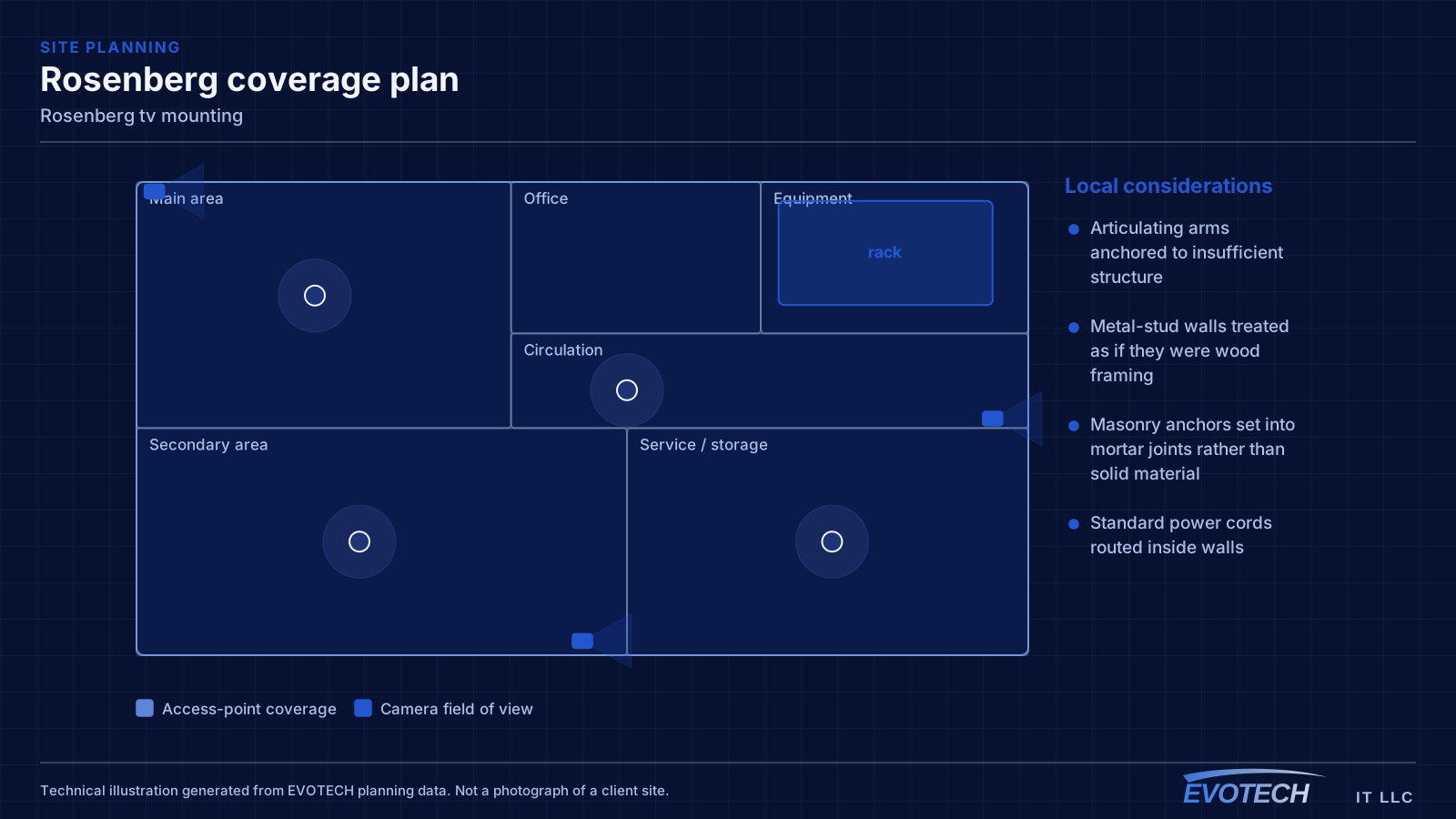
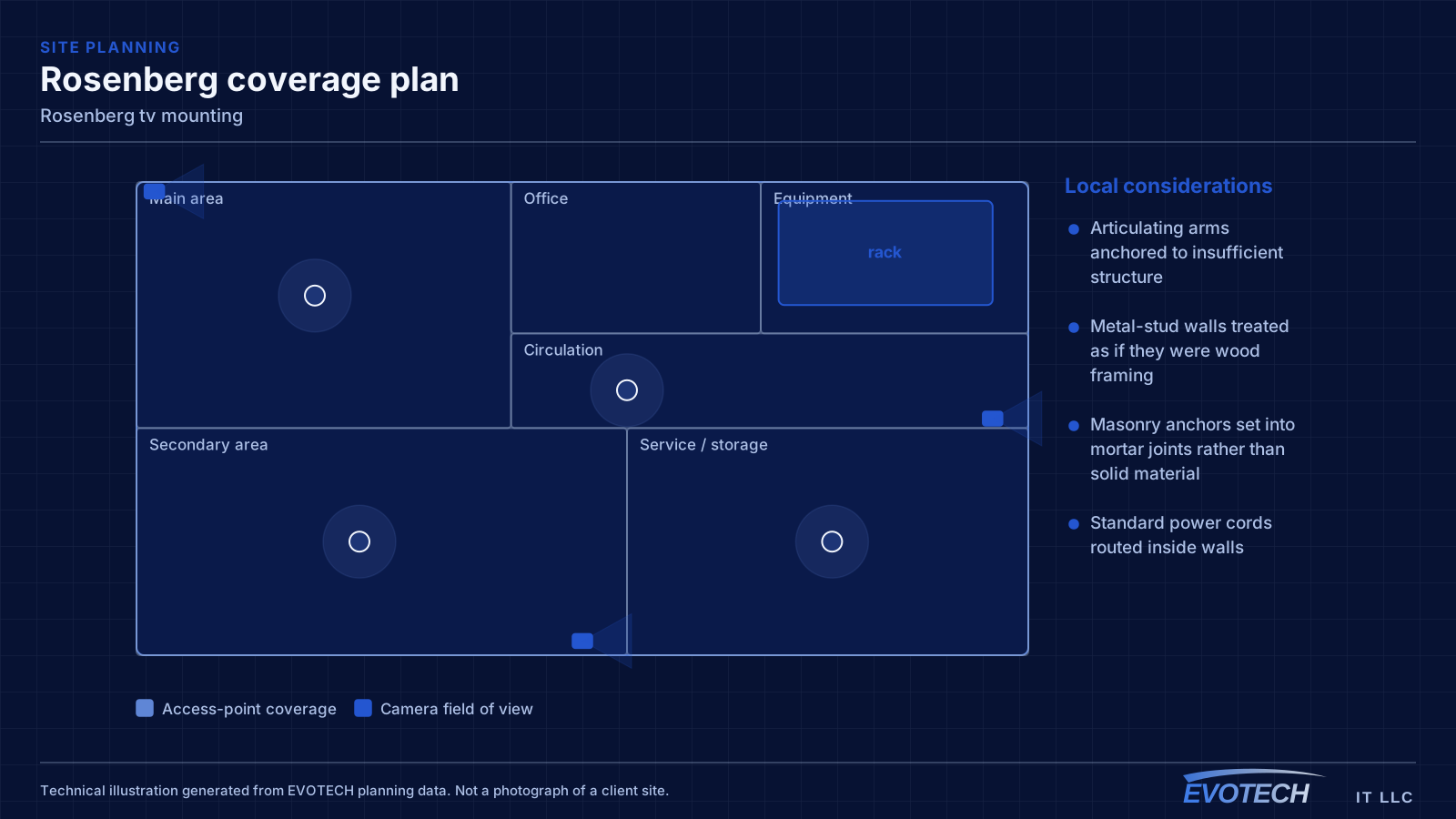
- Articulating arms anchored to insufficient structure
- Metal-stud walls treated as if they were wood framing
- Masonry anchors set into mortar joints rather than solid material
- Standard power cords routed inside walls
- Signal cables not run before mounting, leaving no route afterwards
- Viewing height chosen for the wall rather than for the seating
- Outdoor installations using indoor mounts that corrode
Rosenberg property conditions that change the plan
Distribution and light-industrial buildings dominate the commercial stock, and metal construction behaves very differently from drywall — signal reflects, footprints often exceed copper reach, and equipment needs protection from dust and unconditioned temperatures.
The historic core is masonry with hard ceilings and little usable pathway, so runs there frequently need new containment. Newer residential and retail on the outskirts is straightforward suburban construction.
For warehouse and distribution work, distance and metal construction drive the design: intermediate distribution points fed by fiber where a single equipment room cannot reach, and coverage validated with racking stocked rather than empty.
- Metal distribution and light-industrial buildings
- Masonry downtown stock with limited pathway
- Slab-foundation suburban housing and retail pads
- Unconditioned operational areas affecting equipment life
- Long cable runs in large-footprint buildings
- Fiber to intermediate points where footprints exceed copper reach
- Wireless validated under real stock conditions in metal buildings
- Equipment sited in conditioned space or filtered enclosures
- New pathway where the downtown core has none
- Dust protection for operational-area equipment
Getting tv mounting done in Rosenberg
In wood framing, fixings go into studs with lag bolts sized for the mount and the display weight, spanning two studs where the mount allows. In solid masonry, appropriate anchors go into the brick or block itself rather than the mortar, which is weaker. Metal-stud walls need either plywood backing installed behind the drywall — straightforward during construction, more involved afterwards — or a metal-stud anchoring system designed for the load, particularly for anything articulating.
Warehouse work often needs lift access coordinated around operations and forklift traffic, and exterior equipment needs housings rated for humidity and driven rain rather than nominal weather resistance.
- Lift access coordinated with warehouse operations
- Work scheduled around distribution shifts where needed
- Rated exterior housings and sealed penetrations
- Residential attic work scheduled early in summer heat
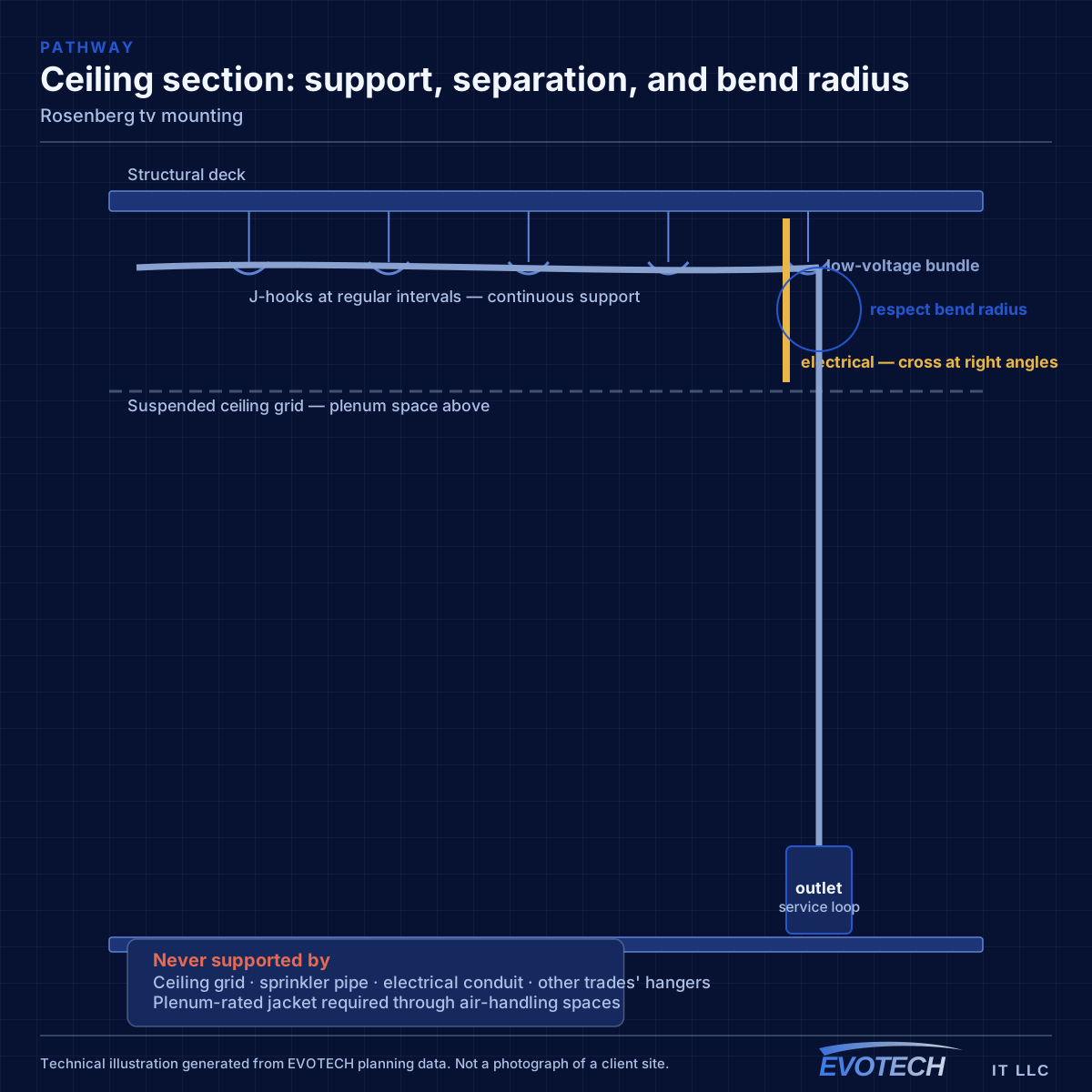
- Cable pathways kept clear of forklift and racking zones
Popular services nearby
Frequently searched near this area — the pages people look for most.
Frequently asked questions
Does EVOTECH have an office in Rosenberg?
No. This is a service-area page: EVOTECH serves Rosenberg without claiming a physical office there. The wording stays as coverage, not a location claim.
Can a TV be mounted on a metal-stud wall?
Yes, but not with wood-stud technique. Metal studs are thin and will not hold lag bolts under sustained load. The reliable approaches are plywood backing behind the drywall — easy during construction, more involved afterwards — or an anchoring system made for metal studs and rated for the display weight. This matters most with articulating arms, which multiply the load considerably.
Does EVOTECH have an office in Rosenberg?
No. This site does not claim a physical office in Rosenberg or anywhere else. Rosenberg is described as a service-area market — coverage, not a location claim.