
Why this page exists
Ubiquiti UniFi installation in Rosenberg is scoped around the same physical realities EVOTECH weighs everywhere — but read through Rosenberg's specific conditions: warehousing and light-industrial buildings along the highway corridor, with metal construction that reflects wireless signal and needs proper cable support. This page pairs what the service actually involves with what the Rosenberg market changes about it.
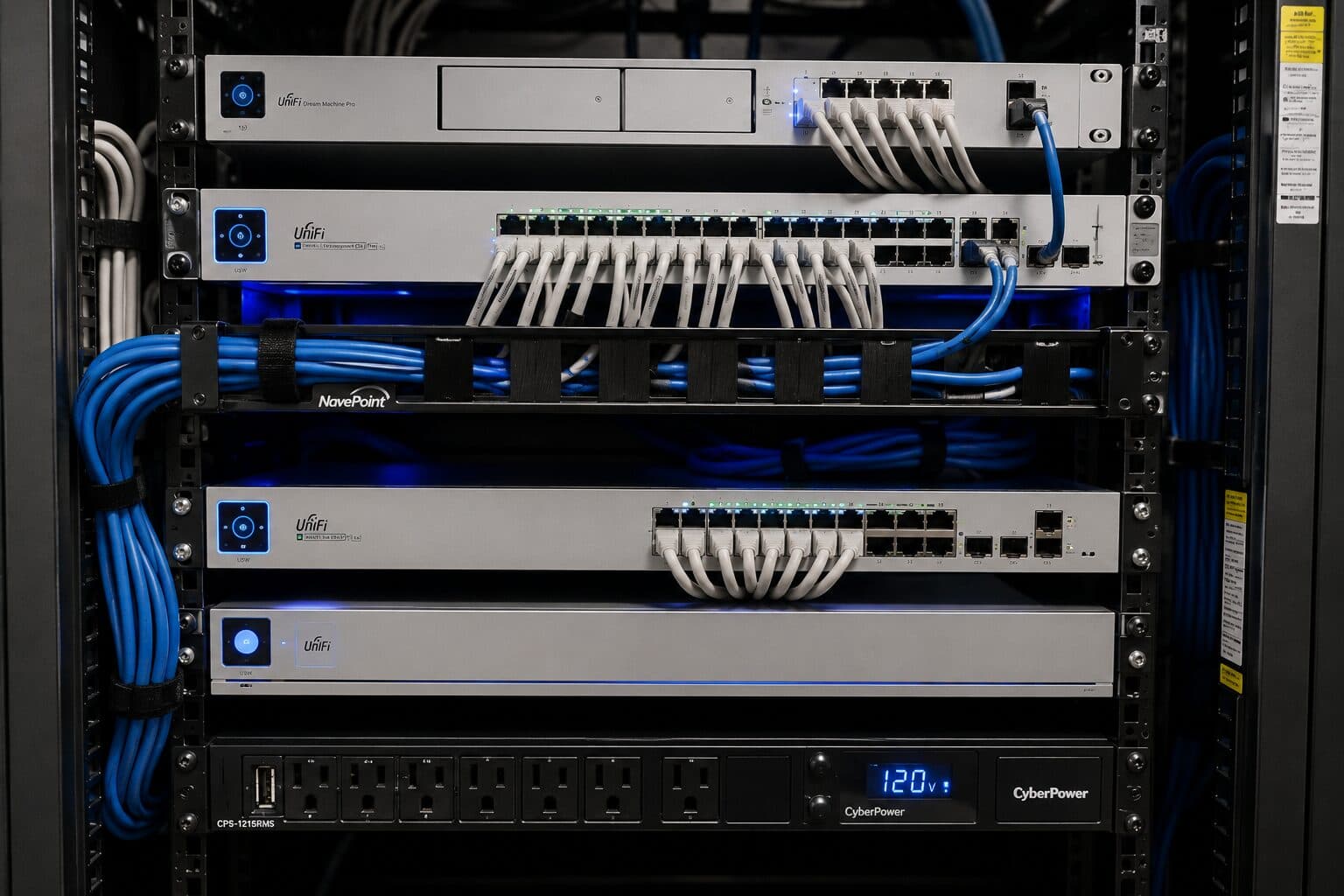
A UniFi deployment puts the gateway, switching, wireless, and often cameras and door access under one controller. The practical benefit is operational rather than raw performance: one interface for network configuration, client visibility, firmware updates, and camera review, instead of separate systems that each need their own knowledge.
What ubiquiti unifi installation usually involves
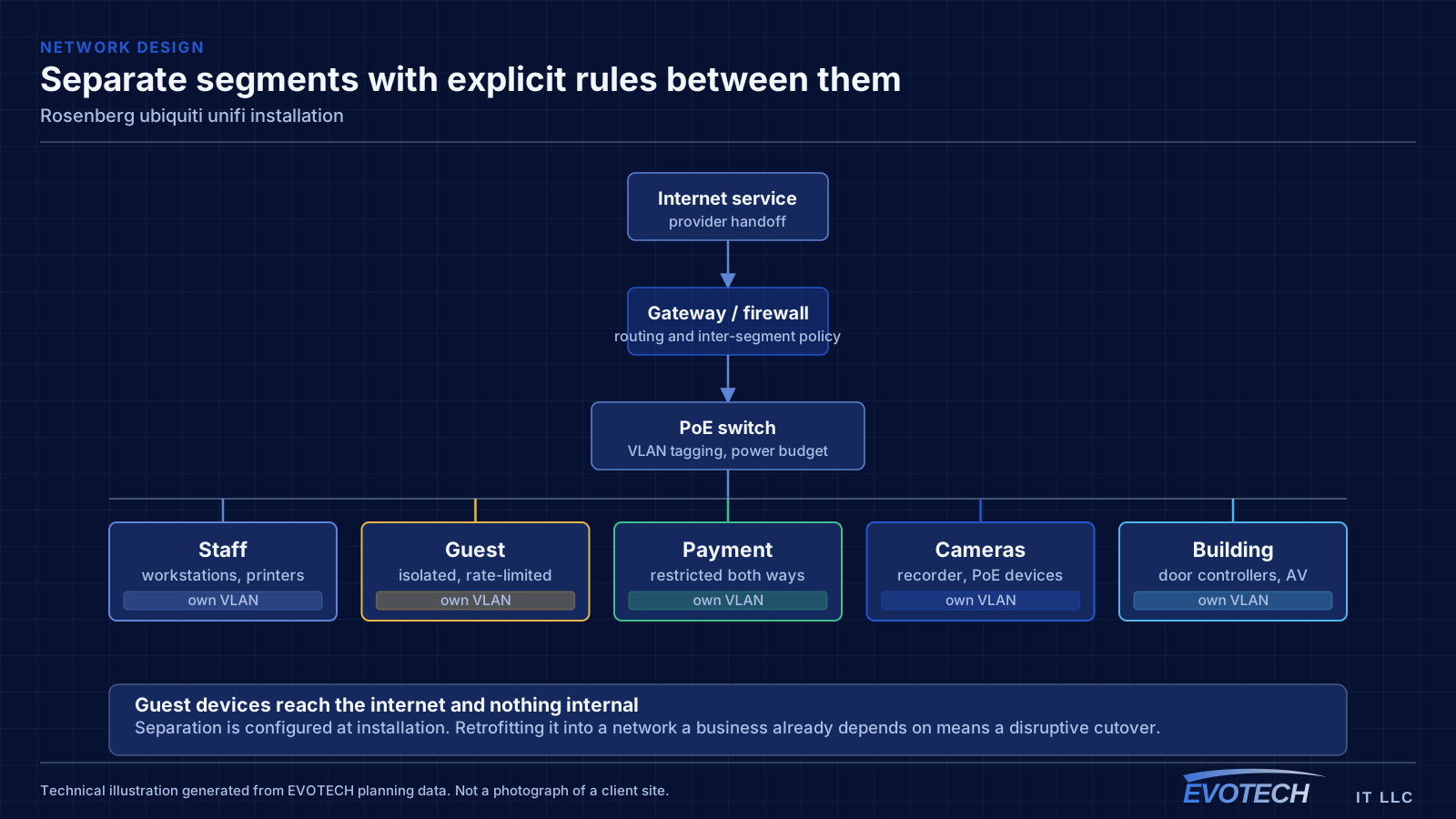
The most common problem with an existing UniFi installation is that it was deployed as a set of boxes rather than as a design. Adopted devices on default settings, no VLANs, no channel plan, and firmware left wherever it landed will underperform, and the interface makes that easy to overlook because everything reports as online.
The second is powering. UniFi access points, cameras, and door hardware draw power over Ethernet at different classes, and a switch chosen on port count alone can run out of PoE budget before it runs out of ports. That shows up as devices rebooting under load rather than as an obvious power error.
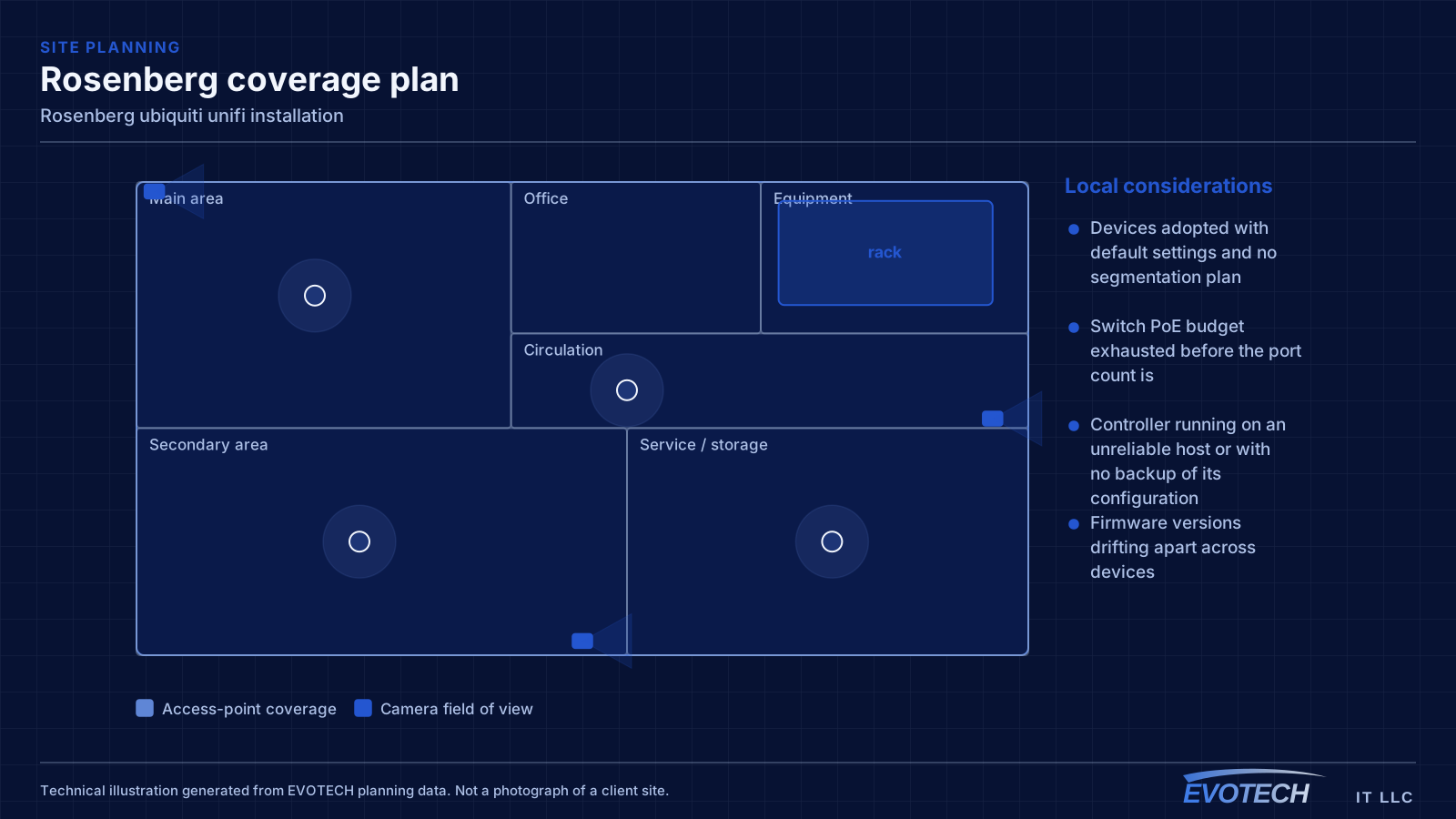
- Devices adopted with default settings and no segmentation plan
- Switch PoE budget exhausted before the port count is
- Controller running on an unreliable host or with no backup of its configuration
- Firmware versions drifting apart across devices
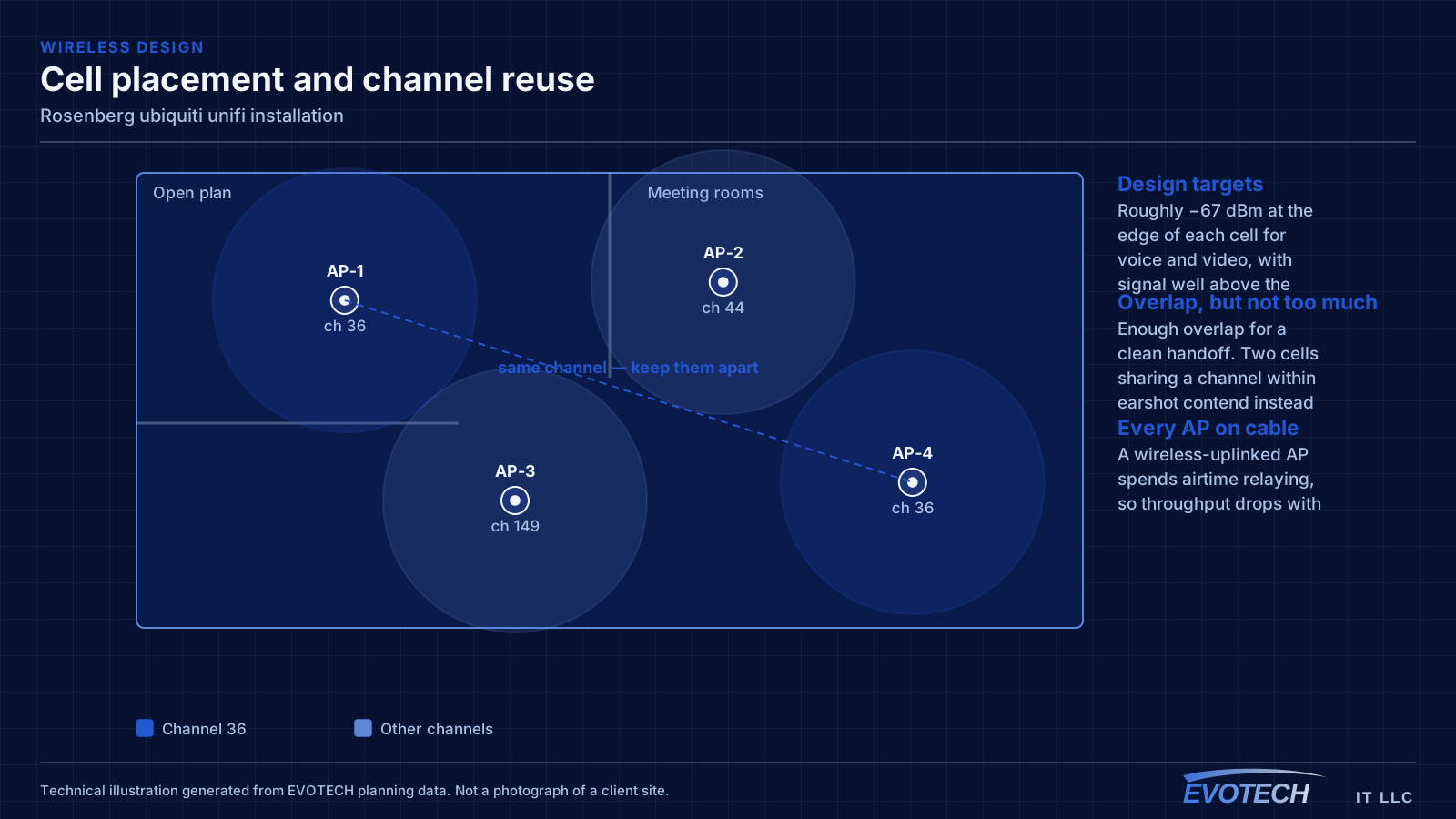
- Wireless left fully automatic in a dense environment where it needs guidance
- Camera storage sized without regard to retention expectations
Rosenberg property conditions that change the plan
Distribution and light-industrial buildings dominate the commercial stock, and metal construction behaves very differently from drywall — signal reflects, footprints often exceed copper reach, and equipment needs protection from dust and unconditioned temperatures.
The historic core is masonry with hard ceilings and little usable pathway, so runs there frequently need new containment. Newer residential and retail on the outskirts is straightforward suburban construction.
For warehouse and distribution work, distance and metal construction drive the design: intermediate distribution points fed by fiber where a single equipment room cannot reach, and coverage validated with racking stocked rather than empty.
- Metal distribution and light-industrial buildings
- Masonry downtown stock with limited pathway
- Slab-foundation suburban housing and retail pads
- Unconditioned operational areas affecting equipment life
- Long cable runs in large-footprint buildings
- Fiber to intermediate points where footprints exceed copper reach
- Wireless validated under real stock conditions in metal buildings
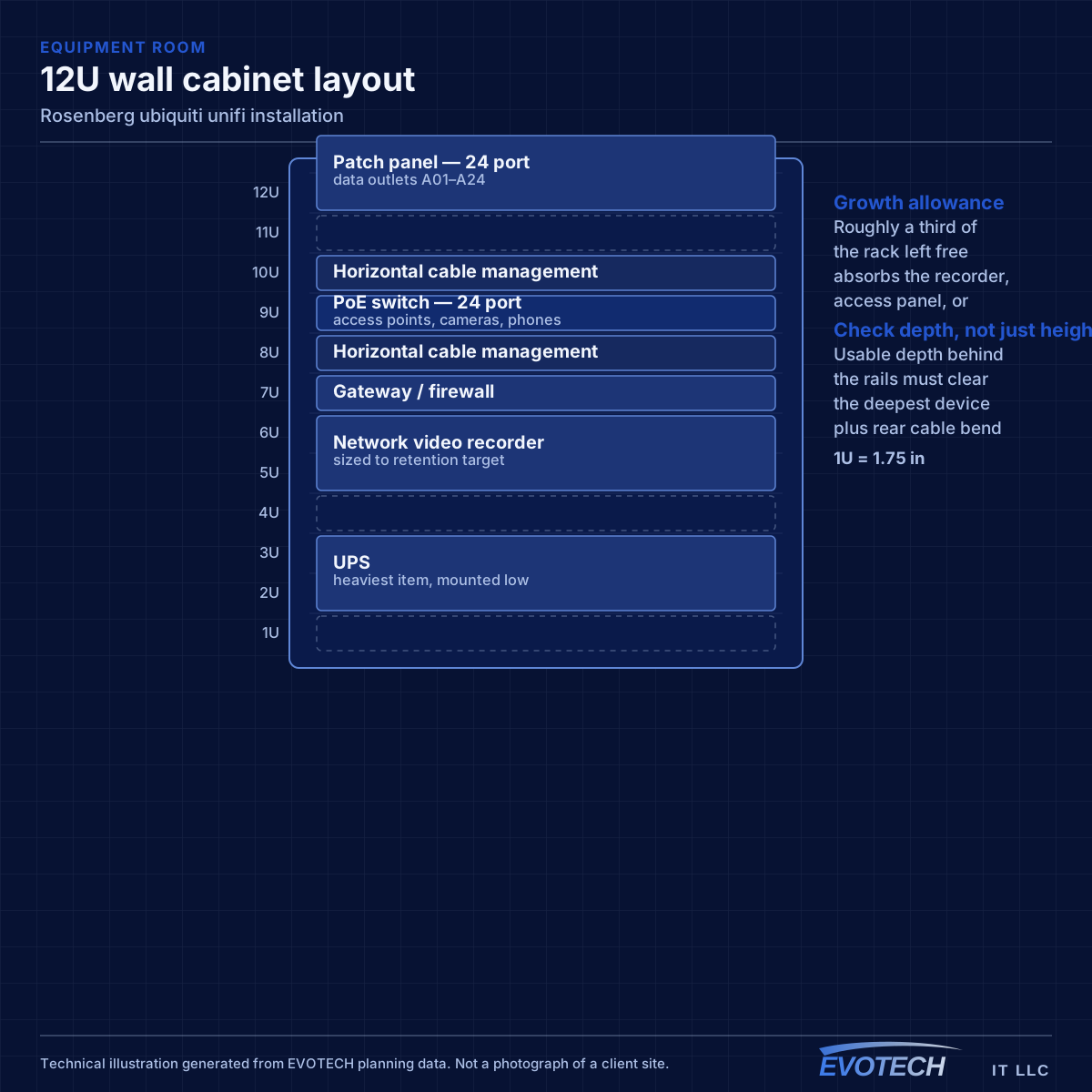
- Equipment sited in conditioned space or filtered enclosures
- New pathway where the downtown core has none
- Dust protection for operational-area equipment
Getting ubiquiti unifi installation done in Rosenberg
The gateway handles routing, firewalling, and inter-VLAN policy. Segmentation is where most of the practical value sits: separate networks for staff, guests, payment systems, cameras, and building devices, with rules controlling what may talk to what. A guest network that cannot reach the camera recorder is a meaningful improvement over a flat network, and it takes configuration rather than extra hardware.
Warehouse work often needs lift access coordinated around operations and forklift traffic, and exterior equipment needs housings rated for humidity and driven rain rather than nominal weather resistance.
- Lift access coordinated with warehouse operations
- Work scheduled around distribution shifts where needed
- Rated exterior housings and sealed penetrations
- Residential attic work scheduled early in summer heat
- Cable pathways kept clear of forklift and racking zones
Frequently asked questions
Does EVOTECH have an office in Rosenberg?
No. This is a service-area page: EVOTECH serves Rosenberg without claiming a physical office there. The wording stays as coverage, not a location claim.
Is UniFi the right choice for a small business?
It suits sites that want proper segmentation, decent wireless, and cameras under one interface without employing a network administrator. The tradeoff is committing to one vendor's ecosystem. A mixed-vendor design gives more freedom to pick the best component for each role; the single-vendor version is easier to live with day to day. Both are defensible — it is worth choosing on purpose.
Does EVOTECH have an office in Rosenberg?
No. This site does not claim a physical office in Rosenberg or anywhere else. Rosenberg is described as a service-area market — coverage, not a location claim.