

Why this page exists
TV mounting in Spring is scoped around the same physical realities EVOTECH weighs everywhere — but read through Spring's specific conditions: retail and food-service commercial base where payment-system separation is a standing requirement. This page pairs what the service actually involves with what the Spring market changes about it.
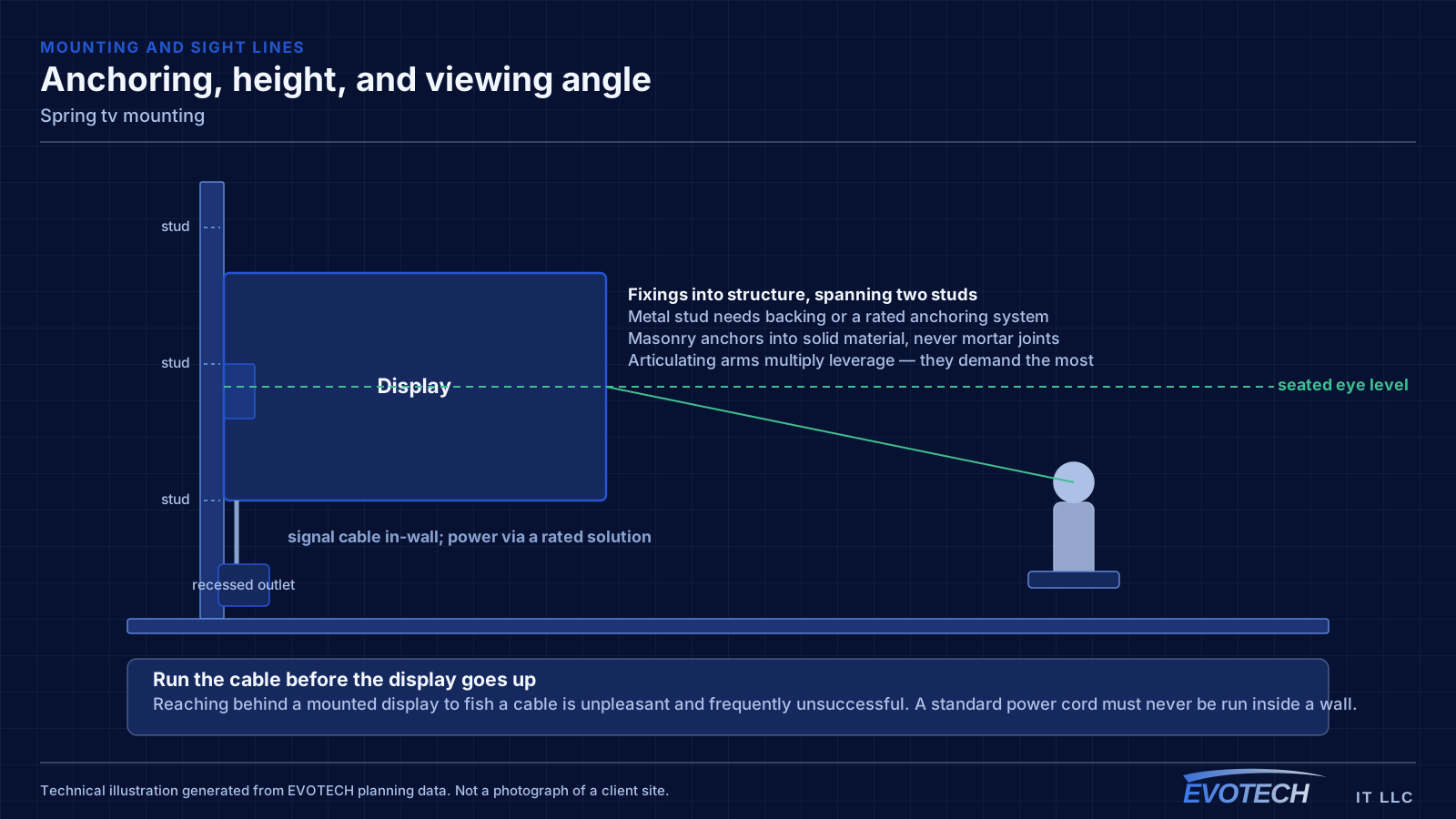
The mount has to transfer the display's weight into something structural. In wood-framed walls that means lag bolts into studs. In masonry it means appropriate anchors set into solid material rather than mortar joints. In metal-stud walls — common in commercial buildings — standard wood-stud technique does not apply, and larger displays generally need backing or a purpose-made metal-stud anchoring system.
What tv mounting usually involves
The serious problem is anchoring. A large display cantilevered on an articulating arm exerts substantial leverage on its fixings, and an arm anchored into drywall alone or into a single stud is a genuine hazard rather than an aesthetic issue. Metal-stud walls are the common commercial version of this, where fixings that feel solid during installation are not rated for sustained load.
The second problem is cabling. Running a power cord through a wall is not appropriate; the correct approach is either an in-wall rated power solution or a recessed outlet behind the display. Signal cables can be routed in-wall, but they need to be in place before the display goes up, because reaching behind a mounted display to fish a cable is unpleasant and often unsuccessful.
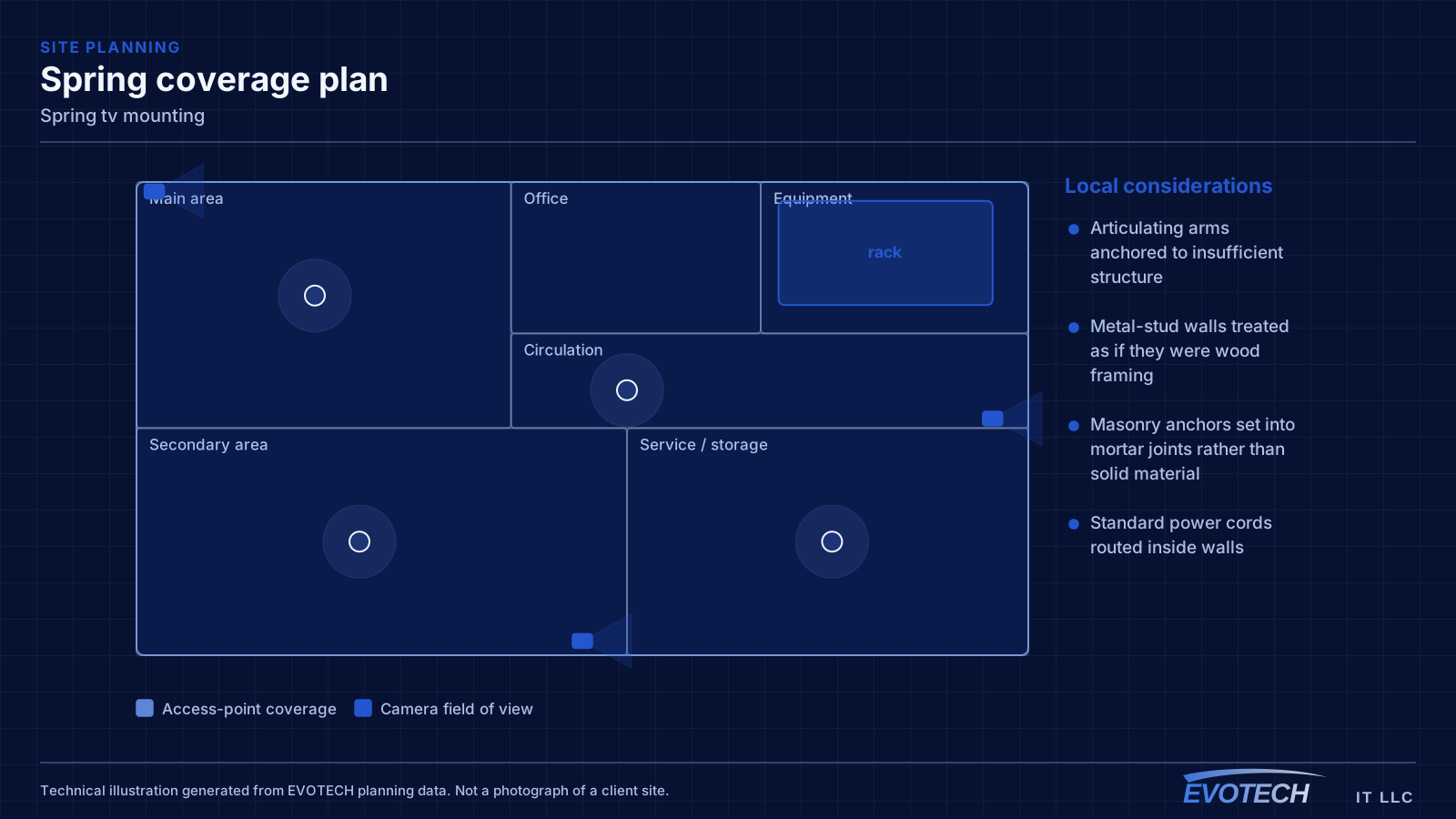
- Articulating arms anchored to insufficient structure
- Metal-stud walls treated as if they were wood framing
- Masonry anchors set into mortar joints rather than solid material
- Standard power cords routed inside walls
- Signal cables not run before mounting, leaving no route afterwards
- Viewing height chosen for the wall rather than for the seating
- Outdoor installations using indoor mounts that corrode
Spring property conditions that change the plan
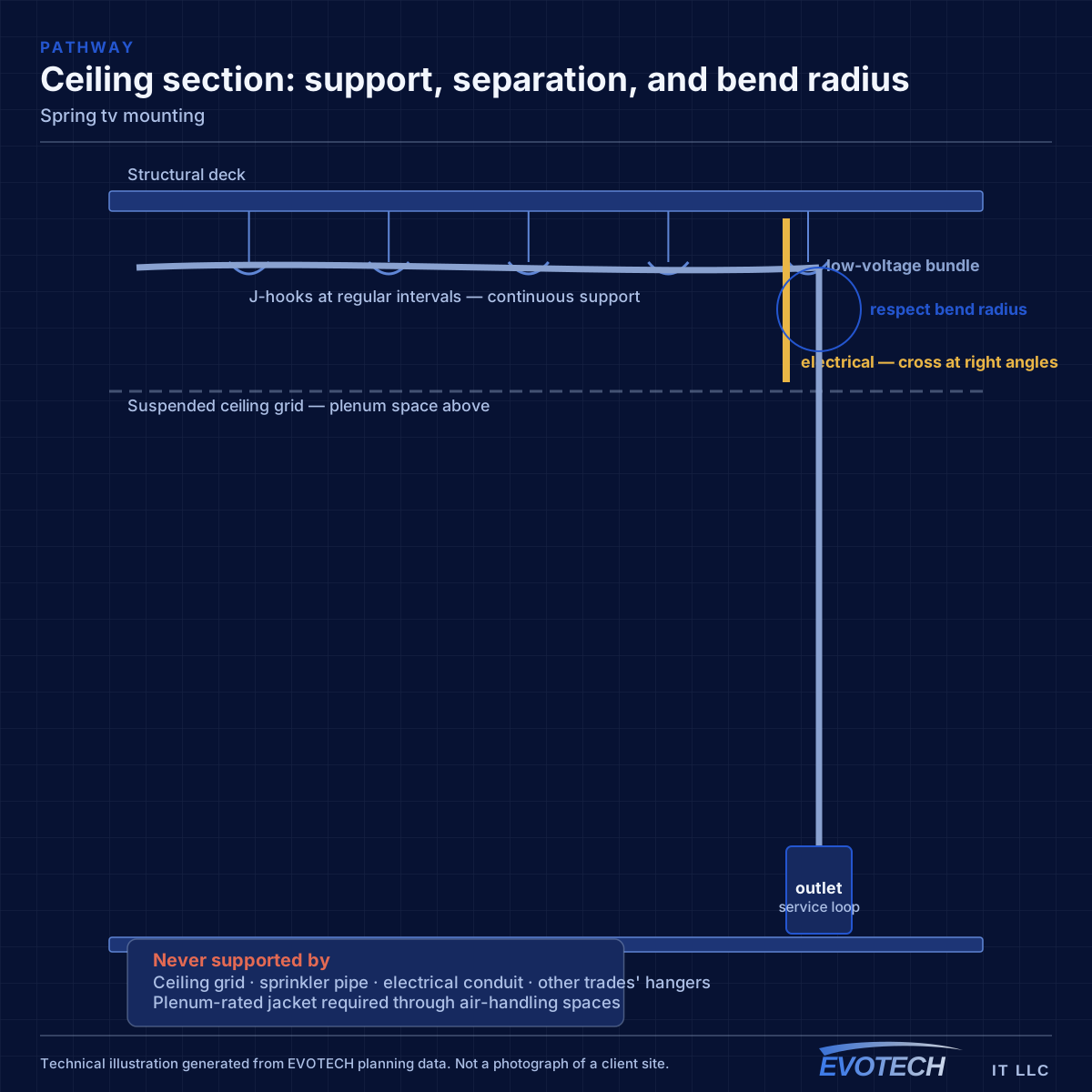
Retail and restaurant units in this area span several construction types. A converted space may have open structure overhead and easy routing; a mall unit may be hard lid throughout; a newer pad site usually has suspended grid. The scope difference between these is significant even when the floor area and outlet count are identical.
What stays constant across all of them is the network requirement: separate segments for payment, operations, and guest, with guest isolated and rate-limited. That is a configuration matter rather than a construction one, and it applies regardless of what the ceiling looks like.
For commercial work: what the ceiling actually is across the whole unit, where the equipment can live so it stays cool and dry, how the networks will be separated, and what the available working window is.
- Ceiling construction varying widely between adjacent units
- Payment, operations, and guest separation required consistently
- Kitchen environments constraining equipment placement in food service
- Storefront glazing affecting entrance camera framing
- Landlord rules applying in leased and centre units
- Ceiling construction confirmed across the whole unit, not just the front
- Equipment position away from kitchen heat and moisture
- Network segmentation agreed before installation
- Entrance camera positioned to avoid daylight backlighting
- Working window and landlord permissions established
Getting tv mounting done in Spring
In wood framing, fixings go into studs with lag bolts sized for the mount and the display weight, spanning two studs where the mount allows. In solid masonry, appropriate anchors go into the brick or block itself rather than the mortar, which is weaker. Metal-stud walls need either plywood backing installed behind the drywall — straightforward during construction, more involved afterwards — or a metal-stud anchoring system designed for the load, particularly for anything articulating.
Food-service work happens outside service hours, with each session ending with the site operational for the next opening. Retail work can often proceed during trading with containment and barriered ladder areas, though anything over the sales floor or noisy is better placed before opening.
- Food-service work outside service hours
- Retail work during trading with containment where feasible
- Merchandise and surface protection throughout
- Sessions ending with the site fully operational
- Residential attic work scheduled early during summer
Popular services nearby
Frequently searched near this area — the pages people look for most.
Frequently asked questions
Does EVOTECH have an office in Spring?
No. This is a service-area page: EVOTECH serves Spring without claiming a physical office there. The wording stays as coverage, not a location claim.
Can a TV be mounted on a metal-stud wall?
Yes, but not with wood-stud technique. Metal studs are thin and will not hold lag bolts under sustained load. The reliable approaches are plywood backing behind the drywall — easy during construction, more involved afterwards — or an anchoring system made for metal studs and rated for the display weight. This matters most with articulating arms, which multiply the load considerably.
Why does payment-system separation come up on every retail and restaurant project?
Because it addresses both a security and an operational risk. A payment terminal sharing a flat network with guest devices is reachable from those devices, and guest usage can also saturate the connection payment processing depends on. Separating them at installation is straightforward; doing it later in a running business is not.