Why this page exists
Gate & license-plate cameras for new construction is shaped by how the space is used, not just by the service itself. New construction bring their own operating constraints, and this page pairs what gate & license-plate cameras actually involves with what that environment changes about it.
Watching a gate or driveway and reading the license plates that come through it are two different objectives, and they usually need two different cameras. An overview camera shows the scene — who arrived, what happened — with a wide, well-lit view. A license-plate camera is tuned narrowly for one thing: a fast shutter to freeze a moving plate, a tight field of view and angle aimed at where plates appear, and controlled infrared so the reflective plate is legible at night rather than blown out.
One window, and it does not reopen
Low-voltage rough-in happens in a specific slot: after framing and electrical, before insulation and drywall. Inside that window, running a cable anywhere is straightforward. Once drywall goes up, the same cable costs many times more and sometimes cannot be run at all.
The asymmetry is the whole story of new-construction low voltage. Decisions made cheaply during rough-in become expensive or impossible afterwards, which is why the pre-rough-in planning conversation is worth more than any equipment choice made later.
- Rough-in window sits between electrical and drywall
- Upstream delays compress the window without extending the deadline
- Post-drywall changes cost many times more, if they are possible at all
- Finish work happens months later, after paint and ceilings
What gate & license-plate cameras usually involves
The core mistake is expecting one camera to both show the scene and read plates. A wide overview camera cannot freeze or resolve a plate on a moving vehicle, and a plate camera's narrow, fast-shutter view is useless as a general scene. Trying to do both with one camera gives a view that is mediocre at each.
The second is night and motion. A plate is retroreflective, so at night an ordinary camera either loses it in the dark or blows it out with too much infrared, and a slow shutter smears the plate on a moving car. And gate positions are often beyond easy power and network reach, so a run planned as if it were a nearby camera fails.
- One camera expected to both show the scene and read plates
- Slow shutter smearing plates on moving vehicles
- Night infrared blowing out the reflective plate or losing it in the dark
- Field of view and angle too wide to resolve a plate
- Gate position beyond easy power and network reach
- No overview camera, so context of the entry is lost
What to rough in even without a final design
Full system design is often not finished when the rough-in window arrives. That is normal, and it is not a reason to skip the pathway. Running conduit or sleeves to likely positions preserves the option cheaply even when the eventual equipment is undecided.
For a commercial building, the reliable rough-in set is: cable to every likely device outlet, ceiling positions for access points spaced for the intended coverage, camera positions at entries and approaches, door positions with cable to the controller location, and pathway to any likely display or AV position. Plus, in every case, a properly located equipment room.
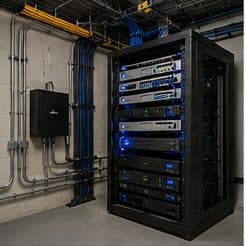
The equipment room deserves particular emphasis because it is the most commonly under-provisioned item. It has to hold the network rack, camera recorder, access-control panel, and any AV equipment, with dedicated power, ventilation, and clearance to work. Sizing it from the network alone is a decision that gets discovered eighteen months later.
- Sleeves and conduit to likely positions even before final design
- Ceiling access-point positions spaced for the intended coverage
- Camera positions at entries, approaches, and service areas
- Cable from every controlled door to the controller position
- Equipment room with dedicated power, ventilation, and working clearance
Dedicated plate capture, night handling, and reach to the gate
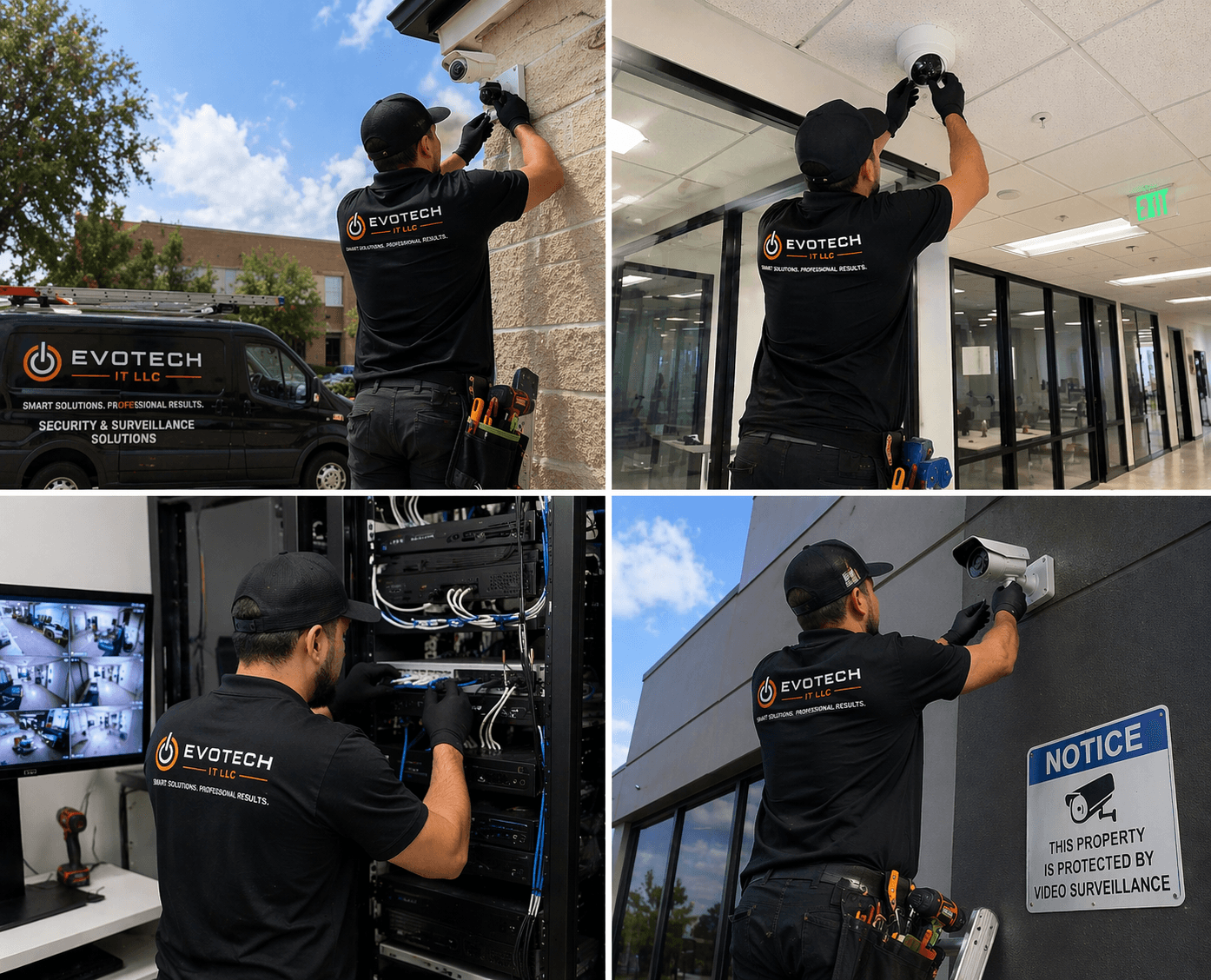
License-plate capture is a specialised camera task. It needs a fast shutter to freeze a plate on a moving vehicle, a narrow field of view and a shallow angle aimed at where plates present, and a distance matched to the lens so the plate fills enough of the frame to be legible. Because a plate is retroreflective, the infrared is controlled so the plate is lit to read rather than blown out — settings that make the plate legible also make the rest of the scene dark, which is exactly why a separate overview camera covers context.
- A dedicated plate camera: fast shutter, narrow view, shallow angle
- Distance and lens matched so the plate is legible in frame
- Controlled infrared so the reflective plate reads at night
- A separate overview camera for the scene and context
- Fiber or intermediate-powered runs to distant gate positions
- Mounting angle and height set for plate presentation
Frequently asked questions
What changes about gate & license-plate cameras in new construction?
The operating environment does. New construction bring specific constraints — how the space is used, when work can happen, and what has to keep running — and those shape the gate & license-plate cameras plan as much as the service's own technical requirements.
Can one camera watch the gate and read plates?
Rarely well. Reading a plate needs a fast shutter, a narrow view, a shallow angle, and controlled infrared — settings that make the plate legible also make the wider scene dark. A general overview camera cannot resolve a plate on a moving vehicle. The reliable approach is two cameras: one for the scene, one dedicated to plates.
What has to be decided before rough-in?
Device locations, the equipment room position, and the pathway plan. Equipment selection can wait — you can run cable to a position without knowing which camera or access point will go there. What cannot wait is the decision about where things go, because that is what determines where cable is pulled while the walls are open.