Why this page exists
Home theater installation for new construction is shaped by how the space is used, not just by the service itself. New construction bring their own operating constraints, and this page pairs what home theater installation actually involves with what that environment changes about it.
Good surround sound comes from placing speakers correctly relative to where people sit, not from buying larger ones. A surround layout — front left, centre, and right across the screen; surrounds to the sides and slightly behind; a subwoofer positioned for even bass; and height or ceiling speakers for object-based formats — only works when each speaker sits where the format expects it relative to the primary seat. A theater with excellent equipment in the wrong positions sounds worse than modest equipment placed well.
One window, and it does not reopen
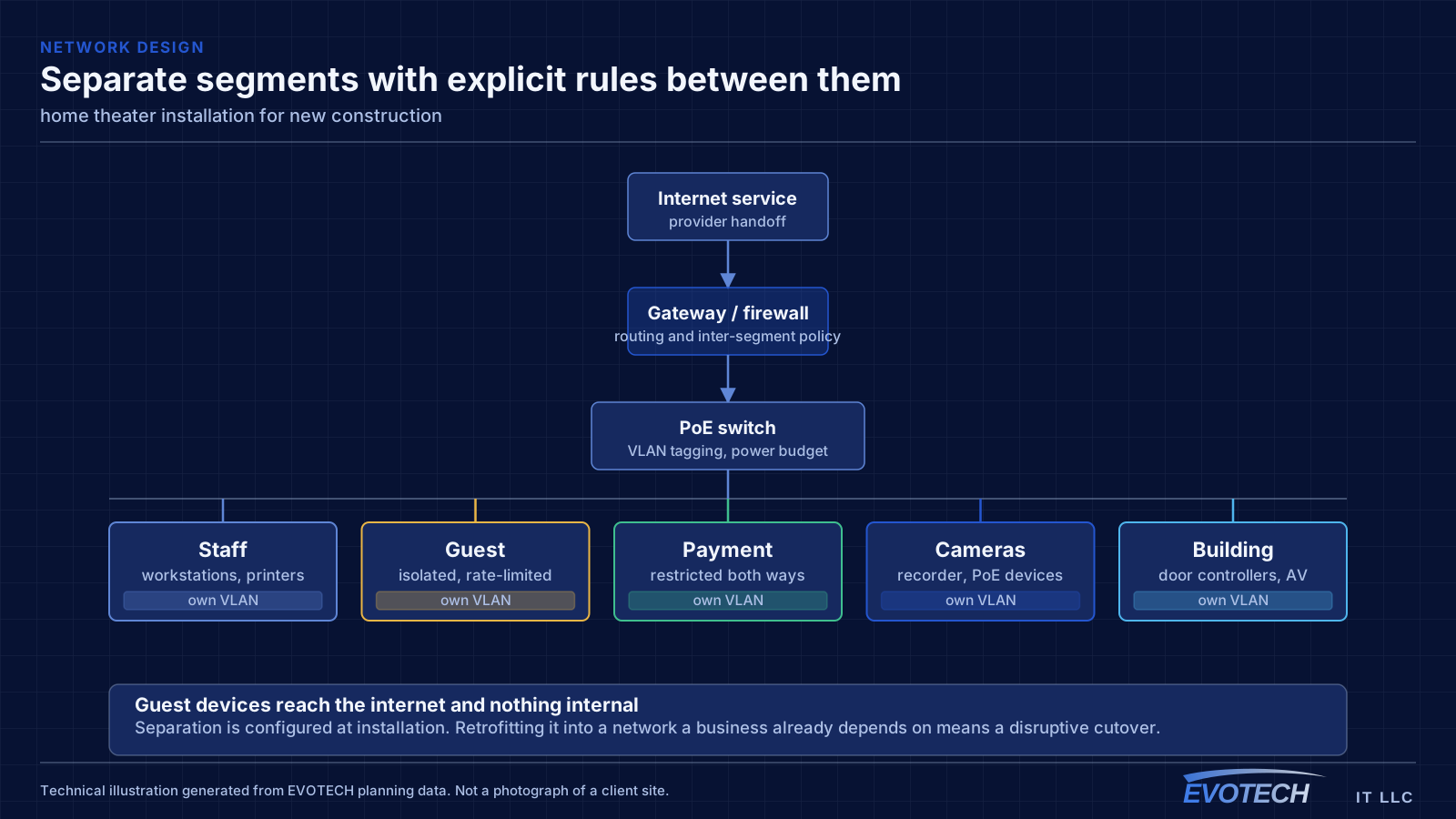
Low-voltage rough-in happens in a specific slot: after framing and electrical, before insulation and drywall. Inside that window, running a cable anywhere is straightforward. Once drywall goes up, the same cable costs many times more and sometimes cannot be run at all.
The asymmetry is the whole story of new-construction low voltage. Decisions made cheaply during rough-in become expensive or impossible afterwards, which is why the pre-rough-in planning conversation is worth more than any equipment choice made later.
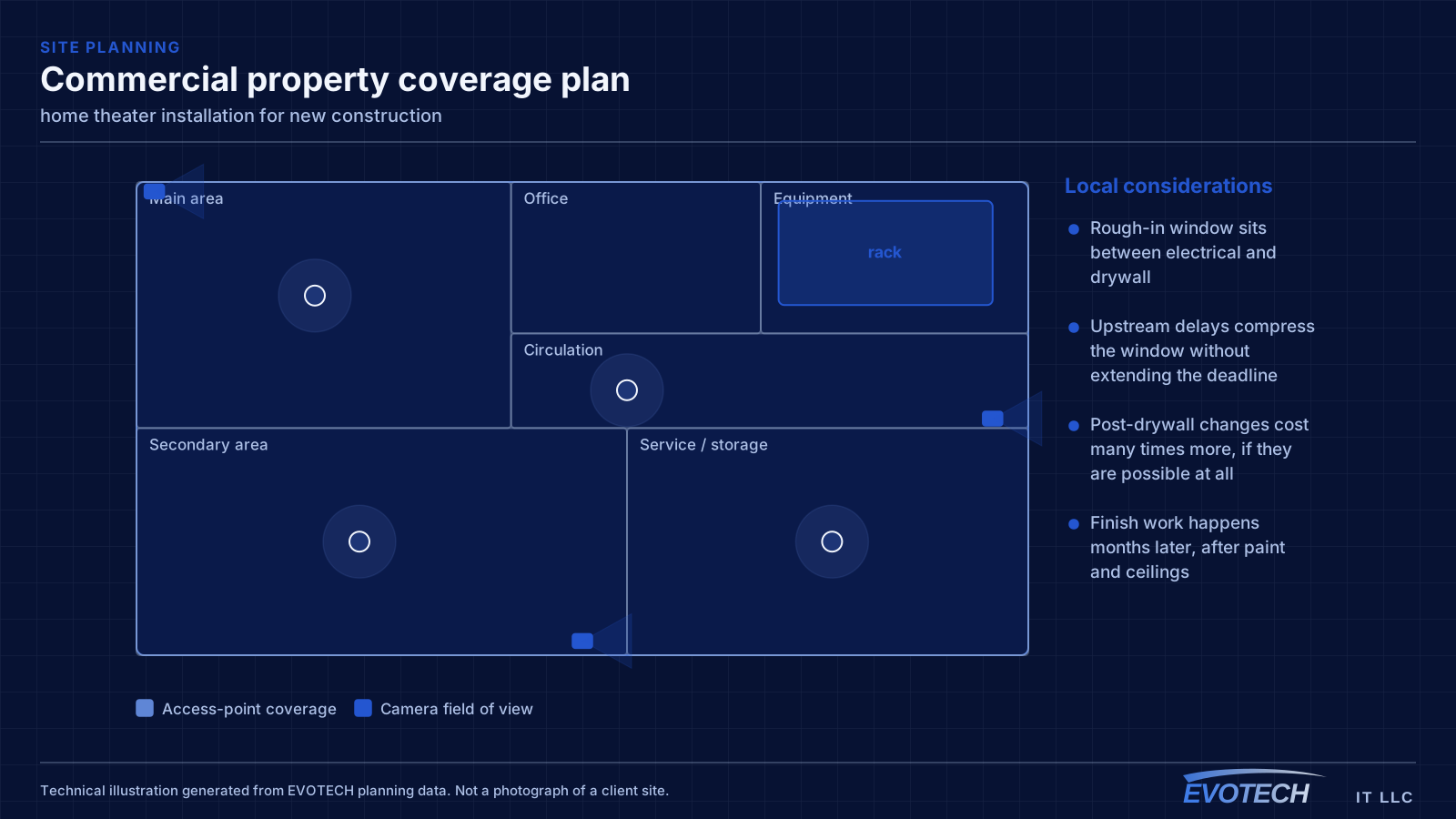
- Rough-in window sits between electrical and drywall
- Upstream delays compress the window without extending the deadline
- Post-drywall changes cost many times more, if they are possible at all
- Finish work happens months later, after paint and ceilings
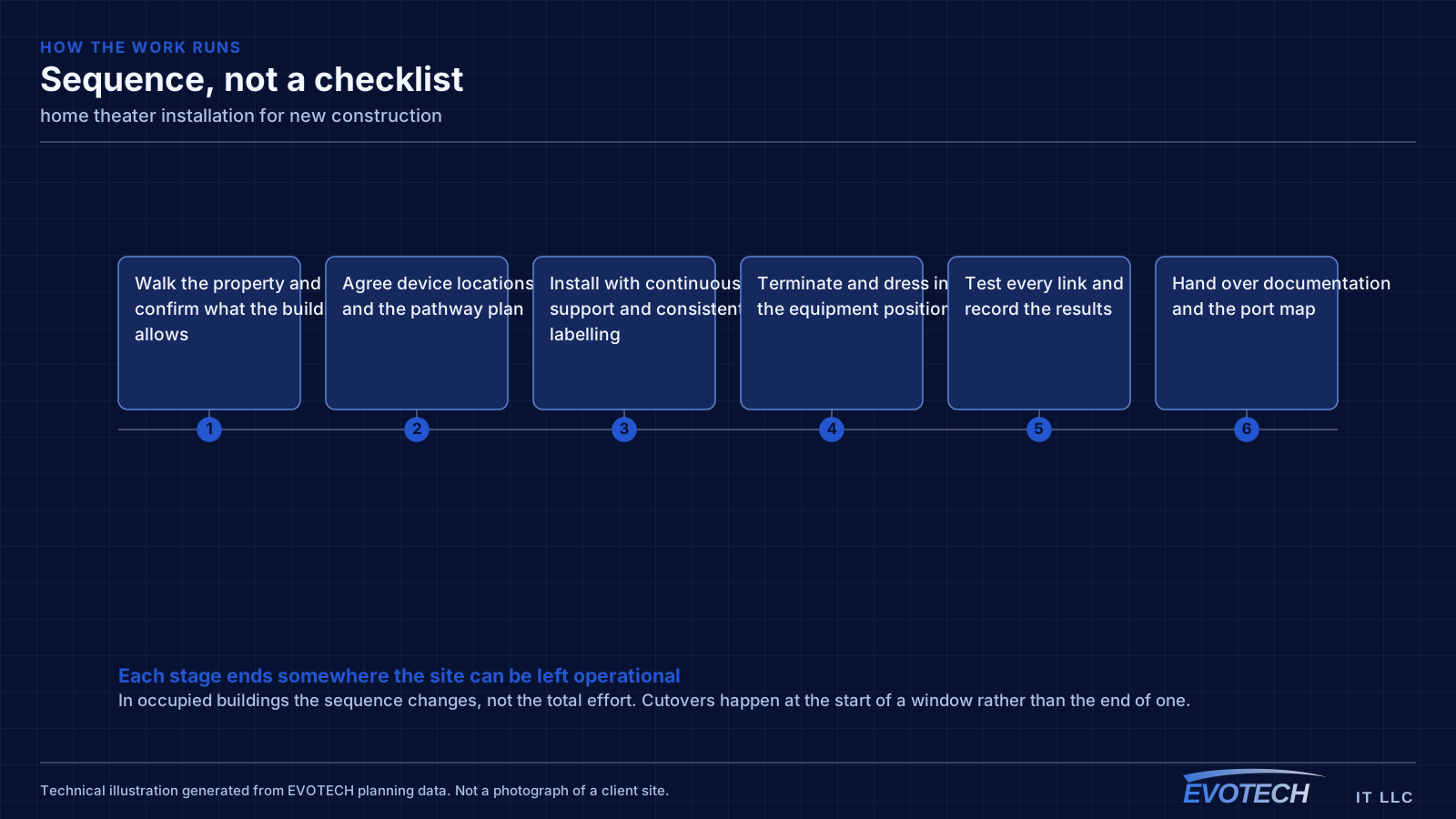
What home theater installation usually involves
The recurring complaint is dialogue that is hard to follow while effects are too loud — a balance and placement issue, usually a centre channel that is poorly positioned or a room that smears speech through reflection. The second is bass that is boomy in one seat and thin in another, which is subwoofer placement interacting with the room's dimensions rather than a fault in the subwoofer.
The third is operational: a system that needs three remotes and knowledge of which input to select is a system the household stops using at full capability. Consolidated, simple control is what keeps a theater in daily use.
- Dialogue lost under effects from centre-channel placement or room reflections
- Bass uneven between seats due to subwoofer and room interaction
- Surround speakers placed for convenience rather than for the format
- Height and ceiling speakers omitted or mislocated for object-based audio
- Cable runs to speaker and equipment positions left until after finishes
- Control complex enough that the system is used below its capability
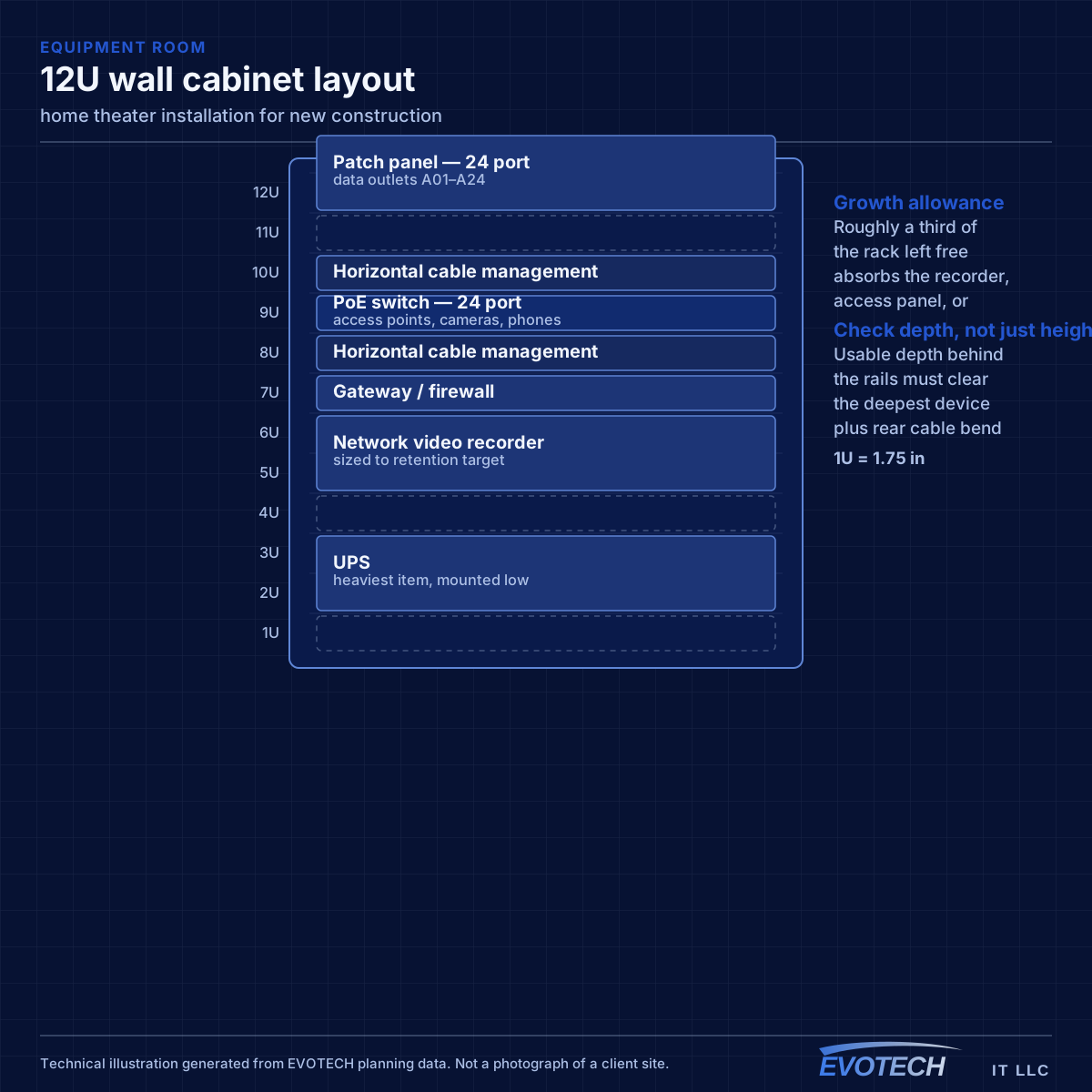
What to rough in even without a final design
Full system design is often not finished when the rough-in window arrives. That is normal, and it is not a reason to skip the pathway. Running conduit or sleeves to likely positions preserves the option cheaply even when the eventual equipment is undecided.
For a commercial building, the reliable rough-in set is: cable to every likely device outlet, ceiling positions for access points spaced for the intended coverage, camera positions at entries and approaches, door positions with cable to the controller location, and pathway to any likely display or AV position. Plus, in every case, a properly located equipment room.
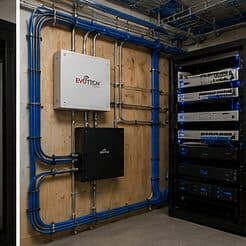
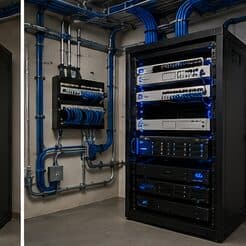
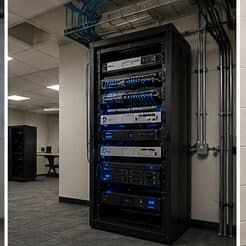
The equipment room deserves particular emphasis because it is the most commonly under-provisioned item. It has to hold the network rack, camera recorder, access-control panel, and any AV equipment, with dedicated power, ventilation, and clearance to work. Sizing it from the network alone is a decision that gets discovered eighteen months later.
- Sleeves and conduit to likely positions even before final design
- Ceiling access-point positions spaced for the intended coverage
- Camera positions at entries, approaches, and service areas
- Cable from every controlled door to the controller position
- Equipment room with dedicated power, ventilation, and working clearance
Speaker layout, subwoofer placement, and room acoustics
The front three speakers anchor the soundstage: left and right at the edges of the screen, centre directly at or just below it, all aimed toward the seating at roughly ear height. Surrounds go to the sides and slightly behind the main seats. Height or in-ceiling speakers, for object-based formats, sit above and around the seating per the format's layout. The single most important reference point is the primary seat — everything is placed relative to it.
- Front left/centre/right anchored to the screen at ear height
- Surrounds to the sides and slightly behind the main seating
- Height or in-ceiling speakers placed per the object-audio format
- Subwoofer position found by measurement, not defaulted to a corner
- Reflection control and soft surfaces for dialogue intelligibility
- Everything placed relative to the primary seat
Popular services nearby
Frequently searched near this area — the pages people look for most.
Frequently asked questions
What changes about home theater installation in new construction?
The operating environment does. New construction bring specific constraints — how the space is used, when work can happen, and what has to keep running — and those shape the home theater installation plan as much as the service's own technical requirements.
Why is dialogue hard to hear but explosions too loud?
Usually the centre channel and the room. Dialogue lives in the centre speaker, and if it is poorly placed or the room smears it through reflection, speech gets buried while wide effects stay loud. Correcting centre placement, setting levels relative to the seat, and adding some absorption fixes far more of this than adjusting the volume ever will.
What has to be decided before rough-in?
Device locations, the equipment room position, and the pathway plan. Equipment selection can wait — you can run cable to a position without knowing which camera or access point will go there. What cannot wait is the decision about where things go, because that is what determines where cable is pulled while the walls are open.